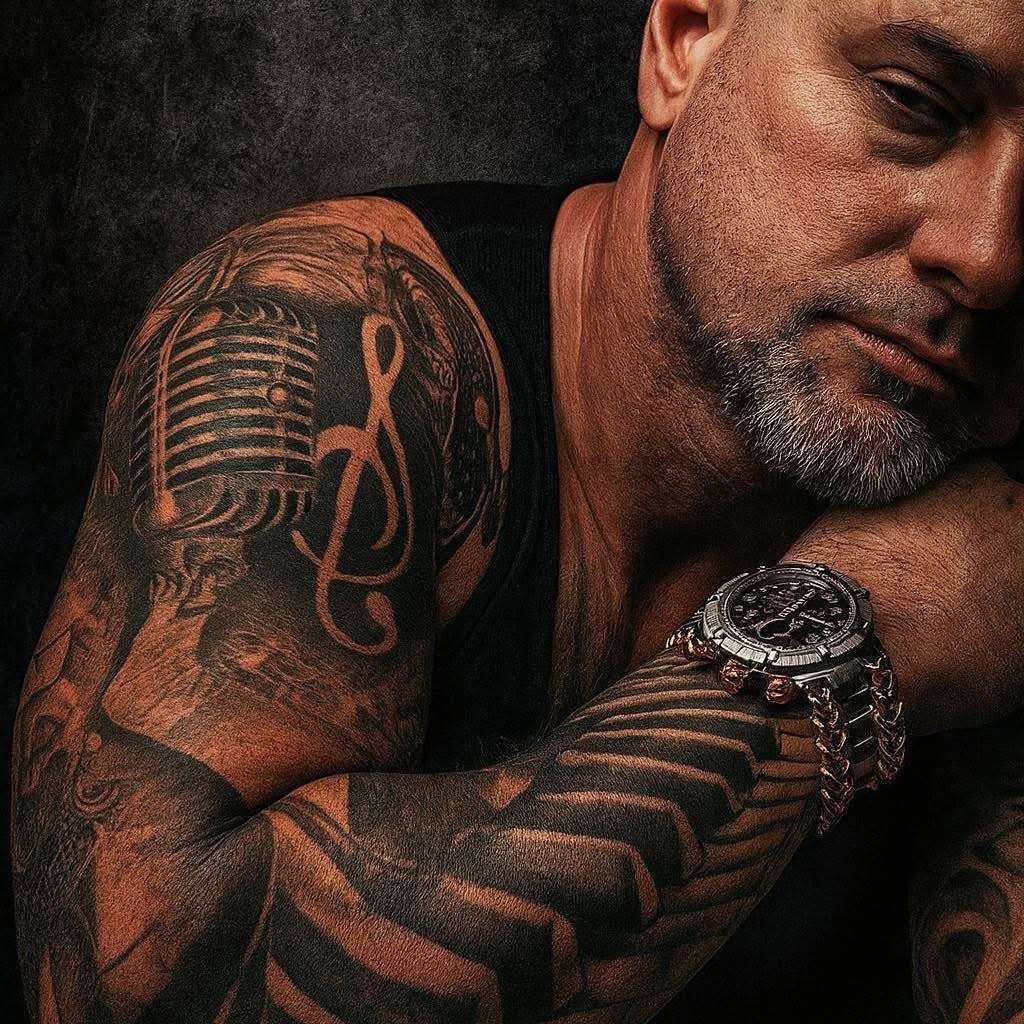
There’s something striking about an artist who chooses to do everything on his own and still manages to sound this complete. DyeVerse is one of those rare creatives who has built his sound, identity, and direction entirely from the ground up, handling every detail with precision and purpose. From production to visuals, nothing feels outsourced, and that level of control translates clearly into the music.
With his latest release, “GEMINI ANTHEM,” DyeVerse doesn’t just deliver a track, he delivers a statement. It’s bold, unapologetic, and deeply personal, taking aim at long-standing stereotypes while offering a more honest, grounded perspective. What makes the record resonate isn’t just its energy, but the intention behind it. There’s a sense of purpose in every bar, a clarity that comes from lived experience rather than surface-level storytelling.
What’s even more impressive is how naturally everything connects. The sound, the message, the visuals, it all feels aligned, as if nothing is accidental. That level of cohesion is rare, especially for an artist working entirely on his own. It speaks to both his creative depth and his commitment to authenticity.
As DyeVerse continues to build momentum organically, particularly through platforms like TikTok, it’s clear that his work is finding its audience without compromise. There’s something refreshing about an artist who chooses to move at his own pace, trusting that the right listeners will connect when the time is right.
In this interview, DyeVerse opens up about the meaning behind “GEMINI ANTHEM,” the realities of working independently, and the mindset that drives his artistry forward.
“GEMINI ANTHEM” feels like a bold and personal statement. What inspired you to address the stereotypes surrounding the Gemini zodiac sign in such a direct way?
I wrote the ‘Gemini Anthem’ to finally dismantle the stereotypes I’ve dealt with my entire adult life. It seems like the second someone finds out you’re a Gemini, they jump to these wild conclusions—calling us ‘two-faced’ or ‘unpredictable.’ I’d hear people say, ‘Oh, you’re a Gemini, so you must be like this,’ and I’m just thinking, What are you talking about .In reality, I am the most loyal, driven, and genuine person you’ll meet. I’m the guy who is there for his circle, focused on the work, and bringing the energy and humor to the room. I’m not some backstabbing person in the night; I’m a man of my word. I realized the best way to correct the narrative wasn’t through an argument, but through the music. I wanted to create a record that embodies the true strength, loyalty, and complexity of being a Gemini—setting the record straight once and for all through the sound
Working solo at that level requires a lot of discipline and self-trust. What are some of the biggest challenges you face when you don’t have a team to bounce ideas off?
Basically, I make music to connect with people. I hope they hear it in a personal way—maybe someone who doesn’t feel heard or seen can listen to one of my tracks and say, ‘OK, he understands.’
I really focus on the dynamics of the process. I just sit down, start making a melody, and it all kind of comes together. It feels more like I’m channeling something. I mean, yeah, it would be nice to have collaborators more often, but it doesn’t really matter to me in the end. The game is always going to be the same: put something out there, and whoever connects with it, they can keep it
On the flip side, what are the biggest advantages of having full creative control over your sound, visuals, and overall artistic direction?
That really is the ultimate question, isn’t it? It’s something I’ve realized more deeply the further I get into this process. While I value having complete creative control over every single element—from the sound to the visuals—it’s a double-edged sword.
On one hand, you have total autonomy. On the other, that level of control can breed a lot of doubt. When you are the sole architect, if a project falls flat or fails to resonate, that weight falls squarely on your shoulders. You have to be confident enough in your vision to lead, but also strong enough to shoulder the weight of the feedback once it’s out in the world.
Up to this point, most of my feedback has come from strangers, and the response has been incredibly positive. That’s been a massive win for me. It proves that if you’re willing to take that risk and carry the weight of the work yourself, the payoff—and the connection you make with the audience—is that much more authentic
You handle every aspect of your music completely on your own, from writing and production to engineering and mastering. What originally pushed you toward this fully independent, DIY approach?
Honestly, it came down to a evolution of my own ear and a realization about professional discipline. Growing up, I was always in bands or collaborating with producers on hip-hop tracks, and I hit a wall where the ‘human element’ became a massive bottleneck. Dealing with producers who constantly reschedule or bandmates who show up unprepared—or not at all—creates a level of friction that kills the creative spark.
I remember sitting there one day thinking, ‘I play all these instruments. Why am I outsourcing my vision to people who don’t have the same drive I do?’
It started as a move of pure necessity. I began saving up, piece by piece, until I had a cohesive home studio built out. I realized that having constant blockages in my creative process was a choice I didn’t have to make anymore. Now, I handle the writing, production, and engineering because I’d rather be the one responsible for the workflow than have it stalled by someone else’s lack of commitment.
“GEMINI ANTHEM” blends a haunting yet aggressive sound with confident, unapologetic lyrics. How did you approach building that balance between mood and message?
That’s a great question. For me, the beat always dictates the concept. Once the production was finished and I heard that aggressive energy clashing with those haunting undertones, I knew exactly what the message had to be. It felt like the perfect backdrop to set the record straight on what being a Gemini is actually about.
Every Gemini I’ve ever known is a powerhouse, and I wanted the lyrics to embody that unapologetic intensity. The core of the track is the idea of ‘fire and ice’—and which one you get depends entirely on you.
I’m very fluid in how I interact with the world; I tend to mirror the energy brought toward me. If you’re getting fire or you’re getting ice, it’s usually a reflection of your own behavior. That’s a hallmark of the Gemini trait—that high-level adaptability. The ‘Gemini Anthem’ is really just me putting that mirroring process into a sonic form. The music was done, the mood was set, and the lyrics were just the natural conclusion of that energy
The line “I’m like fire and ice a Gemini…” stands out as a defining moment in the track. Did that lyric come early in the writing process, or did it develop as the concept came together?
It’s funny that line stood out, because it was a very intentional choice. People love to throw the ‘two-faced’ label at Geminis, but they misunderstand the mechanics of it. It’s not about being fake; it’s about the fact that you absolutely do get two distinct sides of us. You get the fire—which is the passion, the loyalty, and the brotherhood—or you get the ice, where you’re completely frozen out.
That lyric was a defining moment for the track because I wanted to hit the listener right in the face with that reality. I’ve always kept it 100% real. If you’re a permanent fixture in my life, like the brothers I’ve had for 35 years, you get the fire. But if you cross a line, the ice kicks in and I remove you from the equation.
There is no middle ground with me. By putting that line in the song, I’m telling the world: We aren’t ‘two-faced,’ we just don’t waste energy on people who don’t earn the warmth. It’s about weeding out the noise and being unapologetic about who gets access to your energy
Your music has been gaining attention organically, especially on platforms like TikTok. How do you view organic growth compared to traditional promotion or industry backing?
This is the part of the process where I’m really starting to see the landscape change. To be honest, I’ve never been a ‘traditional promotion’ guy or someone looking for industry backing. I’ve always just put the work out there. But the reality of the game is that you either promote yourself or you risk your vision never being heard.
Growing organically is a strange, humbling experience. Usually, when I drop something on a platform like TikTok, it doesn’t always catch fire. But the ‘Gemini Anthem’ is different—it grew legs on its own. When I started seeing friends who usually stay quiet about my music actually coming forward to comment and share it, I knew I had something special.
It’s pushed me into a new headspace. It’s making me realize that if a track can stand up like this on its own, maybe it’s time to put some real weight behind it and see how far it can actually go. I’m just grateful that people are finally feeling the energy I put into this specific track. It’s a new arena for me, but I’m ready to see where it leads.
In a music landscape where collaboration is often key, do you see yourself remaining fully independent, or are you open to selective collaborations in the future?
Oh, absolutely. I love collaborating. While I’ve built the capability to handle every aspect of my music solo, there is a specific kind of magic that happens when you open up the creative process to other artists. Collaboration pushes you in directions that a strictly independent workflow just won’t reach.
Since I don’t have a ‘fixed’ roster of collaborators yet, I spend a lot of time working with independent musicians on platforms like Wikiloops. I’ll lay down drum tracks for someone’s guitar work, or we’ll just mess around and build something from scratch. It is an absolute blast.
I’m always going to be open to potential collaborators who bring that same drive and energy to the table. At the end of the day, it’s about the music—and if another artist can help elevate the vision, I’m all in.
You also handle your own artwork and release strategy. How important are visuals and branding in shaping the overall identity of DyeVerse?
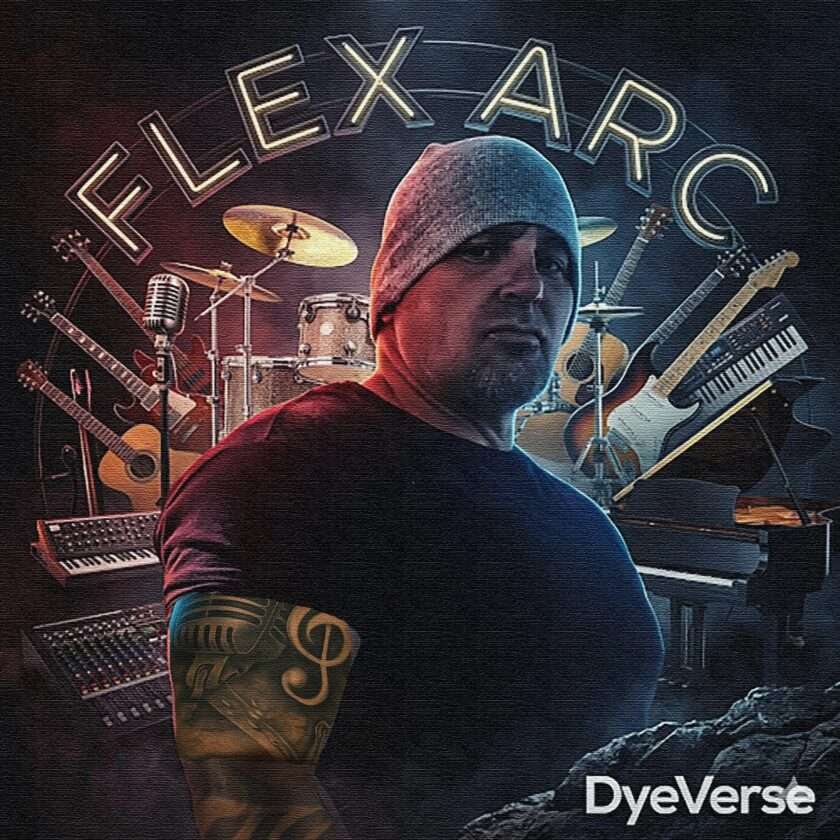
The visual identity is massive for me. I’ve been a web designer for about 20 years, so Photoshop is practically second nature. Transitioning those skills into creating cover art and visual assets was a natural move, and it’s one of the parts of the process I enjoy the most.
I view visuals as an essential pillar of the music. As humans, we are incredibly visual creatures; our sight is often our primary way of navigating the world. If the artwork falls flat, it’s just as off-putting as landing on a poorly designed website—you aren’t going to stick around to see what it’s actually about.
I curate every image of myself and every piece of art very carefully. I want the visual to mirror the energy of the track so that when someone sees the cover, they already have a sense of the ‘DyeVerse’ atmosphere before they even hit play. It’s all about controlling how I am perceived as an artist and making sure the quality is consistent across the board
What do you want listeners to take away from “GEMINI ANTHEM” after hearing it for the first time?
First and foremost, I want the Geminis out there to hear this and feel seen. I’ve seen them saving it and reposting it because they recognize themselves in it—they know I’m describing our frequency perfectly.
But for everyone else—the people who feel like they’ve been ‘mishandled’ or ‘misguided’ by a Gemini—I want them to understand the law of the mirror. We don’t just treat people poorly for the sake of it; we reflect what is brought to us. If you’re getting a certain type of energy, it’s likely because that’s the energy you’re projecting.
If you treat us with respect, you get that loyalty back. If you treat us like crap, you’re going to get that back ten-fold. There’s a line in the chorus that sums it up: ‘I see ten moves before they’re made, I’m as real as they come, fuck around catch a fade.’ It’s a warning and a statement of fact. I stay ten steps ahead, and I keep it as real as it gets. What you take away from the track depends entirely on which side of the mirror you’re standing on.