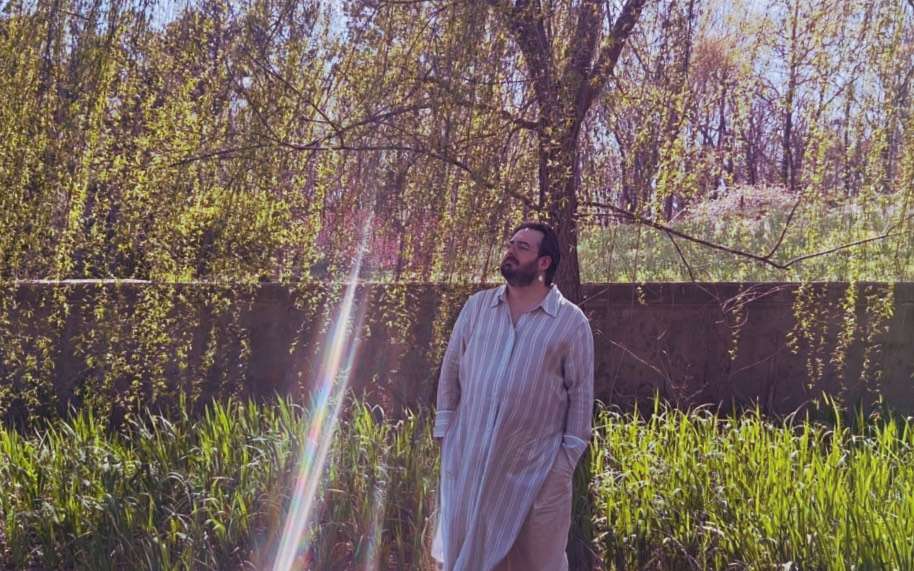
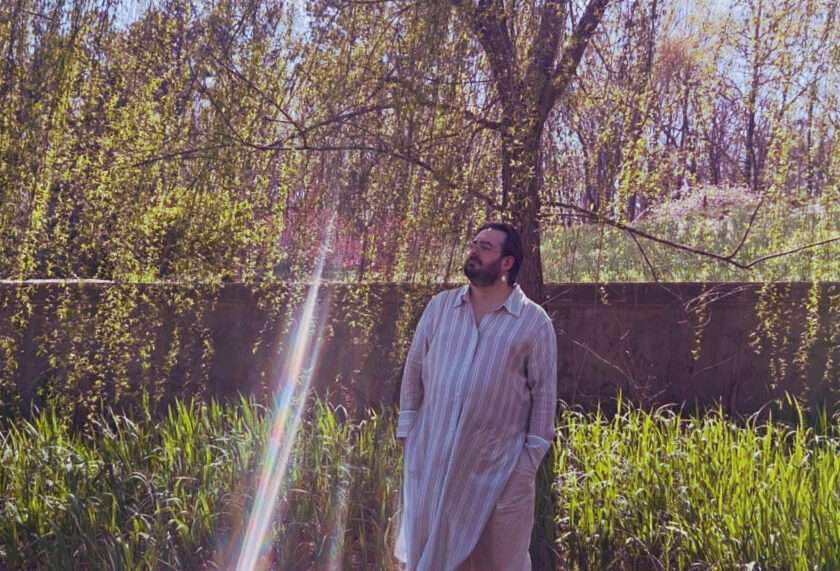
Ryne Meadow has established himself as a distinctive and emotionally fearless voice in contemporary songwriting, and Baptisms stands as one of his most revealing and accomplished works to date. Built on themes of religious expectation, internalized shame, and the ongoing process of self acceptance, the album presents a body of work that is both deeply personal and artistically intentional, reflecting an artist unafraid to confront the most complex parts of his own lived experience.
What makes Ryne’s approach particularly compelling is the clarity and honesty with which he transforms personal history into song. Across Baptisms, vulnerability is never treated as aesthetic but as necessity, allowing each track to function as both confession and release. The result is a record that feels grounded, purposeful, and emotionally resonant, carrying a sense of truth that remains rare in modern songwriting.
In conversation, Ryne reflects on a journey shaped by spiritual awakening, creative evolution, and the gradual dismantling of long held belief systems. He speaks with thoughtful precision about healing, not as a final resolution, but as an ongoing process marked by both difficulty and growth. This perspective gives Baptisms its emotional depth, as it captures not only where he has been, but where he continues to move.
The album itself moves through contrasting emotional spaces, stillness and confrontation, pain and clarity, anger and acceptance, forming a cohesive narrative that mirrors lived experience rather than neatly resolved storytelling. Through it all, Ryne’s songwriting remains sharp, reflective, and deeply human, reinforcing his reputation as an artist capable of turning personal truth into something universally felt.
This interview explores the making of Baptisms in depth, alongside the experiences, identity shifts, and creative processes that shaped it. It also offers insight into an artist who continues to define himself through honesty, discipline, and a commitment to expressing what is often left unspoken.
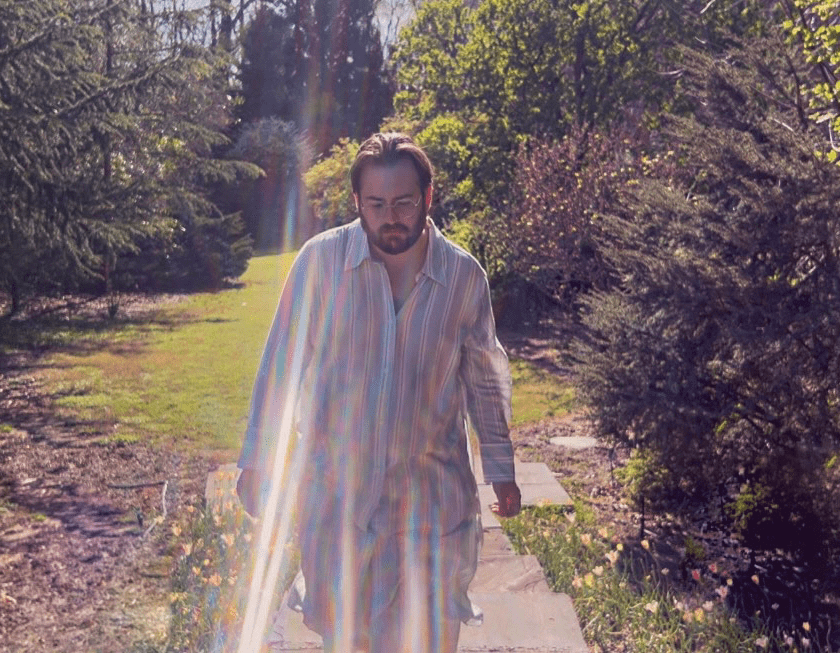
To begin, Baptisms is described as a record shaped by religious expectation, internalized shame, and the journey toward self-acceptance. When you look at the album as a whole, what emotional chapter of your life does it represent, and what needed to be expressed through it?
“Honestly…. It represents everything leading up to this point in my life. The spiritual awakening that inspired Baptisms really became this all encompassing thing that changed my view of, literally, everything. I needed to deconstruct decades of religious trauma. I needed to heal that inner child that was scared to live authentically. And, honestly, I’m still working on these things. And probably always will. There’s a double edged sword to that. It’s sad that I’ll always feel the ache from the incessant bullying, yet beautiful that I’ll always be growing. And that’s where I am right now.”
Across your career, how has your relationship with songwriting evolved, especially when it comes to turning deeply personal or difficult life experiences into structured songs that still feel honest and intentional?
“I started writing songs as an act of catharsis. It was my way of purging the things that I didn’t feel like I could openly speak on. My early songwriting was vague and whimsical and was a way to hide the stories of me being in love with boys – something I could not speak on because the relationships were all secret and I didn’t feel safe to start speaking that truth for some years. Now, I hold nothing back. There’s no vagueness. If something feels too vague, I’m not satisfied and will often sit with a lyric until something more authentic comes to the forefront. With this album, I didn’t want there to be any confusion on who I am as a person and what I stand for. And I’m extremely happy that I stuck to my guns about that.”
Baptisms deals with queer identity and the process of unlearning inherited belief systems. How did you approach writing about such sensitive themes in a way that felt both cathartic for you and accessible for listeners?
“Well, for starters, this is very treacherous material to try to scale. It’s nuanced and deep and can be extremely confusing to navigate. And I know I’m far from the only person that has experienced this, so I wanted to get it right for the people that didn’t know where to turn. I don’t think I ever got anywhere successfully with this subject matter until I really sat back and told myself *your feelings are valid* and really sat with that for a minute. We’re taught not to question the church, that it’s the ultimate authority – so, even being detached from it and keeping distance, it still felt wrong for a long time to speak my truth. I really felt like I was the problem. For longer than I’d like to admit. And there are millions of others that still feel that. So I knew I had a duty, as an artist, to put my voice towards change. I’ll never forget the first time I belted out the chorus of Sinner when I was writing it. It felt so powerful and freeing. And I knew I was doing it right.”
There is a strong contrast throughout Baptisms between stillness, reflection, anger, and confrontation. How do you personally balance those emotional extremes when shaping an album so it feels like one cohesive journey?
“I had to give myself a world of grace. All of those things are part of the process. It took me five years to finish writing and producing this album. I thought I knew what kind of artist I was and what the album stood for two years in, then some sync deals with a major streaming network fell through at the literal 11th hour. That forced me to deal with my unhealthy fear of failure and added another layer to the already varied process I was going through. A year of therapy then a year of sitting with reality passed before I felt like I could rise from the ashes. And when I did, I had an album that had far surpassed any expectations I originally had for it. The key was to just trust the process.”
In a broader sense, what role does music play for you personally, not just as a career, but as a way of processing identity, memory, and emotional experience?
“It’s a way for me to tell my story – to create my legacy. It’s a creative outlet, for sure, but also… it’s therapy. I have learned so many facets of my identity through songwriting. I’ve healed things in me that I didn’t know needed to be healed. And that’s beautiful to me. It’s also just a natural part of how I think and process information. No matter what, I don’t think I’ll ever stop writing.”
Stepping back from Baptisms, how would you describe your overall artistic identity today, and how has it evolved since you first started making music?
“I’m a folk artist, at the end of the day. I always have been. But the beauty of being an artist, and really a human in general, is the constant evolution we find ourselves going through. I started out writing whimsical gay love songs in my bedroom during high school, because I was missing that from the music industry. I now, still gay and pretty whimsical, find myself using my skills to tackle more complex topics that I witness within the world in front of me – speaking my truth in a way that’s unmistakable and precise. I would say my identity is: a songwriter for change.
As a singer, songwriter, and producer, you hold full creative control over your work. How does wearing all of those roles influence the way Baptisms ultimately sounds and feels?
“Wooh…. It’s really a lot sometimes. I’m lucky that I’m able to tackle every aspect of my work from start to finish because there’s so many other artists that don’t have that ability. I honestly don’t think I’d be doing music at all if I didn’t take the first step into self producing all those years ago in my bedroom. There’s still things I can’t do. I suck at recording vocals. And guitars. But that’s where my brilliant audio engineer and co-producer, Matt Tamisin, comes in. I take the songs to Matt about 75% finished and he helps me smooth out the edges. It’s great, because I get to choose the artistic direction of everything and get to create that in real time, then bring it to someone I trust that gets my vision to help me put the finishing touches on it. I wouldn’t want to do things without Matt.
He’s just as important to this album as I am. And I’m forever proud of the work we’ve done together over the years – ESPECIALLY Baptisms.”
Looking beyond this specific album, what defining experiences have shaped the artist you’ve become?
“So many things. For one, growing up gay in the Deep South – in a fairly conservative and religious community – put a lot of uncertainty in me at a young age. I will likely never stop unraveling the experiences of incessant bullying and finding new things to heal. I have the memory of an elephant, which is both a curse and a blessing. Great when I can recall the answer to a test question. Terrible when I see a picture of a fellow classmate that passed away too young and all I can think is ‘oh, he made fun of my bald spots when I started pulling my hair out when the bullying was at its peak.’
Experiences like that kinda go hand in hand with using songwriting as a way to heal the heartache I’ve carried with me from that point in my life. I started writing songs from a broken place and I’m proud to say that sadness is not the only place I pull from for inspiration anymore. The beauty of healing those wounds has opened my eyes to all the beauty around me. And I’m able to live in the moment now, feel all the feelings, and write about things happening in my present. And that’s helped me so much to be able to move through my feelings productively and not hold onto things for decades at a time.”
Many listeners connect to music through their own experiences rather than the artist’s intent. When you were creating Baptisms, did you think about how others might interpret or relate to these songs, or was the focus primarily inward?
“The focus is pretty much always inward, but not in a narrow viewpoint. I focus on what I feel in the moment of an experience so I can put a voice to things in the most honest way. Some people aren’t able to connect to their feelings like that or don’t have the right words. I do. And that’s a gift. I never know how someone is going to take a lyric, but I know that I have to write it with intention because someone may need to hear those exact words – even if they’re going through something completely different than what I am at the time.
My duty as a songwriter – an explorer of all things light and dark in my world – is to speak the truth. Because speaking my truth could lead someone else to FINDING theirs. The songs are from my perspective and they came from a very specific place for me, but they might find someone in a situation unlike mine and spark something in them. That’s more powerful than anything I could’ve ever intended.”
What has been the most challenging part of building a sustainable career as an independent artist?
“Navigating this industry as an indie artist feels absolutely impossible most of the time. Putting so much work into music that you have to beg people to listen to – even the people in your close circle.
Putting a lot of thought into social media posts only for them to get 3 likes because the algorithm isn’t satisfied with you. It feels like screaming into the void. And I’ve often times thought ‘why the fuck am I still doing this?’ But then…. You connect with that one listener.. that one person that tells you that your words have helped them and you see that your work CAN reach the right people… That people need your words, your experiences, your authenticity so they can feel the bravery to live their own truth. That’s why you keep going.
Finally, what do you hope Baptisms leaves behind emotionally for listeners, and how do you hope it contributes to broader conversations around identity, acceptance, and personal freedom?
“God, this album really changed my whole perspective on life in general. When I listen to Baptisms I feel a sense of pride and power. And that’s not because I wrote it – it’s because of the truth these songs speak to the world as a whole. I hope it helps people come forward and speak their own truth in a way that makes them feel like they are on fire. Because once we start to stand up to the injustices we face everyday, we tell the naysayers – whoever they may be – that we are worthy, we are valid, and that we don’t need permission to exist. And if we keep being free together, one day the kids like us won’t have to be scared to be their true selves. And that’s the world I want to live in.