
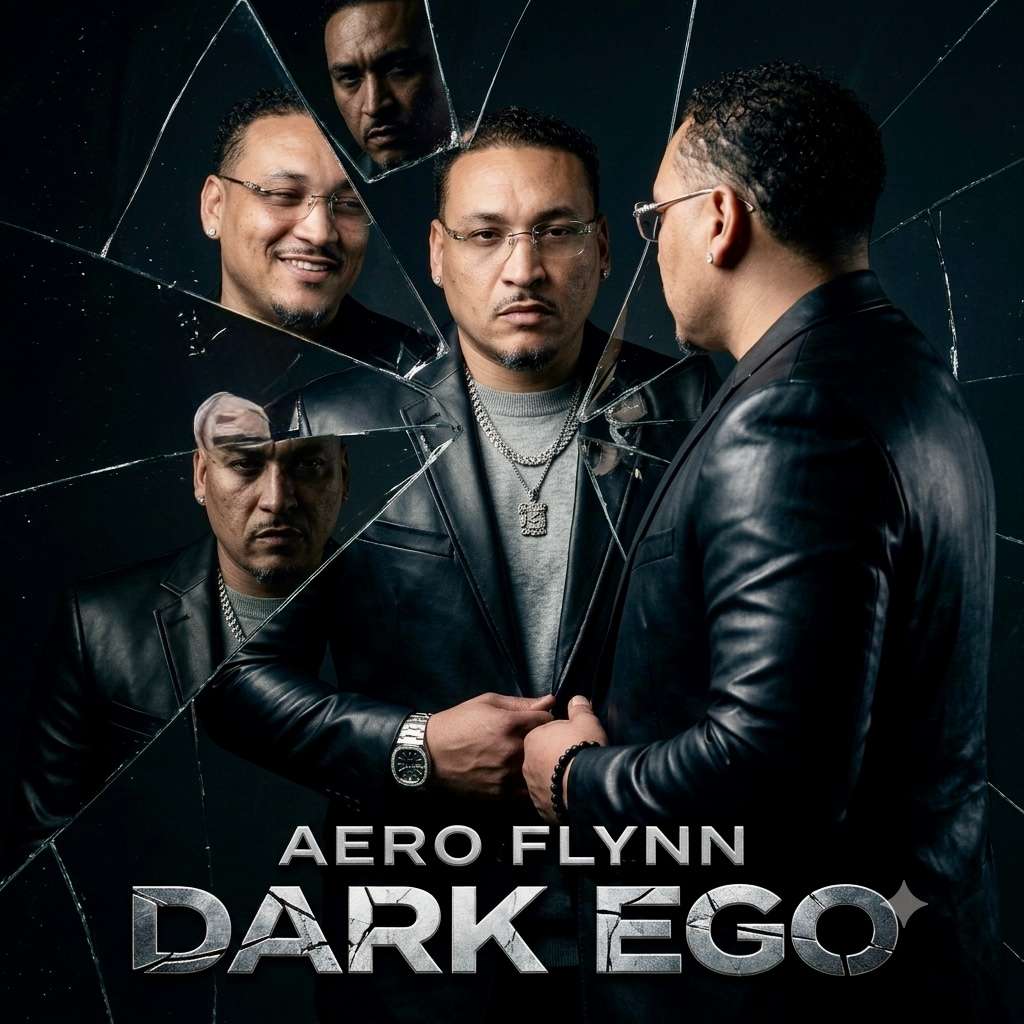
Hip-hop has always been a genre where artists wrestle with identity. Sometimes that identity is aspirational, sometimes it’s vulnerable, and other times it’s deliberately larger than life. On “Dark Ego,“ A.E.R.O. FLYNN leans into all three. What initially sounds like a hard-hitting display of lyrical dominance gradually unfolds into something more psychologically layered, revealing an artist using his pen to explore the part of himself that is fearless, confrontational, ambitious, and unwilling to be ignored.
The title itself is telling. “Dark Ego” doesn’t simply represent violence or negativity. Instead, it symbolizes the voice that emerges when survival, confidence, and ambition collide. Throughout the song, FLYNN creates a character who exists somewhere between reality and metaphor, allowing listeners to experience the internal war between discipline and destructive impulses. It’s this balance that gives the record substance beyond its aggressive exterior.
From the opening line, “Moons out, night time, I bring the goons out,” the song immediately establishes a cinematic mood. The darkness isn’t merely a backdrop; it’s an emotional landscape. The production reinforces this atmosphere with haunting textures that make every verse feel like another scene in a psychological thriller. Rather than chasing a radio-friendly sound, the instrumental creates space for the lyrics to become the focal point, allowing FLYNN’s storytelling to take center stage.
Lyrically, “Dark Ego” is packed with confidence, but it isn’t empty bravado. One of the first standout bars, “Give a fuck about a plug, I’m the pipeline,” immediately communicates independence. It’s a declaration that he refuses to rely on gatekeepers or validation from anyone else. Moments later, “You must be sniffing if I’m not in ya top five” continues that self-assurance, echoing one of hip-hop’s oldest traditions: proving your greatness through lyrical conviction.
However, what makes these bars effective is that they don’t exist in isolation. They contribute to the larger psychological portrait FLYNN is painting. The confidence feels earned rather than manufactured because it’s balanced with moments of self-awareness. The line, “I know I’m tripping, and I’m not in my right mind,” briefly interrupts the relentless bravado with vulnerability. It’s a subtle but important admission that even the strongest minds wrestle with instability, doubt, or emotional conflict. That single line humanizes the persona behind the bars.
The song’s writing is filled with cultural, literary, and historical references that reward attentive listeners. Mentioning Donald Goines immediately places FLYNN within a tradition of gritty storytelling. References to Raekwon’s Only Built 4 Cuban Linx, Nipsey Hussle, the Geneva Convention, David Koresh, and martial arts imagery all serve different purposes, but together they demonstrate the breadth of his influences. Rather than name-dropping for effect, these references function as building blocks for the world he creates. They paint a picture of an artist who studies culture and history as carefully as he studies rhyme schemes.
One particularly interesting aspect of “Dark Ego” is its use of violent imagery. There are numerous references to weapons, warfare, and confrontation, from concealed drums to blades and battlefield metaphors. On the surface, these lyrics may appear confrontational, but within the context of the song they operate much like traditional battle rap. They’re exaggerated expressions of dominance and resilience rather than straightforward endorsements of violence. The “war” taking place is just as much psychological as it is lyrical.
That psychological tension becomes clearer as the song progresses. FLYNN repeatedly returns to themes of survival and perseverance. “I grind hard, cause I know how it feels to sweat” stands out as one of the most revealing lines on the record. After spending much of the song asserting power and confidence, this lyric reminds listeners that his mindset has been shaped by struggle. It’s a simple line, but it carries emotional weight because it suggests that beneath the fearless persona lies someone who understands hardship firsthand.
The spiritual imagery woven into the song also deserves recognition. Lyrics like “Holy trinity, me, myself, I in the flesh” and “Speak like some prophets of death” create an interesting contrast between sacred symbolism and darker themes. Rather than presenting good and evil as separate forces, FLYNN allows them to coexist within the same character, reinforcing the central idea that every individual carries both light and shadow. In this sense, the title “Dark Ego” becomes less about embracing darkness and more about acknowledging its existence instead of pretending it isn’t there.

Technically, A.E.R.O. FLYNN demonstrates considerable skill throughout the record. His flow remains composed despite the density of the writing, allowing intricate rhyme patterns and internal rhymes to land naturally. He never sacrifices clarity for complexity. Every verse feels carefully constructed, reflecting an artist who clearly values craftsmanship. There are moments where listeners may need multiple plays to fully appreciate the layers within the lyrics, and that’s one of the song’s greatest strengths. It respects the intelligence of its audience.
The production deserves equal praise for understanding its role. Instead of overwhelming the vocals, it creates a cinematic environment where the lyrics can breathe. The eerie atmosphere amplifies the psychological themes without distracting from them, making the entire listening experience feel immersive. It’s the kind of instrumental that doesn’t merely accompany the words but actively enhances their emotional impact.
What ultimately separates “Dark Ego” from many modern hip-hop releases is its willingness to prioritize substance over instant gratification. This isn’t a song built around viral moments or catchy trends. It’s a record designed to provoke thought, reward careful listening, and invite interpretation. Every replay uncovers another reference, another metaphor, or another subtle connection that may have gone unnoticed the first time.
A.E.R.O. FLYNN has described his music as existing at the intersection of psychology, ambition, symbolism, and personal transformation, and “Dark Ego” successfully brings those ideas together. The song explores how ambition can become both a weapon and a burden, how confidence can coexist with inner conflict, and how confronting one’s darker instincts can ultimately become part of personal growth. Rather than glorifying the “dark ego,” FLYNN presents it as something to understand, master, and channel constructively.
Overall, “Dark Ego” is a bold and intellectually rewarding hip-hop record that showcases A.E.R.O. FLYNN as far more than a technically gifted rapper. He proves himself to be a thoughtful storyteller capable of combining cinematic production, layered lyricism, cultural references, and psychological insight into a cohesive artistic statement. It’s a song that challenges listeners as much as it entertains them, demonstrating that hip-hop remains at its strongest when it dares to explore the complexities of the human mind.