
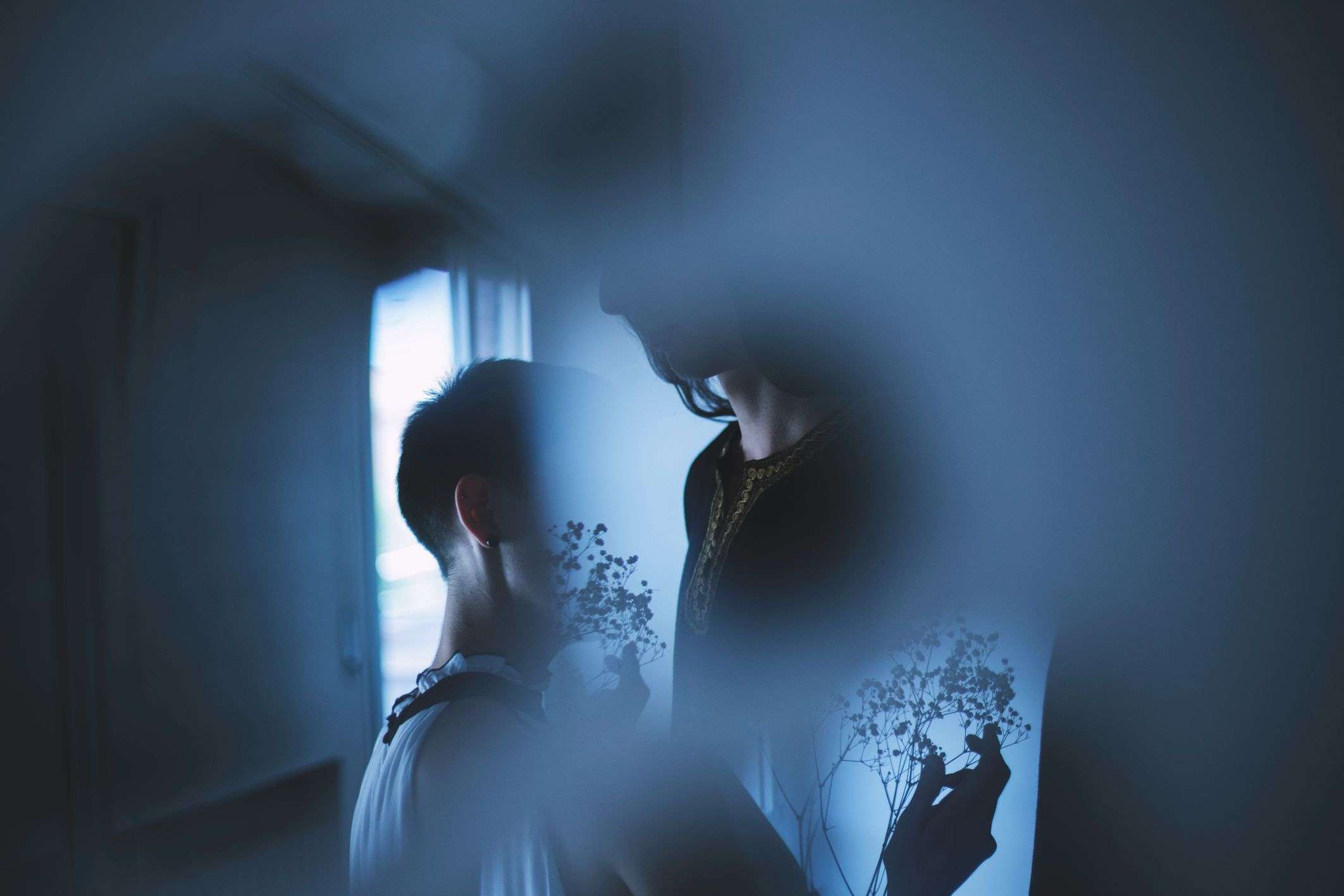
In an age where music is often designed for instant consumption, Hyperflower invites listeners to slow down, immerse themselves, and experience sound as something far more profound. The collaborative project, created by Lorenzo Setti (ATŌMI) and Irene Cavazzoni Pederzini, exists in a space where electronic music, philosophy, emotion, and art converge. Rather than simply writing songs, the duo crafts sonic environments that encourage reflection, rewarding patient listeners with new layers of meaning each time they return.
The story of Hyperflower began in 2018 at Bombanella Studio in Maranello, Italy, where a shared passion for music, literature, and philosophical thought sparked an artistic partnership built on curiosity and creative freedom. Working both remotely and together in the studio, Lorenzo and Irene discovered a chemistry that allowed each of their strengths to flourish. Irene’s evocative vocals and lyrical sensibility blend seamlessly with Lorenzo’s intricate programming, production, and sound design, resulting in music that feels remarkably cohesive despite being born from two distinct creative voices.
Their self-titled debut EP is a testament to that partnership. Although never intentionally conceived as a concept record, Hyperflower gradually evolved into an interconnected emotional journey where each composition naturally became part of a larger artistic universe. Themes of gravity, memory, distance, human connection, philosophy, and even mathematics are woven into the music with remarkable subtlety. Rather than presenting abstract ideas as intellectual exercises, the duo transforms them into deeply human experiences, creating songs that speak as much to the heart as they do to the mind.
What makes Hyperflower particularly compelling is its fearless approach to creativity. The duo refuses to be confined by genre, allowing experimental electronics, ambient textures, cinematic soundscapes, fractured rhythms, and art-pop melodies to coexist organically. Every sonic detail feels intentional. Every synthesizer, vocal layer, and carefully crafted texture serves the emotional narrative, creating an immersive listening experience that feels less like a playlist and more like stepping into a beautifully imagined world.
Perhaps most impressive is the patience behind the project. Songs such as “Proximity” were refined over long periods of experimentation, while the EP as a whole emerged through exploration rather than expectation. That willingness to let the music reveal its own identity speaks volumes about Hyperflower’s artistic philosophy. Instead of following formulas or trends, Lorenzo and Irene trust the creative process itself, allowing emotion, intuition, and genuine collaboration to guide every decision.
Now, after years apart, the duo finds themselves reconnecting creatively once again, opening the door to an exciting new chapter. While the future remains intentionally undefined, the possibility of new music signals that Hyperflower’s journey is far from over.
In this exclusive interview with Spinex Music, Lorenzo Setti and Irene Cavazzoni Pederzini discuss the origins of Hyperflower, the creative process behind their captivating debut EP, the philosophical ideas that shape their music, the importance of sound design and collaboration, and the exciting possibilities that lie ahead. It’s a thoughtful conversation with two artists who remind us that the most meaningful music doesn’t simply entertain—it invites us to listen more deeply, think more openly, and connect more fully with ourselves and the world around us.
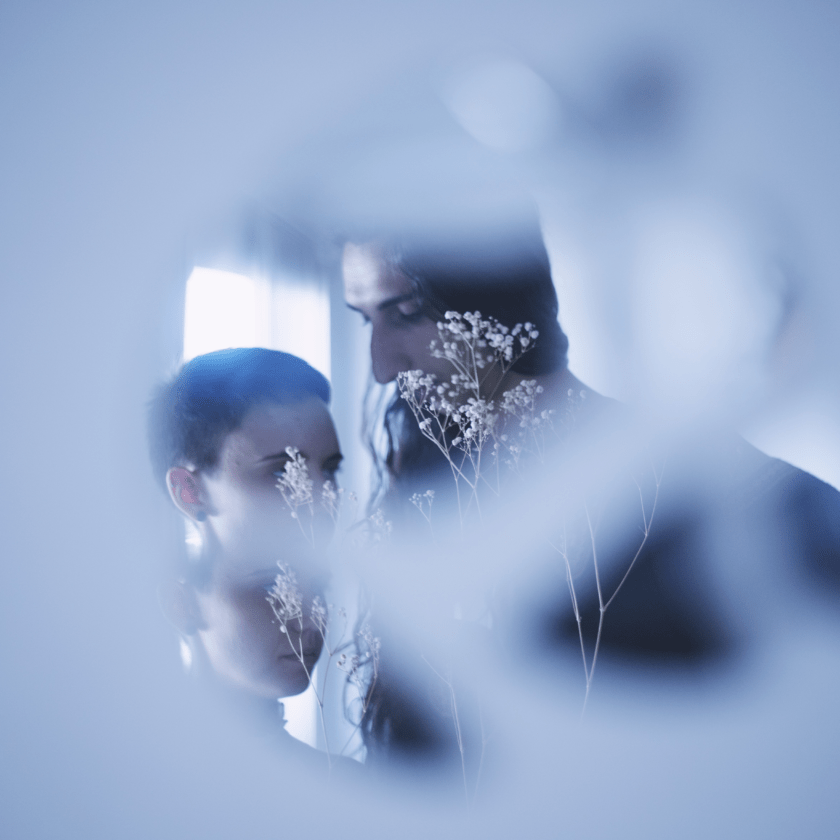
For readers discovering Hyperflower for the first time, could you both introduce yourselves and share how this collaboration began? What inspired you to create Hyperflower together?
This collaboration began in 2018 at a recording studio called “Bombanella” in Maranello, Italy. Hyperflower was founded by Lorenzo Setti, also known as ATŌMI, and Irene Cavazzoni Pederzini. What brought us together and led us to compose music was undoubtedly a period in our lives when we were open to sharing and challenging ourselves. In addition to a shared vision and common musical, philosophical, and literary tastes.
Every collaboration has its own creative chemistry. How do your individual strengths complement each other during the songwriting and production process, and what have you learned from working together? (General)
We composed this album by working both remotely and together in the studio. This allowed us to record and experiment individually before coming together to refine our work. Irene recorded the vocals and some synths and sounds, and she wrote most of the lyrics. Lorenzo programmed, arranged, post-produced, and recorded all the other sounds and instruments. This was one of our first collaborative projects as electronic music producers, and it helped us grow in many ways. This collaboration taught us that music can contain the essence of humanity—past, present, and future—like a prophecy that only those who truly want to listen can hear.
Your debut EP, Hyperflower, feels more like a continuous emotional journey than a collection of separate songs. What inspired you to approach the project in this way, and how did you ensure each track contributed to the bigger narrative?
The EP was not conceived as a conceptual work; it became one with time and the work we put into it. The like-minded vision, both narrative and emotional, was profound and we both managed to express it with a constant approach. This practice generated a universe in which we found ourselves immersed, and which naturally guided every composition step.
Throughout Hyperflower, you weave together themes such as gravity, memory, distance, philosophy, mathematics, and human connection. How do you transform such complex ideas into music that remains emotionally relatable?
There’s no act of transformation; music contains all of these concepts already. For us, it was and still is the need to connect deeply inside and outside of ourselves and to be able to listen and choose. In a philosophical and mathematical sense, concepts like gravity or memory are all expressions of ‘tension’—a pull toward a specific limit. And, in fact, when we select the themes for a track, we are acting as a limiting force on an otherwise endless spectrum of meaning. It’s precisely through this ‘limitation’ that these massive ideas become human and emotionally relatable. This makes the approach holistic.
Tracks like Fold, Gravity, Proximity, and the title track each carry their own symbolic language while remaining connected to the EP’s overall concept. Which song was the most challenging to create, and which one best represents the heart of Hyperflower?
On a pure “how much time we put on a song” level, Proximity was the one where we studied more and more how to perfect it and its very delicate universe.
It’s hard choosing a “heart” of Hyperflower; all of the songs are part of it, making it the way it is. We’d like to ask our readers: Which song best captures the essence of the album?
The production throughout Hyperflower is beautifully immersive, balancing delicate vocals with fractured rhythms, ambient textures, and cinematic electronics. How important was sound design in telling the emotional story behind the EP?
Every choice behind a sound is essential when composing an album that tells a story—one that is happening very close in time, and at the same time, parallel to you. We took an especially intentional approach, experimenting and curating every small sound, mixing analog hardware (mostly synthesizers) and human elements, such as the voice.
Your music sits comfortably between experimental electronic music and accessible art-pop. Was it always your intention to blur genre boundaries, or did the sound evolve naturally as the project developed?
There wasn’t any idea to fit in any music genre. The album unfolded naturally in an intense, emotional full immersion.
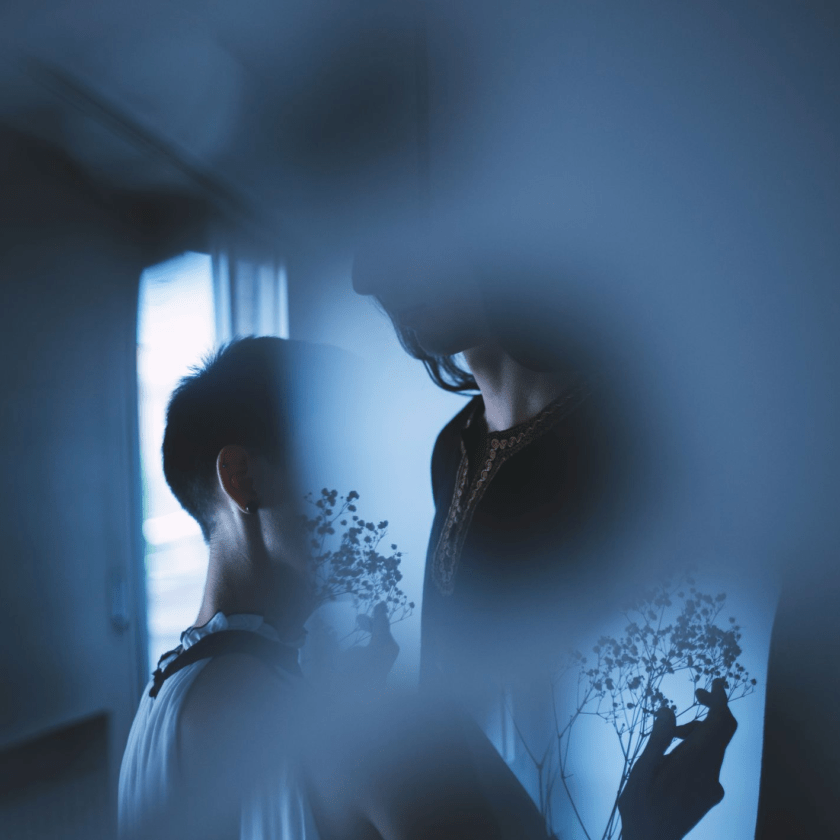
Looking beyond this EP, what artistic goals do you hope Hyperflower achieves? Is this project an ongoing musical journey, or do you already have a larger creative vision taking shape? (General)
We are currently asking ourselves this question. A tangible possibility is that we will start exploring new themes and creating new music—a continuation of this musical journey. It has been a long time since we last did so, so it will be interesting to see how much we have changed (or not) and what comes out of it.
Every artist grows through experience. Looking back on your individual musical journeys, what advice would you give to emerging musicians who want to remain authentic while developing their own unique sound? (General)
Take as much time as you need. There are no rules.
Finally, after listeners experience Hyperflower from beginning to end, what do you hope stays with them emotionally? And can you give us a glimpse of what’s next for Hyperflower? (General/Future)
Connection, reflection, and possibly a sense of immersion. As if waking up from a curious dream.
As for the future: we had grown apart, but we are now reconnecting after many years. The glimpse of what’s to come is still fuzzy and unclear, but it’s fair to say that a new work is being imagined.