
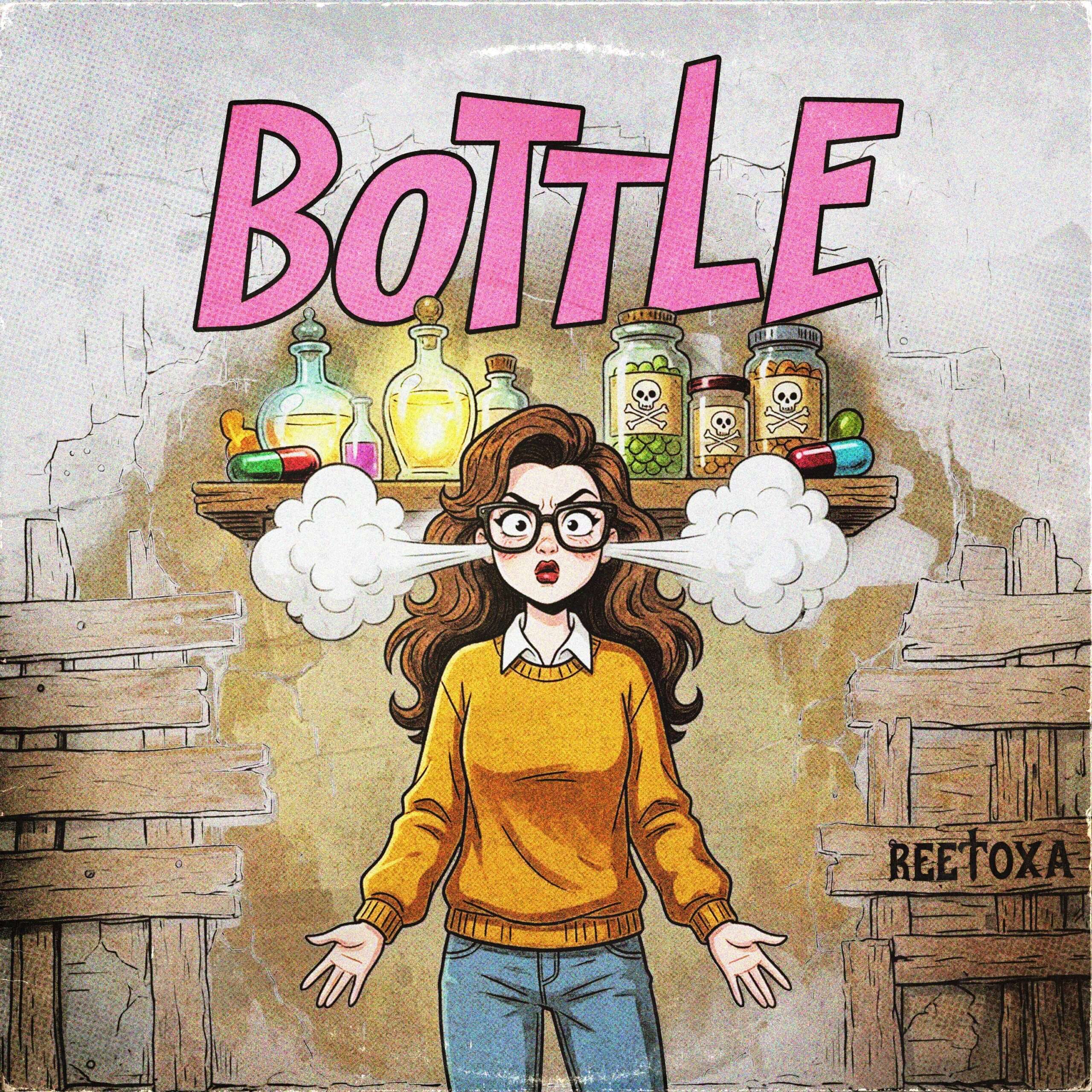
There is something undeniably special about a song that survives the passage of time. While many records are created to capture a moment, “Bottle“ by Reetoxa carries something far more enduring. Originally written by frontman Jason McKee in 1995 when he was just fifteen years old, the song has waited three decades to receive the treatment it always deserved. Rather than feeling like a relic from another era, it arrives with remarkable emotional clarity, proving that honest songwriting never loses its relevance.
What gives Bottle its emotional weight is the truth behind its creation. Inspired by a real experience involving McKee, his high school girlfriend, and a close friend struggling with mental health, the song captures a period of adolescence when friendship became a source of strength amid uncertainty. Instead of dramatizing those memories, Reetoxa presents them with empathy and sincerity. The result is a song that feels deeply human, reminding listeners that compassion often begins with simply being there for someone who needs it.
The songwriting is refreshingly genuine. Although penned by a teenager, the lyrics avoid clichés and exaggerated emotion. There is a quiet honesty running throughout the song that allows its themes of vulnerability, hope, and resilience to resonate naturally. Rather than spelling everything out, Bottle trusts listeners to bring their own experiences to the music, making the emotional connection feel personal instead of prescribed.
Musically, the song benefits enormously from the collaboration between Jason McKee and producer Simon Moro. Moro wisely resists the temptation to modernize the song beyond recognition, instead preserving its original character while giving it the sonic depth needed to connect with today’s audience. The production feels warm, spacious, and dynamic, allowing every instrument to serve the story rather than compete for attention.
James Ryan’s guitar work is particularly impressive. Expanding on McKee’s original ideas, he injects the arrangement with both energy and atmosphere, creating moments that feel simultaneously intimate and anthemic. The guitars provide emotional lift without overwhelming the narrative, helping the song build naturally from reflective verses into a powerful, memorable climax.
McKee’s vocal performance is equally compelling. There is no sense of performance for performance’s sake. Instead, he delivers the song with the quiet conviction of someone revisiting memories that have shaped his life. Thirty years of perspective give the lyrics additional meaning, allowing emotions that were once experienced through teenage eyes to be expressed with maturity, gratitude, and understanding.
Perhaps the most remarkable aspect of Bottle is how effortlessly it bridges generations. Although rooted in the realities of 1990s Australia, its themes remain universal. Mental health, friendship, belonging, and the search for hope continue to define countless lives today, making the song feel just as timely now as it would have when it was first written.
For a band making its introduction, Reetoxa demonstrates a rare commitment to substance over spectacle. Bottle is not built around trends or instant gratification. It is built around authentic storytelling, thoughtful musicianship, and emotional truth. Sometimes the strongest songs are not the newest ones—they are the ones that patiently wait until the right people, the right collaborators, and the right moment come together. With Bottle, Reetoxa has finally given one such song the voice it has always deserved, delivering a moving and memorable release that leaves a lasting impression.