
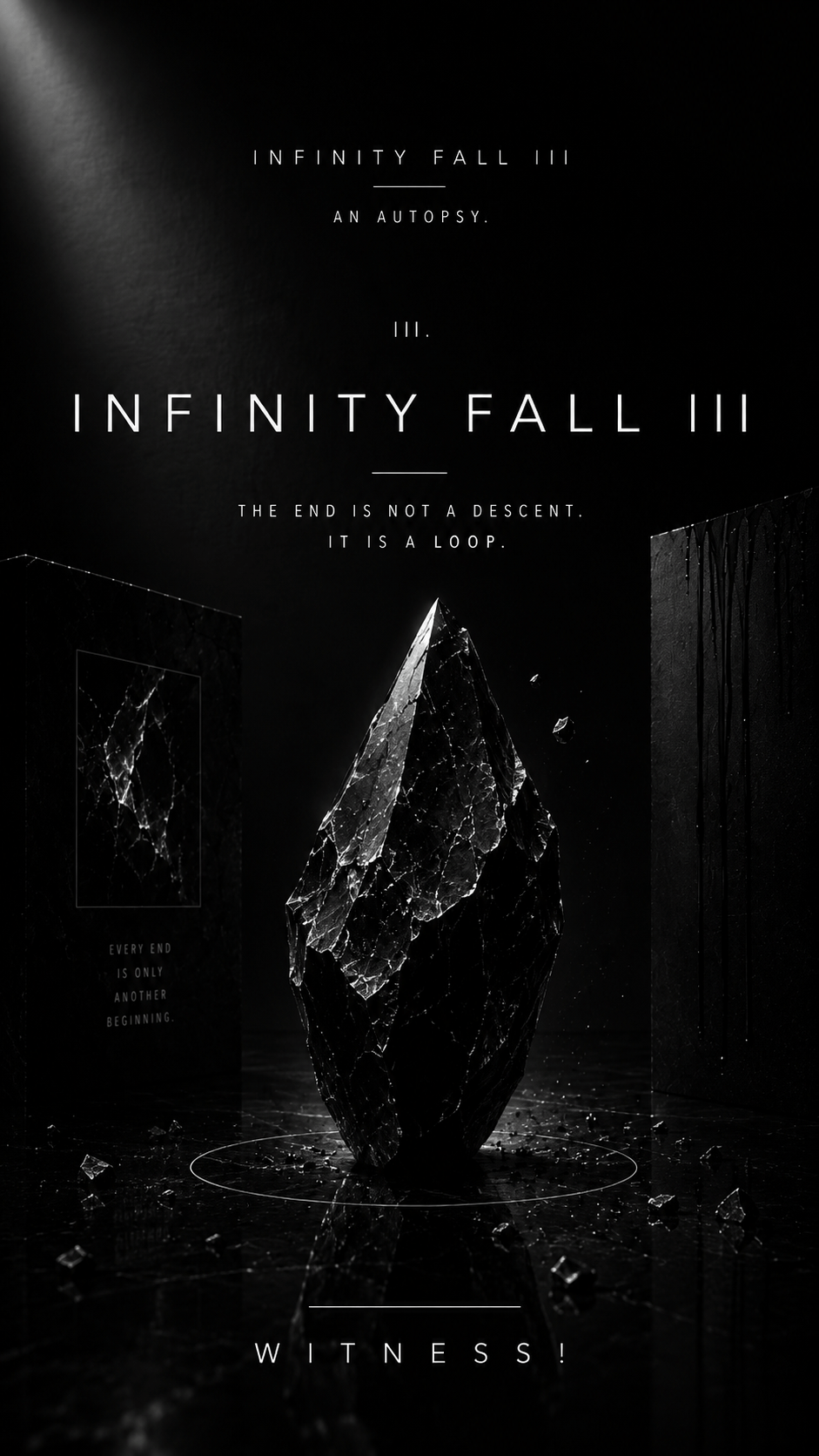
Some artists create music to tell stories, while others build entire worlds that invite listeners to question the stories they already believe. Watch Me Die Inside is one such project. Created by Aleph, the project exists at the intersection of music, philosophy, and conceptual art, where every release serves as an exploration rather than an explanation. Instead of offering clear-cut narratives or easy conclusions, Watch Me Die Inside challenges listeners to examine the ideas of identity, certainty, truth, and perception, encouraging them to embrace curiosity over certainty.
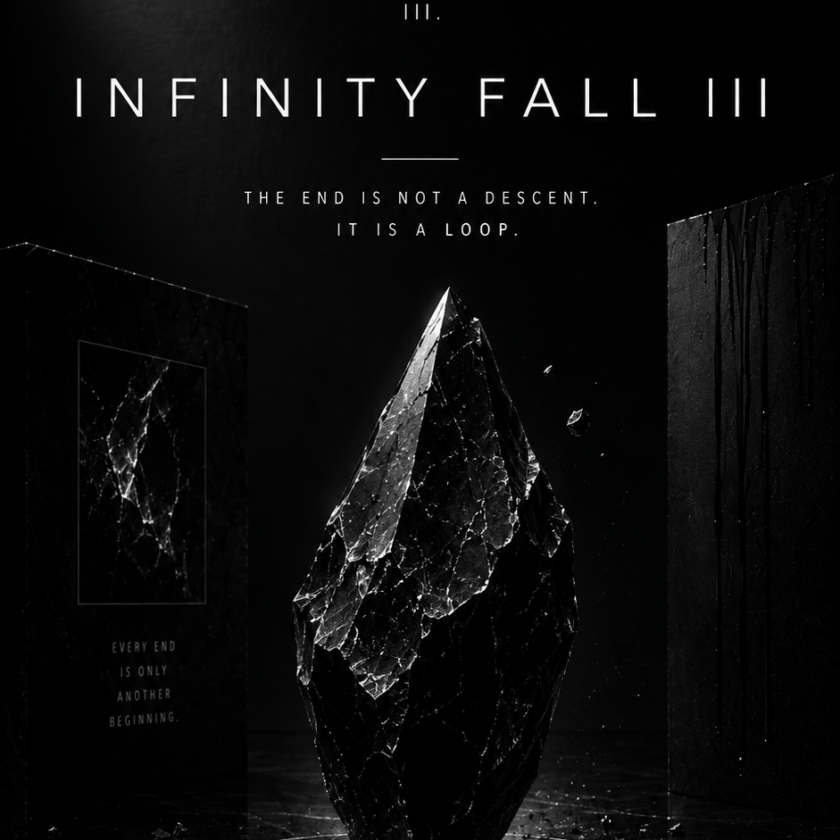
The latest album, Infinity Fall III, is a compelling continuation of that artistic vision. Rather than functioning as a conventional collection of songs, the record unfolds as a carefully crafted philosophical examination. Through its interconnected pieces, Aleph invites listeners to dismantle inherited assumptions and explore what remains once familiar beliefs are stripped away. The album’s defining statement, “Every certainty deserves an autopsy,” immediately establishes its central philosophy: not one of destruction, but of understanding. Here, an autopsy is reimagined as a method of careful examination—a way of looking beyond appearances to uncover deeper truths.
That philosophy extends throughout the entire Watch Me Die Inside universe. Concepts such as Fragments, Autopsies, and Witnesses are not simply recurring themes but form the foundation of an evolving artistic language. Fragments represent observations rather than incomplete stories, Autopsies become acts of intellectual and emotional examination, and Witnesses are those willing to confront uncomfortable truths rather than passively observe them. Together, these ideas transform Infinity Fall III into something far greater than an album, inviting listeners to participate in an immersive experience where every question leads to another layer of discovery.
What makes Aleph’s work particularly distinctive is an unwavering commitment to artistic integrity. In an industry often driven by trends, algorithms, and instant gratification, Watch Me Die Inside chooses patience, ambiguity, and thoughtful reflection instead. The music never demands interpretation; it quietly invites it. Every lyric, arrangement, and moment of silence is carefully considered, creating space for listeners to engage with the work on their own terms rather than prescribing a single meaning.
In this exclusive interview with Spinex Music, Aleph, the creative mind behind Watch Me Die Inside, discusses the inspiration behind Infinity Fall III, the philosophical ideas that define the project, the origins of its unique creative language, and why asking meaningful questions has become more important than providing definitive answers. We also explore the lessons learned throughout the creative journey, the influences that continue to shape this expanding universe, and what audiences can expect as the next chapter of Watch Me Die Inside continues to unfold.
For readers discovering Watch Me Die Inside for the first time, can you introduce yourself and share the story behind
Infinity Fall III? What inspired you to create this project, and what has kept you committed to its vision?
WATCH ME DIE INSIDE:
Watch Me Die Inside isn’t a band built around stories. It’s built around questions.
Infinity Fall III wasn’t conceived as a collection of songs, but as an examination. I became fascinated by the idea that many of the things we consider absolute— identity, certainty, comfort—have simply never been questioned deeply enough. What keeps me committed is that every answer creates another question. The project isn’t moving toward a conclusion. It’s moving toward greater clarity.
Every artist’s journey is different. Looking back, what has been the biggest lesson you’ve learned about yourself through making music, and how has that shaped the artist you’ve become today?
The biggest lesson was realizing that honesty isn’t the same as confession.
You don’t have to expose every personal experience to create something truthful. Sometimes the most honest thing you can do as an artist is ask a question without pretending to know the answer.
That’s become the foundation of everything we create.
Your latest release, Infinity Fall III, begins with the striking statement, “Every certainty deserves an autopsy.” What inspired that idea, and why did it become the perfect introduction to this chapter of the project?
I wanted to reclaim the word autopsy. People immediately associate it with death. I associate it with understanding.
An autopsy is simply a refusal to accept appearances at face value.
It’s a careful examination of what remains once assumptions are removed. That’s exactly what Infinity Fall III attempts to do; not to people, but to ideas.
You describe Infinity Fall III as being “not about death, but about examining the comforting lies that survive long after the truth has arrived.” Could you unpack that philosophy for our readers and explain how it influenced your songwriting and production?
We all inherit narratives. About success.
About identity.
About happiness.
About ourselves.
Many of them continue long after they’ve stopped being true.
I was not interested in writing songs that replace one certainty with another. I wanted to create space where those inherited narratives begin to lose their authority.
That philosophy shaped everything—from the lyrics to the arrangements. Every musical decision asks the same question:
What remains when certainty disappears?
The three tracks, Uneasy, Boring, and Infinity Fall III, feel connected emotionally while remaining distinct sonically. How did you approach building the narrative across the EP, and what role does each track play in telling the overall story?
I don’t think of the EP as three songs.
I think of it as three observations made during the same examination.
Each fragment reveals a different surface of the same object, but none of them claims to explain it completely.
The listener completes the narrative.
That’s why I deliberately leave space instead of resolution.

One of the most fascinating aspects of your work is the concepts of Fragments, Autopsies, and Witnesses. How did you develop this artistic language, and why was it important to build an entire universe rather than simply release standalone songs?
Those words emerged naturally while I was creating the project.
I realized I was documenting events; I was documenting observations. Fragments aren’t incomplete because something is missing.
They’re incomplete because no single perspective can contain the whole. An Autopsy isn’t an ending.
It’s a method.
And a Witness isn’t a spectator.
A Witness accepts responsibility for what has been seen.
Those ideas eventually became the language of the project because they describe the experience more accurately than traditional storytelling ever could.
In an industry where many artists chase viral moments and commercial trends, you’ve remained committed to creating conceptual, deeply reflective music. Has staying true to your artistic identity ever required difficult choices, and what advice would you give to independent artists trying to do the same?
Every independent artist faces the temptation to become more understandable. But being immediately understood isn’t always the same as being memorable.
I have chosen consistency over algorithms. The advice I’d give is simple:
Don’t build content.
Build a world.
People eventually forget campaigns. They rarely forget universes.
Your music invites listeners to think as much as they listen. When someone finishes hearing Infinity Fall III , what emotions, questions, or personal reflections do you hope stay with them long after the music ends?
I don’t hope they leave with conclusions. I hope they leave with curiosity.
If someone finishes the EP and begins questioning a certainty they’ve carried for years, then the music continues long after the final note.
That’s where it truly begins.
Outside of your own work, who are some of the artists, writers, filmmakers, or life experiences that continue to inspire your creativity? How do those influences shape the music you make today?
I’m drawn to artists who trust restraint.
Whether it’s contemporary architecture, minimalist photography, cinema or literature, I’ve inspired by creators who leave space for the audience instead of filling every silence with explanation.
I admire work that doesn’t demand interpretation. It quietly invites it.
Finally, as Infinity Fall III introduces another chapter in the Watch Me Die Inside universe, what can your audience expect next? Are there more Fragments, another Autopsy, or entirely new ideas waiting to be revealed?
The universe is still unfolding. Infinity Fall III isn’t a destination. It’s evidence.
There will be more Fragments. More observations.
Perhaps another Autopsy.
But every chapter will continue asking the same question:
What survives examination?
I don’t intend to answer it. Only to keep looking.