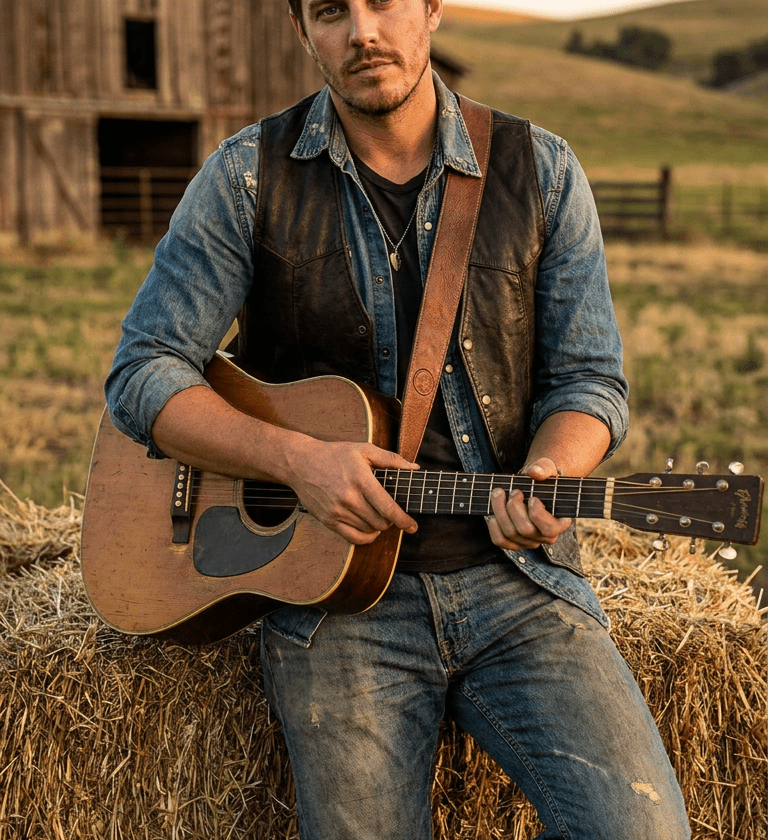
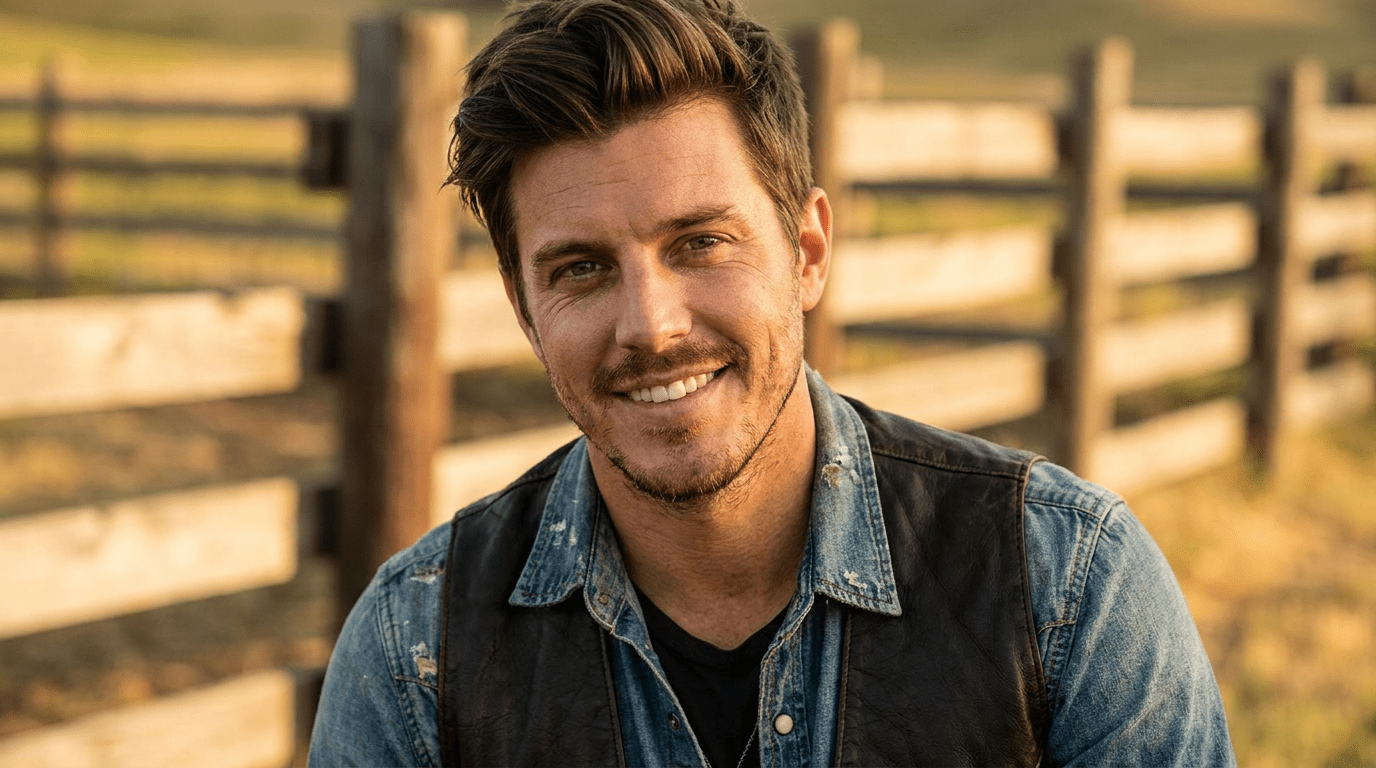
There are artists who follow a path, and then there are artists who reshape the road entirely as they move forward. Eye of TJ firmly belongs to the second category.
Emerging with a voice rooted in lived experience, emotional clarity, and unfiltered storytelling, Eye of TJ has quickly carved out a space that feels both deeply personal and widely relatable. His work does not chase perfection. Instead, it embraces truth in its rawest form, the kind that sits between heartbreak and healing, memory and movement, silence and sound.
With the release of Headlights in the Drive, the opening chapter of what he calls The Pivot, Eye of TJ steps into a bold new creative direction, blending cinematic country storytelling with the emotional weight of alternative rock. It is a transition that feels less like reinvention and more like evolution, a natural expansion of an artist who has always prioritized honesty over genre boundaries.
What makes his work stand out is its unmistakable sense of place and atmosphere. Raised in Mobile, Alabama, his songwriting carries the imprint of Southern life, empty highways, porch lights, late-night reflection, and the quiet emotional gravity of distance. These details do not simply decorate his music; they define it. They give his songs their cinematic quality, as if each track unfolds like a scene from a film you cannot look away from.
At the heart of his artistry is a commitment to what he calls “real life stories.” It is a philosophy that runs through every release, from his breakout debut Everything I Didn’t Say to his rapidly growing catalogue of emotionally resonant tracks that have found strong connection across streaming platforms and social media. Listeners are not just hearing songs; they are seeing fragments of their own lives reflected back at them.
Now, as Eye of TJ prepares to release his upcoming Knowing the Risk EP, he enters a new and compelling chapter. A project built on emotional contrast, it explores love, loss, resilience, and the process of rebuilding oneself after everything falls apart. It is both vulnerable and deliberate, intimate yet expansive, and it continues to establish him as one of the most honest emerging voices in modern country-rock.
We sat down with Eye of TJ to explore the story behind Headlights in the Drive, the emotional foundation of his songwriting, his creative evolution between rock and country influences, and the journey that continues to shape his identity as an independent artist building something entirely his own.
“Headlights in the Drive” marks the official beginning of “The Pivot.” What inspired this transition into Cinematic Country-Rock, and how different did the creative process feel compared to your earlier releases?
The move really felt natural. I’ve always known that I wanted to test the waters of country music, but I didn’t expect the pull to be this strong so early in the project. The timing just felt right. In terms of the creative process, it wasn’t a massive departure—the songwriting remains rooted in the same place—but I did have to be more intentional. At times, I had to remind myself I was crafting a Country-Rock song, which meant finding a balance between the huge energy of my Alt-Rock roots and the “discipline in restraint” that a great country story requires. I had to hold back in some areas to let the grit of the storytelling really breathe.
The song captures the emotional weight of absence in such a vivid way. Was there a real-life experience or personal memory that influenced the writing behind “Headlights in the Drive”?
I think we all have those moments where we feel the heavy weight of an absence. Whether it’s an ex-partner or a loved one who has passed on, that “empty chair” feeling is universal. Everything I write is based on what I know firsthand—pain, heartache, and the long road of moving on. I don’t try to hide behind metaphors; I try to reconstruct the moments that actually happened.
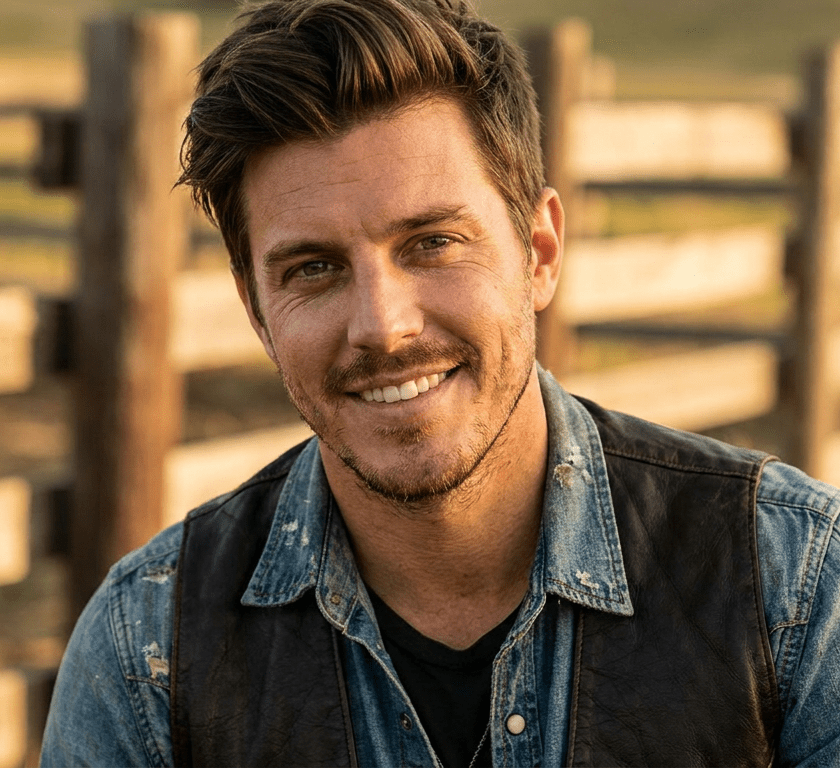
Your music often feels cinematic, almost like scenes unfolding in a film. When creating a song, do you visualize the story first, or does the sound naturally lead you toward the imagery?
My process usually starts with insomnia. I’ll be laying in bed at night, trying to sleep, and that’s when the lines start hitting me. Sometimes I’ll fall asleep on a melody, but more often than not, I have to get up and get those words down while they’re fresh. I really start to visualize the story when I’m in the thick of the writing process. I’ve always wanted my lyrics to flow as if they were part of a film script—widescreen stories for your ears.
Growing up in Mobile, how much has Southern culture and environment influenced your storytelling, songwriting themes, and overall sound?
It’s influenced everything. Growing up in the South, you’re raised on a steady diet of Country music and Classic Rock ‘N’ Roll. Both genres are huge in Alabama, and they both seeped into my DNA while I was growing up. I’m definitely not a city kid; I’m a product of empty highways and porch lights. That atmospheric loneliness you find on a dirt road in the middle of the night is a primary color on my palette.
Artists like Zach Bryan and Brantley Gilbert are often praised for their honesty and grit. How have artists like them influenced your approach to writing emotionally transparent music?
Those two have been massive inspirations, especially as I navigate this pivot. They prove that you can bridge genres without losing your soul. Their approach to transparency showed me that you don’t have to choose between “Rock” and “Country”—you just have to choose “Truth.”
Your debut album, Everything I Didn’t Say, connected strongly with listeners and crossed major streaming milestones independently. At what moment did you realize the project was truly resonating with people?
It was when I started looking at the engagement on TikTok and YouTube. I try to stay on top of my notifications, and seeing people use my sounds to tell their own stories was a huge “lightbulb” moment for me. It’s one thing to get plays; it’s another thing to see an Archive of real people being vulnerable with your music. “Letting Go of You” started the fire, but seeing tracks like “Don’t Trip,” “Setback,” and “Tonight, I Miss You” all hold their ground proved that the audience was staying for the whole story.
The phrase “Real Life Stories” is central to your identity as an artist. Why is authenticity so important to you in an era where music can sometimes feel overly polished or manufactured?
In a world where everything is digital and often over-produced, I think people are starving for something that feels humanly imperfect. To me, authenticity is the only thing that actually scales. If a song is manufactured, it might get a click, but it won’t get a “save.” I want my music to be a vessel for the things we swallow in daily life—the apologies we never sent and the questions that linger. If it’s not real to me, I can’t expect it to be real to the listener.
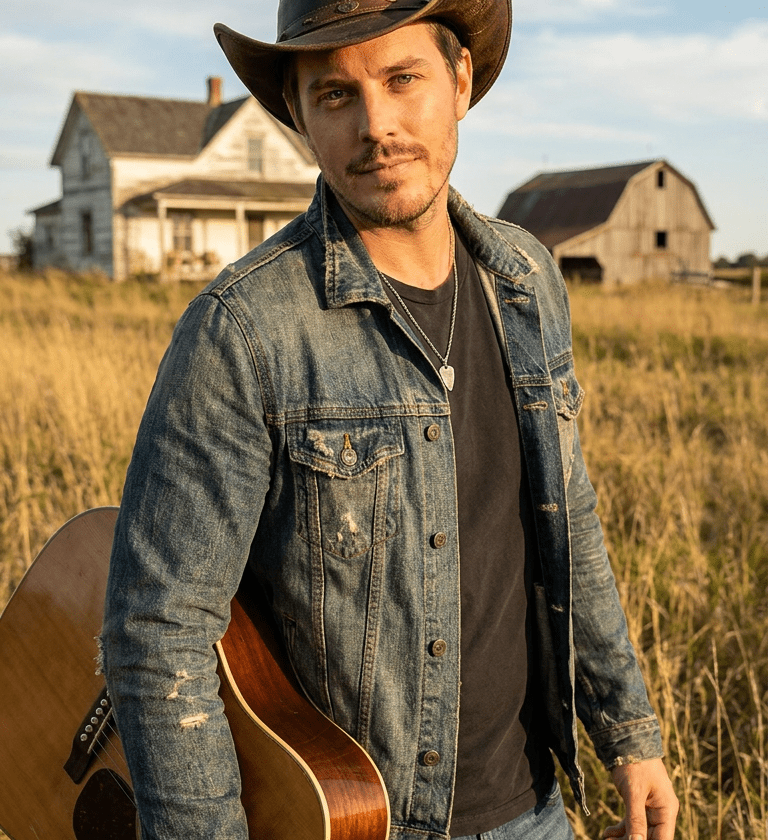
The upcoming Knowing the Risk EP already sounds like an important chapter in your career. What themes or emotions can listeners expect from the project as a whole?
The EP is a journey of resilience. It starts off in a “happy” place with the title track, “Knowing the Risk”—it’s about that terrifying but beautiful feeling of falling for someone even when you know the danger of getting hurt. From there, the heartbreak sets in. You have the longing of “Headlights in the Drive” and the realization that “Nothing Lasts Forever.” But I didn’t want to leave the listener in the dark; the EP ends with “Back to Me,” which is about the process of picking yourself up and finding your own strength again.
As an independent artist building momentum organically, what have been some of the biggest challenges and lessons you’ve faced while growing the Eye of TJ project?
The biggest challenge is definitely the “Multi-Platform” juggle. I’ve found that growing on YouTube and TikTok feels more intuitive because those platforms prioritize discovery. Instagram and Facebook, however, are a different beast—they require a more personal, “behind-the-scenes” approach. Learning that each platform is a different “room” in the Archive has been a huge lesson.
Looking ahead, what is the long-term vision for Eye of TJ, and what do you hope listeners feel or take away after experiencing this new era of your music?
Long term, the vision is to continue exploring both Rock and Country. I love the freedom of releasing short, high-concept EPs like Knowing the Risk to explore
specific moods while I work on the larger narrative. As I release this EP, I’m already deep into writing my second full-length album, due out early next year. It’s going to be a return to a much heavier, more intense Alternative Rock sound—even heavier than the debut. I want my listeners to know that the “Empty Highway” is always evolving, but the grit remains the same.