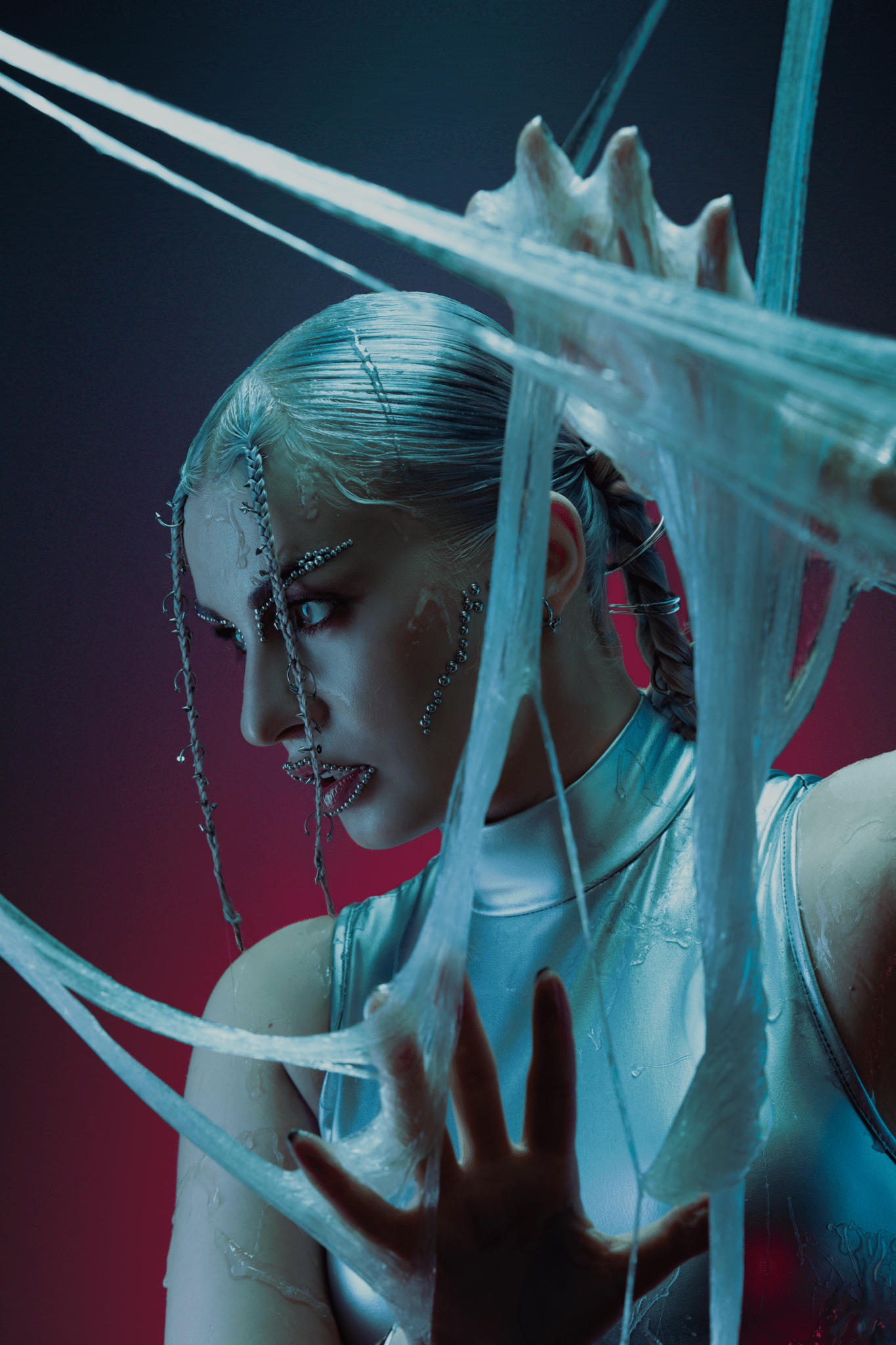
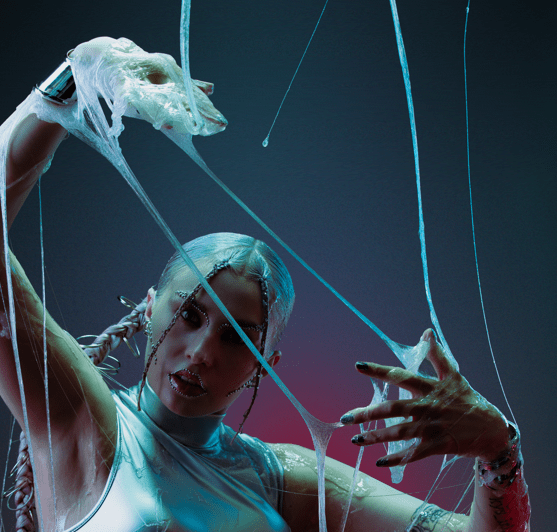
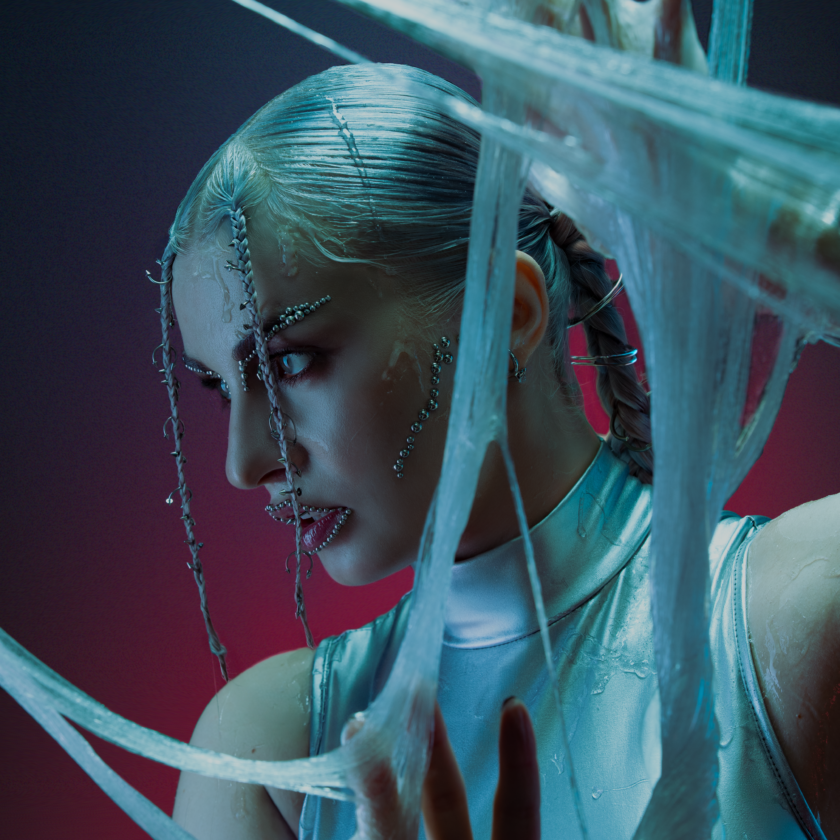
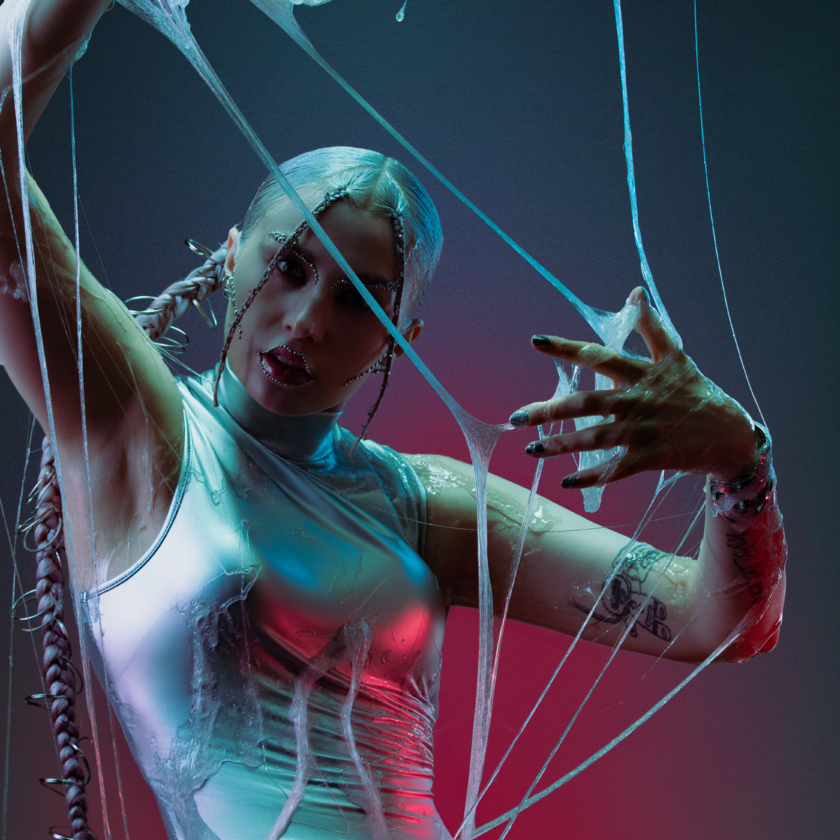
There’s a rare kind of artist who doesn’t just make music but builds entire worlds around it—where sound, image, and concept exist as one unified experience. 4ra 4ra operates precisely in that space. With CHROMEsoME, they present a project that feels less like a conventional EP and more like an immersive audiovisual universe, shaped by a distinct creative vision that blurs the line between the physical and the digital.
Rooted in a background as a digital artist and painter, 4ra 4ra approaches music with a visual instinct, where every sound carries a corresponding image and every concept extends beyond the tracklist. The result is a project that explores identity, technology, and transformation with striking clarity—inviting listeners not just to hear the music but to step inside it.
In this interview, 4ra 4ra unpacks the ideas behind CHROMEsoME, from the concept of “uploading” identity into something fluid and limitless to navigating authorship in an AI-driven era. It’s a thoughtful and forward-facing conversation that captures an artist pushing at the edges of creativity while maintaining a clear sense of control over their evolving world.
CHROMEsoME feels like more than just an EP, it plays out as a full audiovisual world. What was the original idea behind the project, and at what point did you realize it needed to exist beyond just music?
From the very start. I’m originally a digital artist and painter, and I always have visual ideas that accompany my music—it’s an important part of my creative language.
You describe the project as something listeners “upload themselves into.” What does that transformation mean to you on a personal level, and how do you hope audiences experience it?
“Uploading yourself into” is about crossing a boundary between body and signal—turning identity into something fluid, transferable, almost abstract. You take everything that’s heavy, emotional, physical, and compress it into pure experience, something that can exist beyond you but still be you. In that state, you’re not fixed anymore—you’re fragmented, multiplied, reinterpreted. And I love that tension, because it questions what’s actually essential in a person when you remove the body and leave only the imprint.
The EP explores identity in a hyper technological future. How do your own experiences with digital spaces and art influence the way you approach that theme?
I’ve basically grown up inside digital spaces. That’s where the whole identity thing comes from: you can rebuild yourself endlessly online, but it also starts to blur what’s actually you. With art, I’m always translating that glitchy feeling into visuals and sound — like identity getting compressed, remixed, upgraded, corrupted. So the EP is just me pushing that idea: if you live in a hyper-digital world, identity stops being fixed and becomes more about projection—what you want to be or the role you choose to play.
There is a strong narrative arc running through the project. Did you map out the story from the beginning, or did it evolve naturally as you were creating each track?
I had the whole concept in my head from the start, and the tracks came later, built around that arc.
“CHROME UP” introduces the idea of chrome as both armor and identity. What inspired that metaphor, and how does it connect to your real life experiences or observations?
It’s about becoming untouchable, optimized, almost god-like, but at the cost of anything messy or human. Sometimes, we have to be exactly like this to get someone’s attention, to step out of our comfort zones, or to stand up for ourselves. For me, it’s like an invisible shield we put on every day to face this reality. It should awaken the inner power of listeners.
On the title track “CHROMEsoME,” you explore the tension between organic identity and artificial enhancement. Do you see technology as something that ultimately empowers us or distances us from ourselves?
It’s already empowering us in some way. Humans sit at the top of the food chain largely because of technology, so yeah—it clearly has the potential to push us even further. The whole “cold machine brain” or zombie-paradox scenario feels less likely, but we still think in what ifs for a reason. That mindset is part of our culture—it’s how we stay ahead. Imagining worst-case scenarios isn’t paranoia, it’s preparation. It helps us stay aware and set the right boundaries and regulations before new technologies actually become a problem.
“MUGSHOT TYPE” touches on resistance against algorithm driven identity. How do you personally navigate being an artist in a system that constantly tries to categorize and define you?
Even being unhinged is a category, so I just go with the flow of labeling because it’s part of every indie artist’s marketing strategy. If you ignore it, you might stay unique—but you could also end up invisible in some way. And honestly, it’s better to have listeners than to be completely unseen.
The use of your own AI voice clone on “AGI” is a powerful creative choice. What did that process teach you about authorship, control, and the future of artistic expression?
I developed the clone by training a text-to-speech model on my own recordings, so the outputs are mine. This wasn’t my first AI song, though, I previously created a track with GrimesAI, which became the first officially registered AI song in Czechia, so I was already well informed about authorship at the time. I see AI as a powerful tool—if you curate it and build on it as part of your own work. But I’m not a fan of fully AI-generated songs or art. Even if someone is a great prompt designer, it still feels like borrowing—or even stealing—from others’ work. I think there should be clearer regulations and visible labels for fully AI-generated music. The way streaming platforms are training AI on real artists’ catalogs honestly worries me, and it’s not something I support.
You handle both the sonic and visual direction of your work. How important is it for you to maintain full creative control across every aspect of a project like this?
When I handle everything, it stays in one style—audio, image, and story all synced, like a Gesamtkunstwerk. I’d also like to work with a bigger team, but for now I do it alone because I work on tight budgets.
With CHROMEsoME pushing your concept and sound further, where do you see your artistic evolution heading next, and what new ideas are you excited to explore?
I remixed the whole EP into a harder techno style, which I’ll be releasing gradually this summer. And I’m currently brainstorming the new 4ra 4ra era, while taking singing and dancing lessons to expand my craft.