
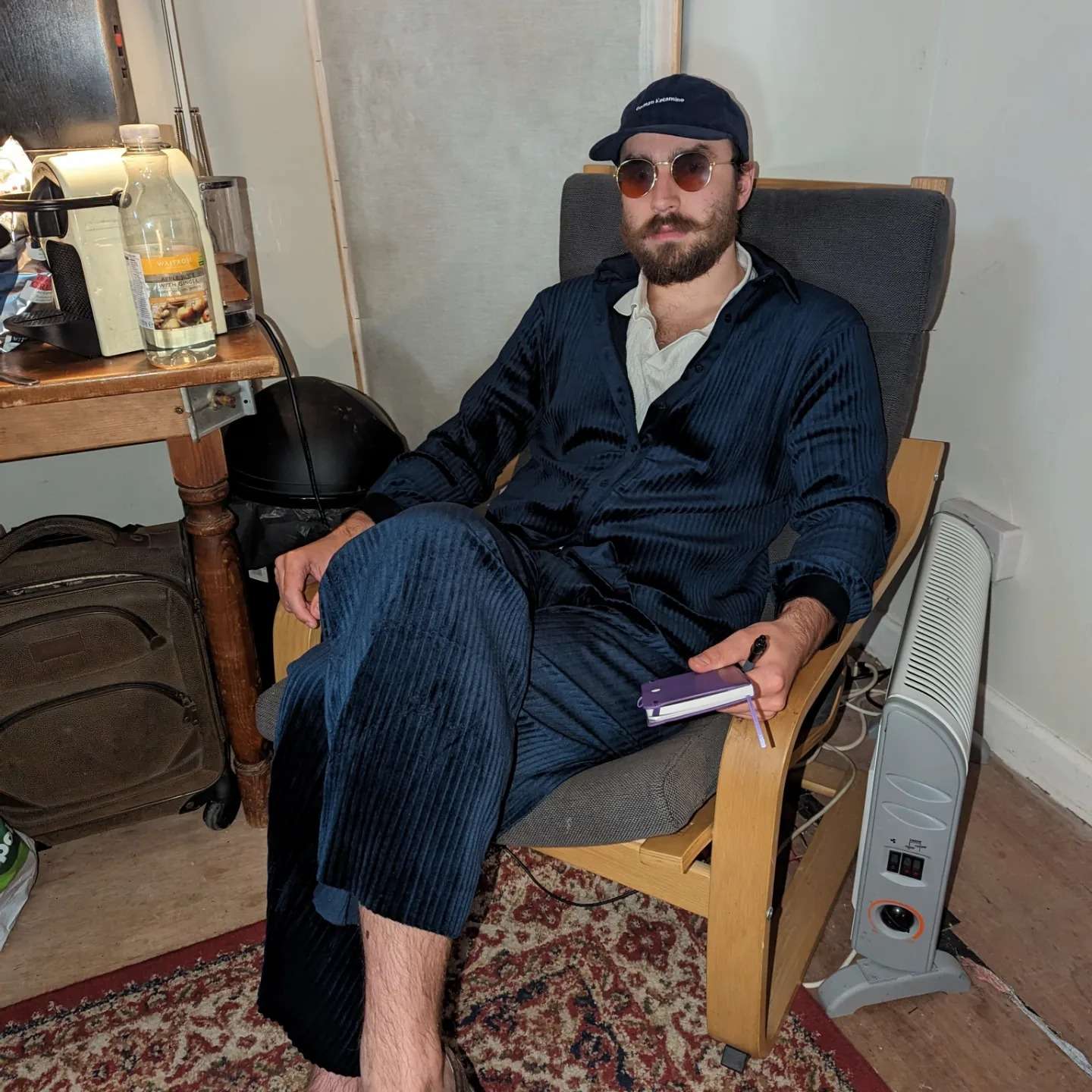
There’s something deeply compelling about artists who allow their work to unfold at its own pace, who resist the pressure of immediacy in favour of something more considered, more lasting. Curly Mouth sits firmly in that space. With Watermelon & Ginger, they deliver a body of work shaped not just by time, but by lived experience, introspection, and an unwavering commitment to authenticity.
Spanning five years and multiple chapters of life, the album feels less like a traditional release and more like a carefully preserved timeline, one that captures growth, uncertainty, and quiet moments of clarity with remarkable honesty. It’s this patience and emotional depth that sets Curly Mouth apart, giving their music a sense of intimacy that lingers long after the first listen.
In conversation, that same thoughtfulness carries through. There’s a clear sense of purpose behind the artistry, an understanding that music, at its core, is not just about sound, but about documenting life as it happens. What follows is a reflective and articulate insight into the mind of an artist who values substance over spectacle, and who continues to evolve on their own terms.
Watermelon & Ginger was developed over a five year period across different cities and stages of your life. Looking back, how did those changing environments and personal experiences shape the emotional core and sonic direction of the album as it gradually took form?
Honestly, over the stretch of those 5 years I think I was losing myself and getting further away from the person I recognised and the only thing I had as a compass were these songs. The songs weren’t shaping my emotional core, I think they were my emotional core. I could return to the songs again and again over the years and develop them and know that one day they would turn into the album I have now. I think this album taught me the art of patience – and moving from place to place forced me to be patient and believe that the moment to record the songs would present itself when I was ready.
This project reflects a long stretch of balancing creative ambition with everyday life, work, and uncertainty in your late twenties. How did that push and pull between responsibility and artistry influence the themes and honesty that ended up on the record?
I think, for a start, having to balance creativity and daily commitments became difficult for me and for a while work and the blur of daily life was winning! I think the fight between being creative and wanting to make music and instead having to go to work everyday definitely hollows the soul. I think it does for anybody regardless of what they want to do outside of work. I found myself feeling a little lost and isolated at times and this definitely came through in the lyrics. Life gets on top of you sometimes and I think I was feeling the void. I think when you start feeling like that you do have to be honest with yourself and address it and I count myself very lucky that I can use music to express my thoughts and feelings.
Zooming out a bit, how would you describe your overall journey as a musician from your earliest recordings to where you are now with Watermelon & Ginger?
The biggest development from my earliest recordings up to now is the improvement of ability on my instruments. I spent a lot of hours honing my guitar skills especially in terms of chord voicings. I am not trained or intrigued by music theory and I wouldn’t say I am very proficient or technical but I am very proud that I have carved out a style of my own on guitar. I think the deeper I have gone into writing music the stronger my vision and intentions have gotten. It feels good to be developing my craft and not stagnating.
What initially inspired you to start creating music under the Curly Mouth project, and how has that original motivation evolved over time?
I was in university and I had just lost my father to cancer. After he passed I used some money I was given to buy a simple recording set up that I could use in my bedroom. I had previously made an album under a different moniker in college and I didn’t identify with it anymore – I needed a new name and I didn’t want to attach myself to a genre. I wanted to feel free to make absolutely anything. It was also an excuse to learn how to actually record and produce music on my own. I made a lot of mistakes and learnt a lot. The result was my first album ‘Peace, Love and Septicaemia’. I think I would have been very lost without my music at that time.
You describe your music as a kind of ongoing diary. Outside of music, what other influences or daily experiences tend to find their way into your songwriting the most?
For me, as a songwriter, I think it is very important to live a life outside of music. You need to live life and surrender to mundanity to allow your mind to coast on different musical ideas and lyrics – it’s all about feeding the subconscious. Being a part of a community is important to me – talking to people and learning about their lives. On my album the song ‘Wendy’ is all about me getting to know my neighbour in parallel with how my life was changing over the months since moving into the house.
Another reference that seems to be gradually rearing its head in my songs more and more is snooker! I love playing snooker almost as much as I love making music. I think lots of musicians and songwriters tend to stay in their musical cliques and all their friends are musicians. For me, although some of my best friends are musicians, I tend to avoid being part of a social music scene. I build a little world in my local community, write my music and tirelessly work on my cue-action. It’s all about getting through the ball!
How do you personally define success as an independent artist, especially when working on long term projects like this album that take years to complete?
I think when you first pursue making music, in the back of your mind you have this secret dream of your music being heard by a big audience, getting radio play and perhaps making a living from it. Now, all those things are desirable, but they aren’t actually an essential part of being an artist. For me, success is the commitment to an idea and the ability to execute it (even if it takes 5 years to do so)! It’s that feeling of having a purpose and a hunger to create! For me, making music is a part of my lifestyle and it’s simply something I do. I think as I get older and deeper into my music, I just appreciate the pursuit of it. I like to release my music because I think the idea of random people potentially around the globe listening to it is exciting and funny but it’s not the reason that I make it for.
When you are not actively writing or recording, how do you usually reset creatively or find inspiration again when things feel stuck or uncertain?
Off the back of writing and recording an album I usually enjoy taking time to focus more on other areas of my life. Writing and recording is quite obsessive and it takes up a lot of headspace once you are committing to recording your songs. I take the time to exercise and see my friends a bit more. I tend to let loose a bit and sort of bask in the relief of finishing yet another project.
I also tend to be quite fortunate that whilst I am finishing one project, I’ve usually already begun to start writing little bits for a future project. My mind is always a couple steps ahead. I also tend to make an electronic album once every couple years – so that gives me a break from formal songwriting and allows me to focus more on beats and textures. Changing things up and mixing genres helps to keep things fresh and helps you to avoid feeling stuck.
Your sound feels both nostalgic and experimental at the same time. Who or what are some of your biggest influences, musical or otherwise, that continue to shape your artistic direction?
Some of my core inspirations musically are artists/bands like Belle & Sebastian, Father John Misty, Judee Sill, Paul Simon, Solange, Flying Lotus, Shuggie Otis, Marvin Gaye and The Who. Sometimes it’s the music itself that inspires me and sometimes it’s their approach to music and songwriting that I admire. I also like to study different painters and find out how they lived their lives and dedicated themselves to their craft. I think different music is always going to find its way to my ears, but for me learning about the people behind the music such as their triumphs and their downfalls is what helps me to keep learning and evolving.
How important is live performance to your identity as Curly Mouth, and do your songs tend to change or evolve once you start performing them in front of an audience?
I don’t often perform live, for me it’s something I like to do when I feel ready for it. I love the challenge of performing and so I quite like to not do it so often that it becomes routine. I mostly perform live solo with just my guitar as accompaniment. This means I have to strip the songs right back and bring a lot of energy to how I express myself onstage. I often use the stage to try out songs that aren’t fully formed yet. It gives me a chance to test my vocal abilities and see if I can capture the attention of the audience. I see performing as an outlet for being playful and expressive. That being said, I would like to get a band together to perform my songs from this album with a much fuller sound.
Looking back at Watermelon & Ginger, is there a particular track that feels most personal or meaningful to you, and what makes it stand out emotionally or creatively?
For me the song ‘The Flu’ is a stand out. Lyricallyit is very personal. It put a lot of thoughts and feelings into words I was previously unable to process or communicate. I am also proud of how the song came together in the studio. I was listening to the album ‘Future Games’ by Fleetwood Mac a lot and I wanted to capture some of that album’s essence on this track.
Connect with Curly Mouth: Instagram, YouTube, Bandcamp, Spotify