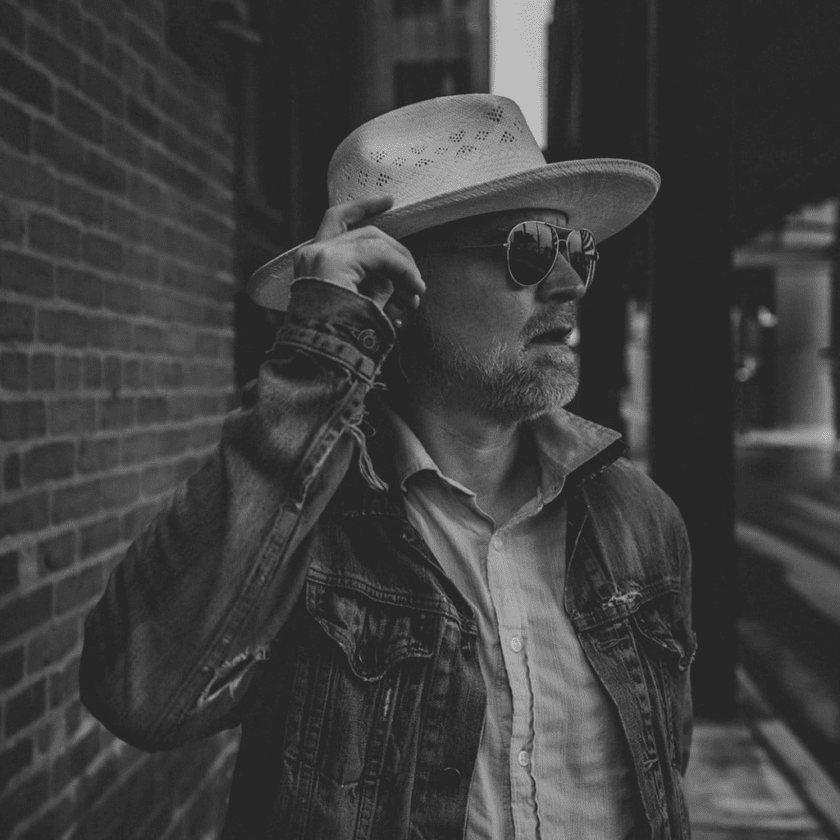
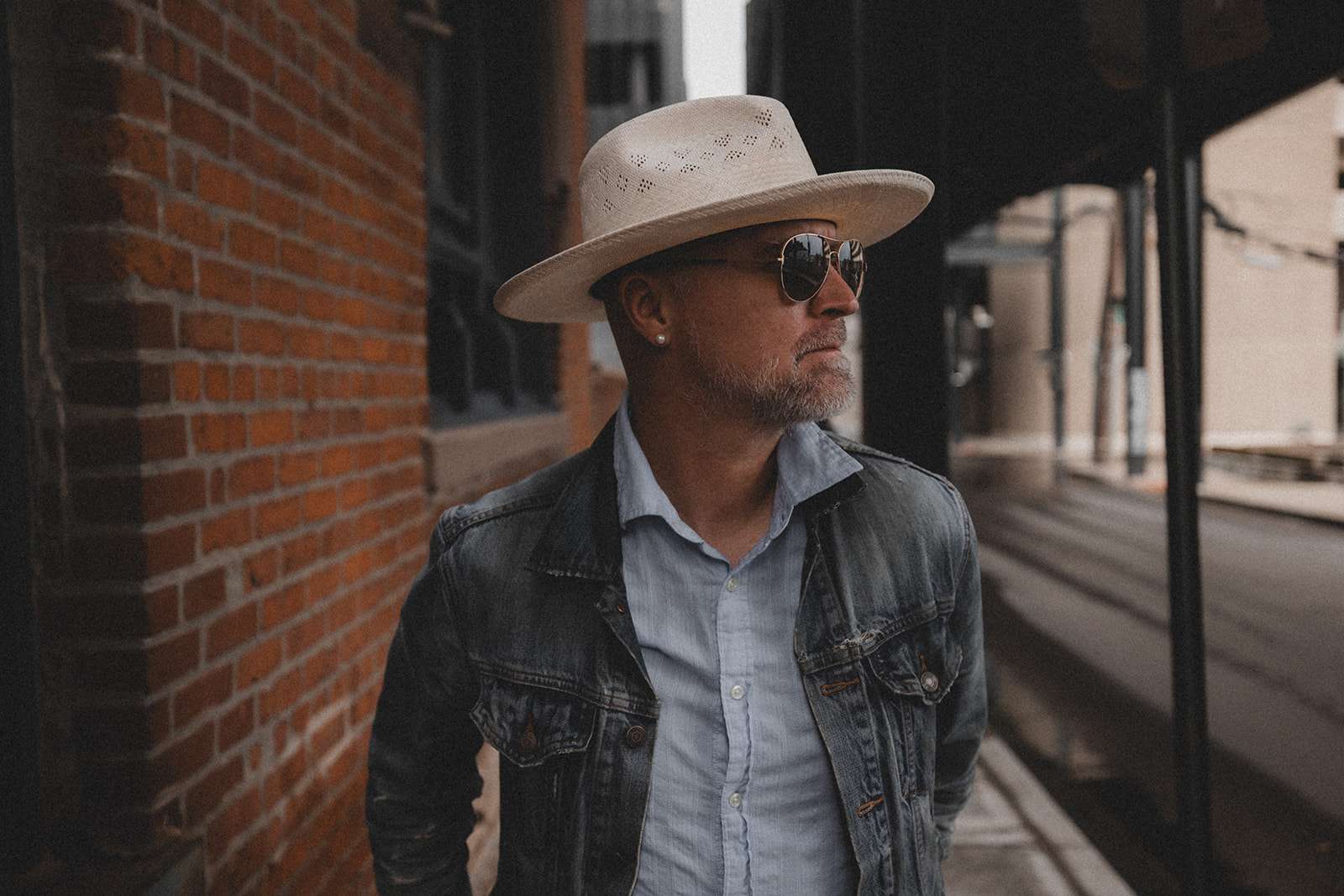
Billy Peake arrives at this moment in his career with a kind of clarity that only comes from time, distance, and a refusal to filter the truth. Manic Waves does not feel like a calculated return or a carefully mapped out statement. It feels lived in. It carries the weight of experience, the chaos of the present, and the strange, often uncomfortable humor that comes with trying to make sense of it all. After years of working within bands and stepping back from the traditional cycle of recording and performing, Peake reemerges with a project that is entirely his own, shaped by instinct as much as reflection.
In this conversation, he opens up about the mindset behind the album and the unexpected freedom that came with creating outside of a band dynamic. There is a sense of exploration throughout his answers, but also a quiet self awareness. He is not chasing perfection or mass appeal. He is chasing something honest. That honesty runs through every layer of Manic Waves, from its blend of indie rock, power pop, and new wave textures to its willingness to sit with difficult themes like political division, generational anxiety, and the emotional complexity of parenthood.
What makes Peake’s perspective especially compelling is the way he balances intensity with humor. Even when confronting heavy ideas, there is a looseness in his approach, a reminder that music can carry weight without becoming heavy handed. His reflections on family, identity, and the uncertainty of the future give the album a deeper emotional core, one that lingers beyond the surface of its sound.
This interview reveals an artist who is not trying to return to who he once was, but instead embracing where he is now. Thoughtful, restless, and unfiltered, Billy Peake is creating from a place that feels both deeply personal and quietly universal, inviting listeners to sit with the contradictions and find meaning somewhere in between.
Manic Waves feels like an album built on contradictions, balancing humor, anger, and tenderness. What was your mindset going into this project, and did you always intend for it to hold those opposing emotions together?
I’d like to pretend that I had a master plan, but I didn’t. For the most part, I just sing what I know. My lyrics are typically inspired by what’s happening around me, or the world, or a reaction to something that I’ve read or watched. I’m a middle-aged dad, watching the world eat itself, trying to figure out how to make sense of it all.
After spending years in bands and then stepping away from music, what brought you back to writing and recording on your own, and how did that time away shape this album?
Well, I never stopped writing or noodling. I just stopped getting together with my bandmates to create. And I also stopped playing shows. The great thing about being in a band is that there are so many opportunities for instant gratification, especially when you play a show. So I think that taking some downtime to write music for me, without a definitive plan for how and when it will come out, made me a bit more contemplative. And a little bit more adventurous.
This is your first solo project where you were not working within a band dynamic. How did that freedom change your songwriting and decision-making process?
Obviously, a lot of the songs still have a rock band construct. But I had zero concerns about making stuff that would easily translate to a live show.
At first, it was exhilarating. The only person I had to please was me, and I definitely had fun exploring sonically.
But then I started to second-guess my own taste! The only people who heard the ideas in progress were the guest musicians and Mike Montgomery, my friend and mixing engineer. But those folks were very encouraging. And I also sent some rough mixes over to my friend and bandmate from Bicentennial Bear, Adam Dowell. He has a great ear and is brutally honest. So I knew he wouldn’t sugarcoat it. I’m paraphrasing here, but Adam was like, “man, keep going, you are onto something.”
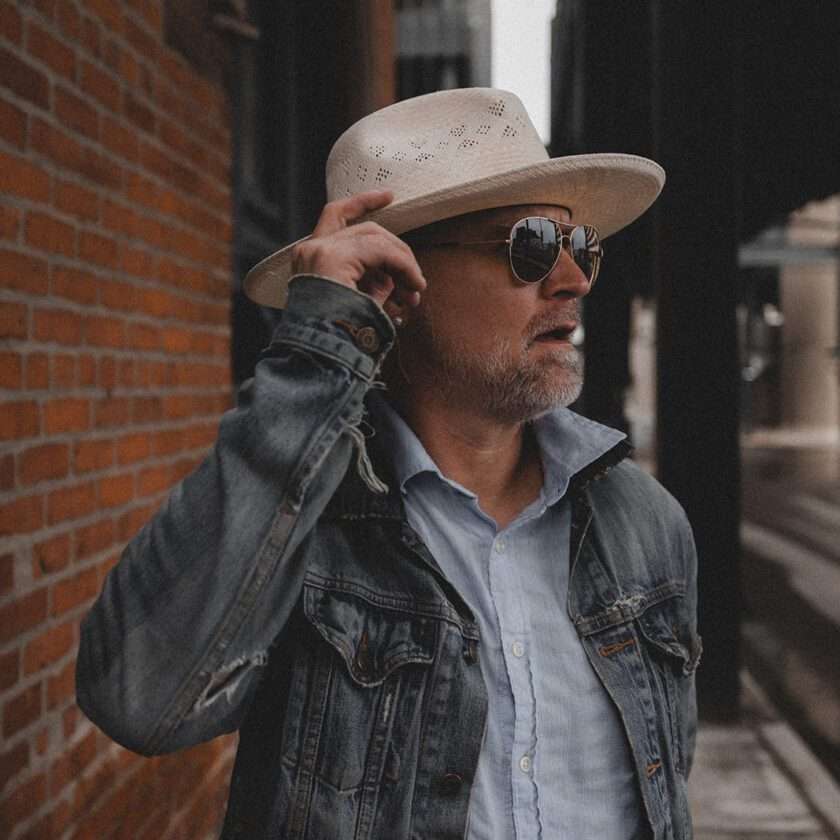
The album tackles themes like online outrage, political division, and generational frustration. How do you approach writing about heavy topics without losing musicality or accessibility?
I’m not sure I’ve ever had any musicality to lose. But I appreciate the sentiment!
Honestly, I wish my music was more accessible. I got a lot of vinyl LPs in my loft that I need to sell! But the main reason I write and record is the release. I have to create. If not, I will implode.
When you think about it, artists who’ve inspired a paradigm shift probably never thought about accessibility, ya know? They had the conviction to do something original. To follow their own gut. Love them or hate them, in my lifetime it’s been Prince, Van Halen, R.E.M, Madonna, Nirvana, Radiohead, Jay-Z, Taylor Swift. I’m missing a few. But none of them showed up fully formed. But all of them evolved into something radically unique that spawned imitators and, in some cases, backlash because they were sooooo transformative.
Of course, that’s not me. I am not suggesting that my refusal to consider accessibility is going to be the first brick laid in the Dad Wave revolution that destroys mediocre, passive rock music. And I’m obviously inspired by other artists and styles. This isn’t godforsaken art rock. F that pretentious noise.
But I want to forge my own way. Good or bad, there is only one me. I am going to write music for myself that I hope resonates with others.
Cue stock video footage of not frumpy but also not chic people standing around a turntable in a tract house dining room. A voice booms:
“Do you like fuzzy guitars with rad synth tones? Are you nervous about the future of mankind? Do you have a short attention span? Have you ever taken a medical gummy and teleported to outer space where your greatest discovery was empathy for your much-maligned, deceased father? If you’ve answered yes to any of these questions, ask your doctor if Manic Waves by Billy Peake is right for you!”
And let’s skip the side effects, dear reader.
There is a strong thread of dark humor throughout the record. How important is humor to you as a tool for dealing with serious or uncomfortable subjects?
I definitely lean into humor when it makes sense. What was the line? A spoonful of sugar helps the end times go down? It’s not that I’m afraid of being super serious. But sometimes I need levity. And joy.
Everyone is trying to find their joy. The thing that confounds me is how some people find great joy in being cruel. And it’s our job to call those bitches out.
Songs like “Inadvertent Trip” and “Little Glow” feel deeply personal, especially in relation to family. How has becoming a parent influenced your perspective as a songwriter?
I knew that I would embrace parenthood. And I am very fortunate to have a patient, supportive, loving partner. But I really underestimated how intense parenting would be. The love. The concern. The pride. All of it. It’s bonkers. I routinely bounce between elation and nausea. I love them so much, and they bring me incredible joy. The nausea is from the uncertainty.
I’m sure previous generations of parents felt like they were living in uncertain times. During the World Wars. The Great Recession. The Polio Outbreak. The Cuban Missile Crisis. But as an American right now, our society feels like it’s on the brink of collapse. And we’re kinda doing it to ourselves. And then you throw AI into the mix, knowing it’ll ultimately play an even greater role in warfare and disinformation, and it’s like, “how can I give these kids good advice or help them prepare for a future that is so cloudy?”
My songwriting used to be solely focused on my welfare and the royal we. But now my motivation for questioning everything is for their sake. So even if I’m not mentioning them, they likely spurred the emotion.
The other thing I didn’t consider was how I would re-litigate my own childhood and my parents’ role in my development or lack thereof. I’ve found empathy for my parents in places I never expected. But I also have a lot of serious questions that will never be answered. “What the hell were you thinking?”
Your sound blends indie rock, power pop, and new wave influences. What artists or records have had the biggest impact on shaping the sound of Manic Waves?
I’m a guitar player and singer. Well, I used to sing. Now I yell, partially in tune. Anyhow, this was the first time I wrote and played the bass and keyboard parts on a record.
Dear listener, when I play bass, especially when I write songs on bass, I want to make your ass shake a little.
I also love the synth sounds from the early 80s. Since a lot of the record broaches darker topics, it’s probably good that gravitated toward nostalgic sounds from when I was young. For example, when I hear the keyboard lines from “Don’t You Want Me” by the Human League or “If You Leave” by OMD, I am transported. I love those sonics.
I was also listening to a lot of Talking Heads, Haim, Wet Leg’s first record, Kate Davis, D’Angelo, and Paul and Linda McCartney’s Ram when I was putting together this record. But I’ll also forever be influenced by stuff like Superchunk, the Afghan Whigs, The Tragically Hip, Nada Surf, Sloan, etc. Moody, clever, guitar rock with singalong choruses. That’s the primary strand of my DNA.
Is that how DNA works?
Looking back at your earlier career with Miranda Sound and Bicentennial Bear, what lessons did you carry into this solo project?
Well, in those bands, I was the one responsible for booking the shows and pushing a lot of the buttons to make the mechanisms beyond the actual music move forward. So I didn’t have concerns about being able to make something happen. I just didn’t know if it would be any good.
The truth is that I am probably the least capable musician of all my bandmates. Technically, I am a musical buffoon. I just have a strong personality and the naivety to say, “I wrote a new song, let’s try it!” I also work very hard. But so do mules. So like I said, it was anybody’s guess if the project would sound rad. But once I got rolling, I rode the wave, and I love where I landed.
I didn’t answer the question. The lesson I carried into the project was follow your gut.
What does your creative process look like now compared to when you were writing with a band? Do you find yourself more instinctive or more deliberate when working alone?
For this record, instead of showing up at band practice with songs or collaborating on ideas with my mates, I had to flesh them out alone.
I think the sparks of a song are rooted in instinct. They just show up. The decisions about how to nurture those sparks are the more deliberate and thoughtful part.
With Manic Waves marking a new chapter in your career, what are you hoping listeners take away from the album, and where do you see your music heading next?
I just hope listeners give it a chance. It’s not for everybody. But it’s honest.
And even if you aren’t a middle-aged dude who is riddled with white guilt and anxiety about civilization careening toward the real-life prequel to RoboCop, you’ll probably enjoy the song about gummies and the excellent drum parts and horn parts that I didn’t play.
I think the next iteration will bop harder and dance even more.
I’d also like to say THANKS for listening to the record and for asking thoughtful questions.