
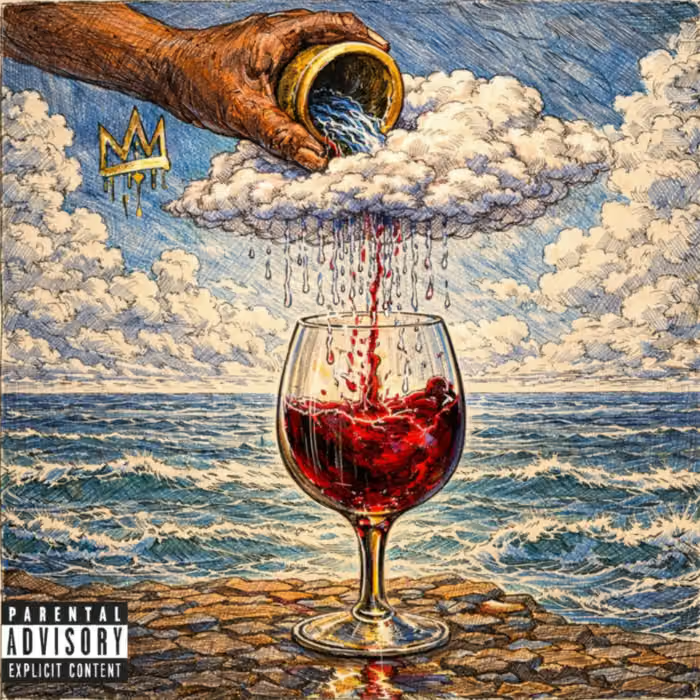
Some albums entertain. Others challenge. A rare few quietly reshape the way we think long after the final note has faded. Water to Wine, the collaborative album from Cashus King and Big O, belongs firmly in that final category. This is not an album chasing trends, streaming algorithms, or fleeting moments of virality. It is a carefully constructed body of work that embraces patience, reflection, and artistic purpose in an era where those qualities often feel endangered.
From the opening moments of “Barry Water,” the listener is invited into a world where every sound, every lyric, and every title contributes to a larger philosophical journey. The biblical inspiration of turning water into wine is not used as decoration or religious symbolism alone. Instead, it becomes a universal metaphor for human evolution. Water represents our beginnings: unfinished, uncertain, ordinary. Wine represents who we become after enduring hardship, discipline, faith, and time. That idea serves as the album’s emotional backbone, giving every track a sense of intention that extends far beyond its individual runtime.
What immediately distinguishes Water to Wine is its extraordinary cohesion. Fourteen tracks unfold like chapters from a single novel rather than isolated songs assembled into a playlist. The recurring imagery of rivers, rain, streams, hydration, drowning, holy water, and finally wine transforms the listening experience into something almost cinematic. Every title feels connected, every transition purposeful, every song another step toward understanding the larger narrative of transformation.

Big O deserves enormous recognition for production that is simultaneously understated and remarkably sophisticated. Rather than overwhelming listeners with unnecessary complexity, he creates environments where emotion naturally flourishes. Rich layers of instrumentation breathe with remarkable warmth. The live piano passages provide elegance without sentimentality, while carefully textured percussion and soulful melodic choices create an atmosphere that feels organic from beginning to end. The production never competes with the storytelling. Instead, it amplifies it, allowing every emotional shift to unfold naturally.
Cashus King’s writing is equally impressive. His lyricism possesses a maturity that resists easy conclusions or performative introspection. Instead of announcing wisdom, he earns it line by line. There is vulnerability without weakness, confidence without arrogance, and spirituality without preaching. His verses acknowledge struggle while refusing to romanticize it, creating an honesty that feels increasingly rare in contemporary hip-hop. Every reflection carries the weight of lived experience rather than manufactured profundity.
The guest appearances further elevate the project because they understand the assignment. Fashawn brings characteristic lyrical precision to “Precipitation,” while Blu, Frannie EL, and Shari enrich “Streams” with performances that deepen the album’s emotional current. P-Rawb, L.O.U., G-Holy, and Big Tone each contribute distinct perspectives without ever disrupting the album’s carefully maintained identity. Too often collaborative albums become showcases of disconnected performances; here, every guest strengthens the larger vision.
Perhaps the album’s greatest accomplishment lies in its refusal to separate technical excellence from emotional resonance. The sequencing is impeccable. Themes introduced early continue evolving throughout the record, creating moments of reflection that feel earned rather than imposed. Songs such as “Drownin’,” “Holy Water,” and “Like Lava for Water” reveal new emotional dimensions with repeated listens, rewarding listeners willing to engage beyond the surface. This is music that values longevity over immediacy.
There is also remarkable courage in the album’s pacing. At a time when many artists design records around thirty-second clips and instant gratification, Water to Wine asks listeners to slow down. It trusts that meaningful art deserves attention, and that confidence becomes one of its greatest strengths. Rather than chasing explosive highs every few minutes, the album gradually accumulates emotional weight until the closing title track feels less like an ending than a quiet revelation.
What ultimately makes Water to Wine exceptional is its humanity. Beneath the spiritual imagery and conceptual framework lies something profoundly relatable: the belief that no one is permanently defined by where they begin. Every disappointment, every setback, every unanswered question becomes another ingredient in personal transformation. Cashus King and Big O never claim that growth is easy, only that it is possible.
In an industry increasingly driven by disposable releases and algorithmic thinking, Water to Wine feels refreshingly timeless. It is thoughtful without becoming inaccessible, spiritually rich without becoming exclusive, and musically ambitious without sacrificing authenticity. More than a concept album, it is an artistic statement that demonstrates what can happen when vision, craftsmanship, and genuine purpose converge.
Few albums arrive with this level of conceptual clarity, emotional intelligence, and musical consistency. Water to Wine is not simply one of the strongest independent hip-hop releases of the year; it is a reminder that albums can still be experienced as complete works of art. It deserves to be heard in full, reflected upon, and returned to often, because like its central metaphor, its deepest qualities reveal themselves over time.