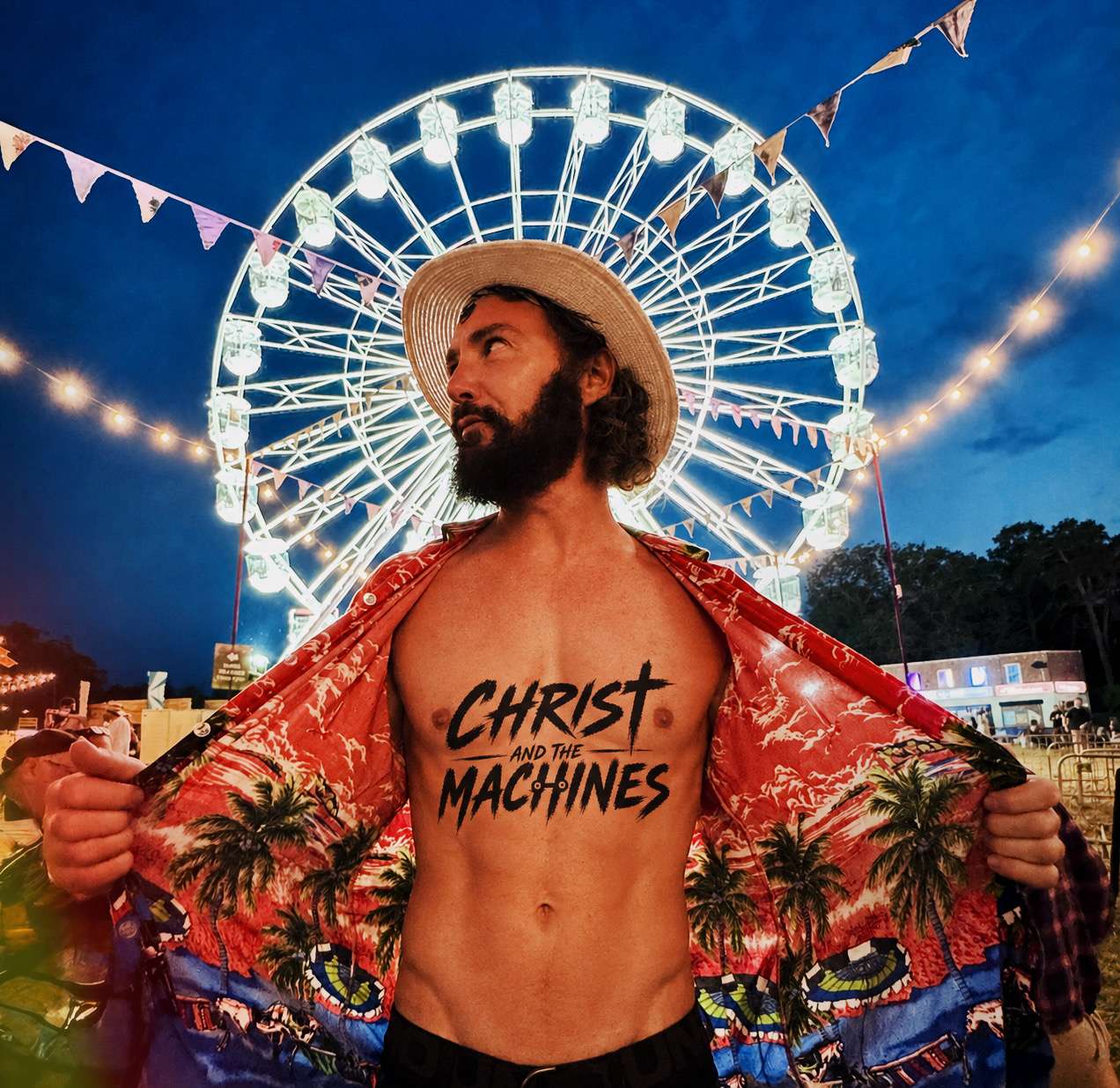
Some artists write from memory. Others write from observation. For Christ and The Machines, inspiration can arrive from somewhere far less predictable, sometimes in the middle of a dream, fully formed and demanding to be captured before morning takes it away.
That unusual relationship with creativity sits at the heart of a musical journey shaped by transformation. Once preparing to build a life around live performance and piano, an accident changed the course of the artist’s career, replacing stages and rehearsals with physiotherapy, recovery and eventually an unexpected immersion in software, programming and AI. Rather than bringing the musical journey to an end, the change opened another door.
Today, Christ and The Machines exists somewhere between the deeply human and the technologically unfamiliar. Love, memory, faith, nature and the subconscious become raw material for songs that refuse to settle comfortably inside one genre, while technology provides new ways to turn long-held ideas into finished work. Yet for all the possibilities offered by machines, the artist remains clear about where the heart of the music must come from: the human being behind it.
There is also a fascinating philosophical tension running through the project. Music is viewed as an ancient form of ritual and connection, while modern technology becomes another vessel through which those same human desires can be explored. The result is not simply a clash between faith and technology, but an attempt to understand what both reveal about our need to create, connect and search for meaning.
Recognition from BBC Radio 1 and BBC Introducing has marked important moments along the way, but approval has never been the ultimate destination. The deeper motivation is curiosity, the desire to explore ideas that may not have obvious answers and, perhaps most importantly, the determination to keep creating despite an unconventional path.
In this conversation, Christ and The Machines opens up about songwriting through dreams, adapting after life-changing circumstances, the creative possibilities of AI, the relationship between faith and technology, and the question that continues to sit beneath the entire project: whether greater intelligence will help humanity evolve, or simply give us new ways to repeat our oldest mistakes.
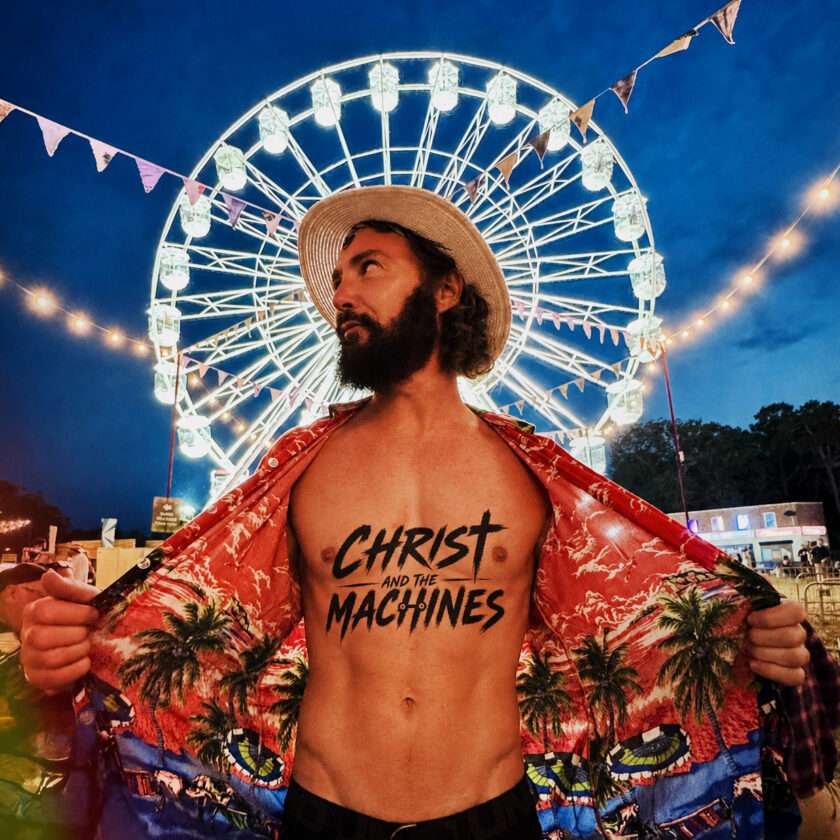
You describe songs arriving to you in dreams, sometimes almost fully formed. What is the first thing you do when you wake from one of these dreams, and how often are you able to preserve what you heard before it disappears?
A vivid dream leaves a lasting impression and usually has a profound effect on the day that follows. When it’s a song, I always have my dictaphone and dream diary handy. The first thing I do is sing or hum the melody before it disappears, then write down any key elements, lyrics, images or important memories that help tell the story of the song. How much I manage to preserve varies, but the strongest dreams tend to stay with me.
After the accident ended your path as a live performer, music remained part of your life in a very different way. Did losing the ability to perform change your relationship with songwriting itself, or did it simply force you to discover a different way of expressing it?
It changed my direction for sure. I was about to embark on a journey with my band, playing piano every day, working on new ideas for the set we would perform and looking for inspiration for new songs. Suddenly, I was doing physio and enduring a lot of physical and mental strain. I had to adapt, and that eventually led me into the digital world, learning new skills I never knew I had. I think long-term survival depends on how well we adapt to change. For me, it became important to keep moving forward and never give up.
You eventually moved deeply into software, programming and AI. How has learning to think like a programmer influenced the way you now think about creativity, songwriting and artistic experimentation?
Songwriting and programming are both very experimental, just in different ways. Songwriting has always given me the freedom to explore melody, sound and emotion, while programming introduced me to a different way of thinking, testing ideas, solving problems and constantly looking for alternative ways of doing things. I suppose somewhere between the two is where my style sits now. I enjoy creating unusual music that doesn’t necessarily fit into one genre, while also moving freely through styles that are more recognisable.
There is an intriguing contrast at the centre of Christ and The Machines: something as ancient and deeply human as faith placed alongside something as rapidly evolving as technology. What happens creatively when those two worlds collide?
Music is one of humanity’s oldest ritualistic art forms, emerging in prehistoric times alongside spiritual belief. It has always evolved through both religion and technology. Modern music remains ritualistic, even when listeners aren’t consciously aware of the ritual.
Modern technology is simply a new vessel for our ancient desires, to connect, transcend ourselves, and find meaning. I can’t tell you who or what God is, but perhaps Spinoza’s pantheistic view is accurate, that God is Nature, and Nature is God. If so, human creativity and the technologies we produce are not separate from divine reality, they are expressions of it.
Creatively, then, Christ and The Machines do not merely collide.
They become different languages for the same ancient search for the divine.
Your songs explore love, memory, faith, nature and the subconscious. Do you see these themes as separate subjects, or are they different ways of examining the same underlying questions about being human?
I don’t really see them as separate. They seem to find each other naturally when I write. Love becomes memory, memory enters dreams, and nature often becomes a way of describing something I can’t explain directly. Faith is about trying to understand things that aren’t always tangible. A lot of my songs begin in the subconscious anyway, so I’m not necessarily deciding what they’re about when I’m writing them. I think they’re all different ways of trying to understand what it means to be here, to love somebody, to lose something, and to make sense of experiences we don’t completely understand.
Because some of your musical ideas originate in dreams, where do you personally draw the line between conscious songwriting and material that feels as though it has arrived from somewhere beyond your deliberate control?
Musical ideas and lucid dreaming have been part of my life for as far back as I can remember, although the two haven’t always overlapped. I never really understood where the melodies came from or why my dreams were lucid. Even consciously, music could sometimes feel like being possessed, ideas would go around and around in my mind, driving me crazy.
Dreams gave me a different kind of unanswerable question. How could I be asleep for such a short time and yet have experienced so much? How could I dream about something before it happened? At times it made a mockery of reality, and I genuinely wondered whether I was going crazy.
For a long time it was my own secret world. I lacked the confidence to tell people what I was experiencing. As I began studying music and spending more time around creative people, I became more comfortable opening up about it. Now I’m older, and having explored thinkers such as Carl Jung, I have a better framework for understanding some of these experiences and what they might mean to me.
So I don’t think it’s really about drawing a line between conscious and unconscious songwriting. It’s more like tightrope walking my imagination. I never force an idea or expect one to arrive. I’m thankful for each day, and if it brings inspiration, that’s an added bonus.
Your experience in technology and AI could have changed the way you approach music dramatically. Instead, you suggest that it expanded how you could realise the ideas you already had. What is one creative possibility technology has given you that you never had before?
My biggest fear is probably living an unfulfilled life. I have so many ideas, both inside and outside music, songs I’ve written, projects I’ve started and things I’ve imagined but never managed to finish. For a long time, I thought it might never be possible to come close to realising them all.
Technology has changed that. It’s probably increased my productivity tenfold and given me ways to explore and complete ideas that previously felt beyond my reach. I don’t know what tomorrow brings, but while I’m alive, I feel I can at least attempt to realise those dreams.
I have a big imagination and technology gives me access to a wealth of knowledge and possibilities. Together, we make a formidable team.
Christ and The Machines asks where personal expression ends and the systems we create begin. As someone who has worked inside those systems through programming and AI, do you think technology is ultimately helping us express more of ourselves, or gradually influencing what we choose to express?
I think it does both. Technology gives us extraordinary new ways to express ourselves, but the systems we build inevitably influence our behaviour too. Algorithms already shape what we watch, read, listen to and increasingly what we’re encouraged to create. The danger is that rather than technology expanding human expression, we begin adapting ourselves to what the technology rewards.
For me, the best ideas still come from the artist, not the machine, memorable melodies, meaningful lyrics and something worth expressing. Art is an expression of the human soul, and the focus should still be on creating a great song, with or without AI.
At the same time, technology has lowered technical and financial barriers for people all over the world. It’s also made creating music more accessible to people who may have been disadvantaged by physical, mental or other barriers. Giving someone with a disability the opportunity to realise an idea they might previously have been unable to create is, to me, a great technological achievement.
So I think technology can influence what we express, but it can also give more people the freedom to express something that was already inside them.
Your previous work has received support from BBC Radio 1 and BBC Introducing. After everything that has happened in your life and creative journey since then, does recognition from the music industry still mean the same thing to you?
It’s not the be-all and end-all. As David Bowie once said, “never play to the gallery.” We shouldn’t create simply to please an audience or seek approval.
That said, recognition has meant a lot to me at certain points in my life. My first bit of airtime on BBC Radio 1 came when my favourite DJ at the time, Sasha, played a track I’d collaborated on during Annie Nightingale’s Friday night show. That gave me a huge amount of confidence to keep going. BBC Introducing recently took the time to speak in depth about my songwriting. That came at a difficult period in my life, so I’ll always appreciate their kind words and what they meant to me at that particular moment.
When I go right back to the beginning, I lacked confidence and people actually laughed when I said I was going to be a songwriter. There seemed to be this idea that only a certain type of person could write songs. I suppose my journey has shown me that there is an unconventional path if you have enough belief in yourself.
So recognition is wonderful when it comes, and sometimes it arrives exactly when you need it, but it isn’t the reason I create.
If Christ and The Machines is ultimately a conversation between faith, technology and human emotion, what question are you personally still trying to answer through the project?
Will technology help humanity evolve beyond the patterns that repeatedly lead us towards destruction, or will we simply use new intelligence to repeat the same mistakes? No, seriously, I don’t believe in absolute answers. My intrigue as a songwriter is exploring the unknown. I’ll end with a quote from one of my greatest songwriting influences, John Lennon: “Unknown is what it is. Accept that it’s unknown and it’s plain sailing.”