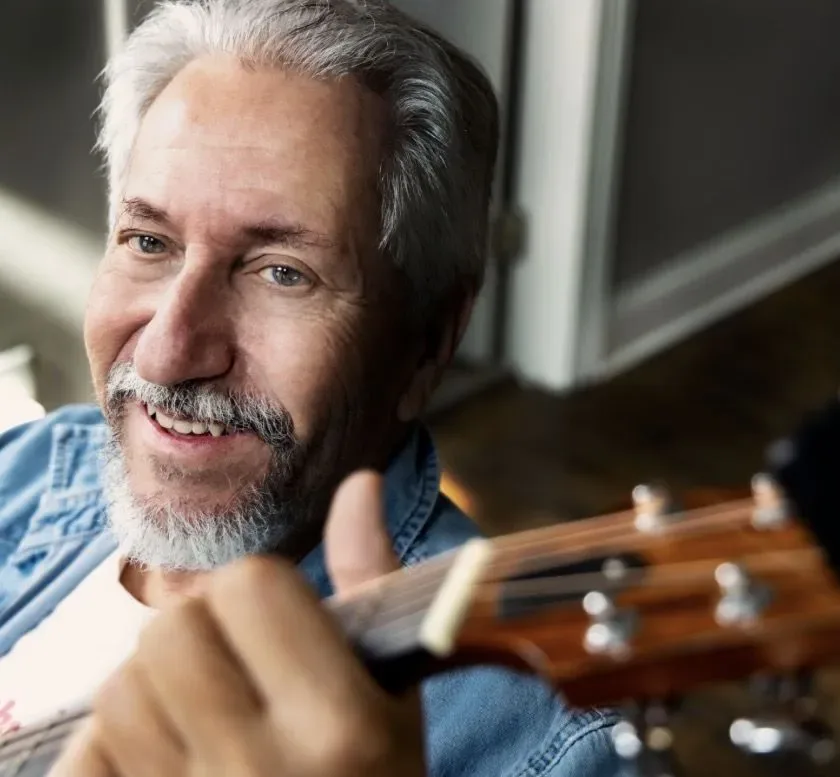
On his latest album, Jesus Drives a Subaru, singer-songwriter Richard Daigle brings together a collection of story-driven songs exploring love, loss, family, aging, and the complexities of human nature. In this interview, he discusses the inspiration behind the album’s unexpected title, how personal experiences shaped his songwriting journey, and why he uses music to tackle difficult subjects while leaving room for listeners to find their own meaning. He also reflects on the stories behind several standout tracks and the importance of finding hope, connection, and love through life’s ups and downs.
Your new album, Jesus Drives a Subaru, is described as a collection of short stories rather than a traditional album of songs. What inspired you to take this storytelling approach, and how did you decide which stories to share?
Telling a story in a song is a pretty typical approach for me but it wasn’t a conscious decision to make the album a collection of stories. It just turned out the songs I’d been working on and wanted to include on the album were story songs and seemed to relate to each other somehow. I guess you can chalk it up to serendipity and I’m fine with that!
The title track has a humorous and thought-provoking take on the question, “What Would Jesus Do?” What inspired the idea behind the song, and why did you choose such an unexpected title?
I wanted to write a song about a quirky, hippy Jesus and the first draft actually had “Jesus drives a Subaru” as a line in the third verse. My producer, Butch Ross, and I both looked at it and agreed it’d be great to use that as a title so I rewrote it. Using that line as the title and also first line, the song kind of wrote itself from there. I love it when that happens! I did have to chew on the chorus for a while but I think “doing good things is good theology” is a great message. I’ve always been a “kum ba yah, why can’t we all get along” kind of guy so it fits well in that respect.
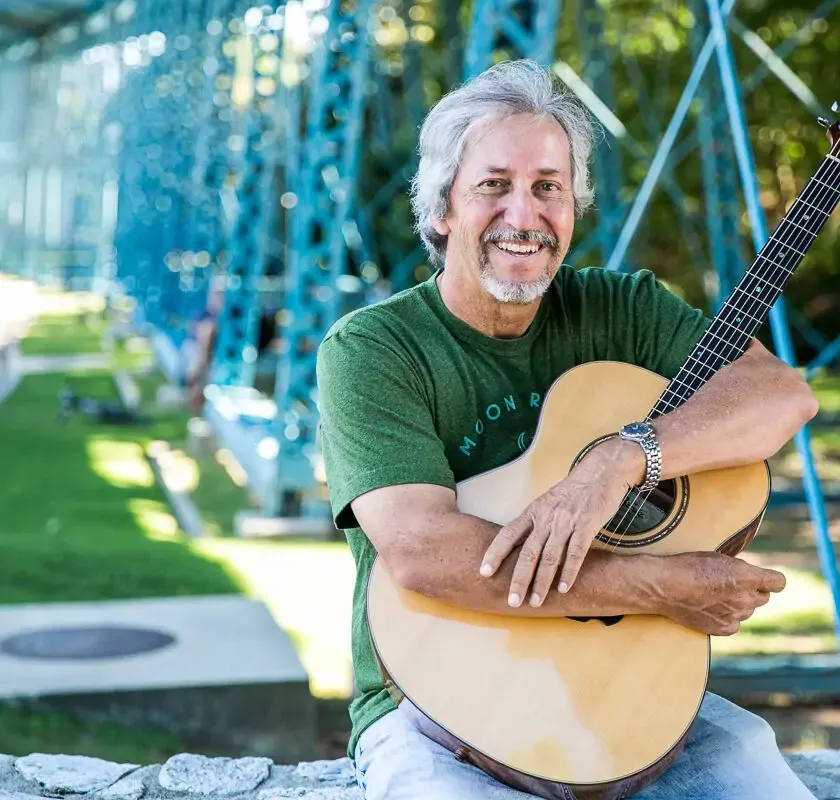
You describe yourself as a late-bloomer songwriter, having embraced songwriting after losing your wife of 34 years in 2014. How did that life-changing experience influence your relationship with music and help you find your voice as a songwriter?
Songwriting is all about learning to bare your heart and soul to the world. Even at my age, I’m still in the learning process of doing that. I had a great marriage to a great woman and losing her was like losing your right arm. You have to learn to live life differently. I think I pushed the pain away instead of experiencing it but then I started writing songs to try to express and understand what I was going through. When I started writing those early songs, like the very personal “Hey It’s Me” and the sweet and sad story song “The Best Part,” I had no intention of singing them with anyone other than me. Somehow a friend heard a song or two and told me about an open mic in Atlanta, I went and started playing my songs and things snowballed from there. Now, 12 years later, I’ve got four albums out, I’m playing 70-90 shows a year, getting good press and in general, seeing my music really turn into something. Having said all that, if the music would’ve only happened after losing my wife, naturally I’d trade it all to have her back. I’ve dated enough and heard enough stories from women to know what Jan and I had was rare. While I wish we could’ve had more years together, I’m so thankful for what we did have.
Several songs on the album tackle serious subjects, including PTSD in “John Lopez” and self-defense in “The Man Inside.” How do you approach writing about difficult human experiences while allowing listeners to draw their own conclusions?
I’d never think my songs would have much in the way of commercial success but I’d rather address important and difficult topics than write a love song (although I really DO want to write more love songs!) In the case of “John Lopez,” I saw the statistic of 20 vets a day taking their own life and it really floored me. How can our government send young men off to die for our country then turn around and not take care of those who make it back but not in one piece—physically or emotionally or both? It cuts across party lines and it’s disgusting and shameful how we don’t adequately fund programs to help our vets. John Lopez is a fictional character but at the same time, I’d say very truthful for many vets we’ve lost. “Man Inside of Me” started when I watched the Stephen King movie “1922,” a creepy movie about a man murdering his wife and enlisting his son to help. At the start of the movie, the man says “hiding inside of every man is another man.” That line really jolted me! We all have the capacity for great good and great evil, and I wanted to explore that. The melody in that song was almost just an instrumental…I loved it but didn’t have lyrics. As I started the song, it became a very natural marriage to that tune. In both of those songs, and in others, I always try to strike a balance of telling a story but giving the listener room to determine meaning for themselves. I think that’s how it works in life. We’re writing and living our own story while trying to understand what kind of character we’re living. There’s a hero and a villain in all of us.
Songs like “Confession” and “Together Alone” explore relationships beyond the idealized version of young love. What have your own life experiences taught you about love, companionship, and the complexities of long-term relationships?
With “Confession,” I was actually thinking of Jason Isbell’s song “Elephant,” which is a brilliant song that may be the saddest one I’ve ever heard. I love how he started it kind of midstream in a scene and with dialogue. I wanted to take that approach but all I really had to start was the scene of a man in bed seeing his previous night’s partner pulling up her jeans. That first line was like priming the priming the pump. Again, it was a case of a song dropping in my lap from above. I really love the characters in that song and there’s plenty of room for interpretation about the lives of the man and the woman. In “Together Alone,” I was looking at the stage in a long marriage or relationship when it becomes more like semi-content roommates than a loving couple. I think every long relationship goes through that phase. I tried to have one line in that song that gives hope that the couple will get through that phase and rekindle the love they had. I didn’t want it to be a totally depressing song! Ha!
“Catch” explores the relationship between a father and son through the game of baseball. What made you choose baseball as a way to tell this particular story, and does it reflect any personal experiences?
This song is true in all but the last verse. My son, now 44 and very successful in the business world, played four years of pro baseball in the Padres organization. I tried out for the school team as a fifth grader in Catholic school in Memphis, stepped up to the plate and eyed a sixth grade throwing pure heat, watched three pitches go by and then followed the instructions to step over to the line with all the others who were immediate cuts. That was my baseball “career,” but my son was gifted from t-ball to the pros. He and I were throwing a tennis ball back and forth at his home on Signal Mountain, TN one time and I started thinking about how he’s a grown man now with two sons of his own and how we are relating man to man now. I also thought about the movie “Field of Dreams” with that last scene that makes men cry, especially me. A simple game of catch “closes the distance from here to there” in more ways than one. In the song I wanted to add some tension in the relationship in the last verse but the reality is my son and I and my two daughters all have a great relationship. I’m so proud of all of them and their spouses. I’m a lucky guy to have them all in my life.
In “Lenny,” you tell the story of a struggling musician trying to make sense of life as his music begins to fade. How much of yourself or your experiences as a musician can listeners find in this character?
I don’t see me in that song as much as full-time musicians I know here in Chattanooga. These are people, unlike me, who started full-time in music as young people and need it to live both emotionally and financially. “Lenny” and the song “I Saw His Name” both deal with the mental health challenges creative people often face. I think it’s terrible that our society doesn’t value musicians, visual artists and other creatives in the way we should. It’s harder now more than ever for someone to make a living in music but we all need music! I had an idea for a project to help local musicians with mental health issues and I’m so pleased that a great organization named Be The Change Youth Initiative partnered with another group, Community Gains, to launch an 11-week program led by a local professional counselor to help local musicians here in East Tennessee and North Georgia. I know several musician friends who went through the program and benefitted greatly.
Your album touches on aging, loss, friendship, family, and mortality. Has getting older changed the subjects you feel compelled to write about or the way you look at life?
I’d like to write more happy love songs but at the end of the day, you can only write what’s inside you. I’ve experienced a lot of loss in my life, not just my wife but my parents, older brother and several friends, so that comes through in my music as well as thoughts of my own mortality. As I’ve gotten older, I know more about what I don’t know than what I do! I’m very fortunate to be in good health and still athletic, playing tennis and pickleball regularly. At the same time, the older you get the more you’re aware that body parts eventually break down and Father Time is undefeated. I’d like to think I’ll live to 100 and still be writing songs!
You close the album with “Gentle Night,” a song that approaches mortality by asking whether we will embrace the road when our time comes. Why did you choose this song to close the album, and what message did you hope listeners would take away from it?
Emily Dickson’s famous poem about death starts with the line “because I could not stop for death, he kindly stopped for me.” That line was in mind when I wrote this song. I think a song about the end of life is nice way to end an album. We can curse death, especially the way it takes away the ones we love, but we should also see it as a part of life. I’ve always loved the Jason Isbell song “If We Were Vampires.” In any loving relationship, someone is going to be left behind (unless they die at the same time, of course). You watch your loved ones go but you also know there’ll come a time when others watch you walk with that silent angel. The song starts, “I met you on the highway, walking backwards through the pain.” The “you” refers to the angel escorting you to the next thing after life. I wasn’t really sure what “walking backwards through the pain” meant when I wrote it but it really rang true. Now I see it’s revisiting the hard things in life before we finally say goodbye to it all.
You’ve built a strong musical presence in the Eastern Tennessee and North Georgia region, both as a solo artist and as a member of the ChattanooGuys. Looking ahead, what are your plans for sharing Jesus Drives a Subaru with audiences, and what do you hope listeners will remember most about this album?
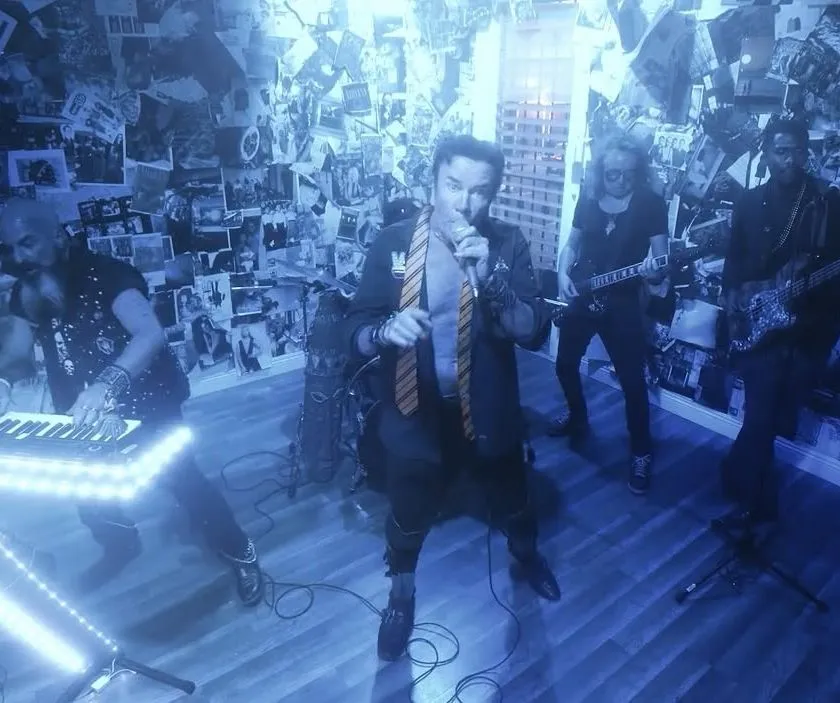
I play mostly solo but I love playing with The ChattanooGuys whenever we land gigs. The trio is me, my producer Butch Ross and Lon Eldridge. Both these guys are great songwriters and Butch is a gifted dulcimer player while Lon is a fantastic finger style guitarist. Lon plays lap steel and guitar on many of the songs on the album and as producer, Butch makes my music better, pure and simple. He also created a video for the Jesus song that’s fantastic and currently on YouTube. My publicist, Olivia Long, will continue to push the album and I’m working with Art Menius for a promotional push next year getting the album out to folk/Americana radio stations nationwide. This isn’t an album for casual listening. I think the songs are meaty and I hope people listen and, whatever their age or position in life, learn something about themselves and learn that love and hope are truths we should all embrace no matter what we experience in life. And of course I hope the Jesus song, or any of them, blows up on top song charts and garners top awards and accolades, lands me on late night talk shows, nationwide tours, and earns enough money to buy a big house and a Mercedes. I’m not holding my breath, of course. I’d settle for a Subaru!