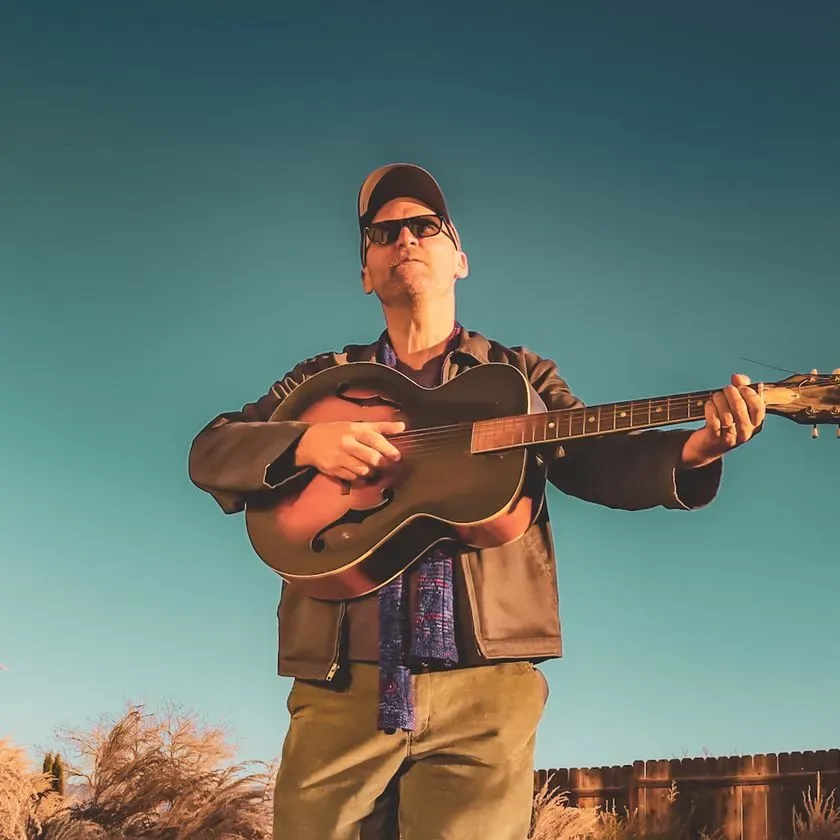
With his new single, “Oh Man This Country Living’s Got Me Down,” singer-songwriter Tom Andes delivers a witty take on the romanticized dream of country living, drawing on his own childhood experiences growing up on a semi-functional farm. Blending American roots influences, rockabilly-inspired melodies, and playful storytelling, the track showcases his ability to pair humor with deeper reflections on everyday life. In this interview, he discusses the inspiration behind the song, his love of New Orleans roots music, the creative freedom of collaborating with other musicians, and how his background as a fiction writer shapes his approach to songwriting. He also shares what listeners can expect from his upcoming debut full-length album, Wonderful Days.
- Your new single, “Oh Man This Country Living’s Got Me Down,” takes a humorous look at the romanticized idea of escaping to the countryside. What inspired you to write this song, and did your own childhood experiences growing up on a semi-functional farm influence the story?
My parents did the whole back to the land thing that I think a lot of people did in the early 1970s, but then I also went to college with a lot of people who I think had a romanticized idea about what it meant to live in the country, and I think I felt disillusioned about all that because my recollection of growing up on a farm was of things like the pipes freezing and bursting in the winter.
- The song is told from the perspective of someone who believes moving to the country will solve all his problems, only to discover that rural life isn’t quite what he imagined. What made you choose this particular character and perspective to tell the story?
The voice just kind of came to me, is the simplest way to answer this question. And once I had that first verse and the structure, things sort of filled themselves in from there. The character was someone I feel like I know, especially from college, so it was fun to write.
- You mentioned that the chord progressions were partly inspired by the classic rockabilly hit “Hello, Mary Lou.” How did that song influence the musical direction of your new single, and what other artists or sounds helped shape it?
I’m not sure this is something that people even hear. But when I was coming up with the guitar solo on this song, which echoes the vocal melody, it struck me that it’s reminiscent of “Hello Mary Lou.” I love that old rock and roll and rockabilly, and I think “Hello Mary Lou” is a great song. I think Steve Earle influences a lot of my songwriting, though he doesn’t tend to write songs that are ironic. And Wilco definitely influenced the way the song was recorded, the experimentation with sounds and textures.
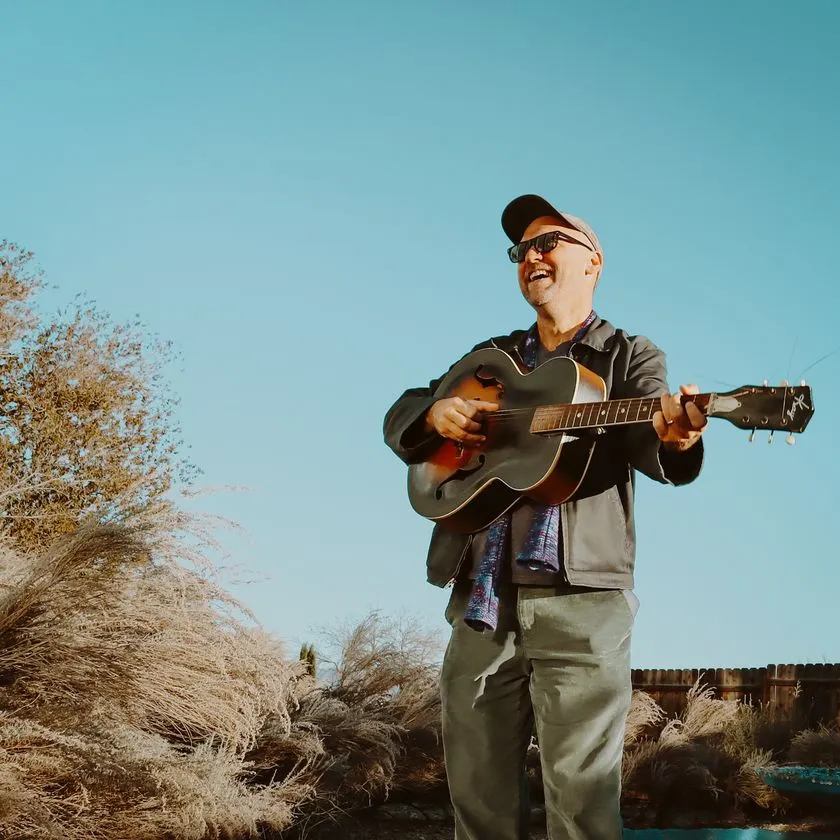
- You recorded the basic tracks live in the studio with acoustic guitar, bass, and drums. What do you enjoy about recording musicians together in the same room, and how does that approach affect the energy of a song?
This might be one of those things things that’s all in my head, but I feel like recording live captures a particular energy and vibe that’s really important to me. That was definitely true of most of the tracks on this record, where there’s an interplay between the guitars and the other instruments that was unique to every take. This one involved more overdubbing, as it was just the basic acoustic track we ended up starting with. But I think that still captures a particular energy.
- The track features some unusual musical textures, including pedal steel, mellotron, and distinctive backing vocals. How did these elements come together, and how important is experimentation in developing your sound?
All that stuff really comes from the collaboration that was part of making this record. I didn’t necessarily set out to experiment with those textures, but the producer, Matthew Tobias, and I both heard pedal steel on this, and the pedal steel player, Alex McMahon, is a terrific multi instrumentalist, so we just let him cook, basically, then incorporated what he’d done into the final track. Similarly, with the backing vocals, a lot of that involved getting ideas from the vocalists on the session, Clark Libbey and Carson Barry, and having fun. Because it’s a funny song, maybe that opened the door for that, too.
- Your songwriting often combines serious subjects like loneliness, heartbreak, and working-class struggles with upbeat, traditional American music. Why do you enjoy contrasting heavier themes with lively musical arrangements?
Maybe it’s a way of sneaking in the depressing stuff without clubbing you over the head with it. I also like stuff that works in more than one register. I think sometimes humor is a great way to lull your audience into being receptive to something heavier. I’m thinking of the British incarnation of the TV series The Office, which could pivot from humor to real pathos and was incredibly moving because of that.
- You discovered your passion for American roots music after visiting New Orleans at the age of eighteen. What was it about the city’s music scene that made such a lasting impression on you, and how did that experience shape your musical identity?
I grew up in a very white, very conservative, very Christian, very small town in rural New Hampshire. Not that there’s anything wrong with those things, but there wasn’t a lot of dancing on Friday nights. I think I moreover was starting to realize when I first visited New Orleans that all music I loved came from there. Nearly everything I grew up listening to had some kind of foundational debt to Black American music, whether it was rhythm and blues, blues, or jazz, and I started to feel that really profoundly when I first went there.
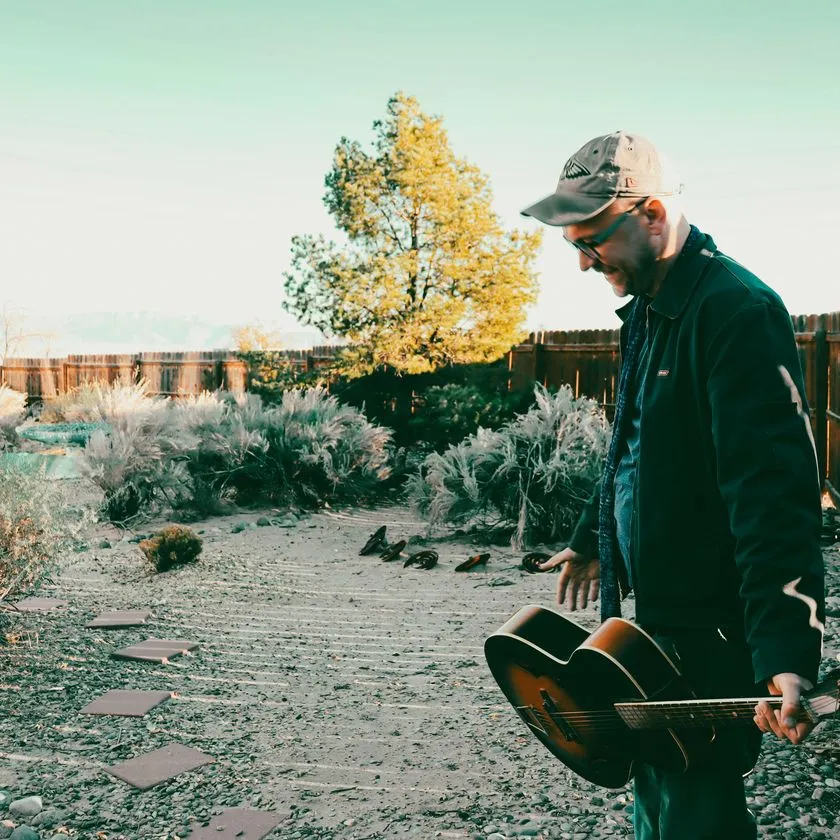
- You’ve performed with several groups throughout the Southwest, including the High Desert Playboys, DBGomez and the Bosque Boys, Juanita, and Karma Splice. How does playing with different musicians and bands influence your songwriting and approach to performing?
Mostly, I feel like I learn a lot from the people I play with. And I always enjoy hearing what different musicians do with my songs. That’s a source of real pleasure for me and helps to keep performing feel fresh and alive. Of course, it’s also nice to gig with people you’ve gigged with a bunch, who really know a song’s sweet spots. Even then, though, I feel like I enjoy leaving lots of room for people to improvise. And I have learned so much playing on other people’s songs, whether it’s about songwriting, playing, or just being a bandleader.
- Alongside your music career, you’re also an accomplished fiction writer, with work published in Best American Mystery and Suspense Stories and Ellery Queen’s Mystery Magazine. You also released your debut novel in 2025. Do you approach storytelling differently when writing songs compared to writing fiction?
That’s a really good question, and that answer is that I’m not sure. I often write songs with a guitar in my hands, and the act of singing the words is really important to finding the right words. Likewise, with a short story, I will sometimes read it aloud to myself, so they have that in common. I think story structure is similar, as well, at least insofar as there is usually some kind of turn I’m looking for. But then they’re obviously very different forms, with very different conventions, so as much as they share, I also approach them differently.
- Your first full-length album, Wonderful Days, is scheduled for release in 2026. What can listeners expect from this record, and how does it represent the next chapter in your evolution as a songwriter and musician?
A lot of these songs came out of the same burst of writing as the songs on my first two EPs, which I later collected as a compilation. Nevertheless, I think this new record represents an evolution in the writing and in the sound and approach to making the record. I think listeners can expect character studies and story-songs but also a a fun band record that sometimes really rocks out.