With her new two-track EP, “Wherever I Land,” international singer and performer Laura Scaglia returns to the city that helped shape her artistic identity: New York. What began with a spontaneous musical encounter in 2018 has evolved into an eight-year transatlantic friendship and an unexpected recording collaboration with producer Mike Muller and a talented group of New York musicians. Blending Americana, soul, and blues influences, the EP captures the spontaneity and authenticity of making music together. In this interview, Laura reflects on her New York journey, the stories behind the two songs, her multicultural musical identity, and why embracing different creative directions is an essential part of who she is as an artist.
Your new EP, Wherever I Land, represents a full-circle moment that began during your first trip to New York in 2018. Looking back, how did that experience shape you as an artist and performer?
It’s funny because, when I first started making music, I didn’t even realize how out of step I felt with the musical environment I had grown up in back in Switzerland. The approach to performing, songwriting, production, even the way artists express themselves… There was something different about the way I naturally connected with music. And it wasn’t until I arrived in New York that I understood why.
Suddenly, I found myself in a place whose energy truly resonated with me and fueled my creativity. I had never felt so challenged and yet so comfortable on stage at the same time.
Back then, I hadn’t even written or composed my first original song. I was performing purely on instinct, and what struck me was how much that raw talent and spontaneity were appreciated over there.
I also discovered an environment where taking risks and making mistakes felt completely natural. Of course, people judge what they see, but if something isn’t for them, they simply move on. A mistake doesn’t define you. And that creates an incredible space for experimentation, exploration and artistic freedom.
That fearless, instinctive approach was already part of who I was, but New York gave me the confidence to fully embrace it. It’s something I’ve carried into every project since, and one of the many reasons why that city still holds such a special place in my heart.
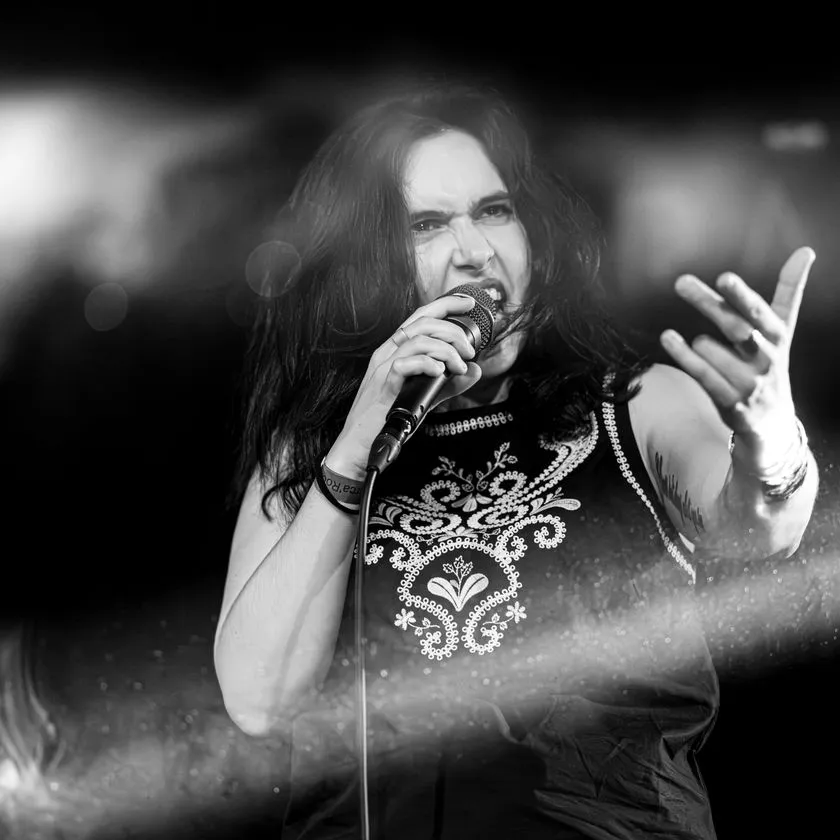
During your six months in New York, you made a promise to perform on stage every night. What motivated you to take on that challenge, and what did you learn about yourself during that period?
I realized quite early on that people’s perception of talent is often influenced by everything surrounding the artist. We naturally tend to appreciate someone’s work more when we connect with their personality, their story, their background or simply because we like them. It’s human nature, but it also makes it difficult to know how much of that appreciation comes from the talent itself.
So I wanted to put myself to the test. Almost like a scientific experiment! I wanted to find out whether my voice, my stage presence, my charisma and my musical potential could genuinely capture people’s attention when they knew absolutely nothing about me. No personal story, no connections, no reputation, no social status. Just me, a microphone and a room full of strangers.
I wanted to know what remained when you stripped away everything except the performance. Was there really something that made me stand out?
That’s why I promised myself I would get on stage every single night during those six months in New York.
What did I learn? To dare, to push myself further, to connect with strangers and, above all, to make every second count. Most of the time, I only had one song. Three minutes to make an impression. And I quickly understood that a performance begins long before you sing your first note. The way you walk on stage, hold the microphone, move, look at the audience… Everything communicates something.
You don’t always get a second song to make a first impression. And I think that lesson has stayed with me ever since.
Your collaboration with producer Mike Muller began with a chance meeting after he heard you speaking French. Did you ever imagine that friendship would eventually lead to a recording project together years later?
Mike and I have always connected incredibly well, both musically and personally, despite the generation gap between us. I mean, he could literally be my father! (Laughs.) But he’s so young at heart, with this wonderfully rock’n’roll attitude towards life. And that’s exactly the kind of energy I was looking for when I first came to New York, coming from Switzerland, where things tend to be a little more structured and reserved.
We just clicked. He became much more than a musical connection. He’s been a genuine friend, someone I can share music, ideas, dreams and a good laugh with.
What’s pretty remarkable is that we’ve managed to maintain that friendship across the Atlantic since 2018. Eight years of WhatsApp messages, phone calls and catching up, without ever really losing touch.
Did I imagine we’d end up recording an EP together? Absolutely not! We’d already made some music together back then, but life took us in different directions. There was the pandemic, and I was also completely immersed in my own artistic projects, including my second EP, The Rise, which I turned into a short film.
When the opportunity came up, I initially thought it sounded like one of those crazy ideas that would be wonderful if they ever happened. But things moved surprisingly fast. And that’s something I deeply admire about Mike: he’s a man of his word. He’s ambitious, resourceful and still has that incredible drive to make his dreams happen, regardless of age. I recognize a lot of myself in that mindset.
So no, I never saw this coming, but I couldn’t be happier about it. In many ways, Wherever I Land is eight years of transatlantic friendship turned into music. And that makes this project incredibly special to me.
The project came together after an old YouTube video of you singing an Amy Winehouse cover resurfaced. What was your reaction when you learned that this video had opened the door to a new musical opportunity?
The funny thing is that this video was never meant to be anything more than a little souvenir!
We were hanging out on a terrace in New York with a French friend of Mike’s, and at some point, we spontaneously started playing music. His friend pulled out his phone and filmed us. There had been absolutely no rehearsal, no preparation, nothing!
Mike is actually a bass player, but he picked up a guitar and started figuring out the chords by ear, improvising his way through the song. I just sang along. We hadn’t even agreed on a key! (Laughs.) It was one of those moments when you’re simply enjoying the music, completely in the present.
We eventually uploaded the video to YouTube because we thought it was a nice memory. At the time, I hadn’t even properly started my musical career, so there was absolutely no intention behind it. No strategy, no expectations.
So imagine my surprise when, eight years later, that little spontaneous performance resurfaced and helped open the door to an entirely new musical adventure!
I guess sometimes the moments you don’t plan end up taking you the furthest.
You originally traveled to New York to work on one song, but the project eventually grew into a two track EP. How did “Paris” and “I’ve Been Here Before” come together, and what connects the two songs?
It actually started with “Paris”, a song written years ago by a songwriter called Richard Marston who had imagined it in a very Bob Dylan-inspired style. Nothing had ever really come of it, and the song had been sitting on his computer for years.
One day, he shared it with a few friends, including Peter McKenzie, who eventually became the producer and financier of this project. Peter had also come across that old video of me singing Amy Winehouse with Mike, and somehow, he connected the dots. He thought it would be wonderful to bring this forgotten song back to life with my voice.
That’s how the whole adventure began.
As for “I’ve Been Here Before”, it came from Peter himself. He’s not a trained musician, but he loves experimenting with songwriting and composing, purely by instinct, without necessarily knowing all the technical rules of music. And I find that quite fascinating!
He shared one of his ideas with Mike, who reworked the song and sent it over to me. I listened to it and immediately felt there was something interesting we could explore. So what started as a trip to record one song eventually turned into a two-track EP!
What’s particularly interesting is that these two songs were originally written completely independently, yet they share an unexpected common thread: the significance of places in our lives. “Paris” is about a city, while “I’ve Been Here Before” evokes the experience of returning to a place. Both explore, in their own way, how certain locations become inseparable from the experiences, emotions and memories that shape us.
And that’s also where the EP title, Wherever I Land, comes from. There’s this recurring notion of where we are, where we’ve been, and how the places we encounter along the way can influence the course of our lives. Sometimes it’s not just the people we meet, but the places we land, that shape our destiny.
I love that two songs written separately somehow found their way to each other, and that their connection became the very identity of the project.
You recorded the EP during an intense 72-hour trip to New York, meeting most of the musicians for the first time and discovering the arrangements just a day before recording. How did you approach such an unusual recording experience, and did it influence your performances?
It was absolutely intense! I spent just 72 hours in New York, and the entire recording session took around 16 hours straight. Everything was recorded from scratch that day. No pre-recorded instruments, no vocals, no arrangements already in the box. We built and recorded everything right there in the studio.
And physically, it was quite a challenge! Between the jet lag, the lack of sleep, staying in an unfamiliar Airbnb, different eating habits and being thrown into a completely different environment, my body was definitely not at its best. I’d also spent three weeks in Thailand for music shortly before that trip, so I was already pretty exhausted!
And as a singer, you don’t just sing with your vocal cords. You sing with your entire body. When your body is tired, it inevitably affects your voice and your performance.
But I’ve become quite used to working under pressure and dealing with demanding circumstances. So I simply focused, got myself into the right mindset and reminded myself how extraordinary the experience was. Yes, I was exhausted, but I was also living something incredible, and I wanted to embrace every second of it.
There’s also something fascinating about recording under those conditions. Unlike working from home or in a studio where you can endlessly redo your takes, this was a one-shot opportunity. I couldn’t just come back the next day and try again. I had to deliver, right there, right then.
And that requires a certain psychological acceptance: what you capture in that moment is what will remain forever.
You have to let go of the idea that everything needs to be perfect and fully commit to the performance you’re capable of giving at that exact moment. It’s challenging, but there’s also something incredibly liberating about it. And I think that intensity is part of what makes these recordings so special.
The EP features an impressive lineup of New York musicians, including artists who have worked with Cyndi Lauper, Joe Jackson, and Shemekia Copeland. What was it like sharing the studio with such experienced musicians, and what did their contributions bring to the songs?
It was incredible! What made this collaboration particularly interesting was the diversity of our backgrounds. These musicians come from a strong blues tradition, with influences ranging from Americana and rock to soul. They’re incredibly versatile, but they also belong to a different generation, which means they bring musical references and experiences that are quite different from mine.
And I absolutely loved that! There’s a certain boldness and authenticity in the way they approach music. They’re not afraid to experiment, to follow their instincts or to make significant creative decisions on the spot.
A perfect example is the drum beat on “Paris”. The original arrangement was completely different, but when our drummer started playing in the studio, everyone suddenly looked at each other like, “Wait a minute… This is amazing!” (Laughs.) His groove completely changed the dynamics of the song, and we decided right there to go in that direction. That’s the beauty of this kind of collaboration: being open to the unexpected and allowing the music to evolve naturally. The musicians were incredibly talented, attentive, efficient and enduring throughout those long recording hours. And despite their impressive experience, I never felt intimidated. I knew what I was there to do, and I was determined to deliver.
I also believe that the lead singer’s energy has a huge influence on the musicians’ performances. When you’re fully committed, confident and giving everything you’ve got, that energy becomes contagious. But if you’re holding back, the whole dynamic can change. A great performance isn’t just about individual talent. It’s about how much energy everyone brings out of each other.
What I particularly enjoyed was that this collaboration crossed generations, cultures and musical genres. Everyone brought their own musical identity into the room, and somehow, we created something together that none of us would have created individually.
I have plenty of behind-the-scenes footage from those sessions that I’m sharing on social media, and I think it really captures that chemistry and spontaneity better than words ever could!
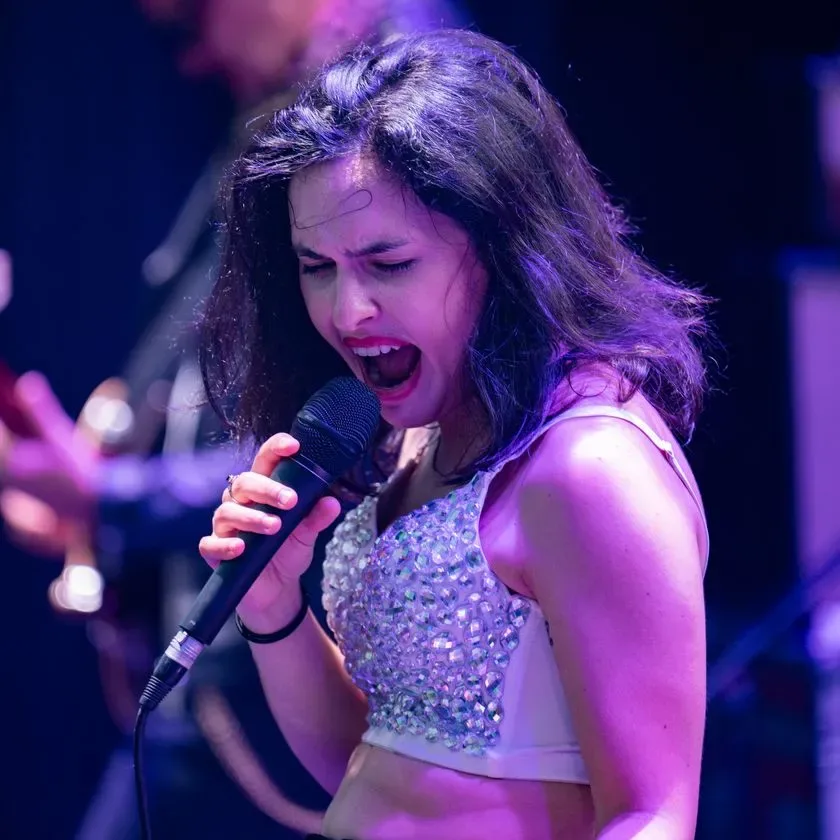
You’re known for performing in French, English, and Italian. How does working across three languages influence your musical identity, songwriting choices, and connection with different audiences?
It’s actually something that comes very naturally to me. Growing up with different languages and cultural influences, I’ve never really felt the need to define my musical identity through one particular language.
Of course, for Wherever I Land, I didn’t write the songs myself, so the language wasn’t a creative decision I had to make. But when it comes to my own compositions, I work very instinctively.
For example, on my second EP, The Rise, there’s a song called “Petite Aile” that moves between English and French. At one point, I felt the need to express something particularly powerful in French, right in the middle of the song. So I simply followed that impulse. Similarly, my first EP, The Calling, featured two songs in French while the others were in English.
I strongly believe that, as artists, we’re somehow vessels for inspiration. When an idea, an emotion or a message comes to you in a particular language or from a certain perspective, I believe you should embrace it rather than try to force it into something else. Your role is to give that inspiration a voice and bring it to life artistically.
I don’t choose the language first. I follow the emotion, and the language follows.
Interestingly, my upcoming third EP, The Pulse, scheduled for release in 2027, will be entirely in English. Not because I deliberately decided to write in English, but simply because that’s how the songs came to me. It’s a conceptual project exploring the different stages of human life, from birth to our final years, and I’m really excited to share more about it when the time comes!
Beyond music, your multidisciplinary project The Rise has received 17 international festival selections and three awards. How do your experiences in film and live performance influence the way you approach music and storytelling?
For me, music has never been just about sound. Whenever I write a song, I already have images in my head. There’s always a story, a message, an emotion or a connection behind it. I don’t really create standalone songs without a bigger narrative in mind. Everything has a meaning, a thread running through it, and I naturally visualize what I’m composing.
So turning The Rise into a short film felt like a natural extension of my creative process. They say a picture is worth a thousand words, and I love being able to bring the stories behind my music to life visually.
Of course, this approach also fits today’s incredibly visual world of social media, although I sometimes find it frustrating that the quality of what gets shared doesn’t necessarily reflect the attention or resources invested in creating it. I’m very attached to producing high-quality visuals, which often requires considerably more time, energy and money, without necessarily being rewarded with greater visibility. But ultimately, what matters most to me is that I’ve told the story I wanted to tell and that I can be genuinely proud of what I’ve created. Whether the audience connects with it is another story, and of course, marketing plays its part too!
Live performance also influences my songwriting. When I compose, I often imagine how a song will translate on stage.
Interestingly, Wherever I Land offers a completely different approach. These recordings are so organic that there’s almost nothing to translate. What you hear is genuinely what we performed in the studio. No Auto-Tune, no artificial tricks, no elaborate production hiding the actual performance. Put the same musicians on stage, and that’s essentially what you’d hear.
And that authenticity extends to the visual side of the project, too. Unlike my previous releases, Wherever I Land doesn’t come with an elaborate visual concept or a cinematic production. Instead, we filmed the entire recording session, capturing the creative process as it unfolded. The behind-the-scenes footage reveals the musicians’ interactions, the spontaneous decisions, the laughter, the concentration and the energy in the room. Nothing staged, nothing overly polished. Just real people making real music together.
With my own compositions, I love building entire worlds around the music. With Wherever I Land, I’m simply opening the door and letting people see what happened inside the studio.
It’s a different kind of storytelling, less constructed but perhaps even more spontaneous and intimate. And I think both approaches are equally honest expressions of who I am as an artist.
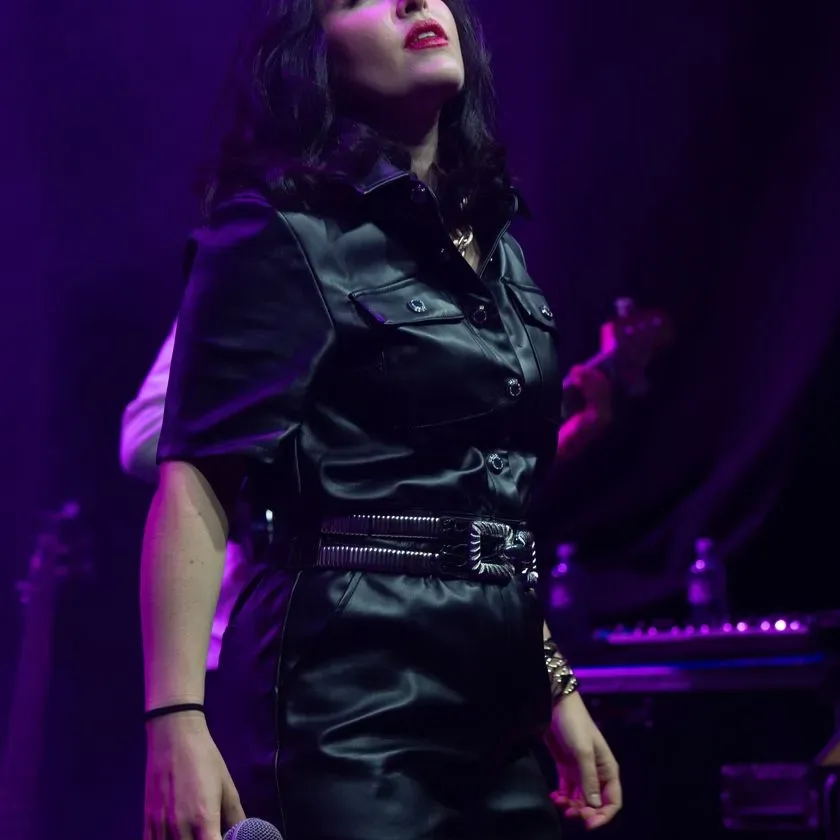
With Wherever I Land bringing you back to New York, what does this release represent at this stage of your career, and what would you like listeners to discover about you through these two songs?
I think this release is a beautiful reminder of why I started making music in the first place.
We’re living in a world where artists are increasingly expected to fit into a specific box. A musical genre, a visual identity, a particular sound, a target audience, a niche… And once you’ve established that identity, you’re almost expected to stick to it. I understand the logic behind it from a marketing perspective, but creatively, I find it incredibly limiting.
I’ve always been a versatile artist, and I’m not afraid to explore different musical territories. Some people might hear Wherever I Land and think, “Wait, now she’s doing Americana? With musicians from a completely different generation? Is this another side of her voice?” (Laughs.) And honestly, I’m perfectly fine with that!
My versatility isn’t a lack of artistic identity. It’s part of my identity.
For me, Wherever I Land is a beautiful artistic interlude, a musical adventure that I simply couldn’t turn down. Not because it necessarily fits into some carefully planned career strategy, but because it’s about human connection, genuine musicianship and the pure joy of making music together. And that’s genuinely why I started doing this in the first place.
I also believe that being open-minded is about more than the messages you defend through your lyrics. It’s something you put into practice through your own choices, by being willing to explore unfamiliar territory, collaborate across generations and cultures, step outside your comfort zone and challenge expectations, including your own.
So if there’s one thing I’d love listeners to discover through these two songs, it’s that there’s more than one side to me as an artist, and I’m not interested in hiding any of them just to fit a particular image.
I’m not changing who I am every time I change my sound. I’m simply revealing another part of myself.
And coming full circle, back to the city where I first dared to test myself as a performer eight years ago, makes that artistic freedom feel even more meaningful.