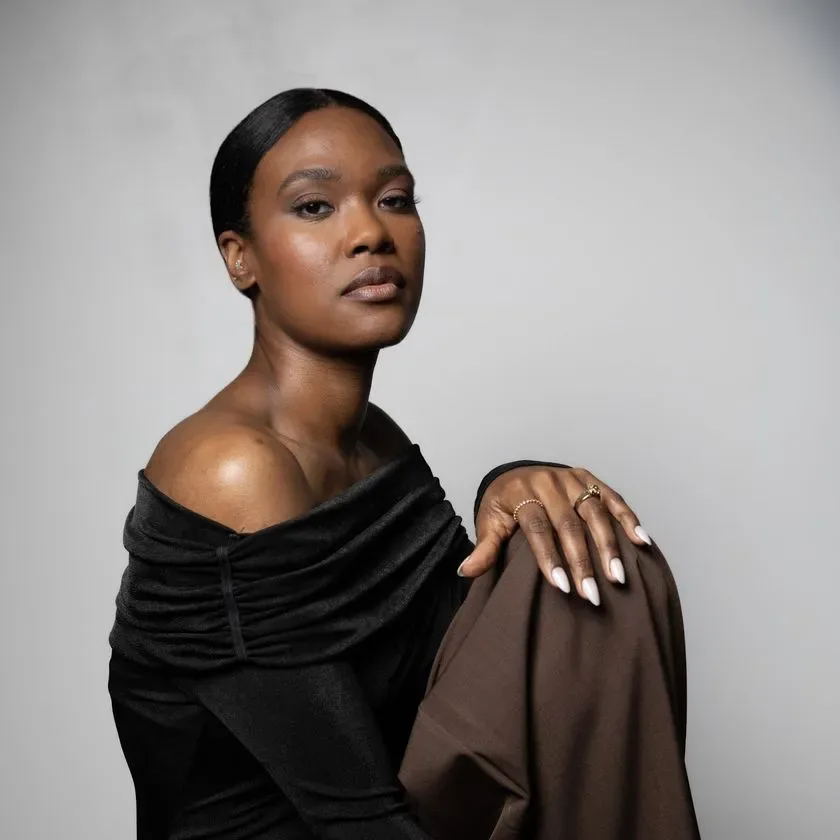
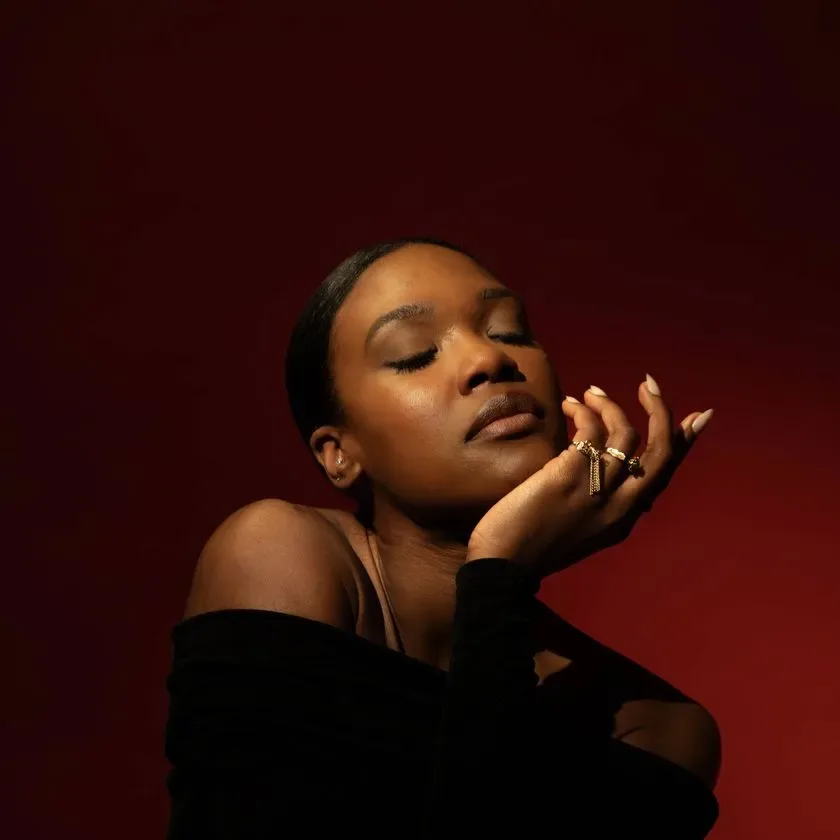
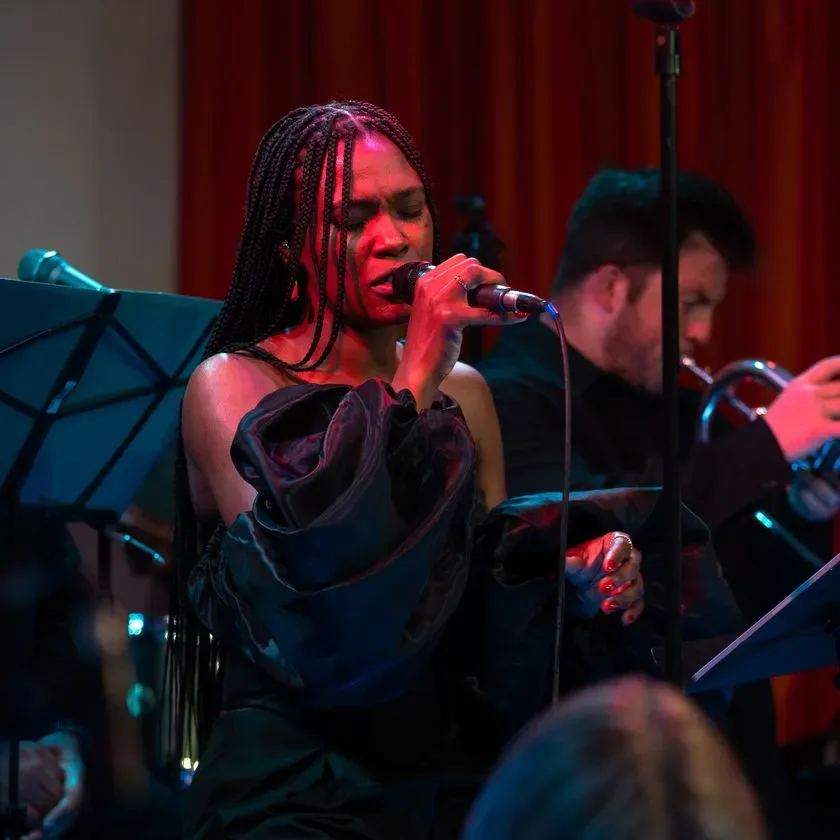
Beginning with a New Year’s resolution in 2023, “E’s Mood Pt. i” became a deeply personal musical journey for Pittsburgh-based artist Erika Denae J, exploring self-discovery, faith, personal growth, and the courage to embrace change. Blending neo-soul, jazz, hip-hop influences, and elegant string arrangements, the track reflects her evolution as both an artist and an individual. In this interview, Erika discusses the inspiration behind the three-part musical suite, how her studies in music therapy and poetry have shaped her creative approach, and the importance of letting go of self-doubt to pursue one’s dreams and potential.
1. “E’s Mood Pt. i” began with a simple New Year’s resolution in January 2023. Do you remember what was going through your mind when you first picked up your Gretsch guitar and recorded that original melody? Did you have any idea it would eventually become the foundation for a three-part musical suite?
When I started playing guitar in 2023, I wanted to make a change for the new year and move with a certain type of grace to receive all that God had for me. I was in the mood for a new me—to release the people, places, mindsets, and habits that kept me from being the best version of myself. I really wanted to see “all of the promises, all of the capabilities,” and what started as a New Year’s resolution became something that I began to live out.
By March 2023, God told me to leave my job while I was actively trying to save to finish renovations on a home that was recently purchased, but I’m so glad that I listened, even though it made no sense at the time. That period was pivotal to hearing His voice clearly, and by the beginning of 2024, I was in a grad program for music therapy.
I had no idea of the trajectory that this melody would take when I was recording it. I wanted it to turn into something but did not think that it would turn into a suite on the album. I have so many song ideas saved in my voice memos and so it is amazing to see this one make it out. Seeing how it has developed, has been a fun process and getting to add strings was such a beautiful learning experience for me as a producer. I got to learn first-hand from James how he arranges strings to embellish compositions.
2. You describe wanting to let go of people, places, mindsets, and habits that no longer served you. How did that desire for personal transformation influence the songwriting and overall message of “E’s Mood Pt. i”?
I did want to let go of mindsets and habits that no longer served me, and I feel as if the music and the poetry became a witness to that process in real time. The year after 2023, I applied to my graduate program for music therapy, where I not only started to feel more grounded and purposeful in supporting healing through music, but I was also getting exposed to a lot of different genres and styles of music. At the same time, I was being challenged to learn to play guitar and piano, which heavily influenced how I wanted to approach some of the songs. It was, in a way, a blessing and a challenge because I wanted to change the music based on what I was learning with theory. Because the album took so long, there were so many shifts in what I was listening to and wanting to put out. There was also a natural evolution with my style and ear, and I questioned if some of the songs still sounded like me. However, I’m grateful that I kept the music on this record because it is a timestamp of words and sounds that capture a lot of areas of growth for me.
3. You once said, “I was in the mood for a new me.” What does becoming the best version of yourself mean to you today, and how has that definition evolved since you first started working on this project?
I think for me, becoming the best version of myself means being open to the challenges and the pressures that create those diamonds within us. For a long time, I have held in the best parts of myself because of fear and doubt. Showing up as the best me is shining without pretense. I’m in a season now where there’s quite a bit of growth happening, and that growth is really coming out of pressure and many uncomfortable moments where I have to push myself outside of my comfort zone. I think continuing to strive toward a vision—even when you’re unsure, not feeling 100% confident in yourself, or a little afraid—is the best way to meet a better version of yourself on the other side. I’m also learning that there is no single “best” version of myself. There is always going to be some area where I can evolve and be challenged, and I never want to feel too complacent. I also don’t want to be overburdened by this idea to constantly reach a new level of evolution. There’s a balance.
4. Your journey during this period involved several important milestones, including returning to school to study music therapy and publishing a poetry book. How have these different creative and educational experiences influenced the way you approach music and storytelling?
Returning to school and self-publishing a book has allowed me to witness the power of lived experience, qualitative research, and sharing narratives. One of the cornerstones of academia is the literature that we have to read. There are a lot of theories and frameworks to pull from that fit our specific approaches as students which has pushed me to become very reflective of how I see things and why I see things the way that I do. It has definitely deepened my practice.
5. Faith plays an important role in your artistic philosophy and personal growth. How does your relationship with God influence your creative process, particularly when navigating uncertainty, change, and new opportunities?
My faith helps to keep me grounded. As a child of God, it’s in my DNA to create, and so I’m often inspired by spending intentional time in God’s presence and with His word. I also think that God’s word alone is extremely poetic, with layers and meanings to the way it was written and its etymology. Oftentimes a revelation can become a poem or a song in addition to encouraging and nourishing my spirit. When navigating uncertainty and new opportunities, I try my hardest to lean into the leading of the Holy Spirit and along with prayer.
6. Musically, “E’s Mood Pt. i” blends neo-soul rhythms, jazz influences, guitar work, and elegant string arrangements. How did you envision the sound of this track, and what inspired you to bring these particular musical elements together?
I wanted this song to feel like a journey, and I wanted emphasize simplicity while being intentional. I’m extremely grateful for John Shannon, who is such an amazing guitarist and songwriter; we talked about him putting in a solo that kind of emulated George Benson and how he would tease his listeners before playing. I wanted that jazz and soul to be felt upfront, and I wanted the track to embody all the things that I love in music– bass grooves, jazz, neo-soul/hip-hop (shout out to Dwele & J Dilla), and strings. I think there’s so much more that could’ve been done with this track, but I’m proud of where it landed. I went back and forth so many times on whether I should add a scatting portion to make it feel more like me with a different vocal approach, but I kept sensing that this single, along with the whole album, was meant to leave space for the listener.
7. The song features guitarist John Shannon and string arrangements by longtime collaborator James Johnson III. What did each of them bring to the composition, and how did their contributions help bring your original musical idea to life?
James added such a beautiful texture with his arrangements and contributed ideas where the strings were not overpowering, but supportive of the overall direction of the song. John has this amazing ability to blend jazz, soul, and rock and he really helped to pull listeners in within the first few seconds. The cool thing about Pittsburgh is its rich and supportive jazz community. James and John have played together in the past and having them both in the space to work on this song felt easy, there was already a sense of knowing one another and that made this long process so much easier and fun.
8. You’re preparing to pursue an internship in music therapy, bringing together your passion for music, mental health, and healing. What first attracted you to music therapy, and how do you see it connecting with your identity as an artist?
I was initially attracted to music therapy back in 2016 when I had an opportunity to teach abroad in Spain for a year. I honestly experienced the power of music and how it allowed me to come back to myself and reconnect with my writing in ways that I had forgotten. When I returned to Pittsburgh, I wanted to create spaces for creative work and holistic wellness, and I created the Healing Intensive Creative Arts Program. At that time, I reached out to local music therapists to support the initiative. Although they didn’t get a chance to be a part of that specific program, it is such a beautiful full-circle moment because one of the music therapists I was in contact with years ago became my supervisor for one of my clinical practicums in my graduate program.
As I’m navigating Erika as a professional and Erika as an artist, I see performing music, storytelling, and practicing as constituents of who I am and I’m learning to embody all of them authentically. I think my artistry will only get stronger the more that I learn and have opportunities to serve others in therapeutic and clinical spaces.
9. “E’s Mood Pt. i” is the first installment of a three-part musical journey. Without giving too much away, what can listeners expect from the next chapters, and how will the story or sound evolve throughout the suite?
As “E’s Mood” progresses from Part i to Part iv, it witnesses multiple parts of my journey. I allowed whatever mood arose in the process to become a part of each track, and I allowed space for the songs to just be. E’s Mood Part iii is a realization that I no longer have to accept self-defeating beliefs about what I deserve and who I am. E’s Mood Part iv is about mobilization and actualization and as the last song on the album, it takes what I have reflected on internally and contextualizes it to become an external force—to make the changes, to move. That’s the mood.
10. At its heart, this song encourages listeners to release what holds them back and embrace their potential. What do you hope someone takes away from listening to “E’s Mood Pt. i,” particularly someone who might be standing at a turning point in their own life?
I hope that listeners are encouraged and reminded of the promises, dreams, visions, and gifts that they hold and to pursue them relentlessly.