
Love songs often promise that feeling deeply is enough. That if two people share something real, the story should naturally lead them toward each other. But life rarely follows such simple rules. Sometimes the strongest feelings arrive at the worst possible moment, under circumstances where acting on them would mean causing pain to others.
For Ersin Secrin, that contradiction became the emotional foundation of “Holding on to You.”
The song explores the difficult space between desire and responsibility, telling a story where love may be real, but pursuing it is not an option. Inspired by a personal experience, the track asks a painful question that many people may recognize in their own lives: what happens when you know walking away is the right thing to do, but your feelings refuse to follow your decision?
For Secrin, the answer lies in the difference between what we feel and what we choose to do. Feelings cannot always be controlled, but actions can. Having experienced the consequences of betrayal from the other side, he understood that genuine love cannot simply be about getting what you want. Sometimes, loving someone means accepting that you cannot have them.
That emotional complexity runs through his approach to songwriting. Rather than beginning with carefully structured lyrics, Secrin often starts with chaos. He records his thoughts into his phone, speaking freely about experiences, questions and emotions before gradually turning those raw recordings into lyrics, verses and complete stories. The result is songwriting built from reflection rather than formula.
His creative process also embraces modern technology. Secrin uses AI as part of developing musical demos, allowing him to explore how his songs might sound despite not being a trained singer or professional musician. Yet behind the technology lies an intensely personal process involving countless rewrites, detailed creative decisions and sometimes hundreds of versions in pursuit of the sound he hears in his head.
For him, technology can help bring an idea to life, but it cannot replace the reason the song exists in the first place.
Throughout his writing, Secrin is drawn to the contradictions that make people human. Love and loss. Loyalty and betrayal. Gratitude and disappointment. Peace and conflict. The things we say, and sometimes the things we choose to leave unsaid. He believes subtlety can often be more powerful than explanation, leaving space for listeners to bring their own memories and experiences into the music.
Ultimately, his ambition is refreshingly simple. He wants people within the music industry to truly listen. Not just hear thirty seconds of a song, but spend time with the stories he has spent countless nights shaping. For Ersin Secrin, the greatest reward would be hearing an artist take something that began as a private thought and transform it into something larger than himself.
In this interview with Spinex Music, Ersin Secrin discusses the personal story behind “Holding on to You,” the emotional complexity of forbidden love, his unconventional songwriting process, the role of AI in developing his music, and his hope of one day hearing a professional artist bring one of his deeply personal songs to life.
Sometimes walking away does not mean the feeling disappeared.
Sometimes, it is the strongest expression of love left.
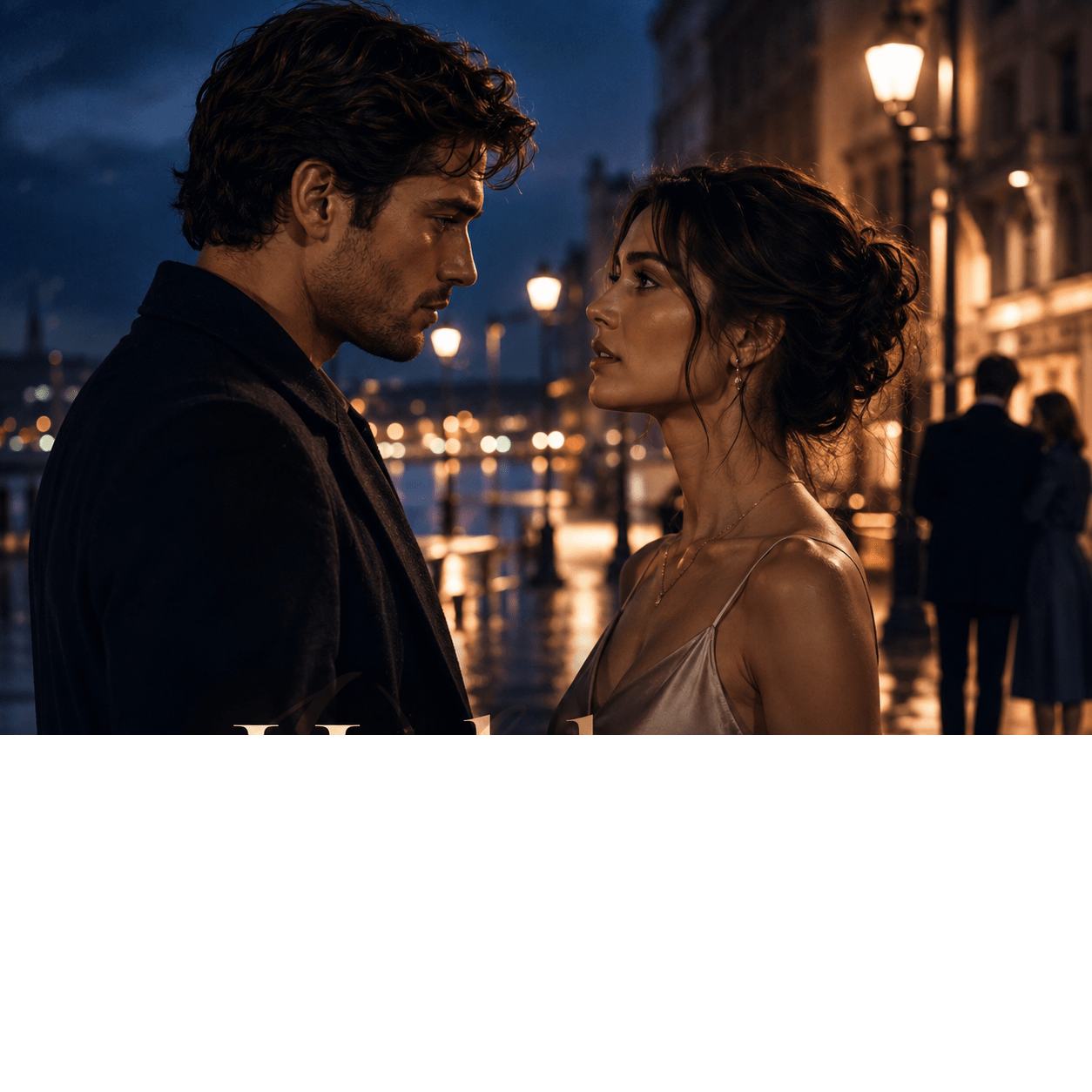
“Holding on to You” centres on a love that feels mutual but cannot be pursued. What interested you most about exploring the emotional tension between knowing you should walk away and being unable to stop loving someone?
This song came from something I experienced myself. I got to know someone in a completely unexpected way. At first it was only professional messages. I had never seen her face or even heard her voice. Later we started exchanging voice messages and talking about everything imaginable, sometimes day and night.
By then I had learned that she was married. For me, that is a line I will not cross.
The difficult part is that knowing something is wrong does not automatically switch off what you feel. You can make the right decision and still have feelings that refuse to disappear.
That contradiction became the heart of the song. Sometimes walking away does not mean you stopped loving somebody. Sometimes you walk away because you do.
The song places its central character in a morally complicated position, where desire and responsibility pull in opposite directions. How did you approach writing that conflict without reducing the story to a simple question of right or wrong?
I think there is an important difference between feelings and actions.
You cannot always control who you develop feelings for. But you can control what you do with those feelings.
I have experienced the other side of betrayal myself and I know what it can do to a family and to the people involved. That made the question very simple for me personally: how could I knowingly cause somebody else the kind of pain that I know myself?
So the character is not presented as a hero because he has these feelings, and he is not presented as a bad person because of them either. The responsibility begins with what he chooses to do next.
For me, real love cannot only be about getting what you want. Sometimes loving somebody means accepting that you cannot have them.
What do you think makes forbidden love such a powerful subject for songwriting?
Because there is no easy solution.
In a conventional love song, two people meet, fall in love and hopefully find their way to each other. Here, even if both people genuinely feel something, that does not necessarily mean they should be together.
I think many people can relate to that in different ways. People fall in love at the wrong time, with the wrong person or under circumstances that make a relationship impossible.
That gives you emotions that a normal love song does not always have: love, guilt, hope, responsibility, longing and restraint all at the same time.
And perhaps the most painful idea is that doing the right thing can still hurt.
How do you build a believable emotional narrative? Do you begin with a scene, a line, a character, or an emotional state?
Usually with an emotion or something that has happened to me.
Most of my songs contain a lot of my own thoughts and feelings. When something really occupies my mind, I take my phone and start talking into a voice recorder. I do not try to write lyrics at that point. I just talk.
I might describe what happened, argue with myself, ask questions, repeat things, contradict myself – everything that comes into my head.
Then I convert those recordings into text and start finding sentences and ideas that belong together. From there I build individual lines, verses and eventually the story of the song.
So the beginning is actually quite chaotic. The structure comes much later.
How do you decide what musical style best serves the story?
It depends completely on what I am feeling when the idea comes.
I do not decide that I am going to write a rock song or a ballad and then search for a subject. Usually the subject comes first, and the mood tells me what the music should feel like.
A good example is “Replay.” I was in the mood for something light, summery and flirtatious. My daughter was talking about how we used to have to rewind tapes when we wanted to watch something again. The way she said it was so sweet that I told her, “I would rewind every moment with you and live it again.”
That sentence stayed in my head, and suddenly the idea of “Replay” was there.
“Holding on to You” was completely different. That story needed space. It needed vulnerability and restraint, so an emotional pop ballad felt much more natural.
The story normally tells me what kind of song it wants to become.
How has using AI changed the way you develop songs, and where do you draw the line between technology and the human identity of the songwriting?
For me, AI is a tool that allows someone who is neither a professional singer nor a trained musician to make the song in his head audible.
But there is a lot more work involved than simply entering a prompt.
I start with my own thoughts, voice recordings and lyrics. I build the verses, work on rhyme and rhythm and then use AI tools to check things such as line length, repetition or places where the flow may not work.
Once I have a beta version of the lyrics, I begin building the musical demo. I give very detailed instructions about how individual sections should be sung, tempo, instruments, intensity, dynamics and style.
I often generate twenty or more versions just to find the musical direction I am looking for. Then the lyrics have to be changed again because something that works on paper does not necessarily work when sung.
I am extremely obsessive about that process. For one of my songs, “Aşkım İçimde Kaldı,” I went through more than 1,100 versions and tiny adjustments before I was happy with it.
So the technology can generate sound, but it cannot replace why I wrote the song. The story, the emotion and the decisions behind it still have to come from me.
How much room do you leave for a future vocalist to reinterpret the song?
A lot.
If somebody eventually chooses one of my songs, that alone would be an incredible honour.
Of course I would not want somebody to change the entire song until there is nothing left of what I originally wrote. Then it would no longer really represent my songwriting.
But if changes happen through dialogue, I am completely open to them.
These people are professionals. If an experienced singer or producer tells me, “This line could work better this way,” I want to understand why. Maybe I learn something that makes me a better songwriter.
I would also say openly if I genuinely believed a change was destroying something important in the song.
For me the best situation would be collaboration rather than somebody simply taking orders from somebody else.
How important is subtlety to your writing?
Very important.
I often think that what is not said is more interesting than explaining every emotion directly.
If you leave a little space, listeners can put their own memories into the song. One person might hear “Holding on to You” and think about a forbidden relationship, another might remember somebody they never had the courage to tell, and somebody else may simply think about the person they had to let go.
If I explain every detail, I take that possibility away from them.
Sometimes one unfinished thought or one moment of silence can say much more than another four lines explaining exactly how somebody feels.
What kinds of stories or emotional situations repeatedly draw you in as a songwriter?
Usually subjects that make me feel something strongly.
Love is obviously one of them, but also family, ingratitude, loss, justice, war, friendship and even nightlife.
A lot of my songs begin with something I have experienced, observed or thought about for too long.
I am especially interested in contradictions in people. Loving somebody while knowing you should leave. Giving everything to somebody and still being taken for granted. People wanting peace while constantly being encouraged to choose sides.
Those contradictions are interesting because real people are complicated. We are rarely only one thing.
What would the ideal collaboration look like for you?
My biggest goal is actually very simple: I would love for somebody in the industry to really listen to my best songs – not thirty seconds, but properly listen – and see something in them.
Money is genuinely secondary to me.
If a producer told me, “We think this song could work for these three singers – who would you choose?” I would love that. Or if somebody asked, “When you created the demo, did you already imagine a particular kind of voice?” Those conversations would mean a lot to me.
I love music, and these songs represent countless nights where I sat there changing words, testing versions and trying to get exactly what I heard in my head.
So being involved in some way would feel like finally seeing the result of all of that work.
I do not need to control the production. They are the professionals. But I would love for my opinion to matter.
And I sometimes joke that the money could even be zero if somebody gave me a tiny appearance walking through the music video. Just let me exist somewhere in the history of the song.
For me, hearing a real artist take something that began as thoughts in my head and turn it into something bigger would probably be the greatest reward.