
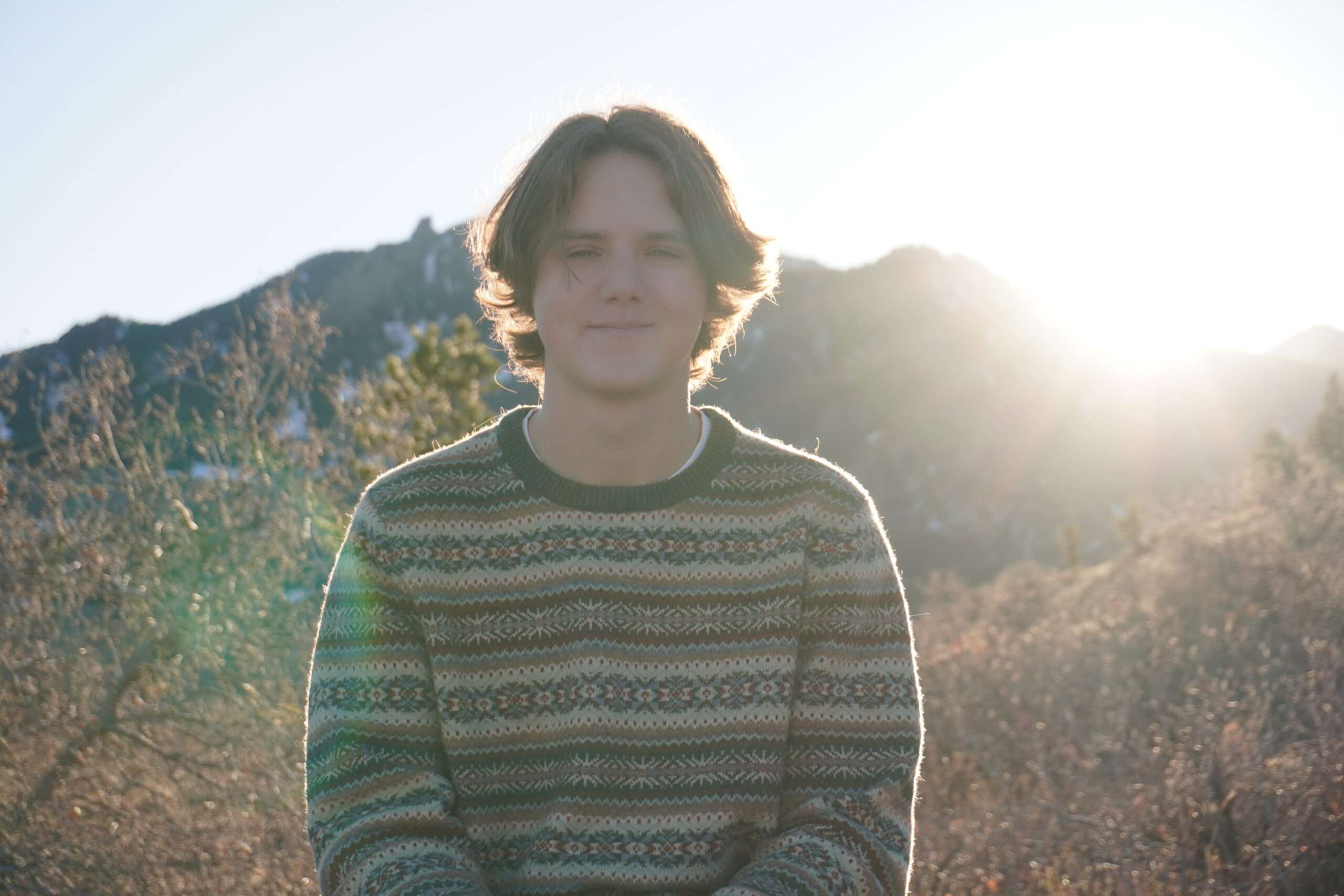
There’s something deeply honest about the way Luc Letourneau approaches music. No forced perfection, no polished illusion, just raw emotion, lived experiences, and the kind of vulnerability that lingers long after the song ends. With his debut project Next Life / One More Day Like This, Luc invites listeners into a space that feels both personal and widely relatable, capturing the quiet tension of growing up, making decisions, and trying to find meaning in the middle of it all.
The album unfolds like a series of moments rather than a fixed story. It reflects the shift from moving through life on autopilot to suddenly being faced with choices that define who you are. That transition, filled with uncertainty, pressure, and self-discovery, sits at the core of his sound. Instead of offering clear answers, Luc leans into the unresolved, allowing listeners to interpret and connect with the music in their own way.
Sonically, his work blends warmth and grit, balancing stripped-back intimacy with bursts of emotional intensity. There’s an intentional imperfection in the way his songs are built, preserving the human side of the creative process rather than smoothing it out. Inspired by artists who value honesty over precision, Luc embraces what he calls the “premature spark,” the idea that the first raw expression of a song often holds its truest form.
In this conversation, Luc Letourneau opens up about the personal experiences behind his debut album, his evolving songwriting process, the influence of his environment, and why learning to let go of perfection has become a crucial part of his artistic identity.
Next Life / One More Day Like This feels like it reflects a deep sense of moving through life on autopilot while still searching for meaning within it. Can you walk us through the emotional or personal experiences that first sparked this concept, and how it eventually evolved into a full debut album?
“There was no one specific moment; instead, I’d call it a sequence of moments. Moving through adolescence and school felt like a monumental change, especially moving out of that phase where there are so many societal pressures. There’s pressure from the system itself, but also from the people surrounding you, where it feels like everyone is competing for their own goals, trying to push further than their parents, or trying to create this perfect story of success.
The album reflects me moving through that. It was a major disruption to the ‘autopilot’ life we often drift through. When you hit these changes, you have to actually decide what you want to do. For me, that is one of the biggest challenges in my life: deciding. When I’m in these seasons of change and I have to dive straight into whatever comes next, it feels disruptive. The autopilot switches off and you have to find your own rhythm again. The way this is put into the songs is somewhat indirect. As I’m writing, I can’t separate myself from the music, the lyrics, or the experiences going on in my life; they are inevitably shown in the songs.
It’s about deciding what you want to do with your life—finding the purest form of your individuality and trying to keep other people’s opinions out, while still taking enough criticism to learn from those around you. Regarding how it evolved into a debut album, it was a matter of committing to the project. The songs are different snapshots of exactly what was happening during that specific time of my life.”
You’ve described your approach to music as anti perfectionist, centered around what you call the “premature spark.” In practical terms, how does that philosophy influence your decisions in songwriting, recording, and knowing when to leave a track intentionally raw rather than refining it further?
“I don’t think I’ve fully mastered that skill yet. I listen to a lot of music that is super raw and untouched—like Neil Young’s solo on ‘Cortez the Killer,’ where the lead guitar was fully improvised on the spot. Obviously, he’s a genius, so whatever he does sounds amazing, but that raw quality is what I’m drawn to in art.
I say that I’m an anti-perfectionist, but I have to admit I can be a bit of a hypocrite. I still find myself nitpicking and picking a song apart. I love working on a song until it almost destroys me, sometimes to the point where I’m actually making it worse than its original quality.
That’s where the ‘premature spark’ comes in. It’s the realization that the first raw cut, even if it isn’t perfect, is often the epitome of the song. There has to be a point where you draw a line. I’ve found that with some of the songs I’m working on now, I simply cannot recreate the same feeling or rhythm later on. I could play the part exactly as it was, but the sequencing and how caught up I was in the moment created this ‘concoction’ where everything just comes together. Even if you found a great riff weeks or years ago, trying to recreate it now just doesn’t carry the same energy as the original.”
Much of this record sits in emotional uncertainty rather than resolution, which feels very intentional. What draws you to writing from that unresolved space, and do you see that as a reflection of your own life philosophy or more of a storytelling choice?
“I would say it’s both a storytelling choice and a philosophy. I’m drawn to things in life that make me think, and I prefer leaving things without a resolution. Allowing the listener to depict what they think a song means has a much more powerful effect than just saying, ‘This is the end of the story; this is how it goes.’”
When a song feels vague, it can actually apply to a wider audience. It makes the listening experience more special because you can craft your own meaning. I’m writing the song and putting the lyrics down, but then the listener’s interpretation creates a new layer—almost like a collage. By bringing your own emotions and portraying what you think the song is, you’re pushing what I created further than I ever could have done on my own.”
Growing up in Boulder clearly plays a role in your identity as an artist. How did the environment, culture, and personal experiences there shape the tone, emotional direction, and even the pacing of this debut project?
“Boulder is a place that can feel very confined; oftentimes, it makes you feel trapped. There is this ‘Boulder bubble’ where it feels like everyone believes they are right, most people hold the same opinions, and everyone complains about the same things. It can feel like you’re drowning in a culture that is a bit insufferable. While it’s undeniably a beautiful place, it has lost much of its original bohemian vibe, becoming gentrified like so many other beautiful areas in Colorado.
My personal experience living there for most of my childhood created an essence in the album of wanting to escape. Everyone gets sick of their hometown, but Boulder feels different—people are nice, but there is a definite snobbiness to it. That environment made me feel a bit angsty and, at times, less appreciative of what I had.
The emotions are very mixed because Boulder is an amazing place and a terrible place at the same time. It often doesn’t feel real; it’s as if everyone is living in their own mini-world. When you’re the only one who seems to recognize that, it feels incredibly isolating, and that is a major part of the emotional tone of the record. Even the natural beauty is complicated. You’ll have a favorite spot or a trail, but now it’s crowded with people who aren’t always respectful. You still have those beautiful moments, but they are layered with the frustration of how the culture has shifted. That tension definitely influenced the pacing and the angst found in the music.”
Your sound blends Americana warmth with indie rock grit in a way that feels both familiar and distinct. When you are building a song, how do you decide where it should live sonically, and what guides those choices between restraint and intensity?
“I think this all ties into my songwriting. For me, I only really write from emotion. In fact, there is only one song on the record that is different from the first time I played it. It all just comes together as I’m playing; I can feel when it needs more energy.
There is always a sound that I’m hearing and chasing before a song is ever even close to complete, and I’m always trying to achieve that specific thing in my head to fully capture it. If a song has more energy, it’s probably reflecting in the lyrics as well. I have this very primitive sense of emotions that anger is loud and sadness is quiet, and I think you can depict that in my songs. Some of them are just lulls where I am trying to capture and portray a specific essence. If a song needs more energy, that’s usually reflected in the lyrics, too. I’m trying to capture the essence of what I’m feeling in that moment—whether it’s a lull or a burst of intensity.Some of them are confrontational, like on ‘Awesomest Man,’ where I am trying to capture and portray a specific essence.””
There is a strong sense of texture and imperfection in your production choices, almost like you are preserving the human fingerprints in the recordings. Was that something intentional from the beginning, or did it emerge naturally as the album came together?
“I’m a pretty sloppy player, and I don’t really hear perfection—but I definitely notice when a take is exactly how I want it. When I’m playing it back, I’m not hearing things like, ‘I hit the E string too hard.’ I’m trying to be in the moment of the recording and the songwriting, digging into imperfection because that is how humans are. No one is really perfect, so I like the idea of preserving that human fingerprint.
The specific textures emerged as the album came together. I didn’t necessarily know from the start that I would use a mandolin on ‘Old Town’ or record the sound of drums on a desk. Those layers were added as I went. It’s like painting: you figure it out as you go, and you aren’t going to know how the shadows should look until you have the object in the middle.”
Looking across the album, is there a specific track that challenged you the most emotionally or creatively during its writing and recording process, and what did that struggle reveal to you about yourself as an artist?
“Emotionally, ‘Awesomest Man’ was probably the biggest challenge. It was me spitting out a lot of anger I had at the time, and I still feel somewhat the same way. Even reading back on it now, it feels like I’m seeing the essence of something ‘ugly’ within those emotions. It still brings up everything I was feeling in that moment, but I learned that I actually need that release. One of the biggest things I discovered through this album is that I truly love songwriting and lyric writing—which was the opposite of what I expected. I thought I’d come out of it loving the recording process most, but it was the writing that really stayed with me.
Creatively, ‘Wedding Bells’ was a hard battle. It is completely different now than when I first created it. I hated how I played it, so I slowed it down, but then I still didn’t like the lyrics or the feeling. I had to work through those edits, and it still feels like it isn’t quite where it ‘should’ be.
That struggle revealed how daunting a creative rut can feel. It feels almost impossible, and I often just want to throw the song out and forget about it. I learned that some songs work best when you hit them right off the bat, while others need to be revisited. I think all songs have their own specific space and moment. If you aren’t in the right creative space or you don’t have fresh ideas, you can try to struggle through it, but most of the time you just dig yourself into a deeper hole. You have to wait for that right moment to happen.”
You often write in a very observational and introspective way, almost like you are documenting inner thought processes rather than just telling stories. How do you balance personal vulnerability with artistic framing when translating those thoughts into lyrics?
“I don’t really balance vulnerability and framing; I’m just fully vulnerable. At this point in my songwriting path, I’m almost numb to it. It used to feel like, ‘No one can read my lyrics—these are my special little things,’ but now I’m trying to lose whatever judgment I was holding onto. I go straight into the framing of what I’m trying to do: writing observational songs that capture inner thoughts. It is still a form of storytelling, even if it isn’t conventional or traditional.
The process is definitely driven by thoughts. The theme is often the ‘main point’ of the writing, but it usually turns in on itself. Most of the time when I’m writing and emotions are flowing, I’m not consciously thinking about what the theme is. I’ll be halfway through or revisiting the song later and realize, ‘Oh, that’s what I’m thinking about, or that’s what this is about.’
I think of the theme as the roots, and then I try to reach out as far as possible to touch on other things while staying close to that center. I like to be abstract in that sense. It usually starts with a single sentence I need to get out of my head. Once I write it down, it leaves my mind and makes room for the next thing. It becomes a sequence of thoughts that snowballs into a full, fleshed-out song.”
Influences like Neil Young and Big Thief are known for emotional honesty and storytelling depth. In what ways did those artists specifically shape your approach to songwriting on this record, and where did you consciously try to step outside of those influences?
“I really like the way those artists write; it’s very introspective. One thing I aim for in my own writing is to make it as vague as possible so that it can apply to many different people, and I think both Neil Young and Big Thief do that incredibly well.
When I actively try to differentiate myself from other artists, I often find I end up sounding more like them. Because of that, I just try to focus on myself. All the music I listen to definitely leaches into my own playing and influences me, but I’m ultimately just trying to make something that I personally want to hear. Since I’m drawn to those specific sounds, the music I play is naturally going to live in a similar space.”
Now that Next Life / One More Day Like This is complete and released, how do you see your creative path evolving from here, and what new ideas or directions are you already beginning to explore for your next chapter?
“I learned a lot from the process of creating Next Life / One More Day Like This. Taking that information forward feels freeing; I feel like I can make fewer mistakes now, which will hopefully make creating future music a bit easier. My songwriting process used to be much more strict—I would force myself to sit down and try to write, which felt dry and restrictive. Now, I’ve learned how to ease into the songwriting flow more naturally.
For this next chapter, I’m exploring ‘quantity over quality’ as a way to truly lose my perfectionism. I have about 16 new songs already, and writing that much allows me to find the most solid pieces without overthinking the process. I’m also working on an instrumental EP, which shows a different side of me where the music speaks for itself without lyrics.
I’m still focused on introspective, emotional storytelling, but I’m starting to look outward at social systems and how they affect us. Most importantly, I’ve grown as an artist. I’ve learned to enjoy my own company and the process of writing solo, but I’ve also become more confident in taking advice and criticism from my peers. Before, I was very protective of ‘my thing’ and wouldn’t really listen to anyone, but I’m finally learning the benefit of opening up that process.”
Connect with Luc Letourneau: Instagram, TikTok, YouTube, Website, Spotify