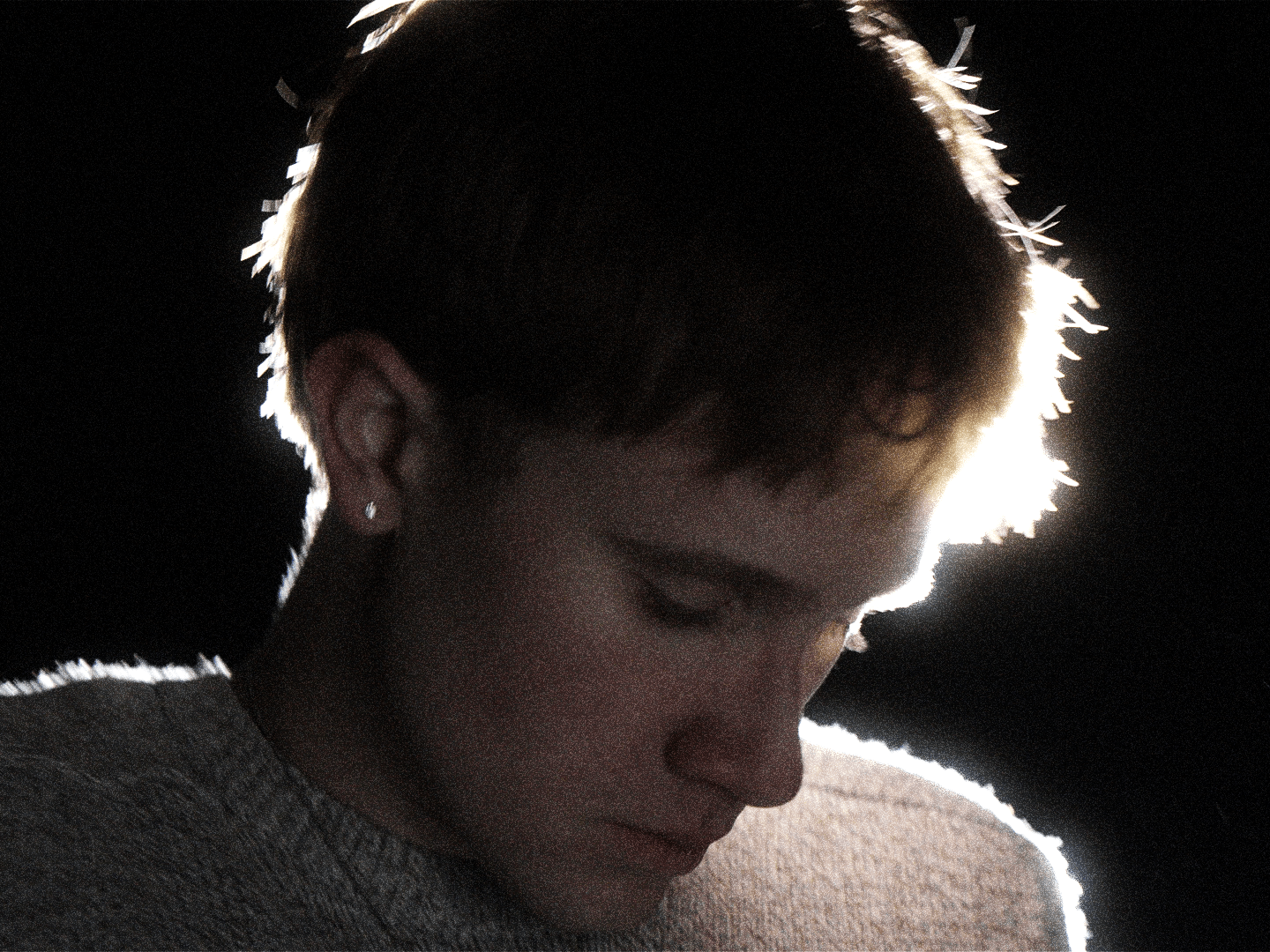
With Reverie, Sev Karlsson steps into the spotlight with a debut that feels both deeply personal and creatively exploratory. More than just a collection of songs, the EP captures a moment of transition, a period defined by self-discovery, pressure, and the quiet determination to finally share his voice with the world. Created during his final chapter in Los Angeles, the project reflects the emotional weight of navigating ambition while learning how to exist within an environment that never slows down.
At its core, Reverie is an honest introduction to an artist still shaping his identity. Blending elements of indie electronic, pop, and chillwave, Sev Karlsson approaches music without rigid boundaries, allowing his instincts as a producer, vocalist, and multi-instrumentalist to guide the process. The result is a sound that feels fluid and immersive, where vocals, textures, and instrumentation merge into one cohesive atmosphere. Beneath that sonic landscape lies a series of internal conversations, touching on themes of burnout, uncertainty, and the search for clarity.
In this interview, Sev Karlsson opens up about the journey behind Reverie, from overcoming the fear of releasing music to the challenges of selecting songs that truly belonged together. He reflects on how his time in Los Angeles shaped both his mindset and his sound and how his evolving creative process continues to push him forward. As he navigates a new chapter marked by relocation and change, this conversation offers a closer look at an artist embracing uncertainty while carving out a path that is entirely his own.
Reverie feels like a very introspective debut. What inspired you to create this EP, and at what point did you realize these songs belonged together as a project?
I think this EP was largely an experiment in getting over the fear of releasing things. I have a lot that I want to say and do as an artist, but I felt as if until I put a real body of work out into the world, I wouldn’t be able to act on any of it. It’s a really honest display of me finding my sound. There were so many demos that didn’t make it onto the EP, so it was honestly quite a struggle to determine which songs belonged together and which didn’t belong at all.
You recorded this during your final chapter in Los Angeles. How did that environment and lifestyle shape both the sound and emotional direction of the EP?
I have a lot of love for LA as a city, and I really enjoyed my time there. Our paces just don’t match. It was always very go-go-go, which in some ways is great; building a career and making connections and all of that stuff. But it comes with a lot of pressure. There’s a sort of balancing act that exists between trying to keep up with the hustle and bustle of everything while also learning how to live on your own in a new city for the first time and coming into your own as a person. That was what the past two years have really been for me, and I think the EP carries those feelings pretty succinctly.
As a producer, vocalist, and multi-instrumentalist, you wear many hats. How do you balance those roles when creating music, and which part of the process feels most natural to you?
They’re honestly all quite interlinked. My vocals are often washed out and manipulated to the point where they feel like just another instrument or element in the track, not necessarily the stand-out characteristic of my music. I feel similarly about the live instrumentation. So I guess in that sense the producer hat fits most comfortably; it’s where everything comes together.
Your sound blends indie electronic, pop, and chillwave elements. How would you personally describe your musical identity to someone hearing your work for the first time?
It’s something I’ve struggled to verbalize because, honestly, I kind of just make what I make without giving much thought to how I would label it or anything. That being said, I think I’m clearly a product of all of my influences. I grew up listening to a lot of trip-hop and electronic music, so I think that stuff combined with some 2000s/2010s chillwave and indie pop is a solid enough summation of my sound.
The EP touches on themes like ambition, burnout, and self discovery. How much of Reverie comes directly from your personal experiences versus observation or imagination?
I wrote most of the lyrics as if I were talking to myself. Across the EP, there’s this sense of conflict or angst in the lyrics, but it’s all self-directed. Because of that, while I’d like to think most of Reverie comes from my personal experience, it’s mostly built off internal dialogues that I’ve grappled with over the last few years that may or may not have any basis.
What first got you into music, and how did your journey evolve into becoming a multi-instrumentalist and producer?
I was classically trained in piano from a young age, and I was always fiddling around with other instruments. I had a pretty promising bass phase for a little bit. My relevant background is really in EDM, though. My grandma bought me a copy of FL Studio in like 2014 after I had been obsessing over Deadmau5, Skrillex, Savant, etc. I think most formative for me was the Porter Robinson album that came out that year. That’s the album that really inspired me to start producing music.
Looking at the tracklist, is there one song that feels especially important or personal to you, and what makes it stand out?
Bygone was one of the first tracks that I wrote for the project; anything I wrote before it didn’t make it on the EP, so it’s the oldest publicly released track from this era. I think it’s also the most thematically potent track on the EP; you can glean a lot about my mental state around the time that I wrote it by reading the lyrics.
What does your typical creative process look like, from the moment an idea comes to you to the final version of a track?
Most of the time it starts with finding a sound or a sample that catches my attention. Then I hear a bassline or a chord progression or something. Interestingly, I often write the final chorus first, or like the most climactic part of the track. That’s not really intentional, but I guess out of habit I find myself layering and layering until it sounds huge, and I’m like, “Okay, this really can’t fit anywhere in this track except for the last 30 seconds.” Then I have to really strip it back and flesh out the rest of the arrangement, which can be a struggle sometimes. It’s probably not the best process if I’m being real.
Now that you have relocated to Vancouver, has that change in environment started to influence the direction of your new music?
I’m actually still in the middle of a sort of insane relocation period right now. I’ll be in Vancouver full-time after the summer. Until then I’ll be bouncing around for a bit—Colorado, then Stockholm this summer to work on music. Vancouver is really just the closest thing I have to a home base right now; it’s the city I’m most comfortable in, and this relocation is more of a search for stability than anything else. It is a great place to make music, though, don’t get me wrong.
With Reverie marking your debut, what are you hoping listeners take away from it, and where do you see your sound heading next?
I guess I hope that listeners are just curious about me as an artist. I don’t think this EP gives any clear indication of what the vibe of my future output will be like, and I kind of like that, because I don’t really know either. I’ve started working on new music and will be playing some unreleased stuff live during upcoming shows, but I’m still not 100% on where my sound is going.
Connect with Sev Karlsson: Instagram, YouTube, SoundCloud, Bandcamp, Spotify