
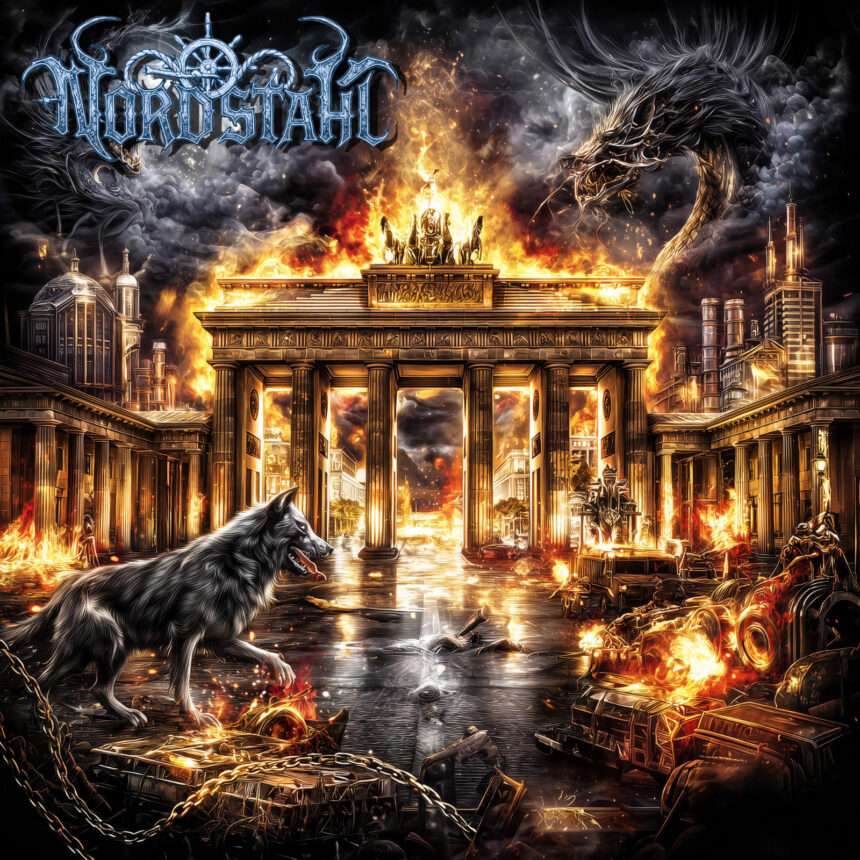
Industrial Metal has always thrived on intensity, but few artists take it as far into uncharted territory as Nordstahl. With the release of Ragnarök in Berlin, Martin, the mind behind the project, delivers more than just an album. At 46, the former software developer turned music creator presents a bold thesis on society, mythology, and technology through crushing soundscapes and uncompromising vision.
For Nordstahl, music is not only about riffs and aggression. His journey began with an obsession for film scores like The Matrix and Kingdom of Heaven, where sound carried more emotional weight than the visuals themselves. That pursuit of raw emotion eventually led him to Industrial Metal, a genre he sees as the perfect language for confronting harsh realities. Paired with the narrative depth of concept albums, his work becomes less a collection of tracks and more a philosophical exploration set to music.
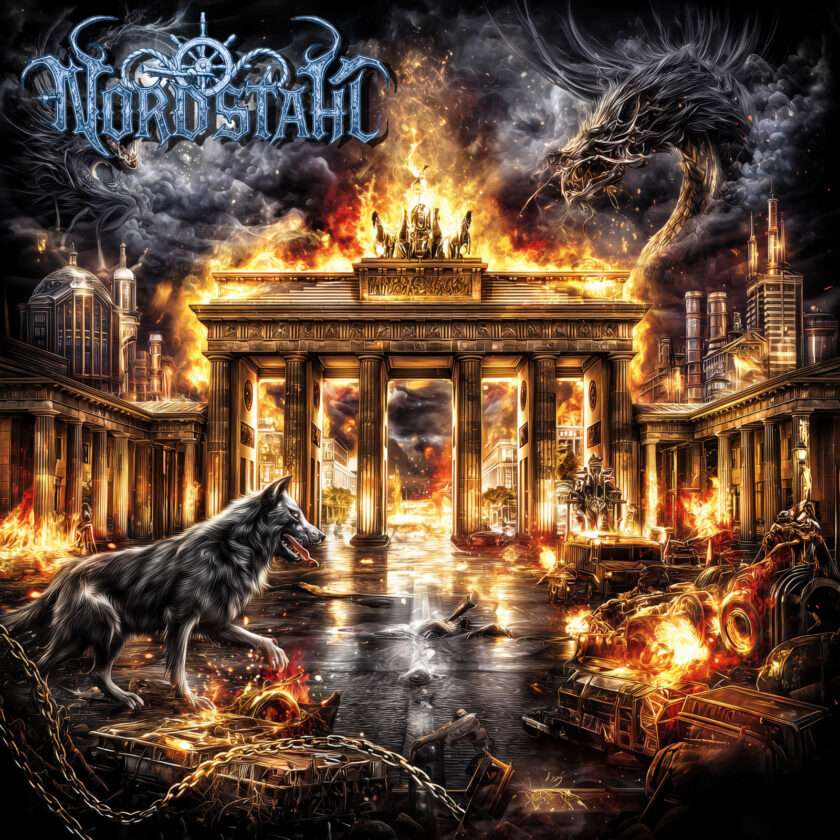
Ragnarök in Berlin embodies this approach. By weaving Norse mythology with the industrial backdrop of Berlin, Nordstahl highlights timeless cycles of destruction and renewal, using ancient wisdom to diagnose modern decay. Gods become metaphors for today’s society, while Berlin itself stands as a symbol of both rebirth and decline. It is not escapism, it is confrontation, wrapped in a soundtrack of mechanical ferocity.
What sets Nordstahl apart is his unapologetic embrace of AI as a creative tool. Having once been locked out of traditional music-making due to a lack of formal training, Martin found liberation in AI technology. For him, it was not a shortcut but a revelation, a way to bring his vision to life without compromise. While some in the industry view AI with suspicion, he insists that the tool is secondary to the message: “The vision, the message, the selection, that’s human.”
Through the interview, Nordstahl reflects on his process, his refusal to bow to industry expectations, and his determination to remain a one-man project. He does not chase collaborations or mainstream approval. Instead, he is driven by a singular mission, to wake people up, to challenge complacency, and to leave behind a legacy defined by truth rather than comfort.
With Ragnarök in Berlin, Nordstahl proves that Industrial Metal can be more than music. It can be philosophy forged in sound. For those willing to confront uncomfortable truths, his work offers both a mirror and a warning, echoing through the chaos of modern life.
Congratulations on the release of Ragnarök in Berlin! How does it feel to see this ambitious project finally come to life?
It was hard work, and it feels good to see people enjoying the results.
Can you introduce yourself to our readers and tell us a bit about your journey into Industrial Metal and concept albums?
I’m Martin, 46, former software developer turned music creator. My journey began with an obsession with film soundtracks – how they carry more emotional weight than the scenes themselves. Think The Matrix or Kingdom of Heaven. That raw emotional power drew me to create my own sonic worlds. Industrial Metal became my language because it matches the harsh realities I see, while concept albums let me explore complete narratives rather than disconnected singles. Each album is a thesis, not just a collection of tracks.
What inspired you to combine Industrial Metal with Norse mythology for Ragnarök in Berlin?
Norse mythology isn’t about distant gods on pedestals – it’s about flawed beings facing inevitable destruction. That mirrors our current situation perfectly. Berlin, once divided and rebuilt, now stands as a symbol of modern decay despite its resurrection. The industrial sound captures the mechanical coldness of our age, while the mythology provides the eternal cycle of destruction and renewal we’re experiencing. It’s not escapism – it’s using ancient wisdom to diagnose modern sickness.
Your album frames mythological figures as metaphors for modern society. How did you decide which myths best represent specific societal issues?
I think the great fact about the norse gods is that they are in a sense metaphors in themself – so everything flows naturally without bending it to much.
Looking back, what would you say was the pivotal moment that defined your career as an artist?
The moment I realized I could create music without traditional training through AI technology. As a software developer, I understood systems but couldn’t play instruments. When AI music generation emerged, I saw it: the democratization of musical expression. No longer would artistic vision be gatekept by technical ability. That’s when Nordstahl was truly born – when the tools finally matched my vision.
Can you walk us through your creative process when writing and producing an album like Ragnarök in Berlin?
First, I identify the theme – the philosophical core that will bind everything. Then I engage in deep discussions with AI chatbots about theology, mythology, philosophy – letting ideas evolve organically. It’s like consulting with a demon of the digital age, extracting wisdom from chaos. The production itself is iterative: adjusting style descriptions, refining lyrics, endless variations. Sometimes I’ll spend days on a track only to delete it because it doesn’t serve the vision. It’s patience multiplied by obsession.
Ragnarök in Berlin addresses apathy, intellectual dishonesty, and moral relativism. Were there specific events or trends in Berlin or globally that shaped this perspective?
Look around. People in power who could change things choose self-indulgence. We’ve replaced architecture that was art with soulless cubes. We have AI and computers but less wisdom than our ancestors. The specific trigger? Watching society celebrate mediocrity while genuine excellence gets buried. Seeing people say “Mir doch egal” – “I don’t care” – while everything burns. Berlin itself embodies this: a city that overcame division only to embrace new forms of fragmentation.
What has been the biggest challenge in your career so far, and how did you overcome it?
Accepting that I’m using AI in an industry that often views it with suspicion or contempt. But I refuse to hide it. AI is a tool, like a guitar or synthesizer. The vision, the message, the selection – that’s human. My biggest challenge was choosing authenticity over acceptance. I’ve had record deal offers but turned them down because they wanted me to downplay the AI aspect. I overcome it by remembering: I’m not here to be bought, I’m here to create truth.
What upcoming projects or collaborations are you most excited about, and what can fans expect next from Nordstahl?
I work alone by choice – this is a one-man project and will remain so. My independence is non-negotiable. The next album will dig deeper into the cycles of collapse and renewal. I’m exploring video work when time allows, though my attempt with “Ankerkette” showed me how difficult it is to match visuals to the sonic intensity. Fans should expect more uncomfortable truths set to crushing industrial soundscapes.
How do you see your music evolving in the next few years, and what legacy do you hope to leave in the Industrial Metal scene?
My music will become more direct, more confrontational. As AI tools evolve, I’ll push them harder, extract more extreme sounds. But the core mission remains: wake people up. My legacy? I want to be remembered as someone who proved you don’t need industry approval or traditional skills to create powerful art. Someone who showed that one person with vision and the right tools can create entire worlds. Most importantly, someone who chose truth over comfort, even when it meant standing alone.
STAY IN TOUCH: