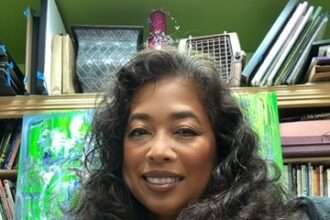

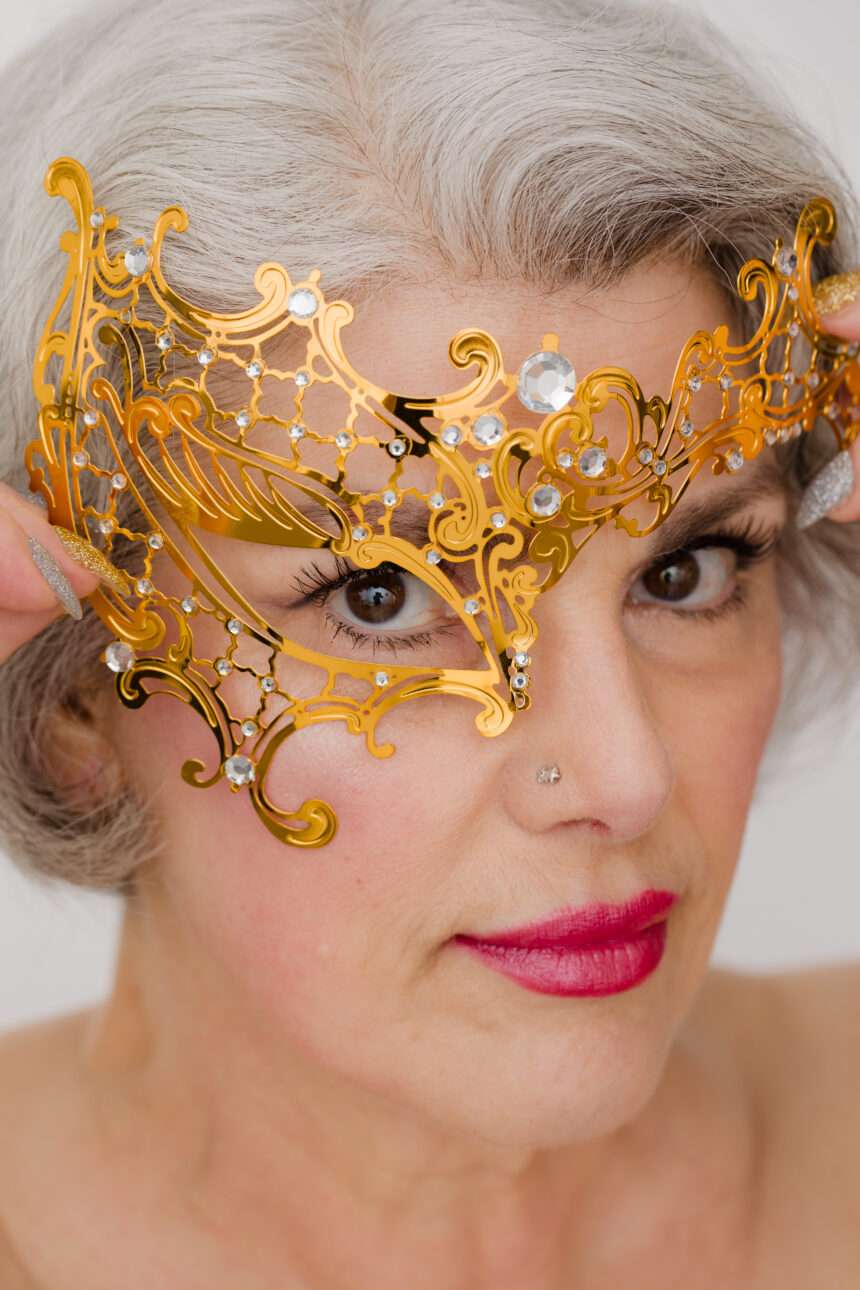
For Seattle jazz vocalist Heather Ward, music is as much about memory as it is about discovery. Her new album, Gilded & Silver, gathers songs that had been resting quietly since her 2019 release Honeysweet and brings them into the light as a project that feels both intimate and expansive. What might have stayed on the shelf instead became a body of work shaped by family, mentorship, and the creative community that has always been at her side.
The album’s title comes from “Into the Music,” Ward’s original tribute to trombonist Hugh Fraser and her uncle, Joe Edmonds. Their influence forms the emotional heart of the record, giving it a sense of legacy that is deeply personal yet easy for listeners to connect with.
Ward’s path into jazz was not the usual one. She began in the visual arts before finding her voice in music, and that early training continues to shape her sound. Her phrasing and tone carry a painter’s sensitivity, each performance textured with the same care she once brought to canvas.
For Gilded & Silver, Ward reunited with drummer Dave Houghton and an ensemble of trusted collaborators while also working closely with her son, Aidan Ward-Richter, who helped re-harmonize several tracks. The project blends originals with reimagined works and, in the process, highlights the dialogue between tradition and innovation that has always been central to her music.
Ward is also a teacher and mentor with NATS, and her dual role as educator and performer feeds both sides of her artistry. Her longtime presence in Seattle’s jazz scene, where she has been active since the late 1990s, continues to shape her voice and her opportunities as an artist.
With Gilded & Silver, Heather Ward has taken songs that once lingered in the background and transformed them into a meditation on legacy, collaboration, and the enduring power of music to connect across generations.check out the interview below and be sure to share your take in the comment section
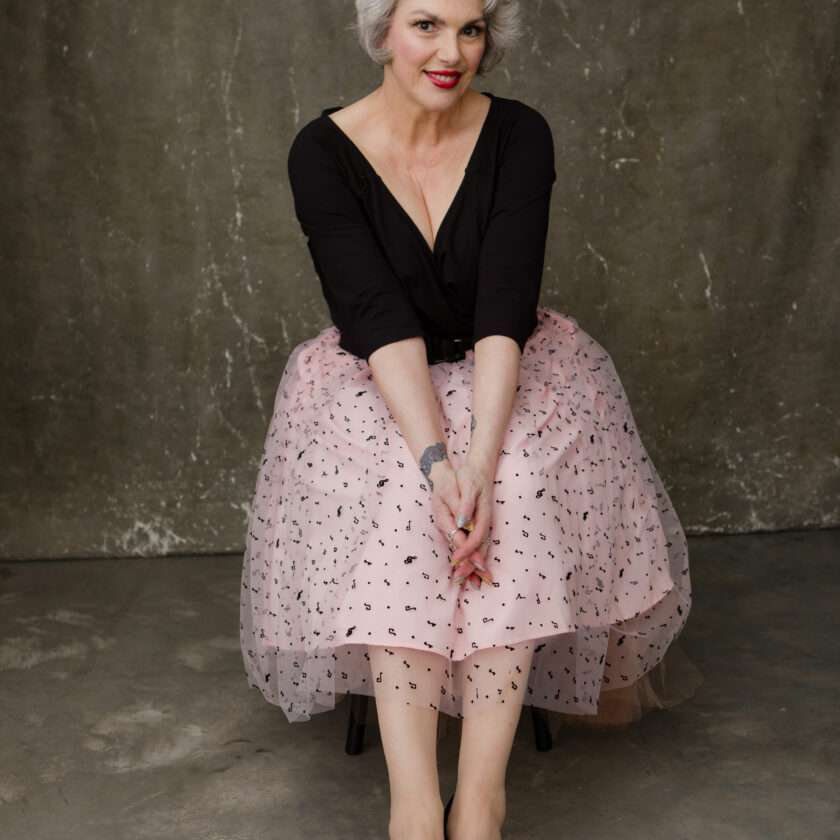
Gilded & Silver came together from tracks you had “in the can” after Honeysweet. What was the moment you knew those songs needed to become their own project rather than stay on the shelf?
I probably would have loaded everything onto the first album if I could have lol! It was just too much material for one project. I thought I’d better give the tracks space to breathe, and give the listener a chance to absorb and process. And some of the “in the can” tracks got some reworking before going onto the new album.
The album title comes from your original “Into the Music,” written in tribute to Hugh Fraser and your uncle, Joe Edmonds. How did channeling their memory and influence shape the emotional core of this record?
They were both phenomenal musicians, and encouraged me to really explore beyond conventional boundaries. Both of them were lost to us due to cancer during the pandemic, so of course I’ve been thinking about them a lot. It seemed like the best way to honour their memory, especially since I’m now finally able to make music full time, was to fully dive in and create work I’m proud of. I think they’d both be proud too.
Your career started in the visual arts before pivoting into jazz. Do you find that your background as a visual artist still influences how you approach music-making today?
Definitely. I approach composing much as I would approach creating a painting: thinking of chords and tonal centers as colours, and creating structures which complement or contrast each other much like in visual composition.
You collaborated once again with Dave Houghton, alongside a stellar ensemble. What do you value most in your long-standing musical partnerships, and how do they help bring your vision to life?
I deeply value boldness and innovation in other musicians. I want to know that they will bring their own aesthetic to the table. When others can take my chords and navigate them in unique and creative ways, that lights my fire! And although Dave doesn’t play on the recordings, he is my partner in several other ways, which has literally made all this happen.
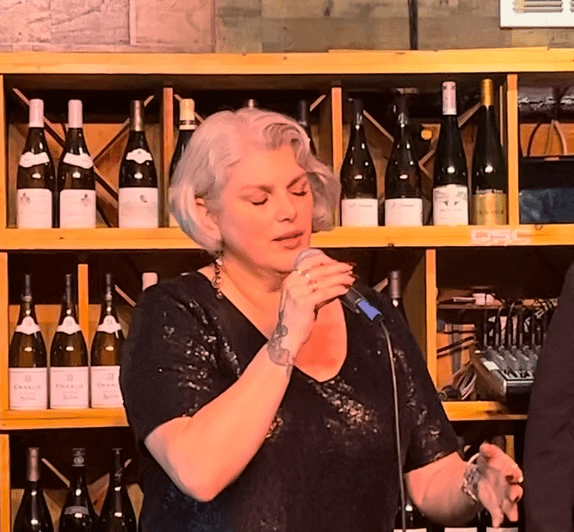
Several tracks on the record are re-harmonized with the help of your son, Aidan Ward-Richter. What was it like to collaborate so closely with family on this project?
I’ve been playing with both Aidan and my oldest kid, Shaina (who plays bass), for years. The mind meld that exists between us when we play is quite astonishing. I rarely even have to ask them for what I want, it just happens! I used to joke that I was breeding my own band lol. Shaina and I have played as a duo many many times, and they played on both albums as well. Aidan recently graduated from Berklee, so they now have even more advanced theory knowledge than either Shaina or I do. I’ve been picking Aidan’s brain about composing, arranging and reharmonizing, as well as having them play and record with me whenever they are back in Seattle.
You’ve studied with iconic figures like Sheila Jordan, Jay Clayton, and Hugh Fraser. What lessons from those mentors continue to echo most strongly in your work as a performer and teacher?
Hugh introduced me to the notion of using voice without words as an instrumental colour, a technique he first encountered working with Kenny Wheeler. He would hand me a flute chart or trumpet chart to sing at jazz orchestra workshops, which was revelation! Jay Clayton expanded on this idea by introducing me to wordless improvising with a looping machine, demonstrating how the voice can be its own accompaniment. That layering and the harmonies it creates have definitely influenced my compositions. Sheila Jordan first introduced me to the idea of singing with only a bass, and demonstrated how to navigate the chord changes. I’ve been doing it for 30 years now.
As a voice teacher and mentor with NATS, how does teaching inform your artistry as a jazz vocalist, and vice versa?
As a teacher, I love to introduce the ways to find ease in the physical instrument. So many singers deal with nerves, which make the body tense up. Once you find ease instead of tension, performing becomes a joy rather than something scary. I employ the same approach in my own performances, which help me pass on the joy to students as well as audiences.
Gilded & Silver blends original compositions with inventive arrangements of other works. How do you decide which songs to reimagine versus which to create from scratch?
Choosing songs to reimagine usually happens when there is a song that sticks with me from my past, or that I’ve loved for a long time. Occasionally, that happens with newer songs too. The thing that makes a song stick can be something as simple as one single chord that leaps out to my ear, or an emotion that’s always evoked. If there’s something specific I want to explore, then I need to write my own composition.
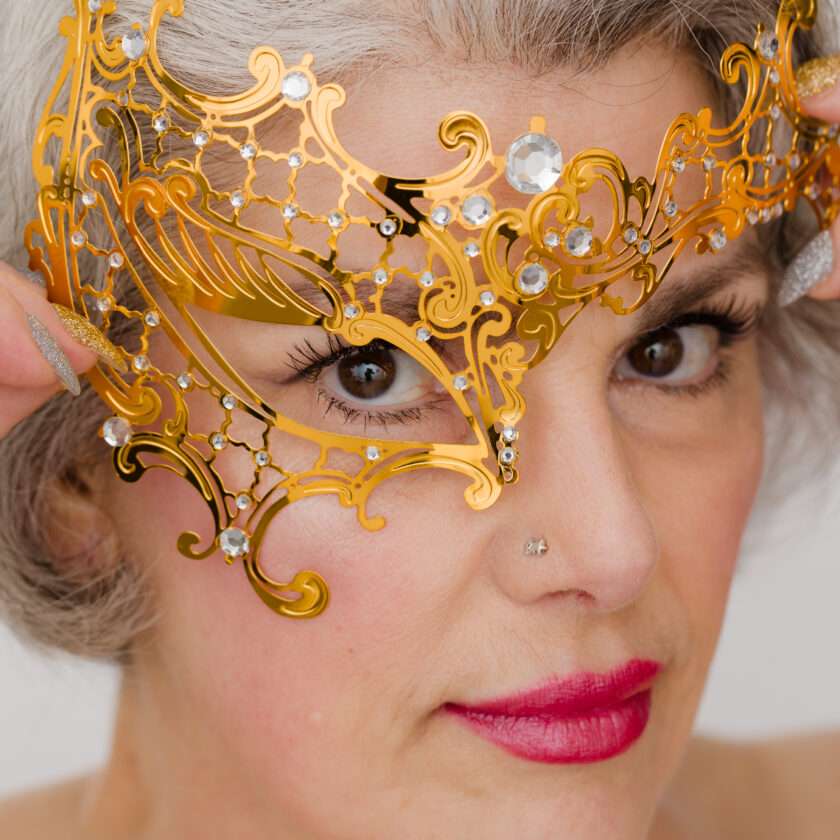
You’ve been part of the Seattle jazz scene since the late ’90s. How has the community there influenced your sound and opportunities as an artist?
Well, I was a pretty sporadic part of the scene for a long time. I had three kids to raise, and after a while I was a single parent, so had to work full time. I would perform whenever I could, but going back to school at the age of 30 (when there was only one kid lol) helped change that. I’d say that the biggest influence on my jazz outlook was becoming involved in a theatre troupe, which had me leading the house band and participating in the creation of our shows. It was a big job, but fascinating. Then later I started adapting jazz to the cabaret format when a friend started to produce cabaret shows, and I performed many for him. I still usually perform in the Seattle Cabaret Festival each year.
Looking ahead, what do you hope listeners will carry with them after experiencing Gilded & Silver, and how do you envision your next chapter as both an artist and educator?
Hopefully listeners will find in my music the emotions that moves me to make music: whimsy, joy, melancholy, wonder. If I can share what moves me, and move the listener too, that feels like success. Coming next? Educating is kind of up in the air currently. I’m working with my partner Dave to fill up my performance calendar, and already working on album #3 which will be mostly originals. More writing, more performing, hopefully some painting too. That’s my ideal life.
For music submission, click here