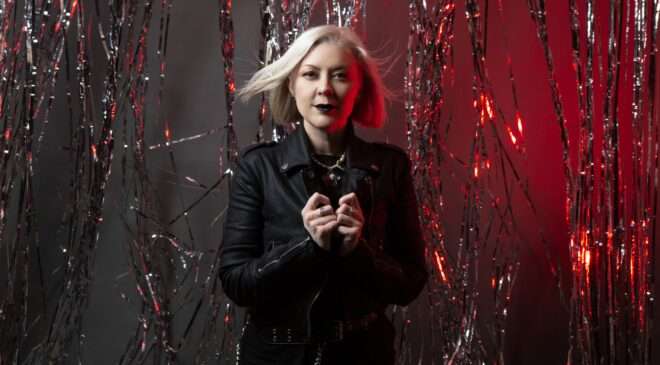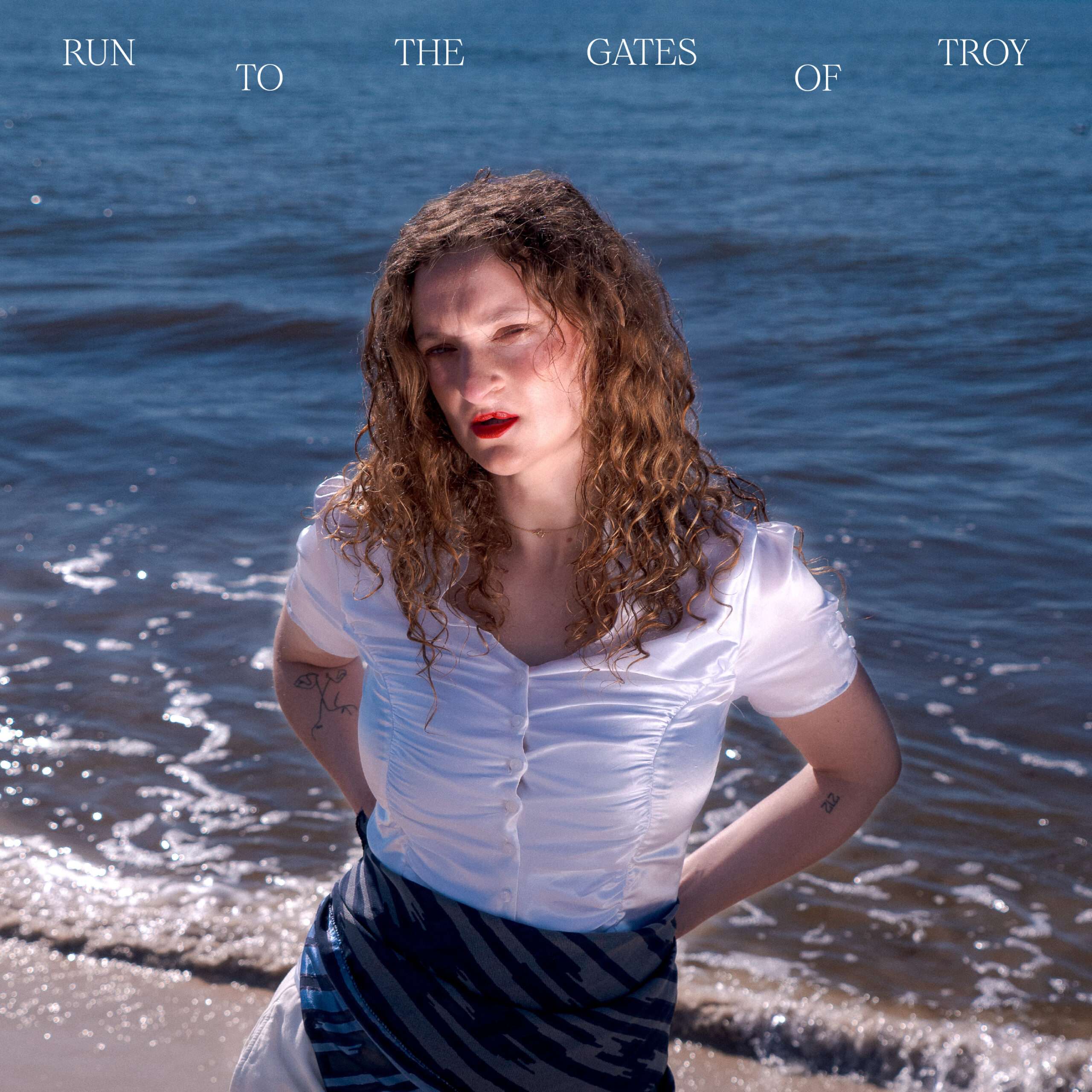
There are some stories that survive for thousands of years because the emotions at their center never really disappear. Love, sacrifice, loyalty, war, loss and the terrible knowledge that sometimes the people we love most cannot be protected from what is coming. For Swedish artist Dorothy Mour, those timeless emotions became the foundation for “Run to the Gates of Troy,” a striking new song inspired by the relationship between Achilles and Patroclus.
The song takes its emotional cue from Madeline Miller’s The Song of Achilles, but Dorothy Mour does far more than simply retell a famous myth. She focuses on the tenderness beneath the tragedy: two people whose devotion survives betrayal, conflicting values, family disapproval, war and the knowledge of an approaching fate. In Mour’s interpretation, Patroclus’ decision to run toward the gates of Troy becomes a devastating expression of love — an act of self-sacrifice driven not by the desire for glory, but by the hope of saving the person he loves and reassuring him even in the face of inevitable loss.
That tension between intimacy and catastrophe is also embedded in the music itself. “Run to the Gates of Troy” begins almost privately, with piano and saxophone creating space for the story to unfold, before gradually expanding into driving drums, electric steel guitars, atmospheric synths and layered choirs. The result is cinematic without losing its human center: a song that moves from the closeness of two people to the overwhelming scale of war. Interestingly, much of that transformation happened organically in the studio, with Mour and co-writer/producer Vilmar Jansson allowing the song to reveal its final shape as they worked.
The track also offers an intriguing introduction to Mour’s broader artistic identity. Her music exists somewhere between modern trip hop, mythic art pop, jazz textures and hip-hop-informed grooves, but there is nothing overly calculated about that combination. Mour describes her musical instincts as intuitive, following whatever sounds and feels right rather than trying to force herself into a particular genre. That freedom is perhaps unsurprising given her artistic journey between Berlin and Stockholm — two cities that, in very different ways, have shaped her approach to music, performance and self-expression.
Berlin gave her an appetite for experimentation, honesty and the freedom to explore subjects that might otherwise be considered uncomfortable or taboo. Stockholm, by contrast, brought discipline, structure and a renewed connection to live musicianship. Together, those influences have helped shape an artist who can embrace the darkness and unpredictability of underground culture while bringing a more deliberate and refined approach to songwriting and production.
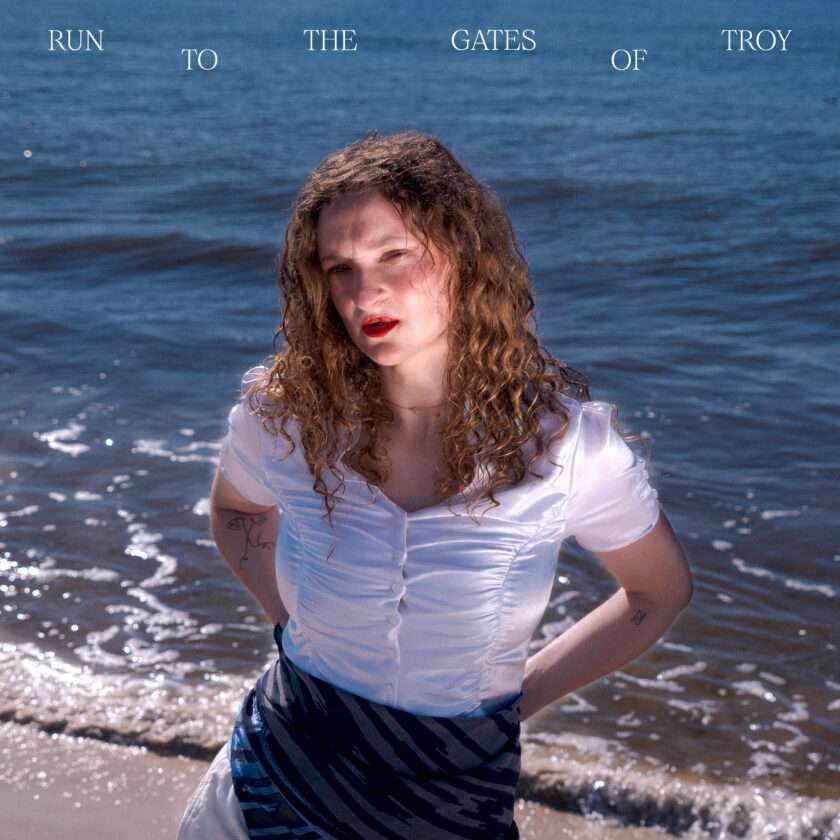
That balance is becoming increasingly important as Mour prepares her debut album, Run to the Gates of Troy, scheduled for winter 2027. The record promises to bring together an organic live-band sound with electronic and trip-hop elements, drawing heavily on analogue textures, nostalgia, Greek mythology and the ocean. Beneath those references is a larger fascination with what it means to be human — the uncontrollable emotions, extremes and contradictions that continue to make ancient stories feel remarkably relevant.
There is also a sense of evolution in Mour’s story. From developing her identity in Berlin’s underground scene to performing at venues and cultural events including Kulturhuset Stadsteatern and Stockholm’s International Film Festival, she has gradually grown into a more confident and disciplined artist without losing the dreamy quality and fearless songwriting that were present from the beginning.
In this conversation, Dorothy Mour talks about the emotional world behind “Run to the Gates of Troy,” the moment the song came together, the challenges of translating a mythological tragedy into music, and the creative chemistry she shares with Vilmar Jansson. She also opens up about writing in English, Swedish and German, the contrasting influence of Berlin and Stockholm, the making of her forthcoming debut album, and the parts of her younger artistic self that remain firmly at the heart of her music.
You chose the story of Achilles and Patroclus as the emotional foundation for “Run to the Gates of Troy.” What was it about their relationship, particularly the tragic side of it, that felt personal or creatively interesting enough for you to turn it into a song?
When I read the book The Song of Achilles by Madeline Miller, I was so touched by their relationship because it felt so pure and beautiful. They were at war together, and a lot of things happened that would easily break many relationships. Infidelity, an illegitimate child, a disapproving mother, clashing values, and impending doom. Yet none of it broke their devotion towards each other. It felt so obvious, like a mountain that’s always going to stand there. They held each other in such high regard despite their flaws and mistakes. I think that’s true relationship goals.
The song reportedly starts in a very intimate place with keys and saxophone, then gradually becomes much bigger with driving drums, choirs and electric steel guitars. When you were writing it with Vilmar Jansson, did you have that full cinematic journey in your head from the beginning, or did the song reveal its final shape during production?
The song and production grew together in real time. It started with Vilmar playing that intro piano riff, and I immediately began singing the chorus over it. I was reading the book and had just reached the scene where Patroclus puts on Achilles’ armor to charge the gates of Troy and end the war. That scene became the chorus, and the rest arrived in one clean burst.
We recorded the scratch vocals without even knowing the final melodies, which gave the verses their spoken feel. After we had the core song down, we realized how cool it would be to emphasize that narrative journey in the arrangement: starting intimately with just keys and saxophone while the focus is on their love, and then bringing in epic guitars and choirs as they enter the war. It was a very natural, intuitive process.
There is a lot of emotion packed into the title “Run to the Gates of Troy.” When you hear that phrase now, what scene or feeling immediately comes to mind, and what do you hope a listener imagines when they hear it for the first time?
For me, it’s the scene where Patroclus is running toward the gates of Troy, holding onto this hope that maybe he can end the war and they can just live a happy life together. But at the same time, he knows Achilles was given that prophecy—that he’d either live a long, quiet life, or go to war, become a legend, and die young. Achilles chose the war, and Patroclus knows that. He probably knows he won’t survive it either.
So it’s basically self-sacrifice. It’s this feeling of charging straight into danger, but mostly wanting to reassure Achilles that it’s going to be okay – telling him not to grieve, because this was always inevitable. That’s why the story is so tragic: all they wanted was a long life together, knowing the entire time that they’d never get it.
When people hear the title, I want them to feel that exact mix of love and doom.
You describe your music as a meeting point between modern trip hop and mythic art pop, while jazz textures and hip hop grooves also find their way into the sound. Where does that mixture come from for you? Do you deliberately search for unusual combinations, or is this simply the music that naturally comes out when you write?
It’s what naturally comes out. Lyrically I will have more of an idea of what I want to say, but when it comes to the music I go a lot on my intuition – what sounds good, what gives me a good feeling. And then it often just happens to be that type of sound. I guess because it’s the music I like to listen to myself?
You have created music in English, Swedish and German. Do you experience those three languages differently as a songwriter? For example, does an emotion sometimes feel more honest or powerful in one language than another, and can the language actually change the direction of a song?
German is the one I’m worst at, which actually makes it quite an efficient process because of the limited vocabulary. You can pretty much only say things in one way, so you don’t get stuck between ten different choices of how to express a thought. My songs in German probably sound super basic to fluent speakers, haha! But they also end up feeling the most playful for that same reason.
English is the easiest to write in, but it has the highest risk of sounding generic or overdone. There are so many words, but also so many pre-existing songs and expressions that have turned into clichés, so you have to be careful.
Swedish is my mother tongue, so it feels the most naked. Everything you say there feels completely exposed. It’s also a more direct language with fewer words in general, so you can’t sugarcoat stuff—you have to get straight to the point. My Swedish songs tend to be the most serious. So yes, language definitely shapes the direction and overall feeling of a song.
Your musical journey began taking shape in Berlin before you returned to Stockholm, and both cities have very different creative identities. What did Berlin teach you about yourself as an artist, and what changed in your music or outlook after returning to Stockholm?
Berlin has such a dark and complicated history which makes it super unique. It’s a very free city with a strong DIY and anarchic vibe, and that definitely shaped me as an artist. It taught me to make whatever music I feel like making without worrying about what’s expected of me, and to never hold back from explicit, taboo, or very honest subject matter. Berlin’s “I-don’t-give-a-fuck” attitude is definitely responsible for that. It also influenced my style, leaning into Berlin’s darker club fashion of lace and latex, or the Marlene Dietrich cabaret aesthetic of Berlin’s roaring ’20s.
As for Stockholm, it’s the literal opposite of Berlin. It’s very structured, disciplined and career-oriented. Berlin is fantastic, but it’s easy to lose yourself in that city. Stockholm definitely made me more disciplined and organized, which has been great for my music. Berlin is all about experimenting and being as weird as you are, while Stockholm has a practical, tangible approach to music making – it’s the hitmaker city, after all. If you take a little from both, you reach the golden middle way.
Stockholm has also caused me to go back to a more analogue sound, since I met my amazing live band The Mours here, and it’s just so much more fun to record and play music with them. My upcoming album, which ‘Run to the Gates of Troy’ will be a part of, will have many songs that have more of an organic band sound for that very reason.
There are some very specific moments in “Run to the Gates of Troy,” from the chorus drop around 0:53 to the cinematic bridge and then the climax near the end. Was there one of those sections that was particularly difficult to get right, or one that you knew immediately had become the heart of the song?
There was some huffing and puffing going on for sure. Perhaps the guitar part at the cinematic bridge was the biggest puzzle to get right. I remember being in the studio with Vilmar and the guitarist in my band, Richard Wedberg, going back and forth on every single note. But it came with the highest reward, since I really think it’s one of the strongest parts of the song.
The chorus, on the other hand, was instinctual from day one. What really made it explode was adding those layered choir backing vocals (‘your cataclysmic wrath…’). It injected this 60s girl-group feel, almost like The Supremes meeting dark art-rock, which completely transformed the energy of the hook.
You worked with Vilmar Jansson as both co-writer and producer on this track. How do the two of you work together creatively? When you disagree about an arrangement, lyric or production choice, how do you eventually decide which direction the song should take?
I think we work quite well together. It’s been a very organic process of just trying things out, going on intuition, and sometimes backtracking and taking things away or replacing them. If we have a disagreement, we discuss it back and forth, or try new things out, until we find what works best for the track.
“Run to the Gates of Troy” is also going to introduce your debut album of the same name, planned for winter 2027. How much of the album can already be heard in this single, and what can listeners expect from the wider world you are building across the record?
The album merges a live-band feel with a more electronic, trip hop sound, and I think ‘Run to the Gates of Troy’ carries both sounds equally. It introduces the core palette: the groove, the live instrumentation, the choirs, and the atmospheric synths.
As for the wider world, the record is very analogue and nostalgic – a longing back to our own humanness. That’s why I kept coming back to Greek mythology and the ocean: they both represent all the untamable extremes of being alive.
You have performed at places including Kulturhuset Stadsteatern and Stockholm’s International Film Festival, after first developing your identity within Berlin’s underground scene. When you look at that journey now, what do you think has changed most about Dorothy Mour as an artist, and what part of the person who started that journey is still very much present in your music?
Honestly, I’ve just grown into the craft. After putting in so many hours on stage, in production, and managing the whole process of making a record, everything’s a lot more dialed in. That organization brings a completely different level of confidence.
What’s still there from the beginning is the dreamy touch across the music – and that same attitude of being ballsy in what I choose to write about.
CONNECT
FACEBOOK | SPOTIFY | SOUNDCLOUD | YOUTUBE | INSTAGRAM | TIKTOK