
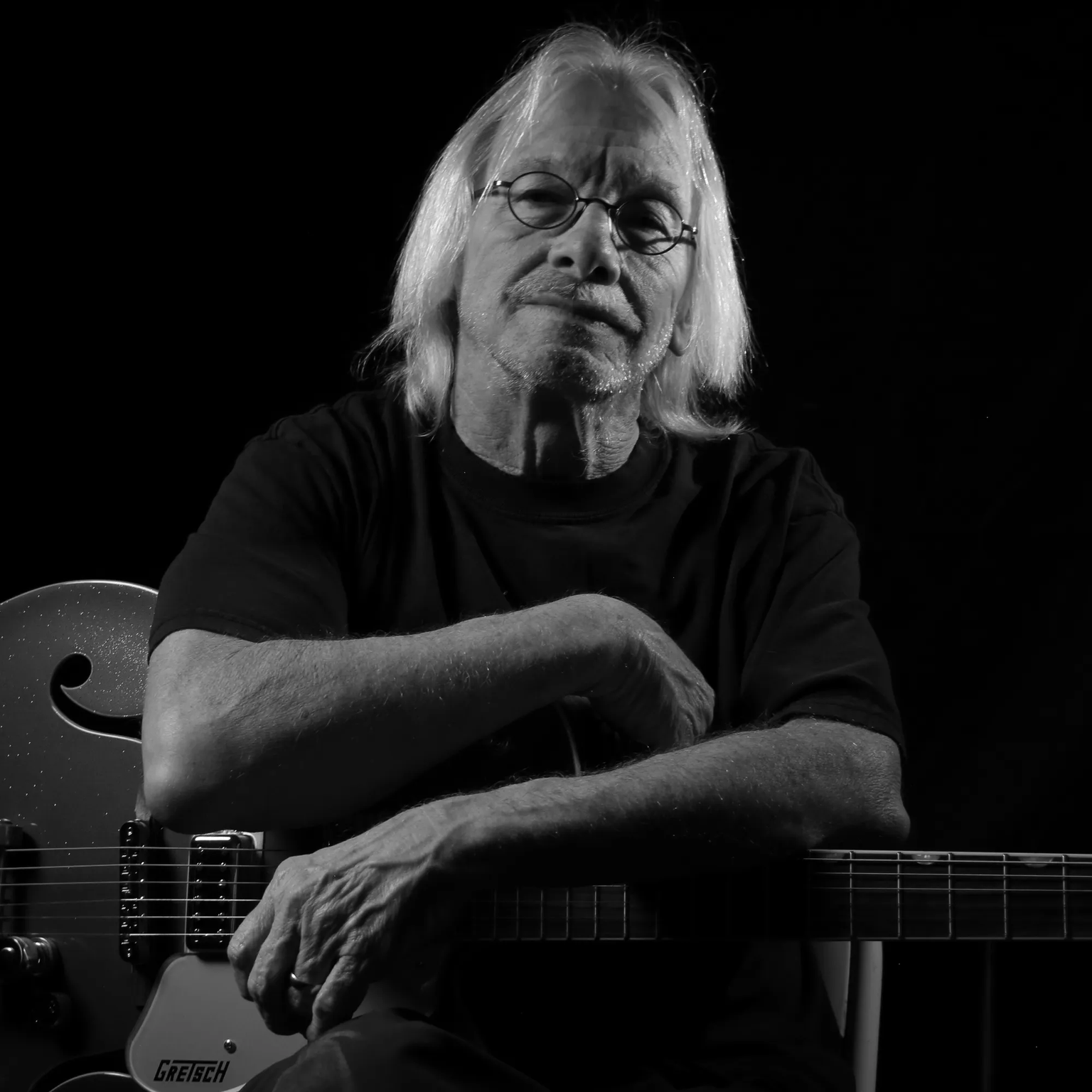
Some albums are created to introduce a new chapter. Others are created because an old chapter still has something worth saying. For David Moore, A Wink Is As Good As A Nod To A Blind Mule is both a musical project and a deeply personal act of remembrance, built around the songs and creative legacy of his late friend and longtime collaborator, James Masters Patterson.
Moore’s relationship with Patterson began during his university years at North Texas State University in Denton, Texas. He had been writing songs since he was 16, using an old Yamaha acoustic guitar given to him by his sister, but music was still developing alongside his ambitions as a soccer player. After a serious ankle injury ended his sporting plans, music gradually became a much larger part of his life.
Introduced to Patterson through guitarist David Phelps, Moore soon discovered that the two lived in the same apartment complex. What began with two acoustic guitars grew into a close friendship and songwriting partnership. Moore would bring chord progressions and melodies, while Patterson had an instinctive ability to find guitar parts that could completely reshape a song.
Their friendship continued in Dallas, where they shared an apartment, formed bands and played clubs around the Dallas/Fort Worth area. Beyond music, they shared everyday interests, from playing frisbee to talking about weather and their cats. Moore describes Patterson as almost a mirror of himself, a connection that made their creative partnership particularly natural.
More than 13 years after Patterson’s death, Moore returned to their shared musical history. Completing the album became an almost two year process involving the reconstruction of drum parts from earlier recordings using MIDI. Without AI, Moore worked by ear and through trial and error, carefully recreating details of the performances.
The work became especially challenging when preserving the distinctive drumming of Wayne Jarvis, another close musician who died less than a year after Patterson. Moore focused on subtle details in Jarvis’s playing, including snare accents and flams, in an effort to retain the personality behind the performance.
One of the most emotional moments came while mixing “Mysteries Of Life,” when guitarist Jay Michael Smith delivered a performance that captured so much of Patterson’s feel that Moore briefly felt as though his old friend had returned.
With musicians contributing from Dallas, Pittsburgh, Albuquerque and the UK, the album gradually became more than a restoration project. It became a living document of friendship, collaboration and memory.
In this interview with Spinex Music, David Moore reflects on the relationship that shaped his musical journey, the difficult process behind the album, the people who helped bring it together and why, after everything, the one thing he would want Patterson to hear is simply: “My friendship.”
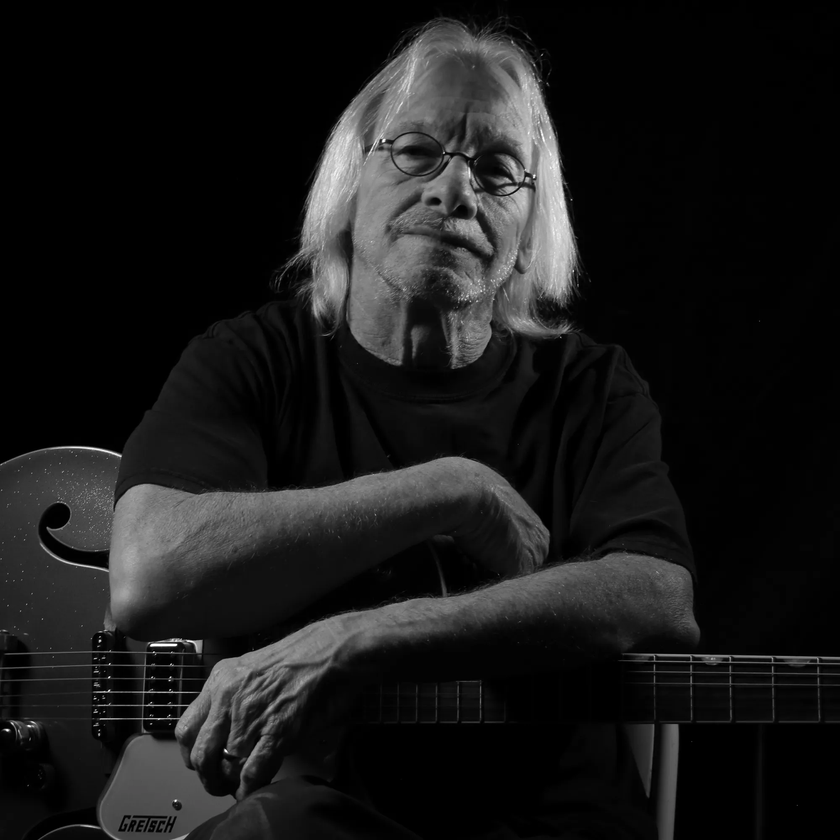
David Moore
“A Wink Is As Good As A Nod To A Blind Mule” is ultimately a tribute to James Masters Patterson, who wrote, co-wrote and inspired every track on the album. What did James mean to you personally and creatively, and when did you realise you wanted to preserve his musical legacy in this way?
I met Jim while attending university at North Texas State University in Denton, Texas. I was a walk-on soccer player as a freshman and was an athelete first and foremost. However a severe ankle injury ended my ambitions. I had been playing and writing songs since the age of 16 on an old Yamaha acoustic guitar my sister gave me, as a hobby. I met a guitarist named David Phelps in on of my classes and he introduced me to Jim. As luck would have it Jim lived in the same apartment complex I did. We started out playing acoustic guitars together and from that our friendship grew.
I basically strummed guitar chords and wrote vocal melodies to them, and Jim had the amazing ability to play along with a perfect part of his making which turned things from just a boring chord progression into a song. We went on to move to Dallas and shared an apartment together and started forming bands and playing the night clubs in the Dallas/Ft. Worth area. In all the years and hours we spent together I can not recall a single instance where we argued or raised voices at each other. I was at the graveside when he was buried and I knew I would like to preserve his memory somehow, but it wasn’t until I was introduced to Jay Michael Smith of The Speaker Wars that I found a voice with Michael’s guitar playing abilities to make it more than a dream.
The album title reflects Patterson’s distinctive sense of humour. How important was it for you to retain that lighter, personal side of James rather than allowing the record to become solely a memorial?
Jim was more than just a friend…the bond between us was more akin to close brothers. Besides having the musical connection, we shared other interests as well. We would go to the local park several times a week to throw frisbee for hours. We both had cats; we shared an interest in weather…it was almost like hanging out with a mirror of yourself. So in a sense, I didn’t give much planning to an importance of capturing a personal side of Jim, that just came about on it’s own volition.
You spent almost two years reconstructing the drum parts measure by measure using MIDI from previous recordings. What was that process like emotionally, particularly when you were working so closely with recordings connected to someone you had lost?
Honestly there wasn’t much emotion in that process. It was a very laborious effort for me. I am not the most gifted musician in the world by any stretch of the imagination, and have very little training to go on. So everything is done by ear, and trial and error. One moment does stand out though. When I started mixing “Mysteries Of Life” after Michael had sent me the guitar tracks it brought a moment of emotional deep reflection. Michael did such a great job of capturing not only the notes, but the feel and sound of Jim playing that song…for a brief time it was like Jim had stepped into the studio. That was a pretty emotional moment.
You deliberately completed this project without AI assistance. Why was maintaining a hands-on, human approach so important to you, especially when technology could have potentially made parts of the reconstruction process faster?
First off I have a very “old school” mentality…a stubborn trait of mine. But mainly two factors went into the decision to do the drums like that. I could have hired a drummer to play the parts, but many of the drum tracks were either played by Jim or our close bandmate Wayne Jarvis. Wayne passed less than a year after Jim, so I couldn’t get Wayne to play them. Wayne was a little unorthodox in his style and technique; he held his sticks like a marching drummer. So he had a light touch and used a lot of untraditional flams and flurishes in his playing.
So to try and capture the feel of his drumming in a digital space required me to alter the velocities of drum hits (mostly snare) to recreate his style to the best of my abilities. We used to practice in a very small bedroom with only a carpeted floor and acoustic ceiling tiles on the walls…there was just enough room for the four of us and our equipment. The only was we were able to pull it off was due to Wayne’s light touch. The other reason was the experience of doing it that way taught me a lot about workin with MIDI programming drum tracks.
“Mysteries Of Life” features Jay Michael Smith playing guitar in a way that you feel remarkably captures Patterson’s own style. What was it like hearing that performance for the first time, and did it create a moment where James seemed to be present in the music again?
I will refer you to my answer of the third question. With that said, Michael is a world class guitar player and he did such a remarkable job playing the guitar parts Jim wrote and played throughout the album that he brought my dear friend’s voice back to life through the medium Jim used to comunicate, which was the talent Jim possessed with the guitar.
The contributors recorded their parts from Dallas, Pittsburgh, Albuquerque and the UK. How did you manage to create a cohesive musical identity across performances recorded in so many different places, and what did each musician bring to Patterson’s compositions?
I guess the only common thread throughout the songs on the album is that they were all written by Jim, Jim and I, or a couple I wrote; however they are all songs we played together for a long time. Jim tended to be more rooted in a classic rock sound, two examples are “Chasing The Mothership” and “Mysteries Of Life” both of which Jim wrote, however I have tapes of things he recorded by himself which could be considered alternative. I tend to cross genre’s more, however no matter what progression I came up with Jim always had the most perfect part to play. One example is “That Little Funky Tune” and the great riff Jim wrote to go along with that song…in fact, although Jim did not do a lot of singing, the higher vocal harmony on that song is one he wrote.
We have already talked about Jay Michael Smith’s guitar playing being the crucial element to getting the project off the ground, however having Brian Patterson’s bass on five tracks, Fred Sullivan’s vocals on three tracks, Hollan Holmes playing synth on two tracks, Ralph Galetti’s vocals on “Mysteries Of Life” as well as his daughter Abbie McKenney singing the duet on Land Of Sunshine, and of course Jackie Dwire singing Eternal Deceiver were great additions to help me fill the gaps. Of course having Stuart Epps co-producing and playing many of the instuments on “Love Is The Victory” was icing on the cake.
Seven songs were released individually beginning in late 2025 before the complete album arrived. Did releasing those tracks gradually change the way you viewed the album, or did you always see the individual singles as pieces of a much larger story?
Actually releasing the seven tracks was a promotional decision to try and build interest in the project. After releasing the first seven tracks as singles I had planned to then release the entire album late May/early June 2026, however the project ran into some unavoidable delays through the summer and I ended up cutting one track from it to get it out in late August.
When you are working on a project rooted so deeply in someone else’s songwriting and musical identity, how do you decide where preservation ends and your own creative interpretation begins?
We were writing partners, so there isn’t really a dividing point to split the works into seperate identities. Even though a few of the songs he wrote, and a few of them I wrote (most of them we wrote together), I could never write the parts he wrote and he did not write like I did, and I think that may be what gives the album it’s commonality, because the two different approaches became one and the same to us. His strengths became my strengths, and vice versa. It is a tribute album to him and his talent, his work ethic, and even his sense of humor.
Beyond the technical reconstruction of the recordings, what did making this album teach you about friendship, grief and the way music can preserve aspects of a person that might otherwise disappear?
A: Jim passed away over thirteen years ago, so time has pretty much washed the grief away. I miss him, and will until the day I die. Like so many things in life, the past blurs, the future is abstract at best, so we are rooted in the moment, which is a quite myopic viewpoint…no pun intended. Music and creativity are emotional things, and strangely I am not a hugely emotional person, however being human every once in a while it sneaks in the backdoor and catches me unaware. That’s my cue to write some music! LOL
Now that the complete album is finally out after nearly two years of work, what do you hope listeners take away from Patterson’s songwriting and musicianship, and what would you most want James himself to hear in this tribute?
One of the reasons for making this album was so that people who never had a chance to hear him play or know him at a personal level will be introduced to the special human he was, and to hear the guitar riffs which got silenced the day he died. The world lost a good man and an extremely talented individual that day. As to what I would want Jim to hear….my friendship.
CONNECT: