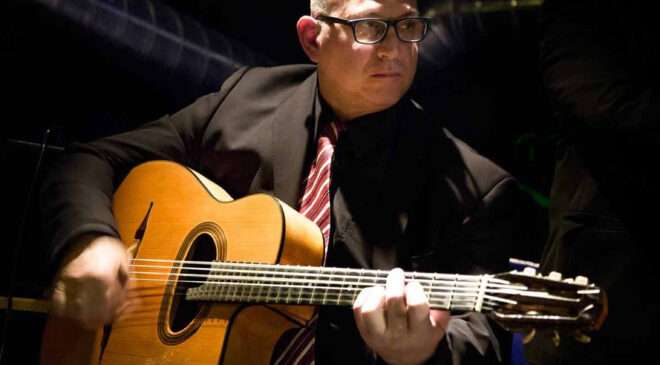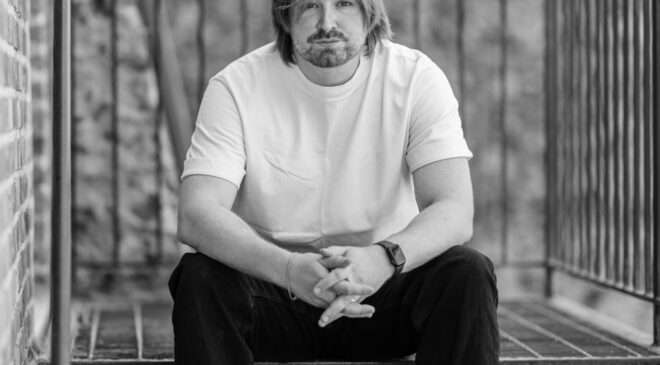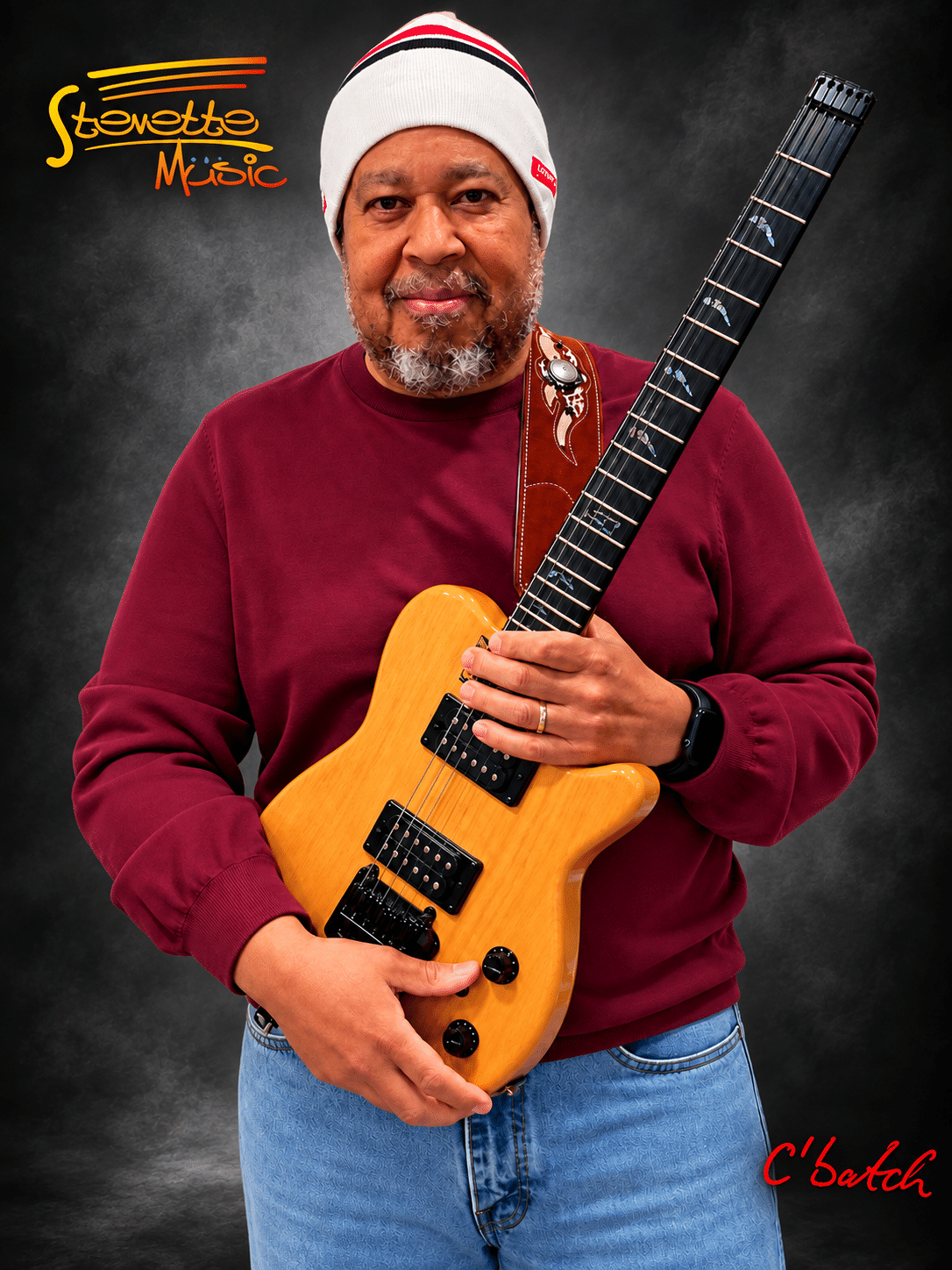
With a career spanning more than four decades, C’batch has built a reputation for musical exploration, creative independence, and a willingness to move beyond conventional boundaries. From his contributions to New York’s dance music scene in the early 1980s to his work with Sinnamon and NV, he has continued to embrace experimentation while remaining true to his artistic instincts.
Through Stevette Music, Inc., the independent label he founded with his wife Yvette in 1984, C’batch has maintained control over his creative direction and explored music on his own terms. His latest work, “If There Was Ever A Fool (One Of A Cast Of Many),” reflects that enduring spirit. Blending guitar, orchestral arrangements, theatrical storytelling, and dark humour, the track brings together years of musical experience in a distinctive and personal composition.
In this conversation, C’batch reflects on the inspiration behind the track, the experiences that have shaped his musical journey, the importance of creative freedom, and his continued passion for discovering new possibilities through music

How did your journey into music begin, and what first inspired you to pursue a career that has taken you across R&B, soul, dance, funk, reggae, jazz, and cinematic music?
My journey into music began at a very young age. I’ve never really thought of music as a career, but rather as an outlet for self-expression. To me, music has always been a passion—a continuous desire to create something beautiful, meaningful, and enjoyable that I can share with the world and hopefully leave behind for others to appreciate.
I think that passion, more than anything else, explains why I’ve explored so many different musical styles over the years.
The guitar improvisation behind “If There Was Ever A Fool (One Of A Cast Of Many)” dates back to 2012, while the lyrics came years later. What do you remember about creating that original piece, and did you ever imagine it would eventually become part of a song like this?
The guitar improvisation was originally performed over a backing track in 2012, and years later, it became the musical foundation for “If There Was Ever A Fool (One Of A Cast Of Many).”
As a matter of fact, I never imagined that I would use that particular improvisation in a song until quite recently.
What prompted me to reconsider it was the success I had with another guitar improvisation that I had performed over one of my earlier compositions, “Round & Round.” That improvisation eventually evolved into an entirely new composition, “Our Little Pooh Pea (The Last Light).”
That experience made me realize that some of these older performances might contain musical ideas worth revisiting, even if I had never originally intended to develop them further.
The lyrics were inspired by your observations of a friend’s relationship and were written after it ended. How did you approach telling a story drawn from real life while balancing its painful moments with irony and humour?
This is a tough question to answer, and my explanation might actually sound a little crazy!
The idea for the lyrics simply came to me one day while I was mowing my lawn. I would suddenly think of a line or a phrase, stop what I was doing, run into the house, and jot it down.
That process repeated itself over and over until I had finished both the lawn and the lyrics!
I wasn’t consciously trying to balance the painful aspects of the relationship with humor. The irony and somewhat dark comedic quality of the lyrics just seemed to emerge naturally from my observations of what had actually taken place.
Sometimes the circumstances surrounding real relationships can be both painful and, in retrospect, strangely humorous.
There is an interesting contrast between the song’s darkly comic storytelling and its dramatic orchestration. How did you develop that combination, and what made you feel that a cinematic and almost theatrical arrangement was right for the lyrics?
Well, I had that original video recording of my guitar improvisation, and I decided to use it as the starting point for developing the music.
I always knew that the lyrics I had written needed a musical home, so I simply decided to experiment and see whether they might work with this particular composition.
There really wasn’t some grand plan to create a theatrical or cinematic piece. It was all experimentation on my part.
As the arrangement developed, the orchestral elements seemed to complement the dramatic nature of the lyrics, while the guitar provided an emotional connection to the story.
Fortunately, the combination worked, and the result was something quite different from what I had originally imagined.
You have described this release as a departure from your usual sound, with expressive electric guitar surrounded by ambient textures and orchestral elements. What did you enjoy most about exploring this musical direction, and were there any challenges in bringing all these elements together?
I think most of my musical compositions are rooted in more traditional musical styles, even some of my recent releases that have taken on a more cinematic character.
In my opinion, “If There Was Ever A Fool” is considerably less commercial and much more theatrical in nature than anything I’ve previously released.
That’s something I had never really considered doing until now.
What I enjoyed most was the freedom to experiment without being concerned about whether the finished composition would fit into a particular musical category.
The challenge, if there was one, was finding a way to bring these very different elements together while maintaining the emotional character of the original guitar performance.
In the end, I think that freedom to experiment is what made the composition work.
You have been part of New York’s dance music history since the early 1980s, with published works such as “I Need You Now” by Sinnamon and “Let Me Do You” by NV. How did that era shape your musical instincts, and what lessons from those years continue to influence your work today?
When it comes to musical instincts, I can honestly say that from the very beginning, through that particular period in the early 1980s, and right up to the present, I’ve always approached writing music with a willingness to experiment.
That has been one constant throughout my musical life, and it has never really changed.
Those early experiences certainly gave me an appreciation for rhythm, arrangement, melody, and the importance of creating something that connects with listeners.
But perhaps the most important lesson I’ve carried forward is not to become confined by any one musical style or formula.
That willingness to experiment continues to influence virtually everything I compose and produce today.
In 1984, you and your wife, Yvette, founded Stevette Music, Inc. How has building and maintaining your own independent music company shaped your career, and what has allowed you to keep creating and releasing music across four decades?
Having our own independent music company has enabled me to maintain the creative freedom to compose and produce music without many of the limitations that are often imposed by the music industry.
That independence has been extremely important to me.
I’ve never wanted to feel that I had to create music simply to satisfy a particular trend, commercial expectation, or industry formula.
If I had been bound by those kinds of restrictions, there probably would never have been an “If There Was Ever A Fool.”
And after more than four decades, I think the desire to create something new and different is still what keeps me going.
Your 2026 project, The Vault, brings older compositions and recordings into the present, while your latest EP, I Guess You Want It This Way, revisits a composition that remained in your archives for around 26 years. What determines when an older musical idea is ready to be completed and shared, rather than left in the past?
That’s an excellent question, and one that’s actually rather difficult to answer.
I would probably say there’s a certain randomness involved in selecting many of these older musical ideas and compositions.
For years, much of this material was literally sitting in a plastic storage container in my garage—a container that I eventually came to call “The Vault.”
When I began revisiting those recordings, I wasn’t necessarily following a particular plan or looking for specific compositions to release.
Sometimes something simply catches my attention when I listen to it again, and I begin to imagine what it might become with a fresh approach.
I suppose it’s a combination of curiosity, inspiration, and perhaps hearing something in the music today that I didn’t fully appreciate when I originally created it.
You have worked across many genres and have dedicated your latest reggae-inspired EP to the legendary guitarist Ernest Ranglin, whom you met in 2001. How have the musicians and musical traditions you have encountered over the years influenced your approach to experimentation and storytelling?
Absolutely, there’s no doubt about it.
I know that I am very much a byproduct of my exposure to the many extraordinarily talented musicians I’ve encountered, watched, and listened to over the years, along with the different musical styles and traditions they represent.
All of those experiences have influenced me in one way or another.
I’ve never believed that musical inspiration has to come from within the boundaries of a particular genre.
Meeting Ernest Ranglin in 2001 was certainly a memorable experience, particularly because of my appreciation for his musicianship and the influence of Caribbean music.
I think every musical experience leaves something with you, and eventually those influences find their way into your own compositions, sometimes without you even realizing it.

With “If There Was Ever A Fool (One Of A Cast Of Many)” bringing together material from different periods of your life, what does this release represent for you at this stage of your career, and are there other unfinished compositions or stories in your archives that you hope to bring to life next?
I think of “If There Was Ever A Fool” as something of an evolutionary musical capstone—perhaps even my pièce de résistance.
It represents a culmination of many years of musical exploration and experimentation, bringing together ideas that originated at completely different periods of my life.
In many respects, it’s a composition I could never have imagined creating when I first began writing music.
And yes, there are certainly other unfinished ideas and compositions in the archives. However, I’m not sure if or when I’ll be bringing those to life anytime soon.
At this point, I’m looking forward to pursuing something that was actually one of my original intentions all along: finding opportunities to place my music in films, television, commercials, video games, and other visual media.
After spending so many years creating this body of work, I’d really like to see some of these compositions find new lives in those settings.
CONNECT