
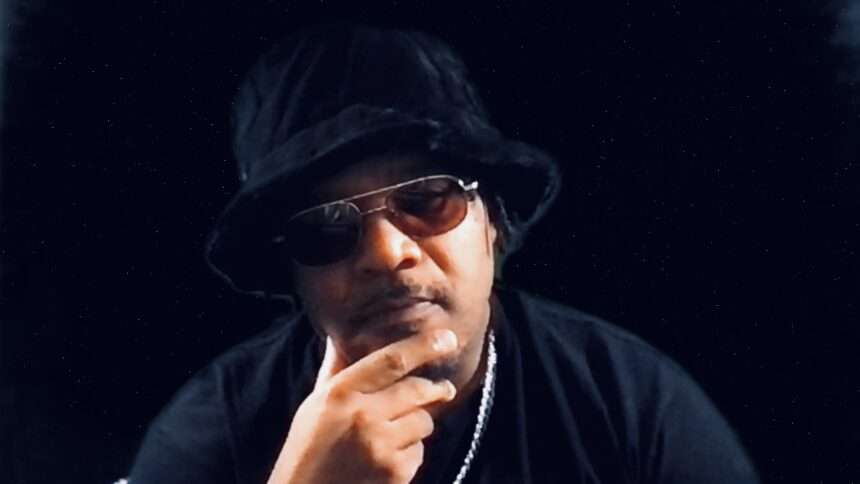
For Seattle-based artist Prience Moore, songwriting is rooted in instinct, honesty, and emotional truth. His music draws from real conversations, lived experiences, and moments of quiet revelation, transforming them into stories that feel intimate yet widely relatable. Rather than chasing trends or overcomplicating his message, Moore allows his lyrics to unfold naturally, trusting that sincerity will always resonate more deeply than polish alone.
With a style that prioritizes storytelling over spectacle, Moore’s work reflects a deep respect for lyricism and emotional clarity. Influenced by timeless artists known for their vulnerability and expressive delivery, he crafts songs that feel conversational, as though the listener has been invited into a private moment. Collaboration plays a key role in bringing these stories to life, particularly in the studio, where words and music are carefully aligned to heighten emotional impact without overshadowing the narrative.
In this interview, Prience Moore speaks openly about his creative process, the responsibility of telling real stories, and the freedom he finds in remaining focused on art rather than industry pressures. His reflections offer insight into an artist guided by authenticity, patience, and a belief that the right songs arrive exactly
“What Would You Do” was inspired by a deeply personal conversation with a lifelong friend. Can you walk us through the moment when you realized this conversation had the potential to become a song, and how you translated such an intimate moment into lyrics that others can relate to?
As the conversation proceeded, the emotions in her mannerisms made my imagination peak. I thought this could be a song. I acquired her permission and it can out naturally.
Your music consistently emphasizes lyricism over beats, creating a sense of storytelling that feels both vulnerable and authentic. How do you approach crafting songs in a way that balances emotional honesty with universal appeal, so that listeners can connect with your experiences without feeling like they’re intruding?
I let the lyrics come to me. If the words don’t flow naturally then I know it’s not a song I should be writing. That’s the thing about song writing or story telling in general, you can control the narrative, so if there is intrusion it’s by design.
When the friend who inspired “What Would You Do” heard the completed track and was moved to tears, what went through your mind? How does witnessing that kind of emotional response affect your perspective on the purpose of your music?
It meant that I captured her pain to the point of revelation. She told me that after listening to the song she knew what she had to do. It became a simple decision to make. The simplicity of it all hahahaha.
“What Would You Do” deals with love, uncertainty, and the hope for enduring connection. How do you navigate exploring such complex emotional territory in your writing while ensuring the song feels genuine rather than contrived?
All my songs I believe have universal appeal because of one unique quality, relatability. We all have gone through stressful relationships or know someone who has. You may not like my voice or you may not like the beat but there is no denying the lyrics, IMO.
Recording at Michael Miller Productions at Unlimitedtalents clearly shaped the song’s sound and atmosphere. Can you describe how the environment, the tools, or even the people around you influenced the final production and emotional impact of the track?
The lyrics are complete when I go see Mike. His contribution is far greater than words on a page. He takes my lyrics and matches them perfectly to music. Others have tried but none have mastered it to my complete satisfaction. I’ve written emotional songs (Hard to Write, I Should’ve Let You Go etc.) but “What Would You Do” has a level of frustration because a decision that seems so simple to make is actually the most complicated decision you may ever make.
Looking at your previous work, including “No You And Me,” how do you feel your songwriting and storytelling have evolved over time? In what ways does “What Would You Do” represent a new chapter or a deeper understanding of your artistry?
I don’t worry about the evolution of my songwriter, I’m more focused on authenticity. I always want my songs to be straight forward and honest. I don’t try to use my superior vernacular to overwhelm the listening, I like to be metaphorical sometimes, which is never planned it’s just how the lyrics flowed out.
You’ve cited influences like Babyface and George Michael, both known for their emotive delivery and timeless songwriting. What lessons have you drawn from their approach to crafting melodies, conveying emotion, or connecting with audiences, and how have you integrated those lessons into your own music?
Both are extremely emotional singers and songwriters. If I could create a SuperArtist I would use the voice of George Michael and the writing, producing and instruments of Face. O and he would also sing backup for GM, hahaha.
Many of your songs feel conversational and intimate, as if you’re speaking directly to the listener. How do you cultivate that level of personal connection in your music, and why is that approach so important to you as an artist?
Again man it’s the naturalbility (my made up word). I see something and I write it as witnessed. Prime example would be the first verse to my previous release “Give Me Your Love. I saw a girl sitting at the Bar and when our eyes met she turned away. That exchange began the germination of the song. “I saw you standing at the Bar the same time that you looked at me, you looked away so fast as if there’s something you didn’t want me to see”. As long as the emotions are real the personal connection will prevail.
As an independent Seattle-based artist, what have been the most significant challenges in balancing the creative process with the business side of music, and how do you ensure your artistic vision stays intact while navigating these pressures?
I stay away from the business side of things. I just put pen to paper and my voice over a Michael Miller beat. And if people of today don’t enjoy it, there’s always posterity, hahaha.
Looking ahead beyond “What Would You Do,” how do you see your sound, storytelling, or thematic focus evolving? Are there particular emotions, experiences, or messages you hope to explore in your next phase, and how do you want your audience to experience that growth alongside you?
I’ve never set out to write a song they have always just come to me. I have no idea what the world will throw at me next, I just have to make sure I have my glove on.
Thanks Man, appreciate it.