
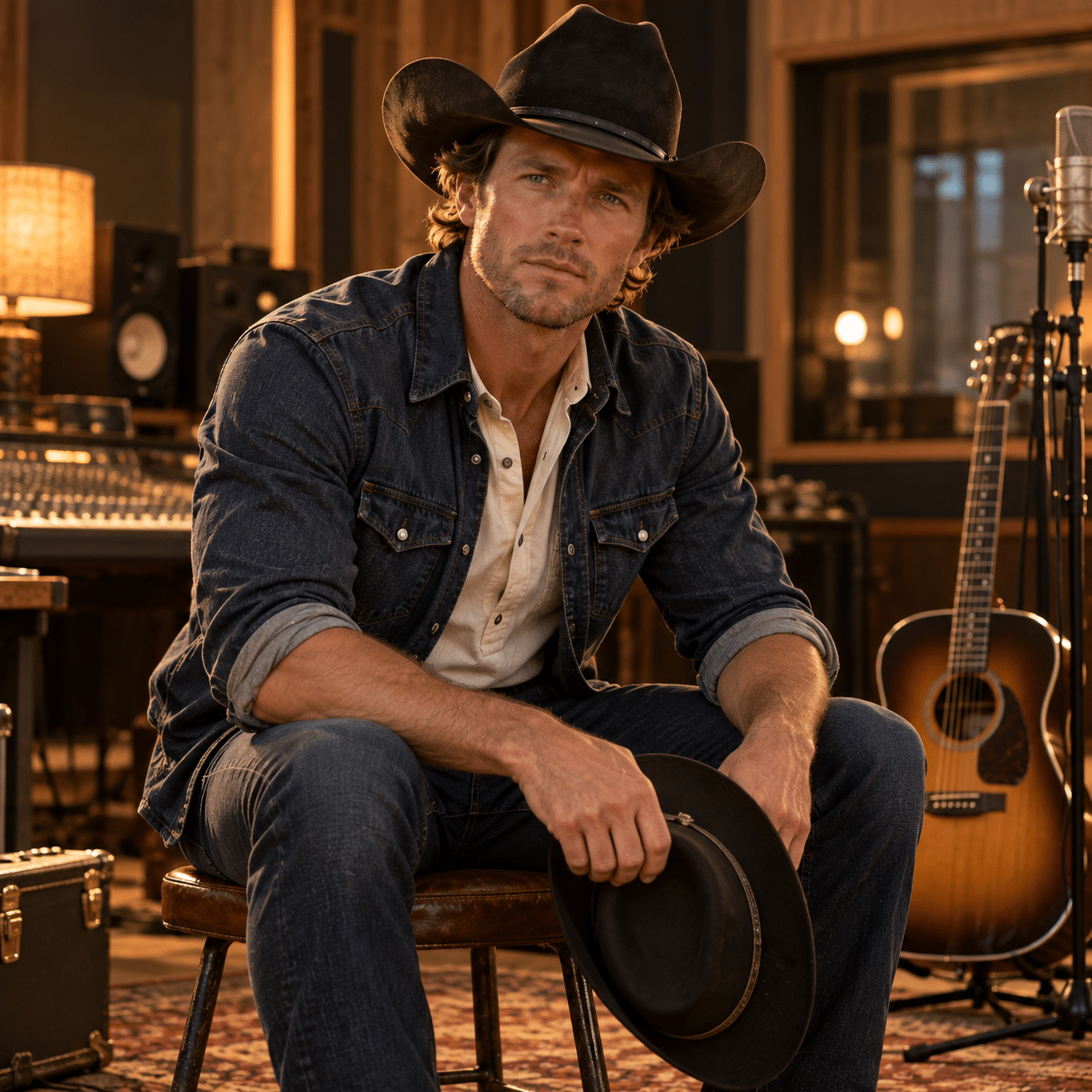
Some songs arrive with the intention of entertaining. Others arrive with something quieter and perhaps more important to say. Troy Landon’s “We’ll Leave the Light On” belongs to the latter. Built around the simple image of a light that remains on for someone who may not know where else to turn, the song carries a message of reassurance without pretending that life’s difficult moments can always be solved with easy answers.
At the heart of Troy Landon’s latest release is an idea that feels almost universal: sometimes, what a person needs most is not advice, a solution or someone telling them how they should feel. Sometimes they simply need to know that a door has not completely closed, that there is still somewhere to go and that somebody is willing to be there.
That idea gives “We’ll Leave the Light On” its emotional foundation.
Rather than focusing on one specific person or event, Landon approached the song from a broader understanding of the struggles people often carry quietly. The farmer praying for rain, the soldier trying to shake the pain and the waitress smiling through her tears become recognizable portraits of ordinary people facing circumstances that may never be fully visible to those around them. They are not presented as larger-than-life characters. They are people living through real moments, which is precisely what allows the song to feel personal.
First of all, congratulations Troy Landon on “We’ll Leave the Light On.” There is something particularly effective about the way the song communicates hope without becoming overly sentimental. Its central message does not promise that everything will suddenly be fine. Instead, it offers something more believable: the reassurance that even during difficult seasons, kindness, hope and human connection can still exist.
That approach also connects strongly with Landon’s understanding of country music.
For him, country has always been about storytelling that allows listeners to see the people inside the lyrics. The genre’s greatest strength, in his view, is its ability to take ordinary situations and turn them into stories that feel immediately recognizable. A listener can close their eyes and picture the people, places and circumstances being described, while perhaps discovering a piece of their own life somewhere inside the song.
That philosophy is evident throughout “We’ll Leave the Light On.” The verses are given room to breathe, allowing the individual stories to establish themselves before the production gradually opens up with the chorus. Musically, that transition mirrors the emotional movement of the song. The verses reflect what people are carrying, while the chorus introduces warmth and the possibility of hope.
It is also a good representation of what Troy Landon has become as a creative project.
Landon is a virtual artist, but the creative identity behind Troy is rooted in a very human songwriting process. The lyrics, concepts, stories and creative decisions begin with the person behind the project. Over time, Troy Landon has developed his own personality and musical identity, becoming a voice through which those experiences, observations and emotions can be transformed into songs.
That distinction becomes especially interesting when Landon’s approach to artificial intelligence enters the conversation.
He has been open about the fact that his music is AI-assisted and has chosen transparency rather than allowing listeners to make assumptions about how the recordings were created. For Landon, AI is a tool within a much larger creative process. The writing, storytelling, artistic direction and countless decisions involved in shaping the final recording remain central to the work.
His explanation of that process reveals just how much happens after the initial idea. A song may go through different versions, arrangements, instrumental changes and vocal adjustments before reaching the form that best serves the story. There are also technical stages involving stems, reverb, de-essing, instrument balance, mixing and mastering.
In other words, the technology may help create possibilities, but Landon remains responsible for deciding which possibilities belong in the final song.
That perspective is particularly relevant at a time when AI-assisted music continues to raise questions about authorship, creativity and the role of human artists. Landon’s position is straightforward: listeners should know how the music was made, and then judge the work for themselves. His emphasis remains on the story and the emotional connection the finished song can create.
And storytelling is clearly where Troy Landon’s musical identity begins.
Influenced by artists including Johnny Cash, Kenny Rogers, Merle Haggard and Travis Tritt, he is drawn to the classic country tradition of saying a great deal in just a few minutes. Those artists could create vivid characters, situations and emotions within the structure of a song, making listeners feel as though they were standing inside the story.
Landon wants to carry that tradition forward, even while using contemporary technology to create the music.
That combination of old-fashioned storytelling and modern production methods gives the Troy Landon project an interesting identity. The tools may have changed, but the fundamental objective remains familiar: write something worth listening to, tell a story clearly and give the listener a reason to feel connected to it.
Perhaps the most revealing part of the conversation, however, comes when Landon talks about success.
For a virtual artist, success cannot simply be measured by the traditional image of touring, performing on stages and building a physical presence in front of an audience. Landon’s definition is much more personal. He wants the songs to reach people, but what matters most is hearing that a particular song made someone think about their own life, brought back a memory or helped them feel something.
That idea brings the entire conversation back to “We’ll Leave the Light On.”
The song is ultimately about connection. Its message is not that darkness can always be removed immediately. It is that darkness does not necessarily mean there is nowhere left to turn.
For someone listening during a difficult night, Landon hopes the song leaves behind one simple feeling: hope.
That final thought gives the release an emotional weight that extends beyond its production, its virtual identity or the technology involved in creating it. Behind Troy Landon is a songwriter interested in the timeless ability of music to tell stories, recognize ordinary struggles and remind people that they are not necessarily as alone as they may feel.
“We’ll Leave the Light On” is therefore more than a song built around a memorable phrase. It is an invitation to remember that an open door can sometimes be enough. The light does not have to solve everything. It simply has to remain visible.
And perhaps that is exactly why the song’s message has room to stay with the listener long after the final note fades.
In this exclusive interview, Troy Landon opens up about the inspiration behind “We’ll Leave the Light On,” his approach to country storytelling, the creative identity behind a virtual artist, his transparent use of AI-assisted music, the human decisions that shape his recordings, and what he ultimately hopes someone carries with them after hearing the song.
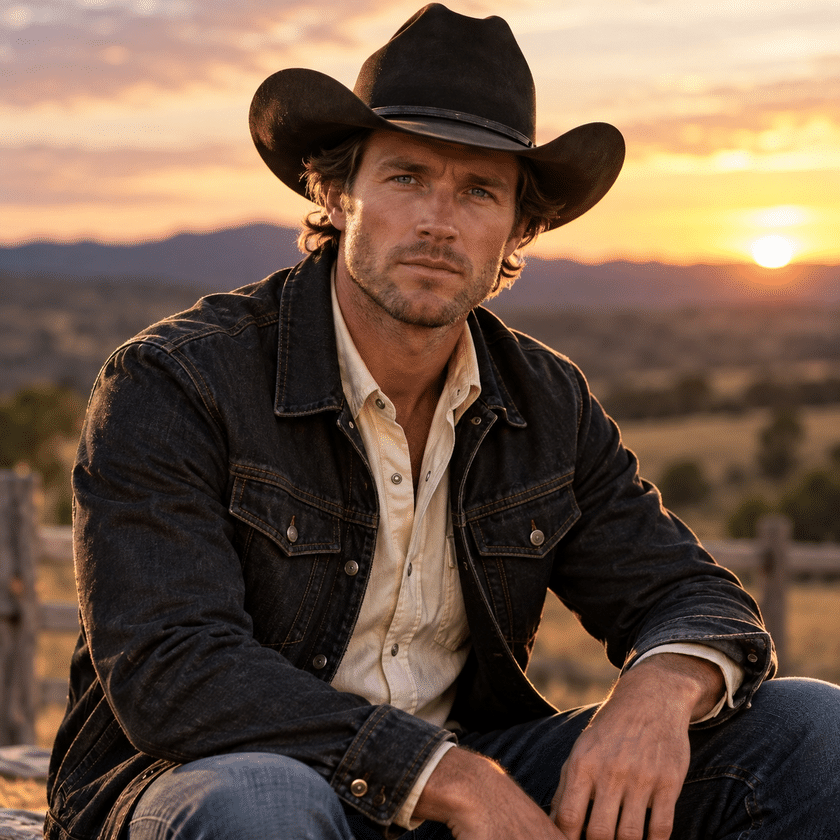
“We’ll Leave the Light On” is built around a very simple but powerful idea: letting someone know they still have somewhere to turn. Was there a particular person, experience or moment that first gave you the idea for this song?
There really wasn’t one particular person or moment that inspired the song. It came more from thinking about how many people are going through something that the rest of us may never know about. Sometimes people don’t need somebody to tell them how to fix everything. They just need to know that somebody is there and that they still have somewhere to turn.
That’s where the idea of leaving the light on came from. It’s a simple image, but everybody understands what it means. If the light is still on, the door isn’t closed. There’s still a place for you. There’s still somebody waiting.
Once I had that idea, the rest of the song grew around it. I wanted to say that no matter how difficult things may be right now, you’re not completely out of places to turn. Somewhere, somebody is willing to leave that light on.
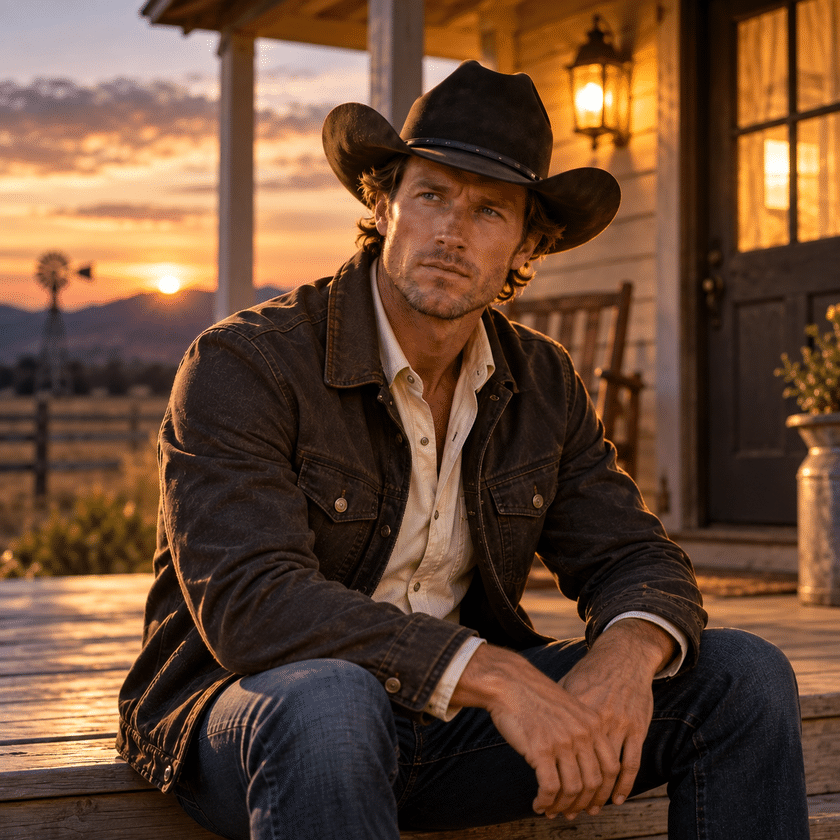
I like the fact that you wanted the song to feel like an open door rather than a lecture. When you were writing the lyrics, how did you make sure the message remained comforting without becoming too heavy-handed?
I think the biggest thing was not trying to tell the listener what they should feel. I wanted to show them situations they could recognize and let them make their own connection to the song. That’s why you have the farmer praying for rain, the soldier trying to shake the pain and the waitress smiling through her tears. They’re just everyday people dealing with things life has put in front of them.
I also didn’t want the song pretending that everything is suddenly going to be okay, because sometimes it isn’t. The message is really just that there’s still kindness, there’s still hope and there’s still somebody willing to be there for you.
That’s what “leave the light on” means to me. I’m not telling you what road you need to take. I’m just saying that if you need somewhere to turn, the light is still on.
Country music has always been good at taking everyday situations and turning them into stories people can see themselves in. What was it about this particular story that made you feel it belonged in a country song?
Country music has always been strong in telling stories through strong and vivid wording that allows listeners to visualize the song. Some of the best country songs are about ordinary people, ordinary struggles and emotions that almost everybody experiences at some point in their life.
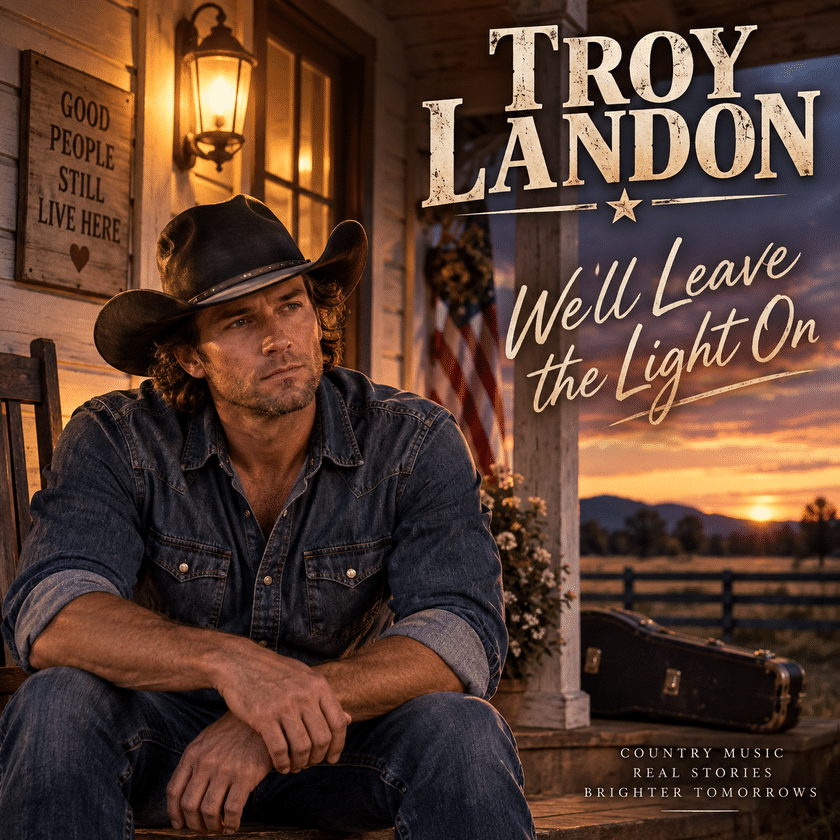
“We’ll Leave the Light On” felt naturally country because that’s exactly what the song is built around. A farmer praying for rain, a soldier trying to shake the pain and a waitress smiling through her tears aren’t larger-than-life characters. They’re people you might know, work with, live next door to or even see yourself in.
That part is personal for me because country music has been part of my life for a long time. The songs I’ve always connected with are the ones where I could close my eyes and see the story being told. I could picture the people, the places and what they were going through. That’s carried over into how I write. I don’t just want someone to hear the words. I want them to see the story and maybe find a piece of their own life somewhere in it.
You deliberately allowed the verses to breathe before opening up the production. When you were arranging the track, how did you decide when the music needed to step forward and when it needed to get out of the way and let the lyrics speak?
I wanted people to hear the verses and see a little bit of themselves in those everyday people, even if their lives are completely different. Then when the chorus comes in, I wanted the music to open up and feel warmer and more hopeful. It’s really that shift from what people are going through to saying, “Hey, there’s still some hope here.”
Troy Landon is a virtual artist, but the songs begin with your own lyrics, ideas and creative decisions. When you are writing as Troy, do you feel that you are writing as an extension of yourself, or have you developed a separate personality and voice for the character?
It’s a bit of both. Troy has developed his own personality and sound over time, and I’ve gotten to the point where I just know when something feels like a Troy Landon song.
At the same time, there’s a lot of me in him. The stories I write and the emotions behind them come from things I’ve experienced, seen or felt. Troy has become the voice that lets me turn those parts of myself into songs. He may be a virtual artist, but the stories he tells are very real.
You have openly described the project as AI-assisted and registered it that way. What made transparency about the use of generative AI important to you rather than simply presenting the music without discussing how it was made?
Transparency was important to me from the beginning. I never wanted somebody to find out later that AI was part of the process and feel like I had tried to hide it. I’m proud of the work I put into these songs, and using AI as part of the process isn’t something I feel I need to hide.
I write the lyrics, come up with the ideas and make the creative decisions that shape the final song. AI is one of the tools I use to bring those ideas to life. I’d rather be open about it and let people listen to the music and decide for themselves how they feel about it.
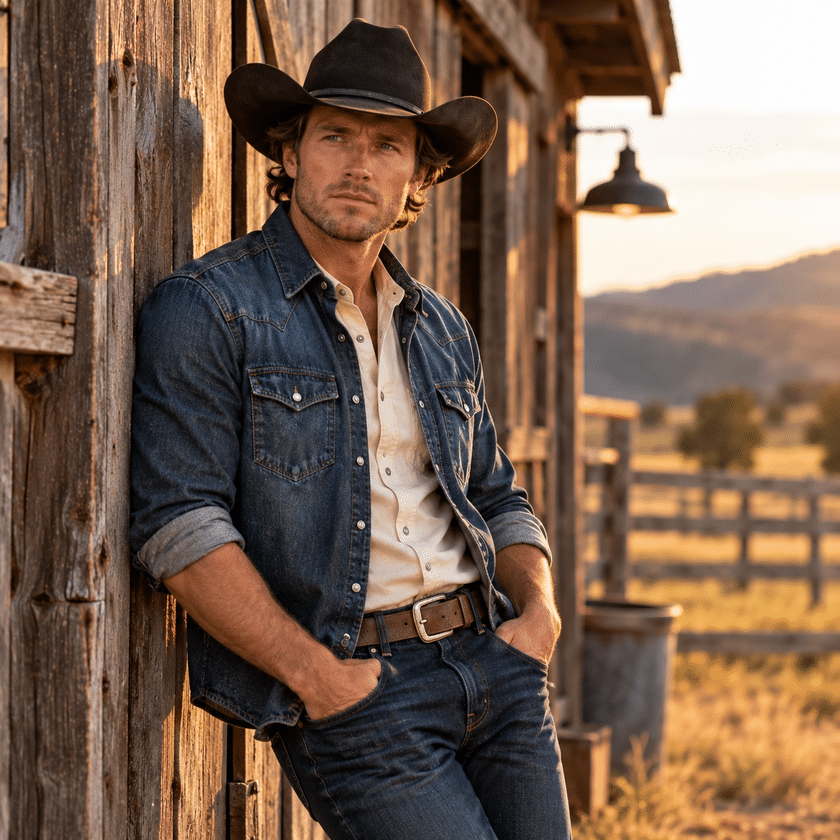
There is understandably a lot of discussion around AI and music, but your philosophy is that the story should come first regardless of the production method. What do you think people sometimes misunderstand about the human work that can still sit behind an AI-assisted record?
I think what people sometimes misunderstand is just how many human decisions go into an AI-assisted song. It’s not simply typing something in, pushing a button and getting a finished record.
The work starts with me. I come up with the story, write the lyrics and decide what I want the song to sound and feel like. I research things like tempo, energy and mood and make sure the creative direction works together instead of having things competing with each other.
From there, I’m constantly making choices. I’ll go through different versions, change arrangements, adjust instruments and vocals, and sometimes start over because something just doesn’t fit the story I’m trying to tell.
Even when I find the right version, the work isn’t finished. I may need to de-ess the vocals, fix the reverb, work with the individual stems, adjust instruments that are overpowering each other, and then mix and master the final track.
That’s the human work people don’t always see. AI can give me possibilities, but it doesn’t know the story I’m trying to tell or what I want the listener to feel. Those decisions are mine, from the first lyric to the final master.
Your influences include Johnny Cash, Kenny Rogers, Merle Haggard, Travis Tritt and several other country artists known for strong storytelling. When you look at the music you are creating today, what part of that classic country tradition do you most want Troy Landon to carry forward?
The storytelling, without question. That’s what drew me to country music in the first place. The artists I grew up listening to could tell an entire story in three or four minutes and make you feel like you were right there living it with them.
That’s what I want to carry forward with Troy, just using the tools we have available today. Technology gives me new ways to shape the music and bring those stories to life, but the goal hasn’t really changed. I still want the lyrics to paint a picture and make the listener feel something.
That’s really the connection between the country music I grew up with and what I’m doing today. The tools may be different, but a good country song still starts with a story worth telling.
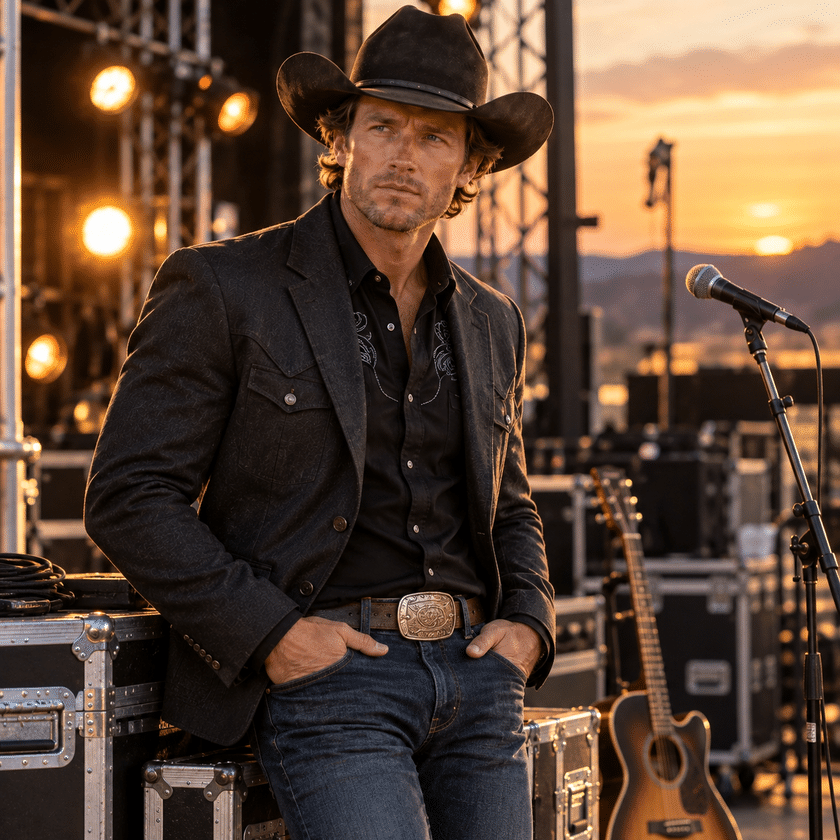
Because Troy Landon does not exist in the traditional sense of a touring artist standing on a stage, what does success look like for this project? Is it the number of people who hear the songs, the emotional response they create, or something else?
Success for me is knowing that something I wrote connected with somebody. Of course I want the songs to reach as many people as possible, but the numbers aren’t what stay with me. It’s when somebody tells me a song made them think about their own life, brought back a memory or made them feel something.
Those moments mean a lot to me because I know where these songs started, usually with an idea or a story in my head. Seeing that turn into something that reaches another person is pretty special.
Troy may be a virtual artist, but that connection isn’t virtual. When somebody feels something because of a song I wrote, that’s real. That’s what success means to me.
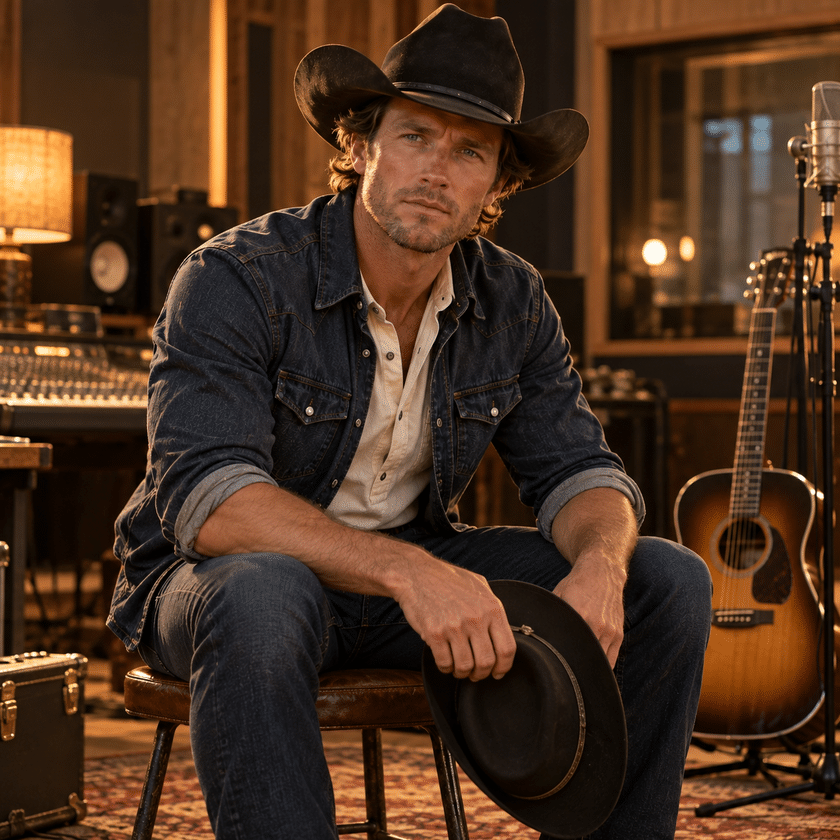
You said your hope is that “We’ll Leave the Light On” reaches someone at exactly the moment they need to hear it. If someone listens to the song during a genuinely difficult night, what is the one feeling or thought you would want them to carry with them after the song ends?
Hope. That’s what I would want them to take away from it.
I’ve had times in my own life when things felt pretty dark, and sometimes you don’t need somebody telling you everything is going to be okay. You just need something that gives you a reason to keep moving forward.
If someone hears “We’ll Leave the Light On” on a night like that, I hope they come away feeling that no matter how dark things seem right now, there’s still someone willing to leave a light on for them. And sometimes that’s enough to get you through the night.