
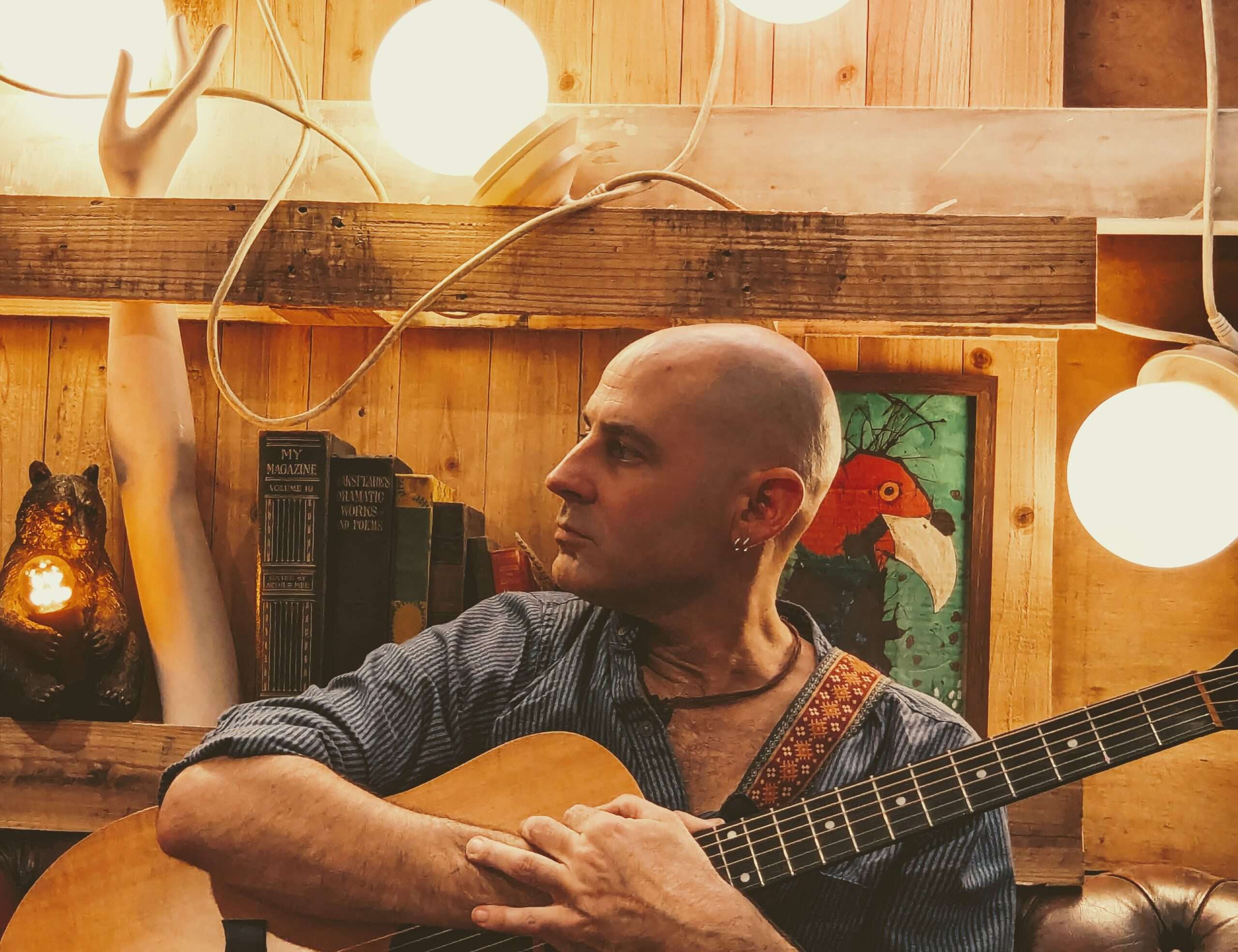
Some songs begin with a clear message, while others develop slowly as the songwriter follows a few words or a melody without knowing where they will lead. For Stu Hillstead, “Secret Child” was one of those songs. Written around five years ago, it started with just two lines. He did not have a complete story in mind or a clear idea of how the song would develop. He simply felt that the words worked well together, and from that small beginning, a story about identity, self-discovery and the importance of believing in yourself began to take shape.
At the centre of “Secret Child” is someone who grows up without fully understanding their own importance. The song follows a journey of discovery, where a person gradually realises that there is more to them than they once believed. It is a story that can speak to anyone who has ever felt different, questioned their place in the world or wondered whether their life would amount to something meaningful. Stu is drawn to stories about the underdog who eventually finds their way, not simply because they make people feel good, but because they offer hope to those who may need it most.
Interestingly, Stu did not set out to write a song with this particular message. Looking back at his early notes and drafts, he realised that the story seemed to develop on its own. Perhaps his interest in human experiences and the struggles people face found a way into the song without him consciously planning it. Whatever the reason, “Secret Child” reflects an idea that appears throughout his work: people are often capable of much more than they realise, and sometimes it takes time, experience and a change in perspective for them to recognise their own worth.
One of the memories that connects closely with the song goes back to Stu’s childhood. He recalls watching the 1952 film inspired by Hans Christian Andersen’s The Ugly Duckling, particularly a scene in which a young boy who feels rejected is encouraged to see himself differently. The transformation from sadness to happiness left a lasting impression on him. Although Stu does not describe himself as someone who was bullied or treated as an outcast, he remembers feeling different and never quite fitting into one particular group. That experience may have helped him understand the emotional side of stories about people who struggle to find where they belong.
For Stu, songwriting has always been a way to explore these kinds of questions. He describes himself as a deep thinker who is fascinated by the human condition. People are complicated, and even understanding ourselves can be difficult. We all have different experiences, fears, ambitions and ways of seeing the world. Through his writing, Stu tries to recognise those differences while also looking for the things that bring people together. His songs often explore the conflict between struggle and hope, giving listeners room to acknowledge their difficulties without losing sight of the possibility of better days.
His approach to songwriting is as open as the subjects he explores. Stu does not follow a fixed formula or insist that every song must begin with a particular idea. Sometimes a lyric comes first, sometimes a melody or chord sequence, and sometimes something he sees or hears becomes the starting point. An idea that initially seems important may eventually become only a small part of the finished song. He allows that process to happen naturally because he values the freedom to discover where a piece of music might take him.
Still, one thing remains central to his creative process: the lyrics. Stu believes words are the lifeblood of a song because they have the power to change how people feel and understand an experience. He pays close attention to what he writes and how each line contributes to the whole. In “Secret Child,” the music supports the story rather than taking attention away from it. Rhythm guitar provides much of the foundation, while occasional riffs and melodic touches add character. For Stu, the main purpose is to make sure listeners can hear the words, understand the message and connect with the person at the heart of the story.
Beyond the song itself, Stu’s outlook is shaped by his attraction to independent, free-spirited characters. Growing up, he admired lone-wolf figures such as Zorro, the Lone Ranger and the heroes of old Western films. He was drawn to characters who travelled on their own terms, touched people’s lives along the way and never seemed entirely tied to one place. This interest connects with his appreciation of the wandering troubadour tradition, where music and storytelling become ways of connecting with people encountered along the journey. While he recognises that such a lifestyle may not be practical for everyone today, the idea of creative freedom continues to appeal to him.
Stu was born and raised in Upminster, Essex, an area he remembers as a safe and relatively privileged place to grow up. Although he did not necessarily see his surroundings as a major centre for creativity, he believes they gave him a strong sense of realism. Accepting circumstances for what they are has become part of his outlook on life, and that honesty finds its way into his songwriting. He does not limit himself to serious subjects, having also written lighter and more playful songs, but the balance between facing reality and holding on to hope remains a recurring theme.
Ultimately, the message Stu hopes people take from “Secret Child” goes beyond the story of one individual. He wants listeners to stay positive, continue working towards what matters to them and believe in their own potential. He also hopes the song reminds people that everyone has value, regardless of where they come from or how long it takes them to find their direction. Sometimes, the qualities that make someone feel different can become the very things that help them understand themselves.
Looking towards the future, Stu remains open to new experiences and would like to explore collaborative projects as his musical journey continues. He cannot predict exactly what stories he will tell next, but he hopes to keep writing songs that people can connect with in their own lives.
In this interview with Spinex Music, Stu Hillstead discusses the story behind “Secret Child,” the childhood memories that helped shape its message, his passion for meaningful lyrics and his fascination with the many sides of human nature. He also reflects on his background, the subjects that continue to find their way into his music and the creative possibilities he hopes to explore next. Check out the full interview with Stu Hillstead to discover more about the man behind “Secret Child,” his approach to songwriting and the hope he wants his music to leave with its listeners.
“Secret Child” follows someone who grows up without understanding how significant his existence really is. What inspired you to tell this particular story, and when did the idea first take shape for you?
I wrote Secret Child around 5 years ago. I started with the first two lines and didn’t know in which direction it was going to go. I have no conscious connection to the 4th of July or cornfields, but, I do recall feeling that the rhythm of those first 12 words sang well. Looking back at my notes and drafts, it appears that this was one of those songs that started to write itself. I can’t say that I had any intention to write a song that told this particular story, however, ‘winning underdog’ stories do resonate with me. Maybe this song came more directly from my subconscious than I realised. The thing about ‘winning underdog’ stories is that they have the potential to give everyone hope, whoever and wherever they are. It’s nice to be able to spread a bit of positivity.
There is an “ugly duckling” element to the song, where someone gradually discovers his identity and potential. Why was that transformation important to the story you wanted to tell?
I remember watching the iconic 1952 Hans Chistian Anderson film as a child. There used to be lots of old musical films, usually on a Sunday, which had me transfixed to the screen. I vividly remember Danny Kaye singing ‘there once was an ugly duckling’ to a sad looking young boy with a shaved head whose character was rejected and bullied by his piers because of his appearance. By the end of the song the boy had a big smile on his face and he ran off to school. As fictional and traditionally Disneyesque as this is, the feel good factor is undeniable. I wouldn’t say that I was bullied or that I felt like an outcast as a child, but I did feel different and that I never fitted in with any particular group, in the way that seemed to come so naturally to other children. Maybe my need to tell this story was my attempt at being a modern day Hans Christian Andersen.
Your songwriting puts a strong emphasis on lyrics and storytelling. When you begin writing a song, do you usually start with a story you want to tell, a particular line, or a feeling that you want to capture?
I have no structure to my songwriting and I like it that way. Sometimes I start with an idea, sometimes with a line, phrase or quote, sometimes with a chord sequence or melody and sometimes with a storyline. Something I’ve seen or heard will usually stand out enough for me to think that it is suitable to become the basis of a song. Sometimes, however, lines, words or ideas do get demoted to being part of a song rather than the main theme. I have always loved the power of words and how they can change the way people feel. I focus a lot on the quality of my lyrics because I see them as the blood that pulses through the body of the song (I’m sorry, I can’t help it. My whole life is a metaphor). One mediocre lyric can taint an entire song in my mind.
“Secret Child” deals with identity and finding your place in the world. Have you always been drawn to stories about people trying to understand themselves, or did this song take you somewhere different as a songwriter?
Yes, I have always been drawn to stories about people trying to understand themselves. I would consider myself to be quite a deep thinker, often to my own detriment, and I am fascinated with the human condition. One of the joys of being human is that there are so many variants. No two people are exactly the same. Sometimes I wonder how an earth we are expected to understand others when we don’t fully understand ourselves. My strategy for getting by as human is (cliche alert) to be kind, be generous and be free and to encourage others to do the same. I incorporate this sentiment into a lot of my songwriting.
There is something very timeless about the wandering troubadour tradition. What does that persona mean to you personally, and how does it influence the way you approach your music and performances?
Growing up, I identified with the more outsider/rebellious, lone wolf personas like Zoro, The Lone Ranger, John Wayne and Clint Eastwood characters from old Country and Western films, The Littlest Hobo (yes, I know he was a dog) and Tarzan. There’s a certain romanticism entwined with the perpetual traveller who never sets down roots, but touches people’s lives as they’re passing through. Maybe it’s the need to leave people wanting more rather than overstaying your welcome. The 12th and 13th century wandering troubadours, in my eyes, were a version of the lone wolf persona. As unrealistic as that lifestyle is for most in the modern world, I do identify with it and maybe even crave it. Or maybe I just want to be seen to be of that wandering troubadour ilk.
You describe your songwriting as covering everything from life and love to storytelling. When you look at your catalogue, what subjects seem to keep finding their way into your songs even when you are not deliberately looking for them?
The conflict between struggle and hope raises its head in many of my songs. Whether that be for an individual or for a collective. As previously mentioned, my interest in the human condition influences my lyric writing and no-one is without a measure of struggle at some point in their lives. To counter that with some hope gives balance to what someone may be struggling with. That being said, I have written some more light hearted and fun songs also. I wouldn’t say that I stick to any particular subject when writing or try to limit myself in any way.
For a song like “Secret Child,” the lyrics carry much of the narrative. How do you make sure the music supports the story without taking attention away from the words?
To me, the words are the most important aspect of the song. I want people to listen to the words and understand what I’m trying to get across. The accompanying music comes along for the ride. The instrumental accompaniment mostly consists of rhythm guitar, however, riffs and licks do sometimes try to steal a bit of the limelight. It’s nice to add a bit of texture to a song with some interesting guitar playing, but, it’s not a ‘must have’ for me.
Coming from Essex, what aspects of your background or surroundings have found their way into your songwriting, even if they are not always obvious to the listener?
I was born and bred in Upminster, which, as well as being in Essex, is also part of the London Borough of Havering. It is the end of the District Line on the tube, has the C2C national rail running through it and is very much a commuter town. Therefore, a lot of Upminster dwellers work in the city. I never considered Upminster or Essex to be a very creative or artist producing area, but, maybe that’s just because I never sought out those kinds of people when I was young. Upminster was a safe place to grow up. It was/is fairly affluent and I consider myself to have had a very priveliged childhood. One thing that I will say that Essex has given me is a sense of realism. The phrase ‘it is what it is’ is, and always was, commonly used and accepting the reality of circumstances is very much ingrained in my core. I’d say that comes through in my songwriting.
The journey in “Secret Child” is ultimately about discovering something within yourself that was there all along. What do you hope listeners take away from that message when they hear the song?
Hopefully, to stay positive and trust the universe. That whatever is meant for you will reach you eventually, whether that be in this life or another. To persevere, to keep working hard at what you enjoy and to believe in yourself. But, most importantly, that everyone is someone and that we all have a place in this world.
As you continue developing as a singer and songwriter, what kind of stories are you most interested in telling next, and is there a part of your musical journey you feel you have not explored yet?
I cannot imagine what the future holds, although, I will do my best to continue writing songs that I hope people can connect with. I would like to explore some collaborative projects and see where that takes me. I’m looking forward to wherever I go from here.