
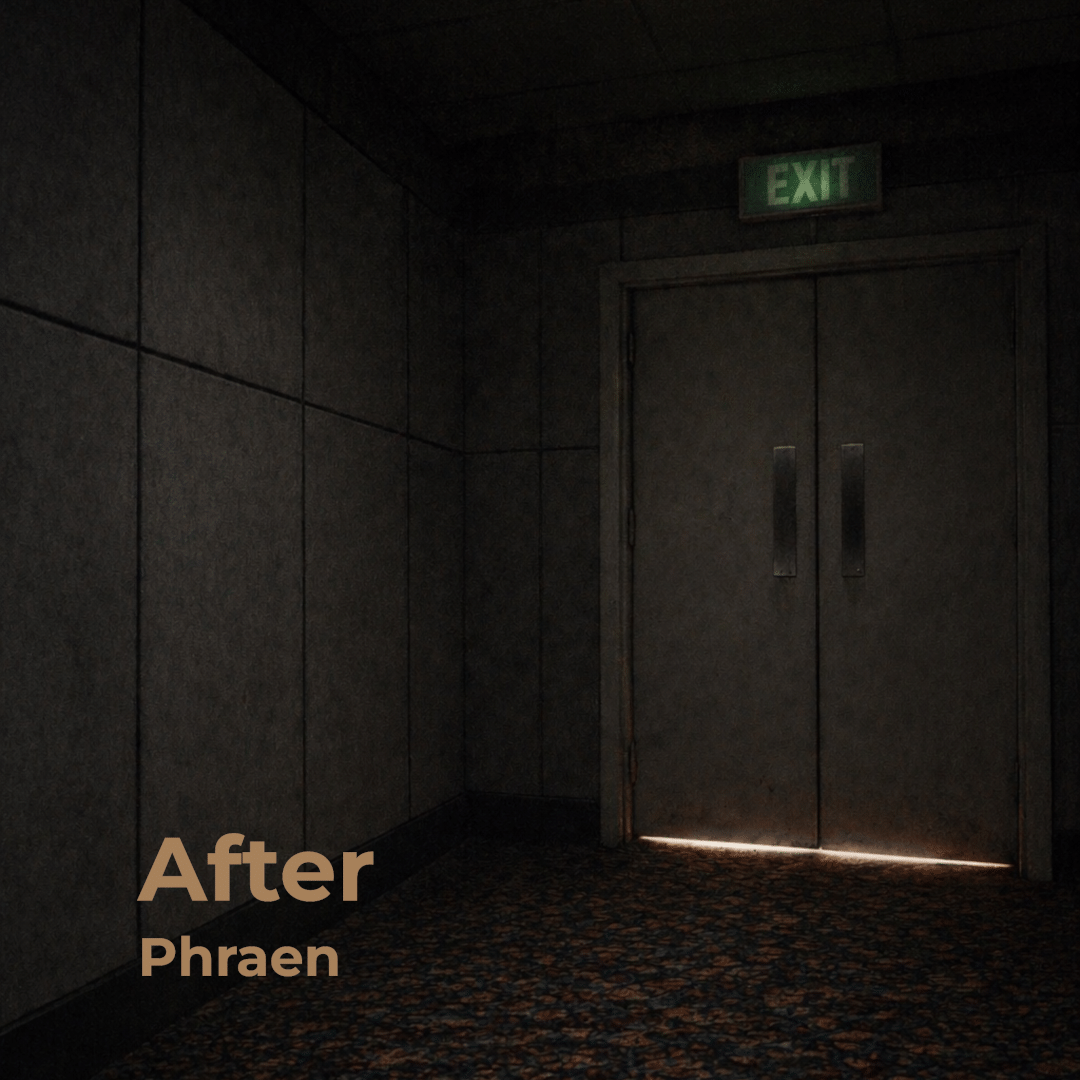
There is a strange beauty in music that refuses to reveal its final shape too early. For Seamus, the songwriter and creative force behind Phraen, that uncertainty became an important part of making “After,” an album that grew from character studies, atmosphere and a willingness to follow an idea wherever it led.
The record was originally titled “Lens,” reflecting its early concept as a series of snapshots from different characters’ lives. Rather than building the album around one fixed musical direction, Seamus approached each song according to the personality and atmosphere it needed. That decision opened the door to some of the album’s most distinctive moments.
“Deer” became one of the biggest surprises. The strings and orchestral elements arrived before the bass and guitars, giving the track an anxious, cinematic quality that changed its direction entirely. Instead of pulling it back toward the original idea, Seamus became excited by what was emerging and built from there.
A similar instinct shaped “Time to Panic,” a reworked version of a song he had written years earlier. Its uneasy mood eventually led to a spaghetti-western-inspired ending that might seem unexpected on paper, but makes sense within the strange emotional world of the track.
That sense of discovery extends into the album’s production. Recorded largely at home in Ableton, “After” makes use of guitar pedals, reverb, delay and distorted amplifiers to create its textures. The process was not always perfectly controlled, either. One small mistake in the title track, caused while editing a vocal recording, changed the phrasing of a lyric. Instead of correcting it, Seamus recognised that the accidental version worked and kept it.
The album also benefits from collaboration. Guitarist Noise Arcade has become an important musical partner, bringing his own interpretation to the songs while understanding the direction Seamus wants to take them. Their working relationship allows the guitar parts to contribute something distinctive without overwhelming the character of each track.
While Phraen has been associated with dream pop, shoegaze and alternative rock, Seamus does not approach his work through genre labels. His focus is on finding what belongs inside each song, which helps explain why “After” can move between delicate passages, heavier guitars, orchestral textures and more unusual arrangements without feeling tied to one formula.
There is also a clear connection between “After” and Phraen’s earlier album, “It’s Routine.” The two records developed around different themes, with the earlier work exploring social issues and the overwhelming flow of information in modern life, while “After” became more focused on characters and what happens after important events. The subject matter changed, but the personal nature of the writing remained.
Perhaps the biggest change, however, is Seamus himself. After spending years developing his sound, he now feels more patient and more willing to trust the process. He does not feel the same need to decide immediately what a song should become, allowing the work to reveal its own direction.
That approach gives “After” an open-ended quality. Listeners are not handed one fixed interpretation of the characters or their stories. Instead, the album leaves room for personal connections, inviting each person to spend some time inside these different worlds and take away their own feeling from the experience.
In this interview, Seamus discusses the making of “After,” the unexpected evolution of “Deer,” the unusual ending of “Time to Panic,” the happy accidents that made it onto the final record, his collaboration with Noise Arcade, and the creative growth that has shaped Phraen along the way.
Seamus, when you first started working on “After,” did you have any idea of what you wanted the album to become, or did you deliberately leave things open and allow the songs to show you where they wanted to go?
Originally I didn’t really have a musical plan for the album. The original title was Lens, rather than After, because the songs were basically snapshots of different characters’ lives. The music was always built around the feeling of each character. With “Deer”, for example, the strings came from wanting to create an anxious atmosphere.
You have described the writing and recording process as something that develops through experimentation rather than following a fixed genre. Was there a particular moment during this album when you tried something completely unexpected and realised, “This is taking the record somewhere I didn’t expect”?
I think “Deer” was probably the biggest surprise. The strings took the track down a different route, and it became something different from what I’d originally imagined.
“Deer” really stands out because of the way guitars and strings come together to create something almost cinematic and orchestral. How did that arrangement develop, and what were you hearing in the song that made you want to take it in that direction?
The strings and orchestral elements came first, then the bass, and the guitars came afterwards. I immediately got excited about where the track was going. It just had such a great sound, and I wanted to see where I could take it from there.
“Time to Panic” seems to take another unexpected turn, especially towards the ending, which has been described as having an almost spaghetti-western feel. What made you decide to let the song finish in that way rather than bringing it back to the sound it had established earlier?
“Time to Panic” is actually a rewrite of an earlier song I’d written a couple of years ago. The spaghetti-western feeling at the end just seemed to fit that anxious and unsettling feeling. It was quite different from how the track had sounded before, but it just felt like it belonged there.
You recorded much of “After” at home, using Ableton, guitar pedals, reverb, delay and even distorted amplifiers to create unusual sustained sounds. When you are experimenting like that, are you usually trying to recreate a sound you already have in your head, or do you prefer to make something first and then discover what it can become?
I think the music tells you what it needs. Sometimes an idea works and sometimes it doesn’t. You just try to keep everything within the boundaries of the character and the song. I tend to let a song develop rather than deciding too early what it should become.
I’m curious about the role of mistakes and accidents in your production process. Have there been sounds or arrangements on “After” that happened almost by accident but ended up becoming an important part of the finished song?
There’s actually a mistake in “After” on the lyric about pulling the skyline into place. On the album it says “play”, and that happened because I accidentally cut off the end of the word to remove noise in the recording and smooth it out. I didn’t realise I’d changed the phrasing until the mix stage. It ended up working, though, so I left it in.
Phraen has been described as sitting somewhere between dream pop, shoegaze and alternative rock, but those were not genres you deliberately set out to follow. Does it matter to you how people describe the music, or are you more interested in the fact that listeners can hear something different in it depending on their own musical background?
I don’t really write with a genre in mind. I was actually quite surprised when I first heard the term shoegaze, because I hadn’t really come across it before. I’m much more interested in what the song needs than where it might sit genre-wise. I quite like people hearing different things in it, though.
You are the person at the centre of the songwriting, production and creative direction, while other musicians have contributed individual parts remotely. How does bringing other musicians into a project that begins so personally with you affect the songs? Are you usually very specific about what you want from them, or do you give them room to surprise you?
I work with a guitarist called Noise Arcade, and we’ve worked together for a little while now, so I feel like we have a really good relationship musically. He’s a fantastic guitarist and really gets what I’m trying to do with the music. It’s quite unusual to click with someone like that. I’m quite specific about the direction I want to take something, but I always want to give him room for his own interpretation. He’s very good at knowing when to add something and when to leave it alone.
Your first Phraen record, “It’s Routine,” established the project, while “After” seems to take the songwriting and production into several new places. When you compare the two records now, what do you feel has changed most in the way you write, produce and hear your own music?
I actually think It’s Routine and After are quite similar in the way they developed around themes. At first, It’s Routine had a different working title too, and a lot of the writing was about social issues, like the fact that everyone has so much information at their fingertips these days. “Crier” was very connected to that idea, as was “Saint Vox”. Those ideas eventually developed into what became It’s Routine.
With After, it was similar, but the focus was more on characters and what happens after events. A lot of that developed naturally as I was making the album.
Finally Seamus, after spending so much time experimenting with textures, arrangements and production, what do you think “After” ultimately says about you as a songwriter? And when someone listens to the whole album from beginning to end, what do you hope stays with them after the final song?
I think After probably says that I’m becoming more patient as a songwriter, and more comfortable trusting what I’m doing. The characters and themes are still really important, but I’m less concerned now with deciding too early what a song should be. I’m happier to let a song develop.
When someone listens to the whole album, I’d like them to come away with a feeling, or maybe a sense that they’ve briefly entered someone else’s world. I quite like leaving space for people to make their own connection with the songs.
CONNECT