
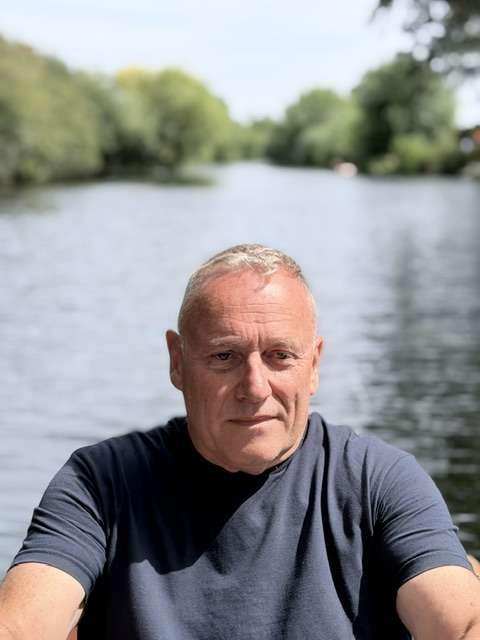
For Music by Jeremy, making music is not simply about recording songs. It is a way of making sense of emotions, memories, ideas and parts of the self that can sometimes be difficult to express in ordinary conversation. That sense of personal discovery sits at the heart of his ambitious debut project, “Scenes from a Well Worn Path,” a remarkable 24-track body of work divided across four releases.
Rather than attempting to compress such a large collection of ideas into a conventional debut album, Jeremy chose to let the project unfold gradually. The decision gives listeners time to become familiar with an artist whose music asks for attention and patience. Across the first two sides, the journey moves through autobiographical memories, pain, grief, joy, fear, humour and wider reflections on the world, while the remaining releases promise to take the story into even deeper territory.
What makes the project particularly interesting is the contrast between its deeply human subject matter and the technology used to bring the music to life. Working alone in a small home studio, Jeremy has used generative AI as a kind of “silicon session band,” allowing him to explore production possibilities that might otherwise have been financially out of reach. Yet the technology remains firmly in service of the songwriting. For Jeremy, the emotion created by the meeting of music and lyrics is what matters most.
His creative process is equally instinctive. Songs often begin with an emotion that is difficult to describe, developing through guitar sketches before lyrics emerge without excessive intellectual control. That approach has allowed deeply personal material to surface naturally, including experiences and feelings that might otherwise remain hidden even from the people closest to him.
Influenced by artists such as John Lennon, Bob Dylan, Randy Newman and David Bowie, Jeremy embraces the idea that great songwriting can be honest, flawed, fearless and completely human. His debut may be arriving now, but the person behind it has clearly been writing, listening and observing for a lifetime.
In this conversation, Music by Jeremy opens up about the making of “Scenes from a Well Worn Path,” the emotional freedom of working alone, the role of technology in his creative process, the evolving meaning of the four-part project, and the deeply personal reason he continues to make music. As Sides Three and Four prepare to reveal more of the story, Jeremy is discovering that perhaps the most powerful part of the journey is not simply being heard, but finding compassion and connection on the other side of the music.
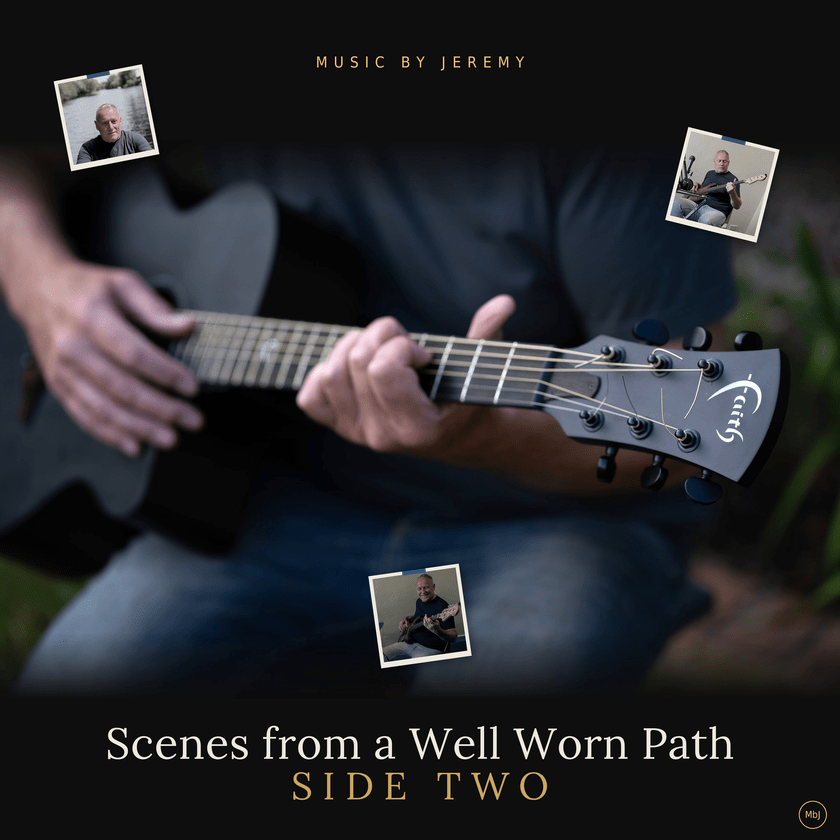
“Scenes from a Well Worn Path” is an unusually ambitious 24-track debut, with each side forming part of a much larger artistic statement. What made you feel that these songs needed to exist as a four-part journey rather than being condensed into a more conventional debut album?
I’m lucky to have a very full drawer of songs to produce so volume wasn’t an issue. I originally considered releasing a conventional album but felt that it would just have to do too much.
My music demands effort from the listener so I wouldn’t expect people to listen to 12 or 14 tracks from an unknown artist. The ‘staggered’ release gives people an opportunity to get to know the artist and decide if they want to dial in.
Side Two moves through pain, grief, joy and fear while also carrying a sense of someone embracing a fulfilled life. How did you approach balancing those darker emotions with the feeling of exhilaration that runs through the project?
The album was recorded on my own in my small studio. Because of this, everything on here is entirely unfiltered. There is no planned ‘approach’, it’s just everything I was feeling at the time.
You will see the ‘story’ unfold over the next three releases, so I won’t spoil anything by giving more details just yet!
“Do Birds Sing the News” and “Idonella Sakaiensis” both appear to use unusual ideas to encourage listeners to think about how we live. What draws you toward subjects that can initially seem distant from everyday songwriting, and how do you turn those ideas into emotionally engaging songs?
To write a song I first find an emotion that isn’t easy to describe. This ‘theme’ can sit in my head for a while but usually comes out as a doodle on my old acoustic guitar. Once this has taken some shape, I need to find the words. For this part I am actively disengaging my ‘thinking’ brain and just let the lyrics fall out. Often it will include things that I’ve seen, heard or remember that feel like they fit.
Your influences range from John Lennon and Bob Dylan to Randy Newman and David Bowie. What have you taken from each of those artists beyond their music, particularly in terms of honesty, storytelling, character and the freedom to reinvent yourself?
John Lennon’s unfiltered honesty, Bob Dylan’s ability to communicate such powerful emotions, Randy Newman’s documentation without judgement, and Bowie’s refusal to pander to society. All just such inspirational people. Their commonality is to have the strength to be flawed and fully human in a world that demands perfection.
You describe technology as a “prosthetic for creative intent,” particularly through your use of generative AI tools trained on your own voice. What was the creative problem you were trying to solve, and did using that technology change your understanding of what it means to perform a song?
I love all types of music, but I am a ‘songwriter’ so – for me – everything is subservient to the way music and lyrics blend to share an emotion.
My creative problem has been that I’m not a great singer or a virtuoso musician, and I can’t afford to hire session musicians.
So, I’m making music the way I always have – by writing a song and then recording it myself. What the AI tools offer is a platform where I can upload my complete demos and use it as a ‘silicon session band’. Then I pull the stems back down to reuse the vocals and drums in Ableton and then blend in my own playing to create a ‘radio ready’ mix.
It offers huge benefits both in getting decent quality output, but also the facility to try different production approaches quickly and easily.
But it’s critical to me that I am using the tech to produce my own songs. The flood of prompt generated ‘music’ is clearly a very bad thing in an already struggling music industry.
Before I sign off on this, I would absolutely love to get these songs played live with a real band so wide open to offers from anyone interested!
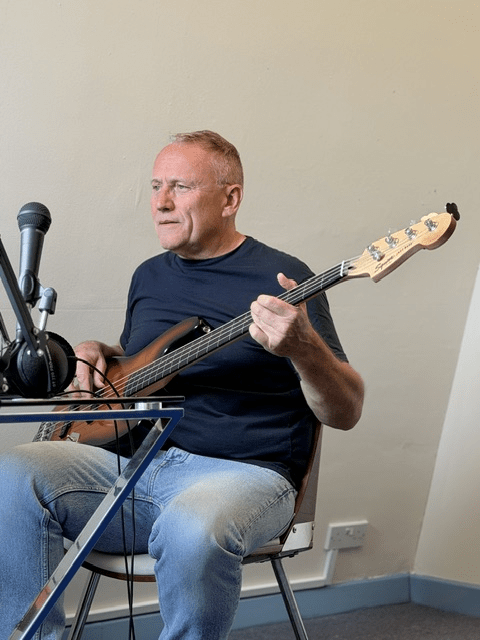
Making such an expansive record independently from a home studio must have required an unusual level of discipline. What did the limitations of working alone actually give you creatively that you might not have had inside a traditional studio environment?
There are some strange sensations to working alone. Most practically, time travels at a terrifying pace; a few minutes in the studio can become six hours in an instant.
Beyond that is what I think of as the ‘Big Brother’ effect where people simply forget the world is watching them. A small room with a few guitars and a computer screen quickly becomes a ‘confessional’. You quickly forget that, just because you don’t have to discuss the specific feelings of your brutal and lonely childhood with a guitarist or singer you don’t really know, it doesn’t mean it’s private.
So, it all just pours out.
The downside is that you don’t get to find out if the work is any good until you read the reviews.
There is a fascinating contrast between the technological methods used to complete the project and the deeply human subjects explored in the songs. Was it important to you that the technology remained secondary to the emotional truth of the music?
I’ve covered this broadly in the AI discussion, but it bears repeating. Music is a human undertaking. Without the tech, this album wouldn’t have happened, but it’s just a ‘silicon session band’, a window if you like that allows you to see the art.
The project has already been described in terms of passion, wit, emotion, honesty and humanity. When you listen back to Side One and Side Two now, which part of yourself do you think listeners are hearing most clearly?
It’s been a massive undertaking to get everything finished so I haven’t really had that luxury yet. But it has been incredibly moving to see people understanding and enjoying my work.
With Sides Three and Four still to come, how does your perspective on the entire project change as each instalment is released and begins to exist independently in the world? Are there particular themes or revelations in the remaining sides that will change how listeners understand the journey so far?
It’s a great question! There are themes that I have only seen through letting go of it into the world.
The biggest revelation for me is how receptive people have been to the work and the extent that it’s been understood. And the impact has been to encourage me to double down on the rest.
I’ve also started to understand the Sides in this context more.
Side One is a slightly timid introduction with autobiographical themes looking a long way back both in form and content. Side Two goes deeper into my world view and character but also starts to have a bit of fun.
Three is filled with big ideas, while Four is stripped back, raw and intimate. It does also reveal the meaning of life – but you’ll have to wait for that!
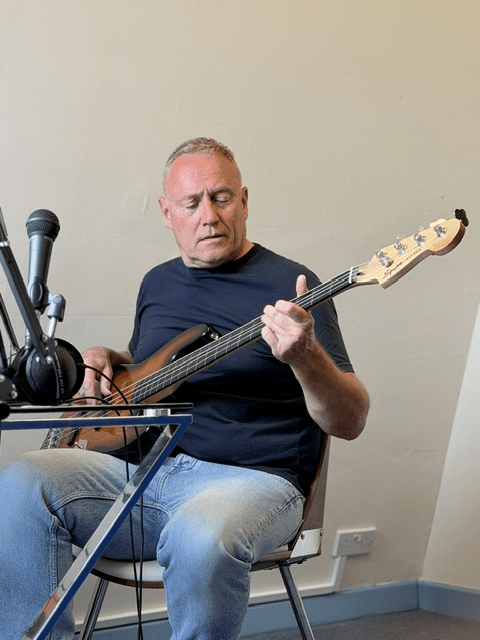
This is your debut, yet it draws on a lifetime of listening, writing and living rather than feeling like the beginning of an artistic journey. After finally putting such a large part of yourself into the world, what does making music now allow you to say that you could not have expressed any other way?
There are things – I think we all have them – that are too uncomfortable to reveal to our closest friends, partners or even ourselves. I have been profoundly privileged to have the opportunity to share these with complete strangers and find not hate and derision, but appreciation and compassion.
It allows me to say that I’m OK and it allows me to feel like I matter in some way. And no price on earth buys that.