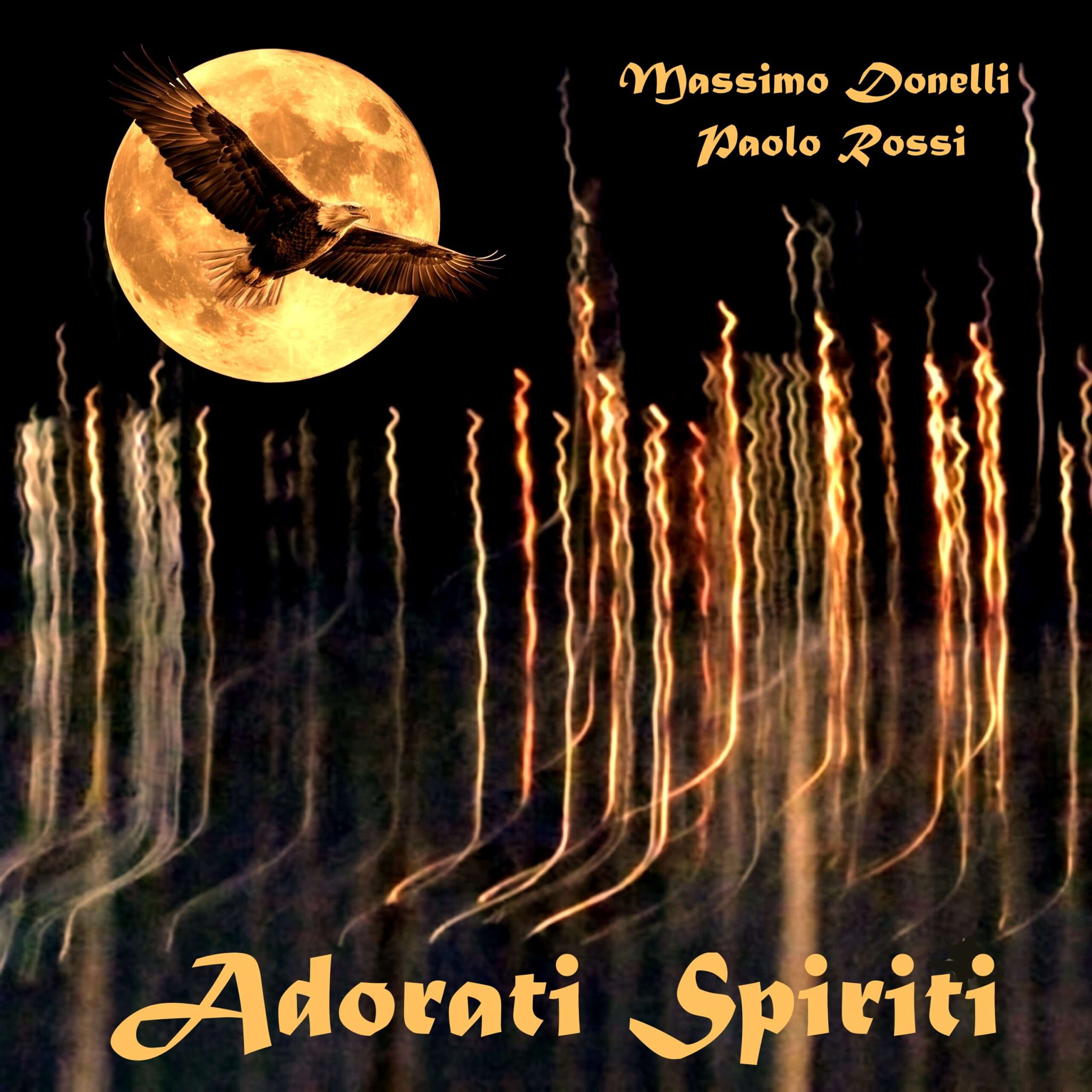
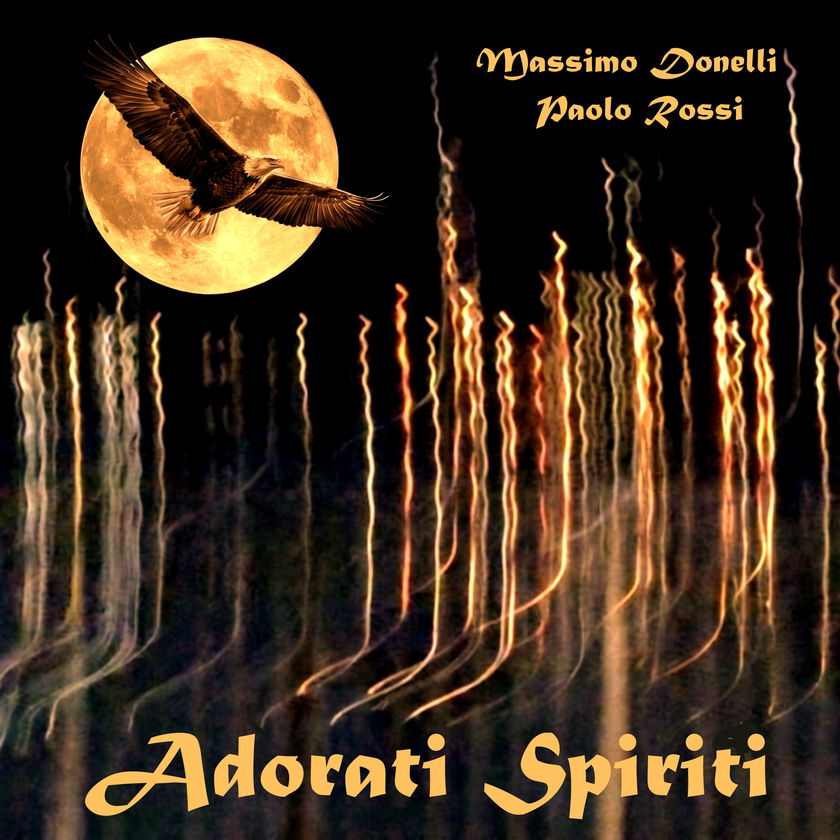
What happens when a world changes so much that the things once used to define a people begin to disappear? That question sits at the heart of “Adorati Spiriti,” the album created by Massimo Donelli and Paolo Rossi, a work that uses the relationship between an elderly Cheyenne man and a young person to explore identity, memory, tradition and the difficult relationship between generations.
At the centre of the story is Chayton, an elder who knows that his life is approaching its end. Rather than asking the young Tokala to reject the modern world, Chayton tries to pass on the values and knowledge that he believes should survive it. For Donelli and Rossi, that distinction is important. The past cannot simply be recovered, and change cannot be stopped, but that does not mean everything from the past should be forgotten.
Their interest in Native American history and culture became the foundation for the album. They explain that the subject was not chosen simply as a setting for a broader story, but because the experiences of Native American people offered a powerful way to examine what happens when identity and a shared value system are weakened over time. They approached the subject through extensive reading and research, treating the culture with genuine respect and admiration.
The album also reflects the unusual musical history of its creators. Donelli and Rossi played music together when they were young before their professional lives took them in different directions, including careers in journalism and politics. Their friendship remained, as did their connection to music, eventually bringing them back to creating together years later.
That reunion has produced a sound shaped by their shared background in progressive music, jazz fusion and world music. Paolo’s poetry informs the lyrics, while Massimo builds the music, though neither describes their roles as rigid. Their process is largely spontaneous, with ideas emerging from the lyrics and music before being developed and arranged in the DAW. Artificial intelligence has also become part of Massimo’s production process, helping develop existing musical ideas and explore arrangements that would otherwise be difficult to achieve without a full band.
Yet the most interesting conversation around “Adorati Spiriti” may be the one between its two generations. Chayton has knowledge to pass on, but Tokala also represents a world that the elder cannot completely understand or control. Through their relationship, Donelli and Rossi explore the possibility that tradition and modernity do not necessarily have to exist as enemies.
In this interview, Massimo Donelli and Paolo Rossi discuss the story behind “Adorati Spiriti,” the Native American history that inspired it, their return to music, their creative process, the role of AI in shaping the album and what they hope listeners take away from its conversation between the past and the present.
“Adorati Spiriti” is built around Chayton, an elderly Cheyenne man who knows that his time is coming to an end. What made you want to tell this particular story, and why did an elder speaking to one young person feel like the right way to explore such large questions about society?
The history and experiences of Native Americans are particularly significant for understanding the extent to which the loss of identity—and even of a “value system”—represents a truly tragic event for a people. Their story offers a valuable starting point for addressing a concept that is broadly applicable and extends well beyond the American Indians. The relationship and dialogue between the elder and the young person in the album touch upon various facets of the intergenerational dynamic. Given that this is a music album, this vast and complex theme is necessarily distilled to make it accessible.
Chayton does not tell Tokala to reject modern life and return to the past. Instead, he asks him to protect the values that still have meaning. Was that distinction important to you when developing the concept of the album?
It was fundamental. After all, there is no turning back, and the reality in which we find ourselves—along with the changes taking place—must be viewed for what they truly are. The crucial question is whether and how markers of identity from the past can still hold meaning and thus be brought into the present. That is why Chayton does not demonize the present; he even seeks to understand it, while remaining convinced that his primary duty is to pass on to Tokala the fundamental pillars of their people’s history. Their people.
There is something very human about Chayton knowing that he cannot stop the world from changing, but still wanting to make sure something important is not lost. Did the story make either of you think differently about the things from your own past that you would want future generations to remember?
It is not simply a matter of recalling personal aspects of the past, but rather of understanding that every generation possesses interesting, distinctive qualities. It is a serious problem if memories fade into oblivion. What matters to us is that the spirit and generational distinctiveness of our past be remembered.
Paolo, you come from poetry and are responsible for the lyrics, while Massimo creates the music. How did you divide the storytelling between words and music when building a concept that has such a strong narrative running through it?
There was no rigid division of roles. Everything developed spontaneously, certainly taking into account our respective aptitudes. There is a sort of continuous interconnection between us.
Massimo, the music is composed by you and then reworked with the help of artificial intelligence. What does AI actually contribute to your process? Does it help you discover possibilities you would not have considered yourself, or is it mainly a tool for developing ideas that already exist?
Above all, it allows you to develop existing ideas, given that we don’t have a band of top-tier musicians at our disposal. Of course, AI can offer good suggestions, but it can also provide solutions that are banal or uninteresting. You have to put a lot of work into the DAW to achieve a satisfactory arrangement.
The album draws from progressive music, jazz fusion and world music. How did you decide which musical language belonged to particular moments in Chayton and Tokala’s journey?
In reality, there is no preconceived decision. Jazz, world, and progressive music are part of our background. It all happens spontaneously. We improvise the music based on the lyrics, select the best parts—which are reworked using AI—and then arrange them, making cuts and additions within the DAW.
Your own story is quite unusual. You played together when you were young, then spent years working in journalism and politics before returning to music. When you finally started making music together again, did it feel like continuing something that had been paused, or did you discover that both of you had become completely different musicians?
7. Yes, we played music when we were young; later, everyone followed their own path—both professionally and personally—though we always remained friends. Yet, music remained a passion for us, something that always filled our days. Getting back to playing after all these years has been deeply rewarding.
Because the album deals with Native American traditions and identity, how careful were you about approaching the subject respectfully rather than simply using another culture as a backdrop for a story about modern society?
We have always been interested in the history and experiences of Native Americans. Delving deeper into the subject for this album was not a chore; we read a great deal about it. We hold that culture in high regard and truly love it. It was not merely a backdrop to our work, then, but its genuine and powerful driving force.
The relationship between Chayton and Tokala is not presented as a simple conflict between an older generation and a younger one. What do you think the elder can learn from the young man as well, even while trying to pass his own knowledge on to him?
Indeed, Chayton assumes a didactic role in the story. From young Tokala and his life, he has learned, above all, that modernity—along with cultural and social evolution and the changes that have occurred—are almost always inevitable processes, yet not inherently negative ones.
When someone reaches the end of “Adorati Spiriti,” what do you hope they are left questioning about their own identity, traditions and relationship with a rapidly changing world?
In the meantime, the hope is that listeners will appreciate the synergy and coherence between the lyrics and the music; specifically regarding the themes, however, we want them to grasp the connection between tradition and the past and the times in which we live—a relationship that, with the necessary distinctions, offers so much that it becomes almost a single entity.
CONNECT