
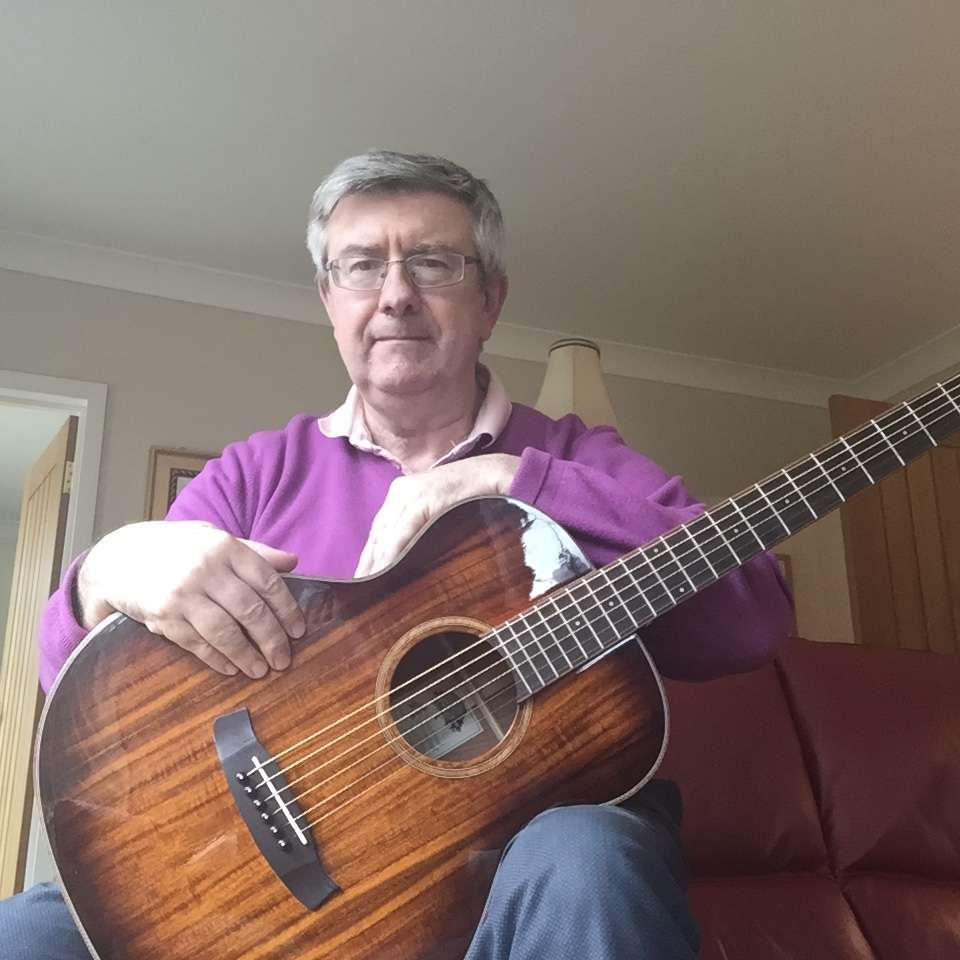
Some guitar pieces feel like compositions. Others feel like places you have somehow wandered into. Martin Lloyd Howard’s “Highland Mist” belongs firmly in the latter category, creating the sensation of moving through a rugged landscape where beauty and mystery exist side by side. Built around the distinctive resonance of DADGAD tuning, the piece finds its character in unexpected melodies, wide melodic leaps and a sombre atmosphere that leaves plenty of room for the listener’s imagination.
What makes Howard’s work particularly compelling is the musical journey behind that sound. A classically trained guitarist with a curiosity that has taken him through folk, blues, rock and more experimental territory, he approaches the guitar as both an instrument and a space for discovery. His fascination with alternate tunings, unexpected chord combinations and the different possibilities of electric and acoustic guitar has allowed him to develop a style that refuses to sit comfortably inside a single genre.
In this conversation, Howard takes us inside the making of “Highland Mist”, from the chance purchase of the Tanglewood guitar in Newcastle to the decision to embrace an old-school recording approach. He also reflects on how classical technique continues to influence his writing, why learning electric guitar fundamentally expanded his musical horizons, and why the element of surprise remains so important to his creative process. Most importantly, he reveals an artist who is still driven by the simplest and perhaps most meaningful goal of all: making music he genuinely enjoys and hoping others find something in it too.
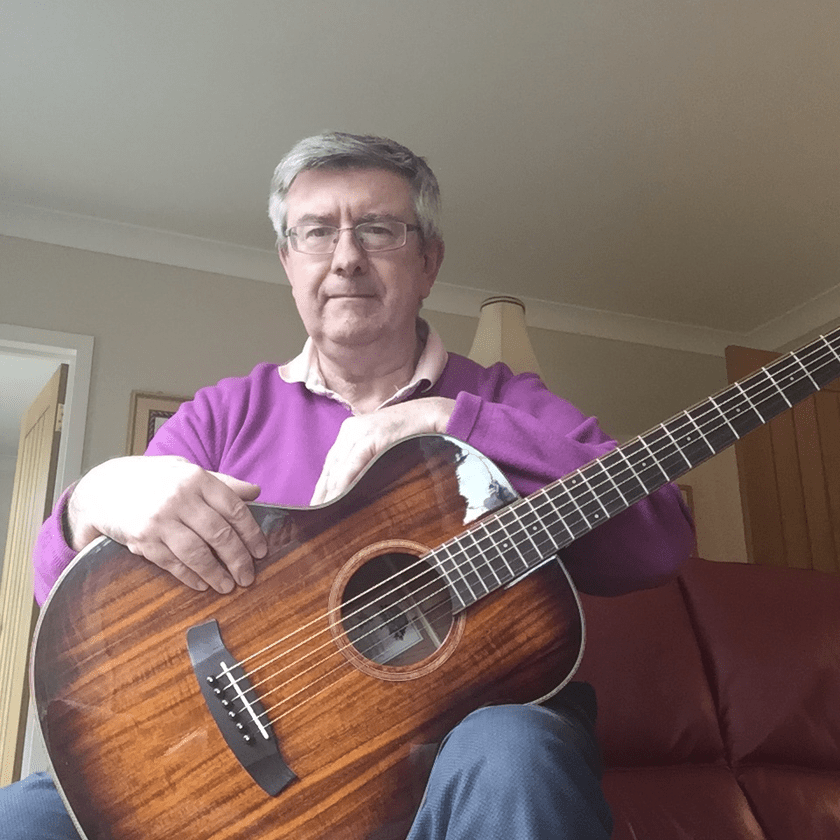
“Highland Mist” feels almost like a musical landscape rather than simply an instrumental track. When you first discovered that fingerstyle sequence, what was it about the sound that immediately made you think of the Scottish Highlands?
I guess it was the D minor flavour with some big melodic jumps which combined a sombre mysterious tone with contrasts in pitch, that to me conjured up the image of a rugged highland landscape.
You normally rely heavily on a 50-year-old handmade classical guitar, yet “Highland Mist” came from a Tanglewood steel-string. What did the change in instrument unlock creatively that your usual guitar could not?
Part of the answer is down to earth practicality. Using alternate tunings, apart from the occasional dropped D, on a nylon guitar often leads to a world of pain! But in addition I wanted a slightly brighter and edgier sound to help carry the lovely resonances that you get in DADGAD. The Tanglewood – a guitar I bought on a whim in Newcastle – fits that brief perfectly.
DADGAD tuning is often associated with Celtic music, but you use it melodically rather than simply as a way to create atmosphere. What made you want to explore the tuning in this particular way?
I have used DADGAD on and off for years, ever since I learned to play “Black Mountainside” (made famous by Jimmy Page on the first Led Zeppelin album) which is itself a melodic piece. I have used it in a more textural manner sometimes teamed with slide guitar (listen to Paint on Canvas on my Spotify catalogue), but in the end I like the unexpected melodies that come from experimenting with different shapes in a different tuning. Highland Mist has come out well and I’m going to use DADGAD again on a new piece (written but not yet recorded) called Surrey Bells where I aim to combine the Tanglewood sound with a second guitar part played in normal tuning on my old classical.
The recording of “Highland Mist” was remarkably stripped back, using a single Rode NT4 microphone positioned close to the guitar. Was that simplicity a deliberate artistic decision, and what did you learn from resisting the temptation to add more production?
That tends to be the way I record solo guitar pieces, particularly when I record at home. From time to time under the expert guidance of recording engineers like Paul Midcalf, I’ll use a slightly more complex arrangement involving two or three mics. But the old school approach was definitely the best choice here.
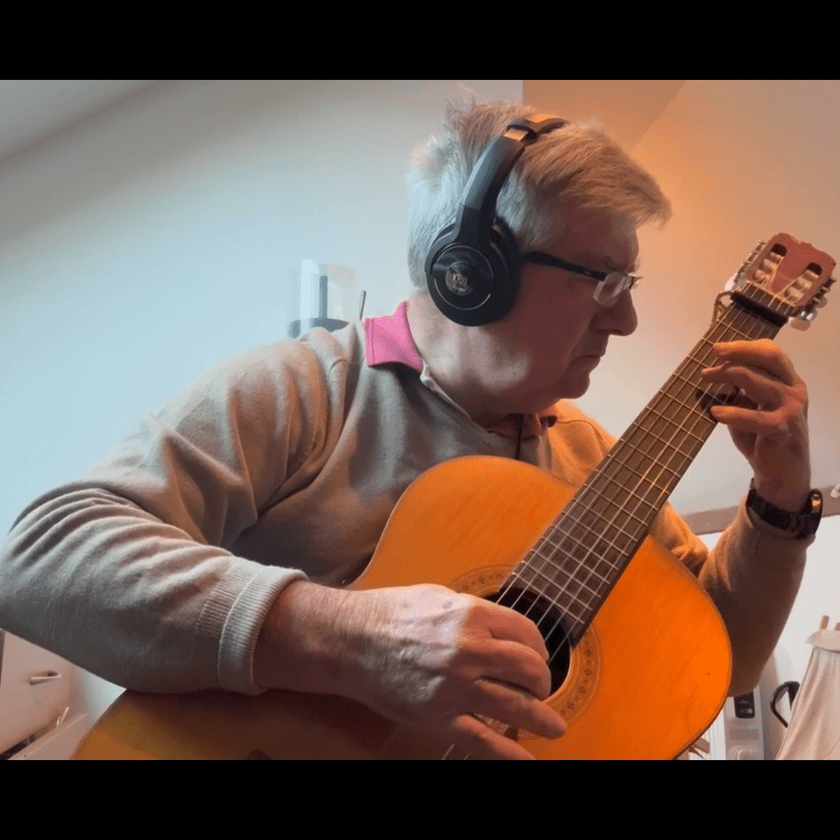
After decades of playing guitar across classical, folk, blues and rock, what still excites you about sitting down with an instrument and discovering something you have never played before?
It’s a good question! Paradoxically, what I have found is that the more I compose the more I find myself able to find new combinations of chords and melodies which contain an element of surprise. That is important to me.
Your music often exists between different guitar traditions rather than belonging completely to one. Do you see your long musical journey as a process of breaking down the boundaries between classical, folk, blues and rock?
I think the answer to that is yes, but I don’t think it was a deliberate choice. The fact is that I like all these styles and the advantage of having started out as a classical guitarist is that it gives you a solid musical foundation, particularly with right hand technique which, in my view, can be used effectively in the blues, rock and folk genres and enable me to compose musical pieces that naturally tend to cross boundaries.
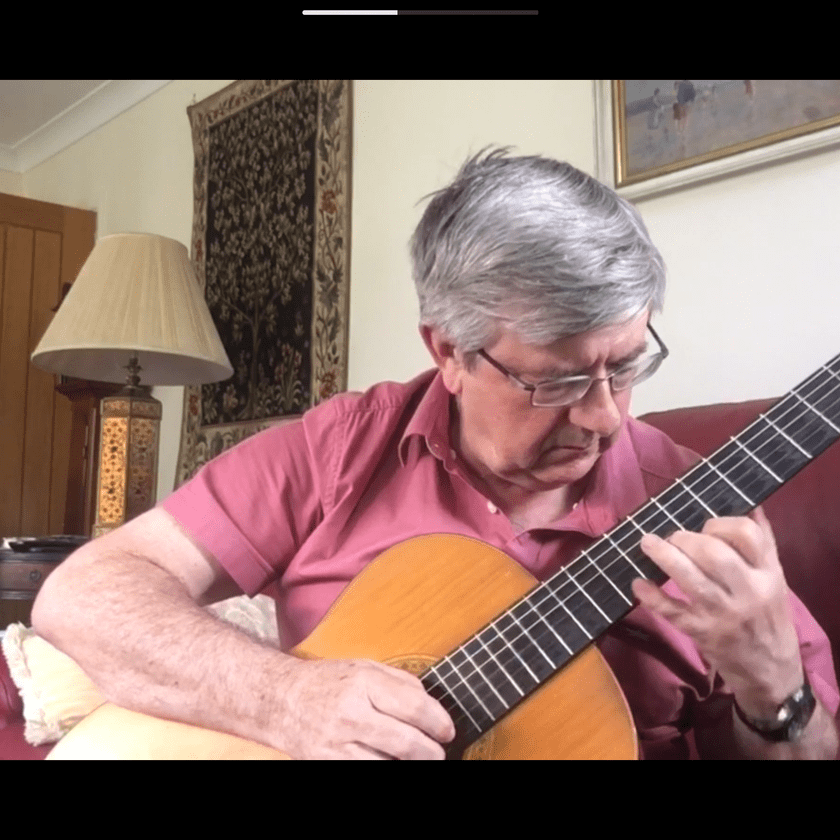
There is a strong sense of place in “Highland Mist.” If the listener could physically enter the world you imagined while composing it, what would you want them to see, hear or feel around them?
For me, the piece conjures images of harsh but beautiful landscapes wreathed in mist and I hope that listeners get that same sense. But I can’t impose that on them. It could be that the sound of the tune generates other images which may be equally valid for a different listener. The main thing is that I want them to enjoy it.
You have collaborated with other musicians while also developing your own instrumental work. How does collaboration influence your creativity compared with the solitude of composing and recording a piece entirely around the guitar?
My collaborative work eg with Mark Johnson tends to occupy a separate space, even if frequently, the original musical idea for a collaboration comes from me messing around on a solo guitar. Collaborations also engage a whole extra set of skills: mixing, mastering, blending different sounds (including capturing vocals which bring a set of new challenges) and in general acting as a producer and multi instrumentalist rather than just a guitar player.
Looking back across your musical journey, is there a particular experience, musician, instrument or moment that fundamentally changed the way you approach the guitar today?
There’s probably more than one, but a key moment was when I started to learn to play electric guitar properly and realise that it is a completely different proposition than just being an amplified acoustic guitar. Sounds obvious but the consequences are many and substantial. It really broadened my horizons.
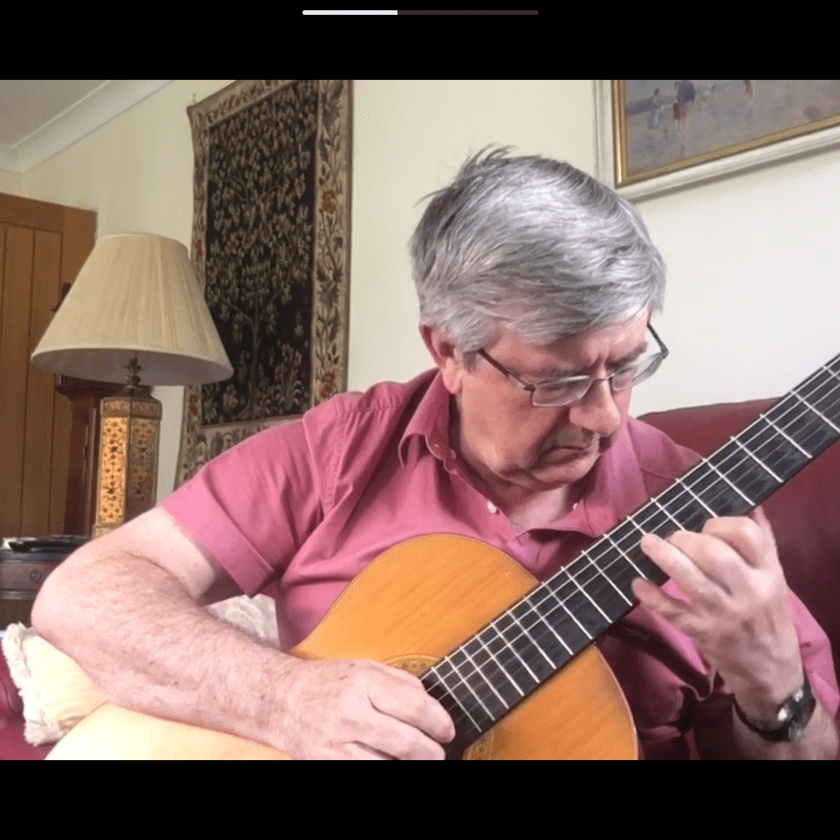
As a musician with such a long and varied relationship with the guitar, what is the bigger story you hope your music tells about who you are as an artist and what you still want to discover?
I don’t think there’s any big message to be honest. It’s always been about making music that I like and that others do too. I like to push boundaries and try new approaches, but it’s always with that end in mind. Hopefully it’s working!