

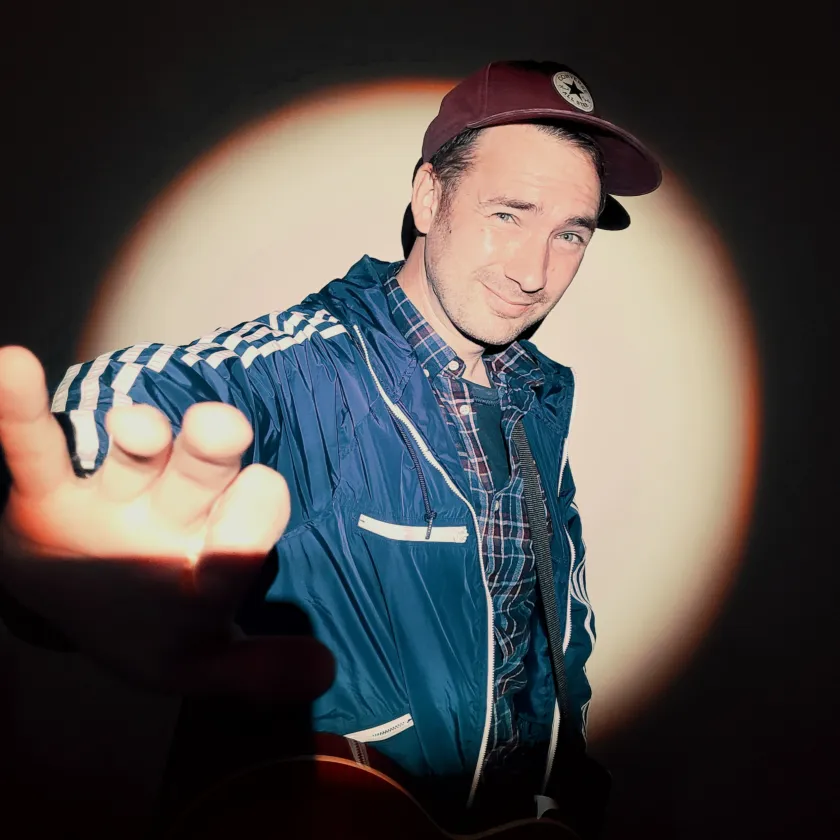
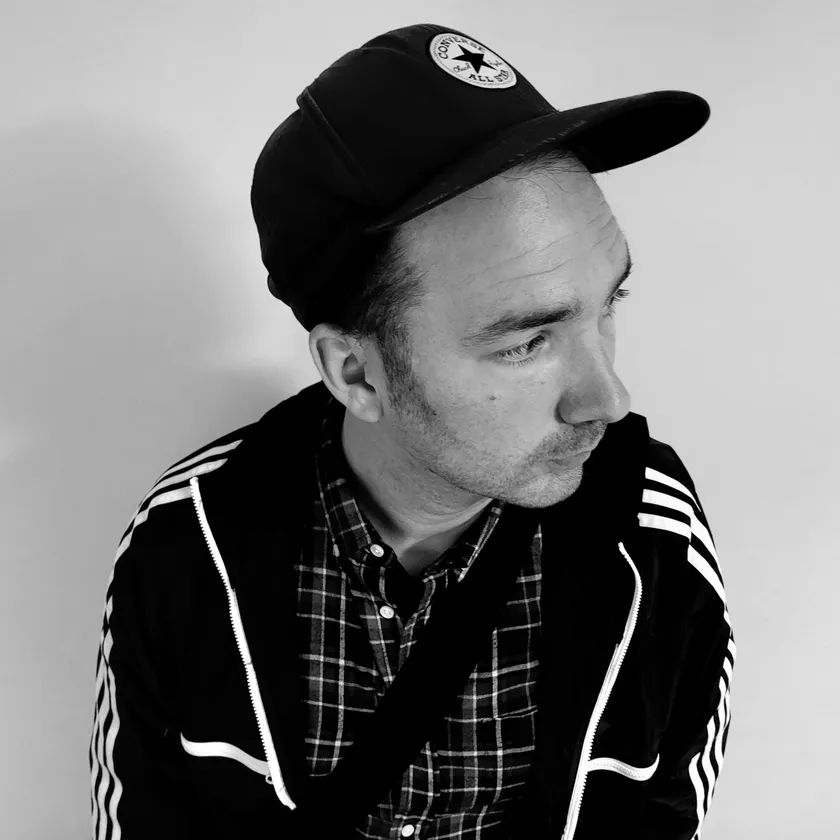
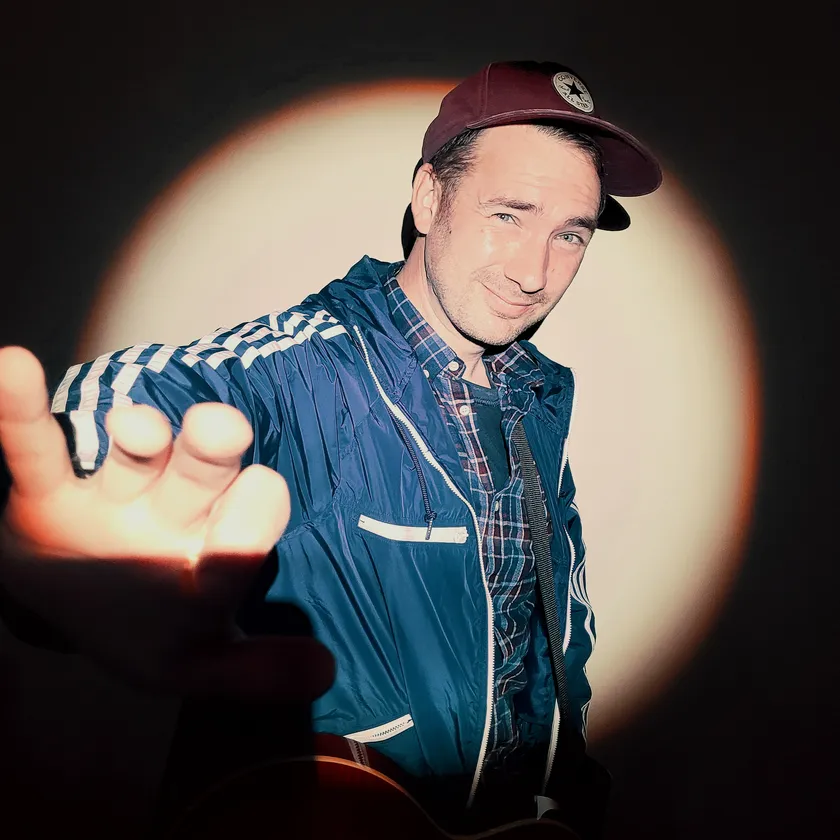
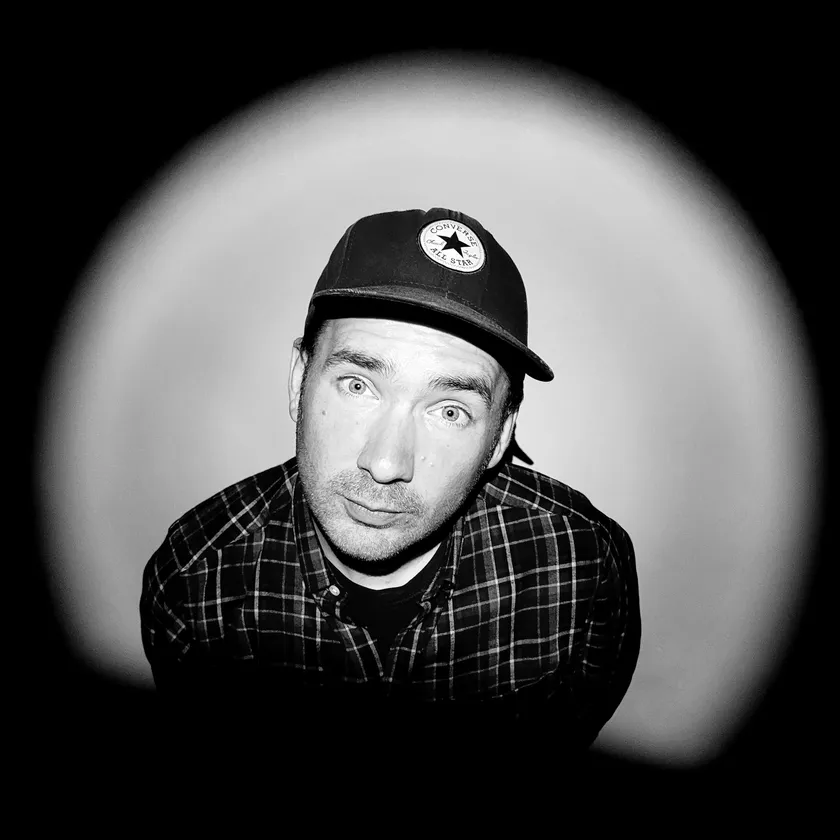
For Jacob, music has always been a big part of his life, starting from the days when he first picked up a guitar as a child and began figuring out songs by listening to his favourite records. Based in Campbeltown, Scotland, he has spent years writing, recording and performing, drawing inspiration from different musical styles, including punk rock, alternative rock, indie and the soul and Motown sounds he grew up listening to. His project, Jacob and the Starry Eyed Shadows, is a reflection of that long-standing passion and his desire to keep creating music on his own terms.
His latest single takes a more personal direction, exploring grief, loss and the difficult emotions that come with saying goodbye to someone or something deeply loved. Inspired in part by his experience of losing his beloved dog, Izzie, the song captures the pain of dealing with loss while finding a way to move forward. Interestingly, despite its serious subject, Jacob wanted the track to have an energetic sound, a memorable chorus and something listeners could connect with and sing along to.
Away from the new release, Jacob has plenty to say about what it means to be an independent musician today. From handling his own songwriting and recording to spending months getting a song exactly where he wants it, he believes the creative process is an important part of what makes music meaningful. He also shares his concerns about the growing influence of artificial intelligence in music and why he feels musicians should be encouraged to experiment, learn and develop their craft rather than look for quick fixes.
In this interview, Jacob opens up about his musical journey, the stories behind his latest release, the influences that have shaped his sound and what listeners can expect from Jacob and the Starry Eyed Shadows in the months ahead.
You are based in Campbeltown, Scotland. How has growing up or living there influenced your musical journey and the kind of songs you create?
I must admit, I haven’t really thought about that too much before. My direct musical influences are from all around the world, so I haven’t thought too much about how my own local area directly influences my music. But it obviously does. The town itself is a great place with a wonderful community, and the surrounding countryside is stunning. I guess it has been politically and economically ‘left behind’ in many ways though, certainly since I have grown up, as have many seaside towns in the UK over the last forty years. Geographically, we’re also at the end of a peninsula, so there’s very much an ‘out of the way’ vibe about the place. You only come here if you really want to as there’s no way of passing through. On a rough winter night, looking out over the Atlantic Ocean, it does have a very ‘edge of the world’ feel to it. Or at least, that’s how I always felt growing up. So yeah, I think that kind of defiance in the face of vulnerability has always come through in my music. Whether it’s the place or me, who knows?
Jacob and the Starry Eyed Shadows is described as the brainchild of a solo artist. How did the project come together, and what does the name mean to you?
I have just always made music. I always loved it and was passionate about it. I think it connected with me in a way no other media could when I was a kid, I guess. I started playing guitar at around 10 or thereabouts, got a few lessons, but then just taught myself. I loved playing by ear, just listening to songs and trying to figure out the notes and chords. At about 12/13, me and my friends started experimenting with recording silly songs on some kind of 4 track. I don’t remember what the device was, maybe a keyboard or stereo with an auxiliary mic. Maybe it wasn’t even a multitrack, probably not. But I remember a hip hop song we recorded, and we thought it was amazing. Of course it was, it was the first time we’d heard our own voices and music coming out of a machine, so that’s obviously exciting to a 12 year old in the 90’s. I guess with AI and modern technologies that type of excitement over an awful recording might not translate, but it was exciting for us at the time. That’s what I worry about with AI music, the lack of play. Young people should be encouraged to learn, experiment, and play with their ideas, not just expect them to come out fully formed.
Anyway, I kept playing, writing, and recording through school and adulthood, playing in different bands. Mostly covers, but also some original stuff. Eventually I returned home and started my own project to keep myself happy. I have always loved groups and bands that have ‘someone and the so and so’s’ type names. Probably going back to my Mum’s Motown and Soul influences. So, I just thought it was different and liked it. Although, I know people struggle typing it into YouTube!
Your upcoming single explores life, loss and how people respond to difficult experiences. What inspired you to write a song around these themes?
Like everyone, I’ve experienced loss and grief. I guess that’s what is so important about the topic; it can’t be escaped and is universal. My last experience of loss was my worst and it was losing my dog Izzie. I always feel terrible talking about it, because I have lost many people who I loved so incredibly much, but for a variety of reasons losing Izzie was the most impactful. I’m sure there are pet owners and lovers who can relate to that. There is just something about that kind of unconditional loving relationship that is different. Especially if it’s a particular dog at a particular time of your life. When you just know; that’s the one, and you feel it straight away. That was me and Izzie. We did everything together. If I could take her somewhere, I took her. She was the anchor who made me feel like me and always brightened my day no matter what was going on. The song isn’t about her specifically, it’s just about that feeling, that uncontrollable grief that you don’t know what to do with. Where does this go, how does this change, and what do I do with this? I guess it’s about that process and gradually coming to terms in a defiant and loving way.
When dealing with loss, people often respond in very different ways. What perspective or message did you hope listeners would take away from this song?
I don’t know, because as you’ve said, everyone responds in different ways. I take my hat off to people who can just hide it, bottle it up, and soldier on. I’m not that person I’m afraid. I had to feel it. It was too important and personal for me not to feel it. I guess we ultimately have to be able to harness pain in different ways and turn it into a positive somehow over time. My song was just about my journey and trying to turn a horrible experience into a positive through the creative process. Again, that’s the miracle of music; creating can help to process so many things. For the listener, I just hope they connect with it in some way. I always try not to be too specific with song lyrics and just let them come naturally, so that listeners can basically interpret it in their own way.
You handle the writing, performances and recording engineering yourself. What do you enjoy most about having such a hands-on role in bringing your music to life?
I just love the process. That’s what music is all about for me. If it was just about having an idea, then everyone would be an award winning musician. You have to try and channel the emotion of the song or idea into something creative; a process. This is why I have so many concerns about AI music platforms; they are arguably destroying the learning and development process. With AI, you just need an idea, and it can do the rest. But that’s not expressive creativity for me.
With this song, I had the basic idea for the chord progressions and verse and chorus lyrics and melodies for a while. But I could never get it finished as there was always something missing. So, it had a lot of re-writes and re-records until it felt right. I was a lot more patient with this song than I am with many and it was a few months before I was happy with it. Especially with it being a personal topic, I guess that encouraged me to take my time and try to get it right. For me anyway.
Your influences range from punk rock and indie rock to Motown. How have these different styles shaped your songwriting, and do you find yourself drawing on particular influences when creating a new song?
I grew up listening to punk and alternative rock. It just resonated with me; I loved the energy, the angst, and the musicianship. I loved music that wasn’t mainstream and pushed musical or cultural boundaries in some way. Something that had a back story and wasn’t just perfectly packaged to be the next big hit. Some of the bands I loved went on to become mainstream years later, like Green Day, but at the time they were still on the ‘alternative’ side and weren’t popular where we grew up. My family brought me up on music, especially old school rock, soul, and Motown. So that always inspired my more melodic and soulful sound, I guess.
You describe the upcoming single as big and catchy despite dealing with serious subject matter. How did you balance its emotional message with the energy and sound of the music?
The song was always going to have a serious subject matter. Most of my songs explore some kind of existential crisis as it tends to be my default writing position. I’ve always loved a big chorus, something people can sing along to and feel. So, that was a big focus. I tried to balance that with a minimalist verse that started in the minor but then resolved in the major in the chorus which I think works well. The sections are short and pretty catchy, especially the chorus, which has quite singalong lyrics. So, I think I managed to balance it quite well.
When you begin working on a new song, do you usually start with a lyrical idea, a melody, a guitar part or something else entirely?
It depends. I always write on acoustic guitar. I tend to play around until I find a phrase or melody that might work. I’ll work on that for a while. If it doesn’t go anywhere, I’ll play through the notes in the key around that phrase and see if I can find something. This could be on guitar or piano. I might find something that sounds good, but it’ll also depend on the lyrics that come. If they don’t resonate, it’ll often get left behind and forgotten. So yeah, it’s normally both. I normally need a lyric idea that fits with a melody idea and then it grows from there, but it could start either way around.

As an independent artist, what has been the most rewarding and challenging part of managing so many aspects of your music on your own?
I just love taking control of every part of the process. Because for me, that’s what makes something mine. I am seeing a lot of musicians, including some talented ones, who are creating music using AI and I just feel this loses something. But I get it. It’s really hard making music that people expect to be ‘release ready’. And that’s what everyone expects these days; “it has to be perfect and has to meet these standards for me to listen to it” because there’s so much out there. That’s not easy and it’s not cheap.
I worked on this song for months writing, recording, and editing, and then worked with a sound engineer to mix and master it until it was ready. So, I get that not everyone wants to do that. But I feel like AI music is taking the soul away from the creative process; it should be a process and it should involve humans, otherwise what’s the point – where is the art!? My music isn’t perfect. I could probably get a more “perfect modern sound” if I signed up for Suno and got it to spit a track out for me based on my ideas, but then I would lose the process; I would lose the experience, I would lose the learning opportunity, I would lose the control, the expression, the graft and perseverance, the mistakes, and all things that make creating art innately human…the things that make it mine.
So, I just love doing it and will always encourage others to avoid the ‘quick fix.’ Can you imagine being a teenager now who can get an absolutely perfect track from typing ideas into an AI app for £6 quid a month, or whatever it is? Where is the incentive to learn an instrument and become an actual musician? You would pick up a guitar for the first time and go “this is too hard, what’s the point?” And who can blame them when it’s only getting harder to get your music out there. The industry needs to remember why it existed in the first place, but I won’t hold my breath.
What can listeners expect from Jacob and the Starry Eyed Shadows after this release? Are there more singles or a larger project in the works?
I will be working on new releases and performance opportunities in the coming months so please follow to keep up to date with what is happening. Thank you for having me, it’s been a pleasure.
CONNECT
WEBSITE | FACEBOOK | SPOTIFY | SOUNDCLOUD | YOUTUBE | INSTAGRAM




Add Your Voice to the Spinex Music Conversation
Reader commentary enriches every review, premiere, and culture feature on Spinex Music. Share thoughtful perspectives on production, songwriting, and cultural shifts with fellow listeners.
Before You Reply
Enter the name you want shown publicly alongside a valid email kept strictly private.
Keep replies relevant to the story and free of promotional spam links.
What Happens Next