
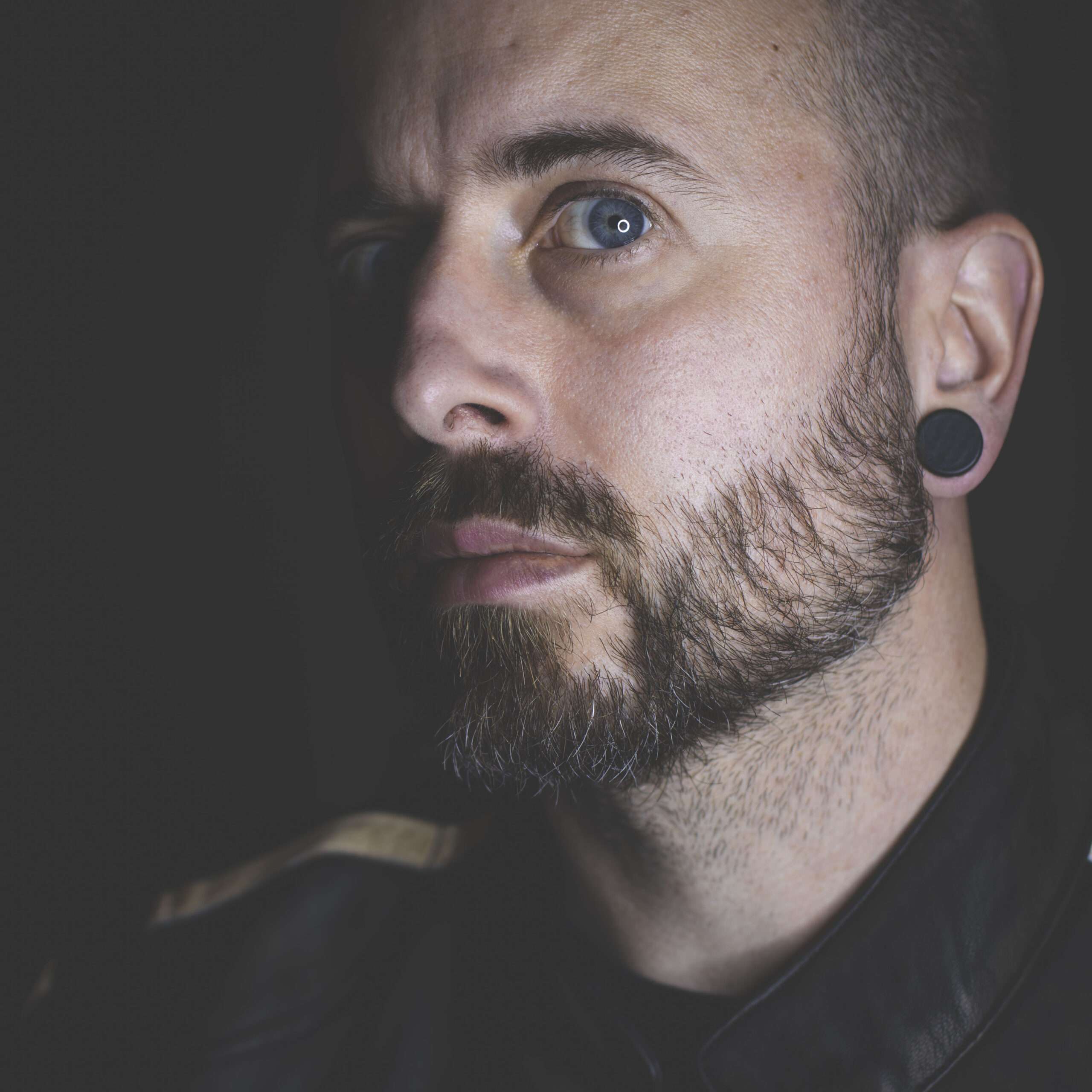
After more than two decades spent helping other artists shape, produce and refine their music, Matthew Parisi is finally putting his own voice at the centre of the work. Under the name DEDCHIMP, the producer, engineer and musician is beginning a new chapter with DEVOUR, a project that is considerably more personal, confrontational and uncompromising than the work he has spent years creating for others.
Parisi’s relationship with music did not begin behind a mixing desk. He started by making his own music, writing and performing in punk and goth bands before moving deeper into studio work. Over the years, that path gave him an extensive understanding of production and an ability to translate the ideas of other musicians into finished records. But somewhere along the way, the distinction between working on music and making music for himself became impossible to ignore.
The turning point came during a performance with Nobody’s Wolf Child at Castle Party. Being onstage, surrounded by music he genuinely loved, exceptional musicians and an audience that cared deeply about the experience reminded Parisi why he had started making music in the first place. It also forced him to confront a question that had been sitting in the background for years: why had he not been doing this himself?
That realisation eventually became DEDCHIMP.
The project represents a very different position for someone who has spent so long working behind the scenes. As a producer, Parisi was accustomed to helping another artist discover the right direction for a song. With DEDCHIMP, there is nobody else to translate his ideas for and no outside artist to reassure him when the creative process becomes difficult. He describes himself as his own worst critic, while also admitting that learning to hear his own voice on a record and accept it as part of the music has been its own challenge.
But that vulnerability is important to the project.
DEDCHIMP is built around the idea of an observer watching humanity consume itself. It is a deliberately dark premise, and DEVOUR does not attempt to soften that perspective. The project explores Parisi’s frustrations with what he sees happening around him, from social disconnection and online addiction to the concentration of power and wealth, and the ways people can become distracted from events happening in the wider world.
His songwriting is therefore not interested in traditional romantic narratives. Instead, DEDCHIMP becomes a vehicle for examining the things that frustrate him, disturb him and occupy his thoughts. DEVOUR, in particular, is described as a kind of confession, with Parisi acknowledging his own previous apathy rather than positioning himself as someone who has always stood outside the problems he is writing about.
That distinction gives the project an interesting tension. The songs may be confrontational, but Parisi is not presenting himself as someone with all the answers. He repeatedly returns to his own responsibility and his own failure to engage more deeply with the world around him. Rather than telling listeners what to believe, he wants the music to encourage them to think for themselves.
Musically, DEDCHIMP draws from a wide range of darker alternative influences, including Nine Inch Nails, HEALTH, Deftones and Lorn, while incorporating elements of goth, industrial music, dark pop and electronic production. Despite being a guitarist, Parisi has deliberately avoided making the guitar the centre of the project. Instead, his songs often begin with drums and bass, establishing a strong groove before melody, atmosphere, synths and other textures are introduced.
That approach is central to the sound he is developing. He wants the music to feel heavy without relying entirely on heavy guitars, and aggressive without becoming predictable. The objective is something more psychologically uncomfortable, while still retaining melody and enough musicality for the listener to engage with the work beyond its subject matter.
This contrast between accessibility and discomfort runs throughout DEDCHIMP. There are melodies alongside darker ideas, electronic textures alongside rock influences, and moments designed to pull the listener in before confronting them with the subject underneath the music.
The project’s title track, DEVOUR, captures much of that philosophy. The word comes from a line in the chorus concerning those given power and elevated into positions of influence. For Parisi, the concept extends beyond one literal interpretation. It becomes a broader reflection on consumption, power, celebrity, political influence and the ways individuals and institutions can take from society while the public continues to participate in the systems around them.
At the same time, Parisi recognises that the project is ultimately his interpretation of the world. Listeners may hear the same songs and take something completely different from them. He is comfortable with that. Having spent so much time producing other people’s music, he understands that once a piece of art leaves the creator, it belongs partly to the listener as well.
There is also a deliberate tension between the bleak worldview expressed through the lyrics and the fact that DEDCHIMP is still fundamentally a creative project. The phrase “Music To Watch The World Burn To” captures that atmosphere perfectly. The music is not designed to offer easy comfort or reassuring conclusions. Instead, it reflects the darker emotions that can emerge when someone looks closely at the world and struggles to reconcile what they see with what they hoped it might become.
Yet DEVOUR is not simply an exercise in pessimism. Beneath the anger and frustration is a sense of urgency. Parisi believes there are things he should have said and made much earlier, and he now sees experience as something that gives him a greater perspective rather than a reason to step away from music. The years spent working with other artists have given him the technical knowledge, while life itself has given him something he feels he did not have at twenty: his own perspective and something he genuinely feels compelled to say.
That makes DEDCHIMP feel less like a side project and more like a long-delayed creative decision.
There is no carefully calculated mainstream blueprint behind it either. Parisi is not attempting to reshape the project to fit conventional expectations, nor does he intend to turn himself into a social media personality simply to create attention around the music. Instead, he wants to make work he believes in, tell the stories he feels need to be told and allow people who connect with it to follow the journey.
And given his experience promoting and working with other artists, he is unlikely to simply wait for people to discover DEDCHIMP by accident.
In this exclusive interview, Matthew Parisi talks openly about stepping out from behind the desk, finding his own voice, the frustrations that inspired DEVOUR, the darker ideas behind DEDCHIMP, his approach to building songs, the balance between heaviness and melody, and why he believes now is the right time to finally make the music he has wanted to make for years.
DEVOUR may be the first chapter of DEDCHIMP, but judging from the ideas behind it, this is a project that intends to leave a mark rather than quietly exist in the background.
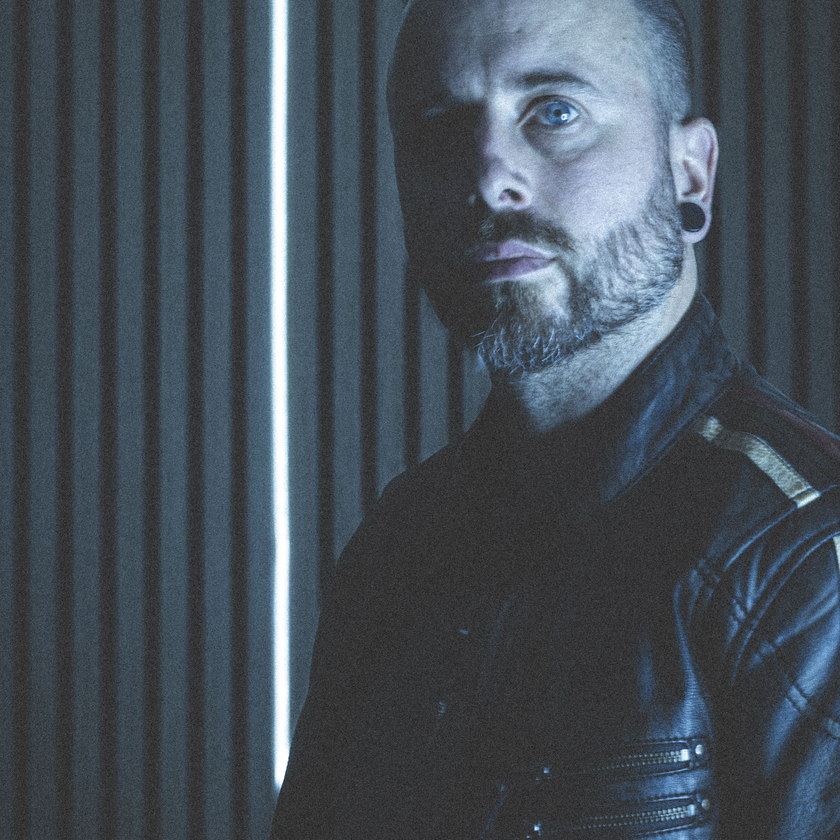
After spending more than 20 years producing and mixing other people’s music, what finally made you decide that it was time to stop being the person behind the desk and put your own name and ideas into the music?
In all honesty, probably frustration. I started out in music making my own thing, playing in punk and goth bands, writing, performing. I then went down the studio path, which has been incredible, but I spent a long time working on music I didn’t love and in reality, didn’t want to be associated with. I left the commercial side of the music industry to work with musicians I actually love and although it took a few years, I’ve been able to carve a career working with exceptional artists.
It was performing with Nobody’s Wolf Child at Castle Party that really gave me the drive to do my own thing. I was onstage performing music I loved with exceptional talent, to people who are passionate about music alongside bands I actually listen to. So in many ways I’ve been frustrated with myself for not doing this a lot earlier. But.. we’re here now, and with that crowd, they only care if the music is good. Nothing else matters.
You have spent a long time helping other artists shape their sound. Was there anything you found difficult about giving yourself that same treatment when you became the artist, or did your experience behind the desk actually make the creative process easier?
I guess both really. The experience of working as an engineer and producer for so long means I can quickly create the things I hear in my head and get to something good. It doesn’t take long to make a half decent sounding demo. But it can be hard to know what direction to take. I’m no longer translating for an artist, I’m doing my thing and the only person who has an opinion on it is me. It doesn’t help that I’m my own worst critic. It’s hard not to spiral into some form of self-loathing whenever I’m working on anything for myself.
There’s also getting comfortable with your own voice. I’ve never considered myself a singer and I’m still not sure I do. Learning to hear myself back on records and be happy with what I’m doing took some getting used to. I don’t have a producer giving me any reassurance.
You describe DEDCHIMP as an observer watching humanity consume itself. That is a pretty bleak starting point. When you look at the world around you, what is it that keeps catching your attention and making you think, “I need to write about this”?
It may be a bleak starting point because it does feel really bleak to me. We will always have a ruling class, and they will always be the worst of us. For some reason, humans are a glutton for punishment. But it somehow feels more extreme now.
I think what has motivated me more than anything is that contrast to the world I lived in as a child and the world I live in as an adult. I grew up pre 9/11 and I remember that day vividly. The 90s was a fairly positive time. There was a feeling of hope generally speaking, but after 9/11 everything changed. We no longer felt safe and there has been a lot of money put into making sure that we never do. I think it also exposed how interconnected all the ruling classes were in a way that hadn’t been unearthed before.
I’m sure we’re close to reaching the conclusion of over two decades of making us feel more disconnected to each other, to society and to the real world. We all mostly live online, addicted to those little dopamine hits. This has been weaponised to make some of us believe some really crazy things in order for us to vote out of fear. When we vote out of fear, we’re only bringing in bad actors who use that vote to make more money and gain more power.
Watching how quickly society moves on from things which are some of the most heinous acts to have happened in modern history because there is some new scandal, or fake news or simply some new influencer, probably AI with an only fans account, who’s feeding our addicted little monkey brains, has been the cause of a lot my frustration and current outlook on the world.
So it’s hard to really write about anything else, and I’m not interested in writing love songs.
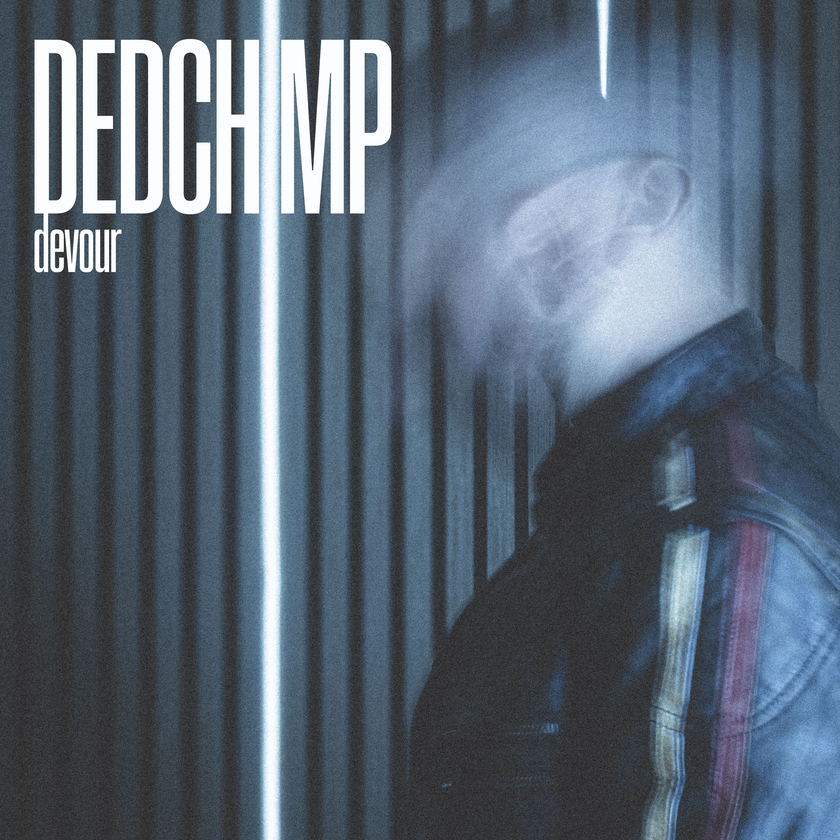
“DEVOUR” is the first chapter of the project. What does that word mean to you in the context of the record? Are you talking about humanity consuming resources, technology consuming our attention, people consuming each other, or something even more personal?
DEVOUR came from a line in the chorus “Did I just let your God take it all and devour”. In that context I wasn’t meaning God in a religious way but those who we idolise and worship. Those we give power to. We give power to the most psychopathic amongst us, raising them to unreachable platforms with fame, money and political positions. You just have to look at the people we’ve elected to be in charge of the world.
But DEVOUR can take on many meanings. Those same people are in the Epstein files and there are plenty of allegations of them devouring children. But the song wasn’t really about that to me. More about us sleepwalking whilst those we idolise take everything from us. We know it’s happening but because so many people somehow believe that they stand a chance of being the ones with power, they keep voting for and idolising them.
The fact we’re not rioting or putting these people in jail says everything we need to know about the world we’re living in. We consume whatever they want us to consume and they take the lion’s share.
Your influences stretch from Nine Inch Nails and HEALTH to Deftones and Lorn, but DEDCHIMP also brings in goth, dark pop and industrial elements. When you are building a track, do you start with the heaviness, the electronics, the melody or the atmosphere?
I usually start from drums and bass. I want there to be a strong, underlying groove to it all so I get that working first. Also, if I write the bass parts first, I’m less dependent on chords that can sometimes force melodies to go in certain directions. Once I have that working then I tend to figure out a melody. If it has a strong melody and a strong groove then I know I can make it into something.
Everything else after that tends to happen quite quickly. I’ve worked in studios long enough to have a good intuition of what comes next. I’ve listened to a lot of music for a long time so I have a lot to draw from. I also love synth design and have created a lot of sounds and patches that are laying dormant, waiting to be used.
You say DEDCHIMP is deliberately confrontational, but you are not trying to give people political answers or tell them what they should believe. How do you make a song challenging enough to provoke thought without turning it into a lecture?
I think that’s why it was important that it came from the point of view that I am the one who has made the mistake. I’ve been ignoring what’s going on in the world around me. I also don’t suddenly expect people to care just because I wrote a song about it. That’s probably why it all feels so futile. Those who care are always going to care, and those who don’t, never will. I can’t exactly blame people who are apathetic to what’s happening when I was one of them for a long time.
But I knew I was ignoring it, and now it feels like we’re past the point of return. I’m sure there are a lot of people who are in the same situation as me. I’ve always been politically aware, but not so politically active. That’s not to say I’m suddenly now an activist. So DEVOUR is about that apathy and essentially, getting the world we deserve as a result.
I’m not trying to tell people what to do. If anything, I want people to figure out what they want to do, instead of being brainwashed by whatever their social media feed is telling them.
You have worked behind the scenes for so long that listeners may hear a very experienced producer at work before they even realise there is a personal story underneath it. How much of Matthew Parisi is actually exposed through DEDCHIMP?
I’m sure there are always going to be different types of listeners. Some people will listen because they enjoy the music. Some people will listen to what I’m saying and perhaps want to dive deeper. I’m just happy if people are listening at all. I’m not going to judge people on whether or not they “get it”. They’ll have their own interpretation and meaning from it and that’s what art is meant to do.
DEVOUR is a confession of sorts and whilst DEDCHIMP is a concept, that confession is very real to me. For me, writing lyrics is very personal. I’m not here to write a boy meets girl type thing. I’m writing about how I see the world. Some songs will be more introspective and others will be more outwards looking. But they’ll all be how I’m actually feeling and thinking at the time.
There is a strong tension in the project between something being heavy and aggressive while still being melodic. Is that contrast important to you, and do you ever find yourself deliberately pulling a song back because you feel it is becoming too heavy or too obvious?
I’ve definitely made deliberate choices about instrumentation that I thought would be too obvious. Despite being first and foremost a guitarist, I didn’t want to make guitar records. It’s easy to make guitar records feel heavy. I didn’t necessarily want to be heavy. I wanted it to be musically uncomfortable. That being said, I want my music to also work as a piece that can be enjoyed. It’s why I wrote melodies instead of just screaming the whole thing. I wanted that contrast.
I’m not ruling out big heavy guitars, and there are guitars in this record, but they’re not at the forefront. Perhaps one day I’ll write some things that are more guitar focused, but only when I’ve figured out a way of doing it that feels like a DEDCHIMP record and not a pastiche of something else.
The phrase “Music To Watch The World Burn To” says a lot about the attitude of the project. Is there any part of you that still has hope for the world you are observing, or does DEDCHIMP work better when you allow yourself to sit with the darker side of things?
It’s hard to feel hope when humanity is deliberately collapsing in on itself. We’ve had a summer of wildfires at a scale never seen before, we’re going through a mass extinction, we’re using water in data centres designed to run machines that will take away our last real connections to humanity, instead of using it to drink at a time when there is severe drought.
All the while, there’s a small group of people making a colossal amount of money in the largest transfer of wealth in history, and instead of being scared of what happens when we all have nothing left, they’re creating bunkers that will allow them to live comfortably whilst the whole world collapses.
I’m not going to try and guess or plan too much on where it can go. But I have promoted a lot of artists in the past and so I won’t be sitting on my hands hoping that people will stumble across my music. I’m happy to shout in people’s faces about the work I’m doing.
But I guess there is hope!?
I’m not really here to provide any comfort. But if the world is going to burn, it may as well be Sodom and Gomorrah and that is what I’m trying to reflect with my art.
“DEVOUR” is only the beginning of DEDCHIMP. After spending two decades helping other people realise their musical ideas, what are you hoping to prove to yourself with this project, and how far are you prepared to take it?
I’m not sure I’m really trying to prove anything. It’s more that this is something I know I should have always done. I thought my time had passed for being a frontman, or running my own project. But actually it was vanity that stopped me doing it. I’ve also learned from working with alt scenes that age just means experience. I have stuff to say now. When I was 20 I would have just regurgitated what others are saying.
As to how far I’ll take it. I’m not making music that will be supported by mainstream outlets, and I’m certainly not going to go down the route of being some social media influencer. I’m going to create art that I believe in, tell the story I think needs telling and those who want to follow along for the ride, can.
CONNECT