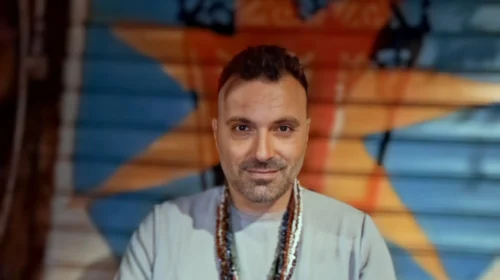

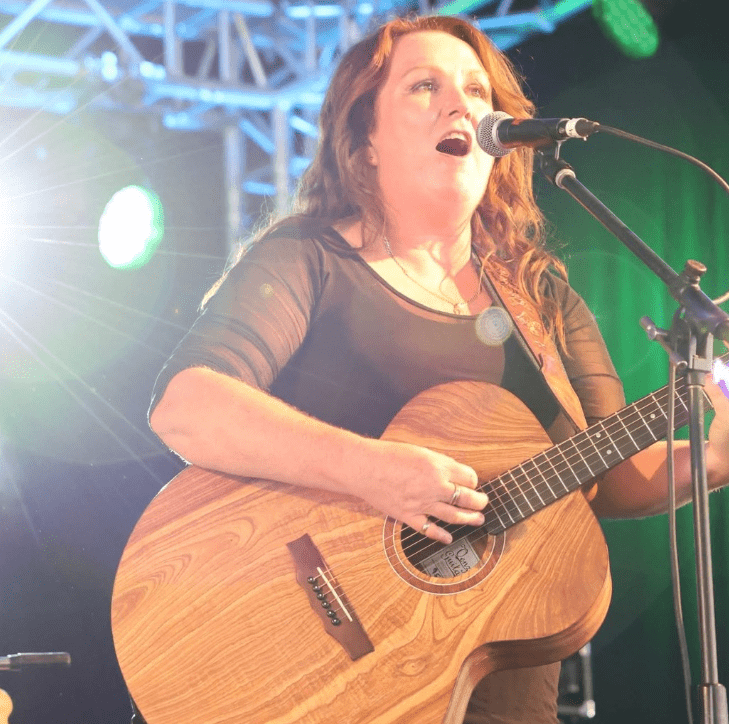
“Ancient Dingo” stands as a thoughtful and deeply reflective work that extends beyond the boundaries of a traditional song. Created through an intuitive collaboration with lyricist and musician Kelly King, the track emerged from a shared writing session and gradually evolved through live performances before reaching its final recorded form. At its core, the song draws on the dingo as a powerful and complex symbol, representing visibility, misunderstanding, and the delicate balance between reverence and fear.
Shaped by Amanda’s life in rural Kandanga and her proximity to the natural rhythms of the Sandy Strait and K’Gari, the song is inseparable from place. These surroundings have not only influenced the sound and pacing of the music but have also informed a broader shift in perspective, replacing restlessness with clarity and groundedness. As “Ancient Dingo” moved toward release, it took on new significance, intersecting with cultural conversations, environmental realities, and moments of national reflection.
In this interview, Amanda speaks candidly about collaboration, responsibility, and the slow, deliberate process of allowing a song to fully reveal itself. She reflects on authenticity, the role of environment in creative life, and the challenges of releasing meaningful work in a fast-moving industry. Together, her insights offer a measured and honest look at how music can quietly invite understanding, empathy, and deeper listening.
“Ancient Dingo” feels like both a song and a statement, drawing on the image of the dingo’s nocturnal howl as a metaphor for being seen and heard. Can you take us back to the moment the idea first emerged and explain how that emotional spark evolved into the final composition?
My harmonica and flutist Kelly and I decided to wrote some songs together, starting with a lyric session. It was then that the lyric & concept “Ancient Dingo” came about. Kelly’s passion for the Dingo spurred the lyric initially, and we played off each other to form the rest of the lyrics. The song formed over some time, and was performed live quite a few times before it was recorded, which was when the song really came to life.
The dingo is one of Australia’s most misunderstood animals, often positioned between reverence and fear. When you decided to center this release around such a complex symbol, what conversations did you hope to open, and how conscious were you of the responsibility that came with telling this story?
It’s interesting when art imitates life. Truthfully, initially I wasn’t very conscious at all. In fact I was as ignorant as the people we now hope to educate! My first thought was that people love dogs and possibly it might appeal to dog lovers, but really there is so much more to the story. A Dingo isn’t just a dog, it’s a predator. The choice to release it (as a single) forced me to investigate the plight of the Dingo in much further detail, and reflect upon my own actions camping previously on the island. Wow. I learnt a lot since then. The responsibility of delivering an environmental message hadn’t really occurred to me until we decided on the release day at which time I have become an armchair expert.
Then, just a week prior to the release there was an unfortunate death of a young travelling worker on the island (due to a Dingo attack) and it has been very upsetting for all involved. As a result 15 dingos have beefed culled.
Place plays a huge role in your work, from rural Kandanga to the Sandy Strait and the presence of K’Gari across the water. How do these landscapes influence the way you write, perform, and even listen to your own music?
My environment is only now starting to be familiar. I’ve been living in this beautiful location now for almost 8 years. It has changed me, my songwriting, my attitude and my outlook. I have so much less angst, and it it opens the possibilities for the beauty of my surroundings to influence my artistic endeavours, that is for sure. I do miss touring, performing every weekend and the rock’n’roll lifestyle that my music career provided for me, but it wasn’t healthy for relationships, stability and finding a sense of belonging. I’m finally comfortable listening to my own music. I hear a happy person who has found home, not my past troubles and woes.
You have released both an electric pop rock version and a stripped back acoustic rendition featuring didgeridoo. How did approaching the same song through two very different sonic lenses deepen your understanding of its meaning?
Well that was easy. The acoustic version was done just recently but it was like a homecoming, revisiting the origins of the song. I like to perform solo, and Ancient Dingo lends itself well to that format. I have worked hard on getting the acoustic guitar parts to produce the back beat rhythms, and its a very enjoyable song to fingerpick because of its challenge and interplay with the melody. The electric version was much harder to visualise and couldn’t have been done with out the vision of my producer Andy Tainsh, who is responsible for the bouncing baselines, encouraging my electric reggae guitar stylings. The song works on both levels of production. That is the sign of a strong song I believe, so demonstrating that feels right.
Collaboration has clearly been central to this project, particularly your work with Kelly King. What do you look for in a creative partner, and how did this songwriting partnership challenge or expand your usual process?
I have a method I have used for many years to collaborate with others creating lyrics. Most of the time it works successfully, especially when people have a lot to say and they aren’t self conscious about sharing their thoughts on paper. Kelly is that person and her enthusiasm is unbound. She came up with the concept for Ancient Dingo, an I would not have been abler to write the song without her, nor would I have been convinced of it’s potential as a single.
Working with Kelly was both fabulous and challenging because she is a bouncing ball of ideas, a storyteller and an enthusiastic linguist! We wrote a couple of songs in that session, the other is also a cracker, called “Thousands of Songs” which is also on the album. Kelly actually sings that one. Her overall excitement about the album and particularly this single has been a breath of fresh air. It makes me feel very pleased that she has enjoyed and now understands the whole process from writing to releasing.
Releasing “Ancient Dingo” on Australia Day carries cultural weight. How do you personally navigate the balance between celebration, reflection, and respect when aligning your music with a date that holds multiple meanings?
I am still coming to terms with it. I had hoped that releasing a song about a controversial Australian Animal on Australia Day would encourage a discourse that rises above the petty politics. I had a romantic idea that it would be a positive distraction in a sea of negative. I am a proud Australian with a strong empathy for our indigenous peoples, who unfortunately do not see Australia Day as a reason for celebrating. Yet the news feeds still focused on the negative and to be honest the main attention our song received was from overseas media outlets. This is disappointing but indicative of the sensationalism that drives the news cycle. I’m sure the unfortunate death of the girl on K’Gari distracted from our release. It was more newsworthy than a song about the animal that caused her death, nonetheless it solidified our message, and the need for attention. Whilst the song didn’t get the attention I hoped on the day, the song is now in the public record for eternity. I’m optimistic about its future opportunity.
Many listeners have noted parallels between the treatment of dingoes and Australia’s broader history with its Indigenous peoples. Was this connection part of your original intention, and what role do you believe music can play in encouraging understanding and empathy?
In some ways it certainly was our intention, but more so with the video. The song was written unconscious of the politics, and I’m glad for that. We don’t intend to preach, just observe and encourage self reflection. Australia is a young and beautiful country with an ugly history, it cannot just be dusted under the carpet. Through understanding we can heal, but there is a very, very long way to go with reconciliation. Can a song change the World? Maybe once upon a time. I am hopeful, but skeptical about the ability for music to cut though with messages nowadays. I look back at the amazing music of Midnight Oil, (an Australian Band with strong political messages) and while the whole country sang along with ‘Beds are Burning” I doubt many people fully grasped what the lyrics truly had to say because so little has changed since then.
Your studio, set in a treehouse and surrounded by nature, feels deeply symbolic of your artistry. How does working in such an environment shape your creativity, focus, and emotional connection to the songs you create?
Andy’s treehouse is a haven. As much as the atmosphere is conducive the working partnership between Andy and I, his skills as a musician and a producer is elemental. The sparks of songs are created elsewhere and brought in, but they come to life in that humble little studio without fuss or frustration. Often I leave the studio and the song continues to evolve without me even being there. What Andy has created, the space, the atmosphere and the freedom to express ideas is a place I want to be. In fact I must call him and book in another session!
Stepping back more generally, how do you know when a song is truly finished, especially when it carries layered themes of caution, beauty, and coexistence?
Ancient Dingo took longer than three years to be “finished”. Even after it was released (on the album) it had another “revision’ with the acoustic version. It’s truly finished now. It’s been let go into the world for consumption and reviewing, on its journey, and like a parent of a child about to embark into the real world. I have to accept it has been fully formed so it can enter the world of public opinion. More specifically I know it is finished because I can listen back and like it. No weird things grabbing my ear that doesn’t feel right, or anything I want to change.
Looking at your journey as a lifelong musician, how do you feel your songwriting voice has evolved over time, and what lessons have nature, collaboration, and lived experience taught you about staying authentic as an artist?
Authenticity is something I’m not consciously trying to emulate. Perhaps these things come naturally and with time in an unconscious way. My songwriting voice is less concerned now with following trends and the experiences of releasing many songs has brought about a nonchalant attitude. I learnt in a previous situation 15 years ago (in a punk rock band called Legless) that wanting something so bad means it is always elusive. Once you let go of the need to be, it often brings about “being”.
I’ve now left the city life, the hustle of chasing gigs, money and fame, and although there is still a flame of ambition here my experiences of being thick in the middle of a music career, touring, record companies, etc, have set me free to settle into this peaceful lifestyle, in this environment. I am humble to be in this position where I can create freely hopefully in an authentic way.
In an industry that often prioritizes speed and trends, how do you protect your creative integrity while still inviting new listeners into your work?
It’s an ongoing challenge to “fit in” to an ever changing industry, so I’ve accepted that I can only do so much. If there are successes beyond my expectations than woo hoo! I’m trying not to beat myself up over missed opportunities, and try hard not to set impossible deadlines or to read to much into the numbers on social media. I’ve experience the changes in my industry and I’m grateful to be still doing what I love.
When audiences walk away from “Ancient Dingo,” whether through the song, the video, or a live performance, what lasting feeling or thought do you hope stays with them?
It would be nice if they could understand the message of danger and caution whilst empathising with the Dingo’s situation. I do hope also that the melody sticks in their head that they might return and listen more than just once, maybe play it for friends or family, and if they enjoyed the song to look up other songs. 🙂