
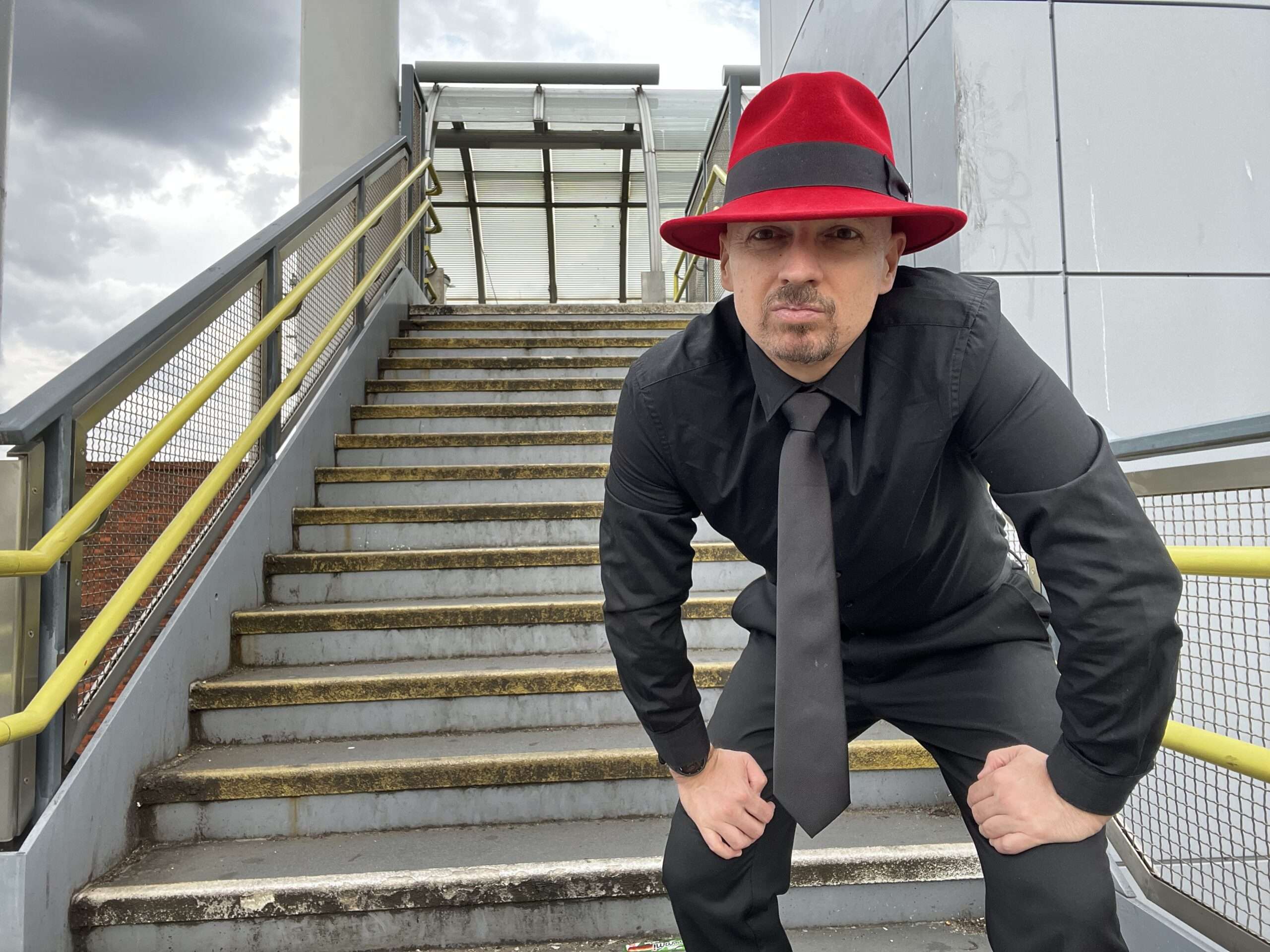
Some songs begin with a clear idea. Others seem to discover their meaning along the way. For Mister Chorister, “You’re Not Listening” belongs firmly in the second category. What started with a very real frustration involving a colleague eventually became a much more personal examination of communication, self-awareness and the things we sometimes fail to hear within ourselves. The result is a song that reaches beyond the simple feeling of being ignored and asks a more uncomfortable question: what happens when the person we are failing to listen to is ourselves?
That question sits at the heart of Mister Chorister’s return to songwriting. After almost three decades away from music, he began writing again in 2023 while navigating major changes in his personal life. The experience brought him back to a creative part of himself he had left behind, but it also changed the way he understood songwriting. Rather than simply documenting experiences, he discovered that songs could be a way of investigating emotions, relationships and questions that do not have immediate answers.
“You’re Not Listening” reflects that shift. Its power comes partly from the fact that the song was not deliberately designed to become part of a larger story. It was written before the Mister Chorister identity and wider narrative had fully taken shape. Yet, as the other releases emerged, connections began appearing between them. What initially seemed like separate songs gradually became pieces of a much bigger exploration of identity, courage, introspection and resilience.
Musically, the track mirrors that internal tension. Power chords, grunge-influenced guitars, cinematic piano, urgent vocals, tempo changes and layered harmonies create a feeling of pressure before the arrangement eventually strips itself back. The closing movement toward silence is particularly significant, representing the noise in the mind finally settling enough to allow listening to happen.
There is also a strong sense of collaboration behind the record. Working with Billy Crabbe and drummer Chris Castellitto allowed the song to develop beyond Mister Chorister’s original ideas, with their contributions becoming part of the storytelling itself. His belief that music becomes something different when created with other people is central to the way he now approaches the creative process.
In this conversation, Mister Chorister opens up about the personal circumstances behind “You’re Not Listening,” returning to music after decades away, the Australian and London influences that shaped his musical identity, the evolution of the Mister Chorister story, and why his songs are becoming less about providing answers and more about asking questions.
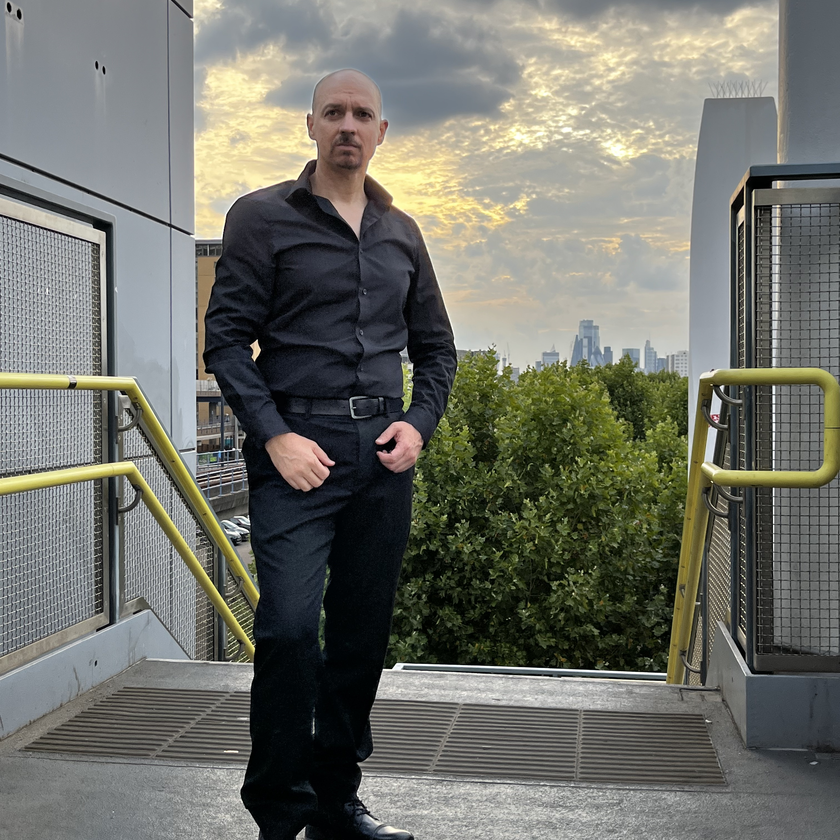
The song begins with the feeling of being unheard, but gradually turns that frustration inward. What made you realise the deeper subject was actually the parts of ourselves we ignore?
The song started with a very real frustration at work.
I was managing a small IT support team, and one particular colleague was especially frustrating when it came to the way we progressed changes. Whenever I asked for a plan or timeline for something he was implementing, he seemed to go completely mute. It was driving me insane.
At the same time, I was going through a pretty difficult period personally. My son was born, a long-term partnership had broken down, I met someone else, and then that relationship broke down too. That’s when I started writing “You’re Not Listening”, with my life in disarray and that particular colleague in mind.
But I’ve always tried to walk a mile in someone else’s shoes. I knew my colleague had his own personal issues, and the more I reflected on these situations, the more I wondered whether I was only seeing things from my own perspective.
And then I remember thinking:
What if the person we’re not listening to is ourselves?
That was a pivotal moment for the song that changed everything. What had started as frustration with somebody else suddenly became something much more personal.
It’s something that I’ve come to understand about songwriting generally. Sometimes you think you’re writing about someone outside yourself, only to discover that you’ve actually been writing about yourself all along.
The song moves through pressure, confrontation, release and silence. How did you approach the arrangement to mirror that psychological journey?
The song started around a power-chord progression with a lyric that came a little too naturally: “Too scared to speak out, too scared to say what I feel.”
The relationship with my colleague had an ebb and flow to it. I never knew what I was going to get next, and I’m sure that pressure was building up inside him as much as it was building up inside me.
That naturally led to the structure of the song. The verses create space, while the choruses become more urgent, with that almost blurting-out of “You’re not listening to me”.
During production, Billy and I spent a lot of time working on the tempo drops. I remember being in the gym listening to one of the mixes when a drop became so dramatic that it pulled me out of the song. I messaged Billy afterwards saying, “At the gym last night, I felt that first tempo drop and it was like a slow-mo moment.”
It was too much, but it was a good reminder that both tension and release had to serve the song rather than overwhelm it.
I also wanted the tension right from the start, which is why I was adamant about the guitar solo intro. The funny thing is that it was almost the last thing we added. We were already on mix 17 when I recorded the first version of that solo.
Then there’s the final release into silence.
Originally, the ending was an uplifting acoustic guitar strum, an augmented 5th chord resolving to the root. But I had the additional idea that Chris Castellitto’s final cymbal shimmer should gradually turn into static noise, like all that head noise turning into background noise and then silence.
Because we are ready to listen, finally.
That sense of the song revealing things to me during the making has become a recurring theme throughout the whole process.
Your previous releases, “Brave” and “Spark,” carried themes of growth, optimism and rediscovering something within yourself. Why did this next chapter need to enter a darker and more conflicted emotional space?
I don’t think it needed to. It just happened.
“You’re Not Listening” was actually the first of the three songs that I wrote, and I started recording it with Billy before “Spark” and “Brave”. In the end, it took the longest to produce because there was so much discovery in the track.
At the time there was absolutely no connection between the three songs. There was no intention to create Mister Chorister. They were simply songs that I thought might be worth putting out into the world.
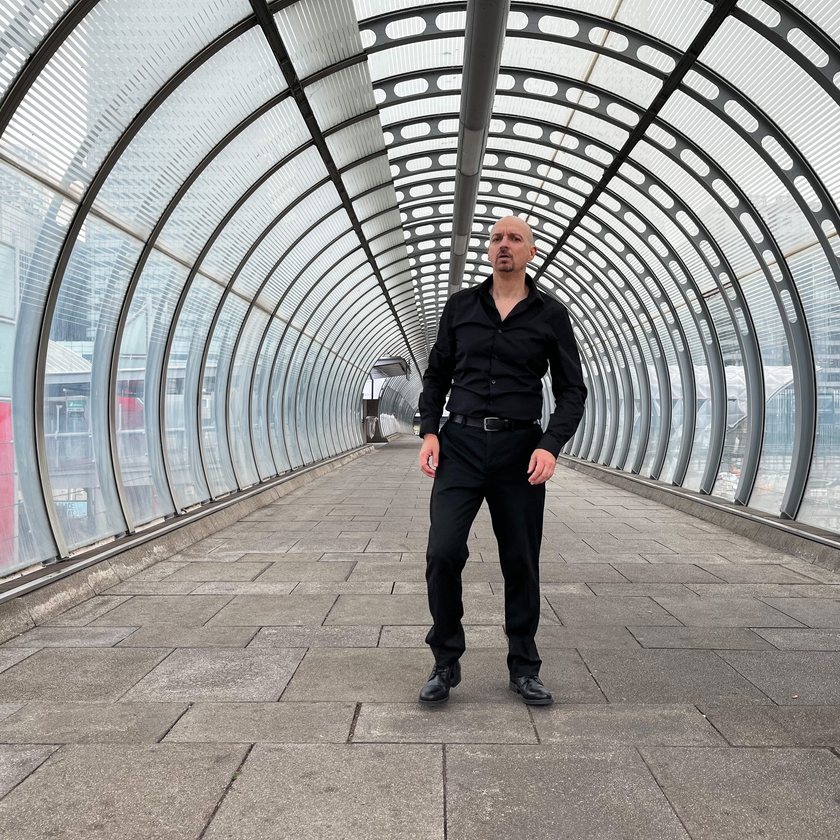
It was only much later that the vision of Mister Chorister began to reveal itself. I realised I needed to understand who this Mister Chorister character was and what these songs meant in that context.
So I don’t think the darker tone was something I consciously chose. The story simply developed that way.
Having not been creative for years, I’m learning that once you start looking inward, you don’t necessarily find something neat and positive waiting for you. Sometimes you find conflict and contradictions. Sometimes the material is darker. Sometimes it’s lighter. Was it the Tom Hanks line from Forrest Gump, “… life is like a box of chocolates. You never know what you’re going to get.”
I think the song is a reflection of that, and a reminder to myself to keep listening and expect surprises, some nice, at what is now a very different stage of my life.
The grunge-influenced guitars, cinematic piano and increasingly urgent vocals create a strong sense of tension. Were there particular artists, records or sounds that influenced the sonic identity of “You’re Not Listening”?
I wasn’t trying to recreate a particular sound. I wanted the music to participate in the emotional and psychological journey.
Billy introduced Free’s “Alright Now” and ELO’s “Don’t Bring Me Down”, which helped shape the driving rhythm, melodic movement and classic-rock energy.
For me, though, the bigger influence was emotional. I already had this psychological frustration in my head, and I wanted the music to feel like it rather than simply describe it. I wanted a grunge-influenced soundscape with some abrasion and tension.
The release is just as important as the tension. We created that through the tempo drops, sparse piano, seven-part harmony and finally stripping everything back to acoustic guitar and a clean vocal.
For the piano, I kept coming back to Guns N’ Roses’ “November Rain”, while Billy added a touch of Nirvana reminiscence with the guitar figure.
For the final chorus, the echoing vocal shifts into a megaphone-like treatment. For me, that represents a deliberate decision to listen. The internal conversation becomes a statement of intent and a willingness to move forward, to take action.
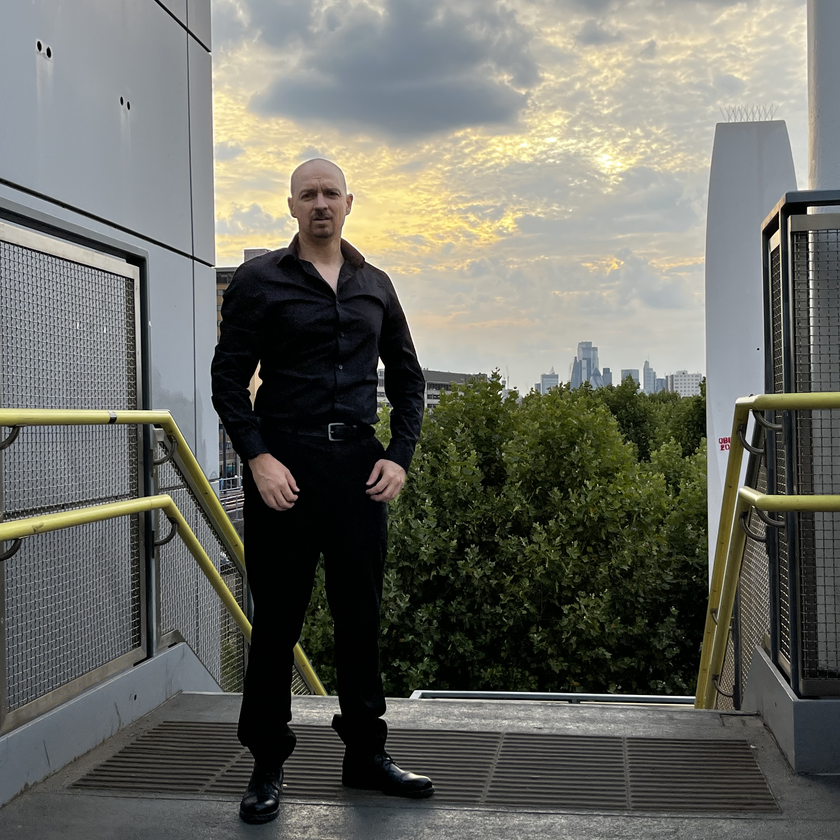
Working with Billy Crabbe on production, mixing and mastering and Chris Castellitto on drums, how did their contributions shape the track? Were there moments where their interpretation took the song somewhere different from what you originally imagined?
Absolutely. Lots of twists and turns.
I think once you bring other people into a song, it stops being entirely yours. And there’s something very magical about that.
Billy was hugely important throughout the process. We were constantly going back and forth over details, and he also played several parts himself.
One example was the piano roll coming out of the second verse. I’d originally wanted it to be shorter, but Billy’s version went further. When I heard it against the lyrics “build a life where I’m free” and “your gaslight is on”, I realised it musically reflected the meaning of the song. So I said, “yes, let’s keep it”.
Chris Castellitto also brought another dimension through his drums. He developed the parts from a demo Billy and I had produced, adding his own feel and movement.
Chris’s cymbal shimmer at the end became another part of the story, inspiring the idea of letting it transform into television static, the underlying background noise of our lives.
So now I have a maxim:
Music is better when you create and play with others. It becomes something you couldn’t ever possibly have imagined.
So playing music with others is now a key part of why I’m enjoying making music.
The song deals with the “voices in our head” and the internal battles that can become difficult to confront. How important is songwriting to you as a way of examining thoughts and emotions that may be harder to express in everyday life?
I returned to songwriting in 2023 after a long period away from music, during which time I’d largely done what I thought I was supposed to do in life.
When I came back, I was also trying to process quite a lot: the end of a long-term relationship, the birth of my son, the beginning and end of a new relationship, and then starting to navigate life again.
I wrote three songs during that period before suddenly understanding that I’d spent too many years not examining my own thoughts and emotions.
When I was ten, I thought songwriting was about writing down what you experienced, felt and observed. Kind of monkey-see, monkey-write.
What I’ve discovered recently is very different.
Sometimes you write because you don’t understand something.
With “You’re Not Listening”, I was trying to understand the mindset and frustration of a colleague who wouldn’t speak to me.
But you can only ever write from your own perspective. Even when you’re trying to write about somebody else, your own biases and experiences become part of the song.
So I eventually realised I was looking inward and asking myself:
Am I listening to myself?
And then the harder question came:
What am I not listening to?
The question took me away from the song for a while. It stunned me into a realisation, a calling that I needed to come back to. By the time I finished the song, I knew I needed to do something about all of the songs I’d written over thirty years earlier.
So songwriting has become much more than my childhood belief in self-expression. It’s an exploration of everything you could possibly want to consider, a way of investigating the self, other people and the world we live in.
Mister Chorister returned to songwriting after almost three decades away. How has that long period away from music changed the way you write now, and do you think the distance gave you a different perspective on creativity, identity and life?
Yes, my perspective has changed considerably.
I’ve learnt a lot during the past 30 years about the world, myself and other people. Amazingly, I don’t really have an axe to grind or the same need to prove myself that you might expect.
If I do want to prove something, it’s to myself, and to show my son what you can do if you put your mind to it.
Thirty years is a very long time. You collect experiences, relationships, mistakes, responsibilities, disappointments and a completely different understanding of yourself.
So when I came back to songwriting, I wasn’t really trying to recover the person I’d been in my youth.
Initially, I think I was discovering that I was still here.
I’d forgotten whatever songwriting process I had all those years ago, but it was a bit like riding a bike. Wobbly to start with, but I naturally found myself doing many of the same things.
The biggest difference is that I’m less interested in forcing a song into what I think it should be. I listen and reflect a lot more now.
That’s probably why the whole Mister Chorister story has surprised me. If I’d tried to design the narrative from the beginning, I don’t think it would have happened this way.
Instead, it’s more organic. I’m writing, then looking backwards and then discovering more about the songs, connections that I didn’t consciously put there.
It’s almost as if I just accepted all of these songs openly, as downloads without any sort of virus checker.
And there’s something quite liberating about that.
Your Australian upbringing and life in London have both become part of your story as an artist. Have those different cultural environments influenced the emotional character, storytelling or musical instincts behind your work?
I love being both part British and part Australian. I have dual passports, so sometimes I pretend I’m a spy, which works quite well with the Mister Chorister persona.
I’ve always joked that Australia threw me out because I can’t surf and don’t really like beer that much. Give me a neat Scottish whisky and a couple of ice cubes with some soothing music any day.
When I visit Australia now, my family ask if I “wanna a cuppa tea” or “a bottle of water”, all spoken in terrible attempts at an Orkney accent. That’s what 20 years in the UK will do to you.
Though, if I’m honest, I never really felt that I fitted in anywhere properly, even at school. I was a happy-go-lucky, curious and outgoing child, but there was always this internal feeling of shyness and awkwardness inside my own skin.
Music was always part of that journey, my safe harbour. I learnt classical and modern guitar, was in the choir at school and listened to everything under the Aussie sun.
My family loved all sorts of music, from Paul Simon and Joan Armatrading to ABBA and Peter, Paul and Mary. There were long drives in the car with Dad’s country and folk mixtapes, listening to great lyricists like Paul Simon, Don McLean and Don Adams.
My father, who served in the military, was a great storyteller, the centre of attention at parties and often had friends around. In his own words, he was a “gun toting, scuba diving, sky diving messenger of peace”. Stories with a tinge of dark humour. I would never get bored of hearing the same story over and again.
That was mixed with Sunday night viewing of Australia’s version of Top of the Pops, Countdown with Molly Meldrum, and staying up all night watching the latest music videos on a show called Rage, the Australian version of MTV. Then came the peer-fuelled influences of stadium rock and metal, followed by the university staples of the 90s like Nirvana, Pearl Jam and Soundgarden.
More recently in London, I’ve set myself a goal of going to a gig every week. It’s been an eclectic mix of jazz, folk, reggae and rock. I’ve wanted an immersive experience. Coming back to music after all this time I wanted modern experiences to seep in and influence what I’m creating now.
So yes, both Australia and London have contributed massively to the way I listen and create.
I’ve always been open to different musical worlds, but perhaps that also comes from never feeling that I belonged to any one of them wholly. And perhaps unsurprisingly I feel the same way culturally.
As the third chapter in the Mister Chorister story, where does “You’re Not Listening” leave the character emotionally? Are these releases being developed as individual songs, or are you gradually building a larger narrative that listeners will eventually understand as a complete story?
In short, the latter, but how this came about is probably the strangest part of the whole project. We’re only three songs in, but it’s pretty clear to me now that they are somehow connected.
What’s strange is how much they weren’t at all connected at the start.
There was no master plan, no eleven-song LP blueprint, with one song to rule them all across Middle-earth. Although I might have to use that now!
I didn’t sit down and decide that “Brave” was chapter one, “Spark” was chapter two and “You’re Not Listening” was chapter three.
The relationships between the songs only started to reveal themselves afterwards.
“You’re Not Listening” was the first of these songs I wrote. It helped me to understand that songwriting was something that I’d missed and wanted to get back into. It forced me to consider that maybe I was the one who wasn’t listening.
That became a kind of finding-my-purpose moment. It led me to find other creatives, seek tuition and start thinking about what I might do with those songs I’d written over thirty years ago.
So the teenage-inspired “Spark” followed, then the most modern addition of the trio, “Brave”. But there was still no obvious relationship between them at that stage.
The idea of Mister Chorister emerged separately while I was playing around with possible stage names, just after I’d written “You’re Not Listening”. I decided to try acronyms of my name, and Chorister jumped out immediately as something with a musical connection, something that I could wrap a story around because I was in the choir at school.
You see, I kept taking these small steps towards Mister Chorister without really knowing their relevance or where they were leading.
I’ve been describing those steps as a kind of map of hidden waypoints that only began to reveal themselves after I started to take the steps.
The first real seed of the songs being interrelated came when I described to Tsk Tsk Agency that “Spark” was a natural progression for Mister Chorister. Next, while preparing the press release for “You’re Not Listening”, I met with my mentor Polly Scattergood and I mentioned I thought there is a story developing between the ego and alter-ego.
That led to the first treatment for the larger Mister Chorister story.
I’m now in this slightly unusual position where I’m writing songs, then discovering afterwards that the songs might have something else to tell me.
So, “You’re Not Listening” finishes with the sound of the television turning off, but of course, that’s not the end of the Mister Chorister story.
Looking beyond “You’re Not Listening,” what do you feel Mister Chorister is beginning to discover about himself as an artist, and where would you like this story of courage, introspection and resilience to go next?
I think Mister Chorister is teaching me that the songs aren’t necessarily answers.
They’re questions, explorations and reflections on things I’ve seen and experienced over the past 30 or more years.
And because I’m discovering this as I go, I won’t always know what the next answer or even the next question is.
I do know the next song is a light-hearted unrequited love song. It’s going to explore taboo in love, misunderstandings and what happens when you don’t see things the same way as a love interest.
So the story is going to venture a little further into love next. But I think it will be a very Mister Chorister kind of love story.
Beyond that, there’s the unfinished LP treatment, with eleven songs already in there. Nothing is 100% firm yet, and it seems to change every other day as I realise the sheer scale of Mister Chorister.
And yes, I do want the project to remain a story about courage, introspection and resilience, but it doesn’t need to become a story where everything gets neatly resolved.
Life doesn’t really work that way anyway.
There’s a journey we’re each on. It requires listening, curiosity and a willingness to discover ourselves, others and the world around us.
If you’d asked what I want listeners to take away, I’d probably say: use their own courage, introspection and resilience, find something they might have overlooked in themselves, and take one positive, intentional step at a time.
Looking at Mister Chorister, perhaps the possibilities are endless after all.
CONNECT
WEBSITE | FACEBOOK | X | SPOTIFY | SOUNDCLOUD | YOUTUBE | INSTAGRAM | TIKTOK