
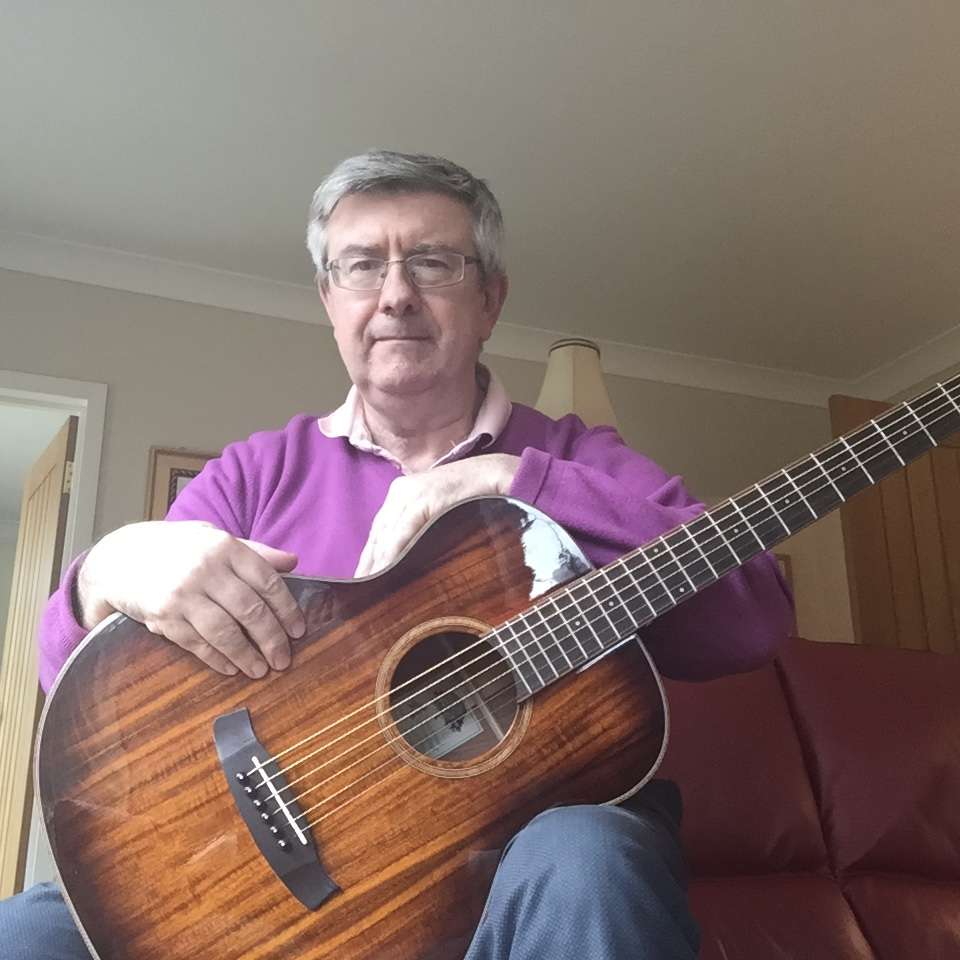
There is a quiet sense of discovery behind Martin Lloyd Howard’s music. Rather than beginning with a fixed story and building the music around it, Howard often allows the music itself to lead him toward an image, atmosphere or feeling. His instrumental work is shaped by that openness, with alternative tunings, layered guitars and carefully considered textures becoming tools for creating a sense of place without relying on words.
“Surrey Bells” is a particularly clear example of that approach. The piece emerged while Howard was experimenting with DADGAD tuning for an entirely different project. From there, the image of bells ringing began to take shape, eventually giving the composition its identity and its connection to Surrey, the English county where he lives. What began as an experiment developed into a piece built around resonance, space and subtle movement.
The use of two guitars is central to the character of the recording. Howard initially imagined a classical guitar playing a defined counter melody, but when that approach did not produce the result he wanted, he changed direction. A second DADGAD guitar offered something more natural, allowing the two instruments to interact through texture rather than simply performing separate melodic roles.
That attention to sound continues into the production. Reverb, echo and stereo positioning help create additional space around the second guitar, giving the piece a sense of depth. Even the choice of instrument became part of the creative decision, with Howard turning to a steel-string Tanglewood because its sharper character better suited the mood.
What emerges from his answers is an artist who values experimentation and iteration rather than forcing an idea into its first form. His background in rock and blues also quietly informs the organic movement of his instrumental arrangements, even when the finished music exists far outside those genres.
In this conversation, Martin Lloyd Howard discusses the origins of “Surrey Bells,” the creative possibilities of DADGAD tuning, his approach to layering guitars, the importance of space in production, and how musical ideas gradually become images and stories.
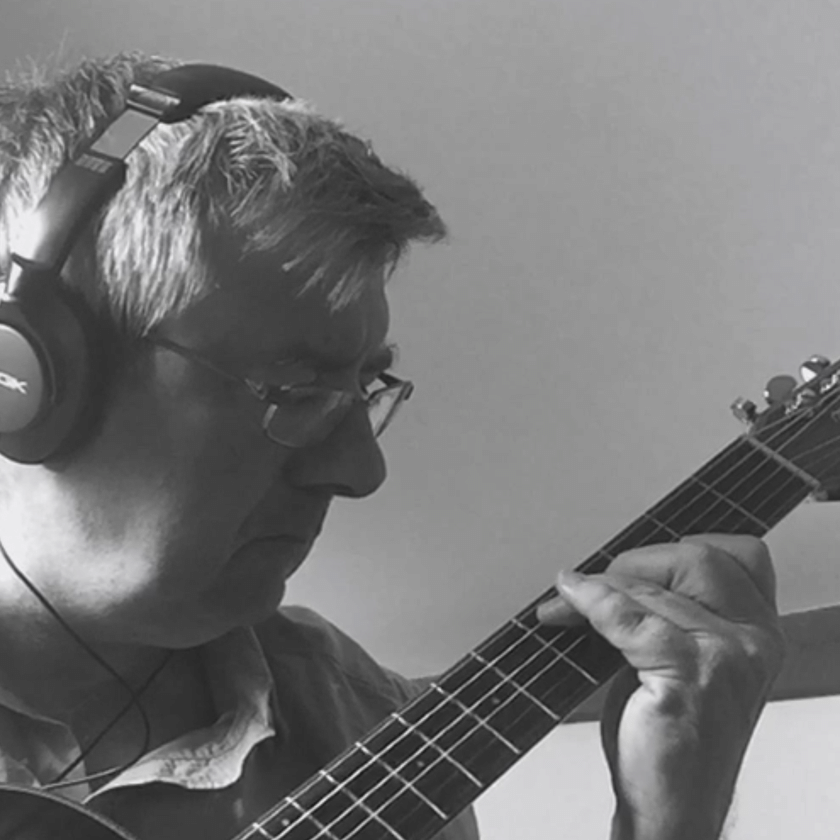
When you first came up with the idea for “Surrey Bells,” did you actually have a particular place or memory in Surrey in your mind, or did the image of bells ringing across a valley come to you purely through the guitar?
It emerged when I was experimenting with DADGAD for another completely different project. The image of bells ringing took hold pretty quickly and I took it from there. There’s no particular place I had in mind, other than referencing Surrey as the English county where I live.
The call-and-response between the two guitars is such an important part of the piece. How did you decide what one guitar would say and how the other would answer it? Did you work that out almost like a conversation between two musicians?
An interesting question. The idea of two guitars was there almost from the beginning. But my first plan was to use my classical guitar in normal tuning as the second instrument and I scored a counter melody for that part. But it didn’t really work, so I reverted to using another DADGAD guitar for the second instrument and rewrote the score to make it much more organic and textural rather than precisely melodic.
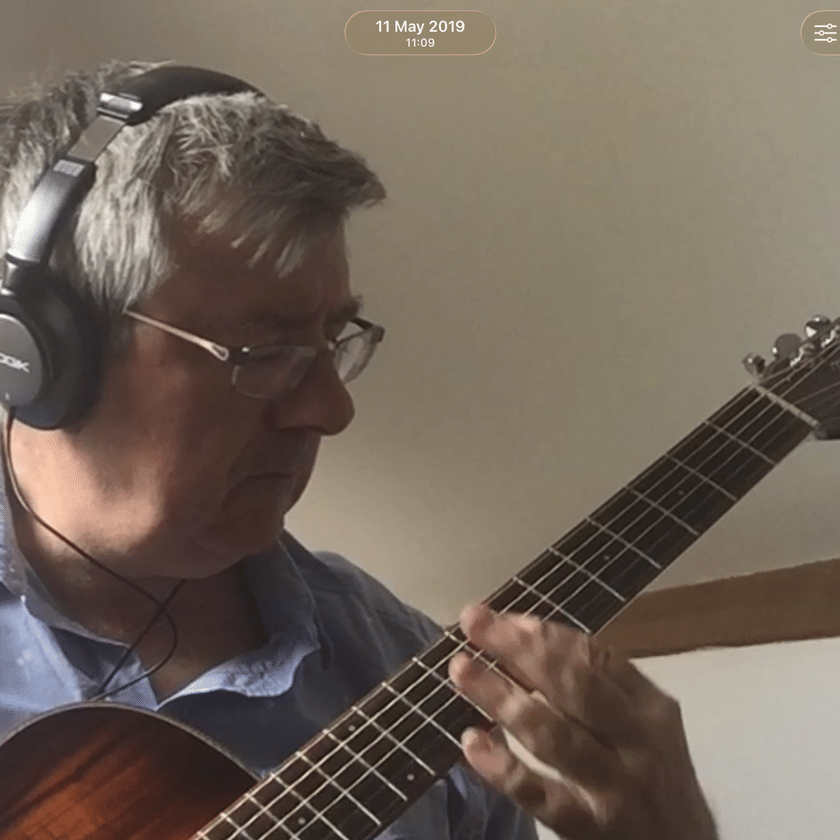
You recorded the piece at home using your Tanglewood steel string guitar and overdubbed the parts. What was the recording process like for you? Did you record one guitar completely first and then build the second part around it, or did you have both parts worked out before you started recording?
I recorded the first part completely and then overdubbed the second part. As I say, it took two attempts to get the sound and structure of the second part right.
You played the entire piece in DADGAD tuning. What was it about that tuning that made it right for “Surrey Bells”? Was there something you were hearing in those open strings and resonances that you could not have achieved with standard tuning?
I think you’ve hit the nail on the head. The thing about DADGAD is the resonances that come from multiple root and perfect fifth notes combined with the questioning tone of a suspended fourth. Perfect for notes and chord shapes to ring out.
I really like the idea of one guitar being made to sound distant and echoey, almost as though you are hearing another church somewhere across the valley. How did you create that sense of distance in the recording, and how important was the space around the notes to the final sound?
I simply added extra reverb and echo to the second part and shifted it to the left on the stereo spectrum. Yes the space in and around the second guitar phrases are very important in achieving the effect that I wanted.
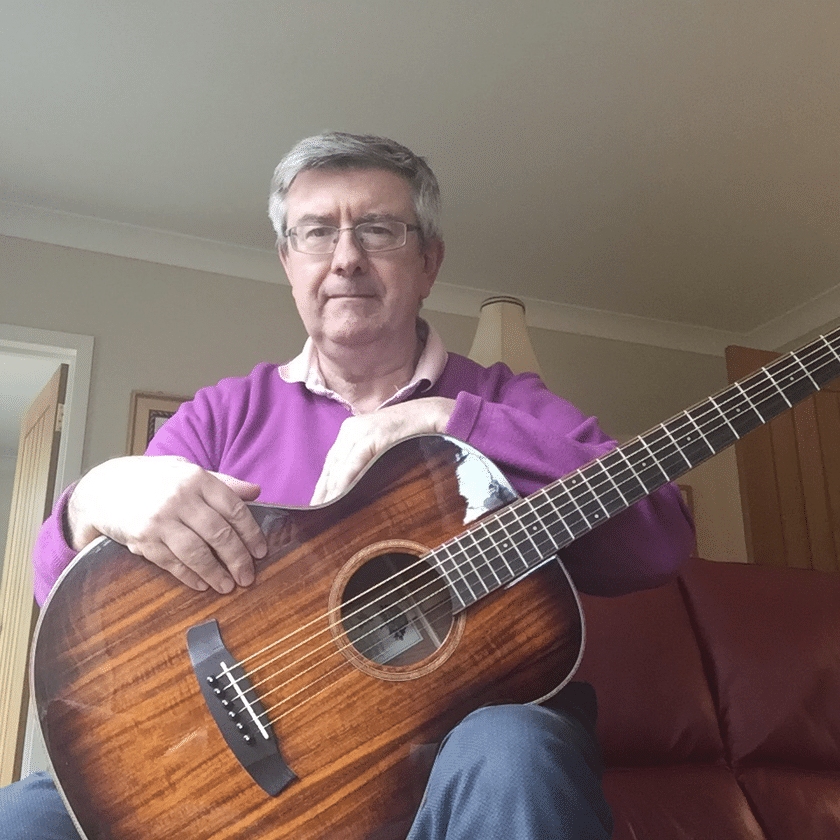
Your main instrument is a fifty-year-old handmade classical guitar, yet this particular piece was recorded on a Tanglewood steel string. What made you reach for the Tanglewood for this composition, and do you approach your writing differently depending on which guitar is in your hands?
First of all there is a severely practical consideration. Using alternative tunings on a nylon strung classical guitar is an invitation to a world of pain! But it’s also the case that the slightly sharper sound of steel strings can suit the mood of the piece. That was the case here which is why I reached for the Tanglewood.
You started from a classical guitar background but have since moved through folk, blues, rock, electric guitar, acoustic guitar and slide. Do you feel that those different parts of your musical journey are all present in the way you compose instrumental music now, even when a piece is as gentle and atmospheric as “Surrey Bells”?
To some extent. Certainly, the fluid, rather organic arrangement of Surrey Bells is influenced by the sort of improvisational techniques that I have learned in playing rock and blues music even if the end result is a million miles away from those genres.
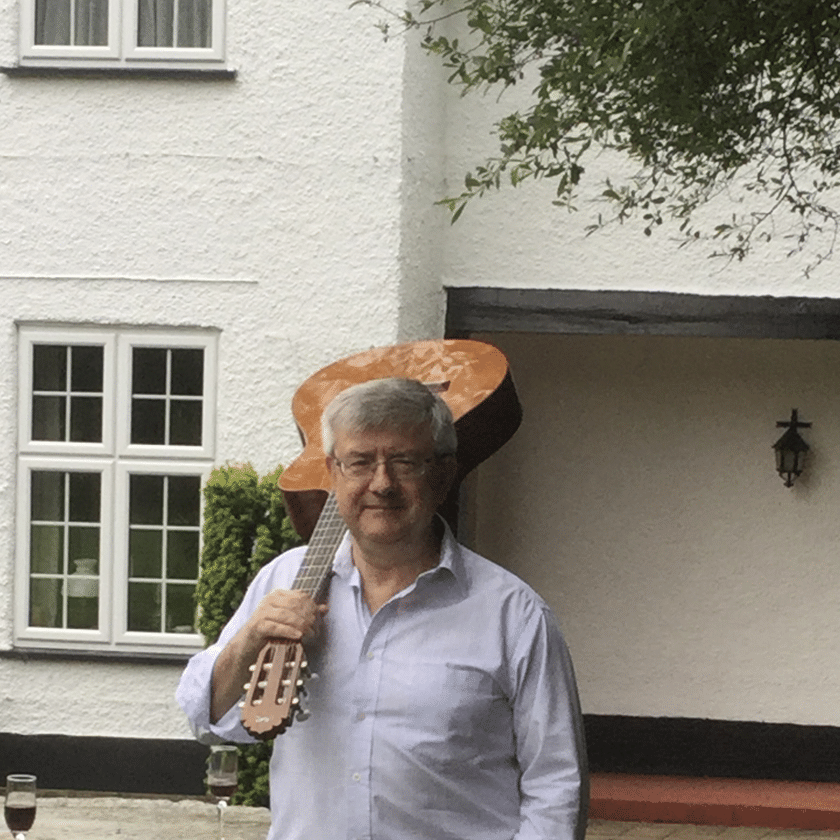
There is no voice telling the listener what the landscape is supposed to feel like, yet the music creates a very specific picture of a bright winter morning in rural Surrey. When you are writing instrumental music, how do you turn a place, atmosphere or visual image into something that can be communicated purely through sound?
It’s an iterative process. Usually the musical phrases come first and at some stage in the compositional process an image of what the music represents comes to mind. It can come quite quickly as in the case of Surrey Bells or a lot later once a piece is pretty well complete. That was the case for my latest piece Elegy which is being released shortly.
You have also worked with artists such as Mark Johnson and The Midnight River Crew. How does collaborating with other musicians affect the way you think about your own instrumental work? Do you find that playing with other people brings ideas into your solo compositions that might not have appeared otherwise?
I think it’s more the other way round. Sometimes the creative process produces a theme or set of chord shapes that to me sound more suitable for a proper song rather than a solo instrumental. In which case I will reach out to Mark to see if he agrees and is happy to write some lyrics to go with it. And then we take it from there.
After “Surrey Bells,” where do you feel your guitar music is taking you next? Are you interested in continuing to explore pieces built around particular places and sounds, or do you already have another musical idea that is taking you in a completely different direction?
Not sure really. I do have a couple of collaborative pieces on the go, one with Mark Johnson and another with two former guitar pupils of mine. I also have an aspiration to put together a short wildlife film using background music which combines material which I have already recorded and released. But I will continue to produce atmospheric pieces like Surrey Bells as ideas come to me.
CONNECT
SPOTIFY | SOUNDCLOUD | YOUTUBE