
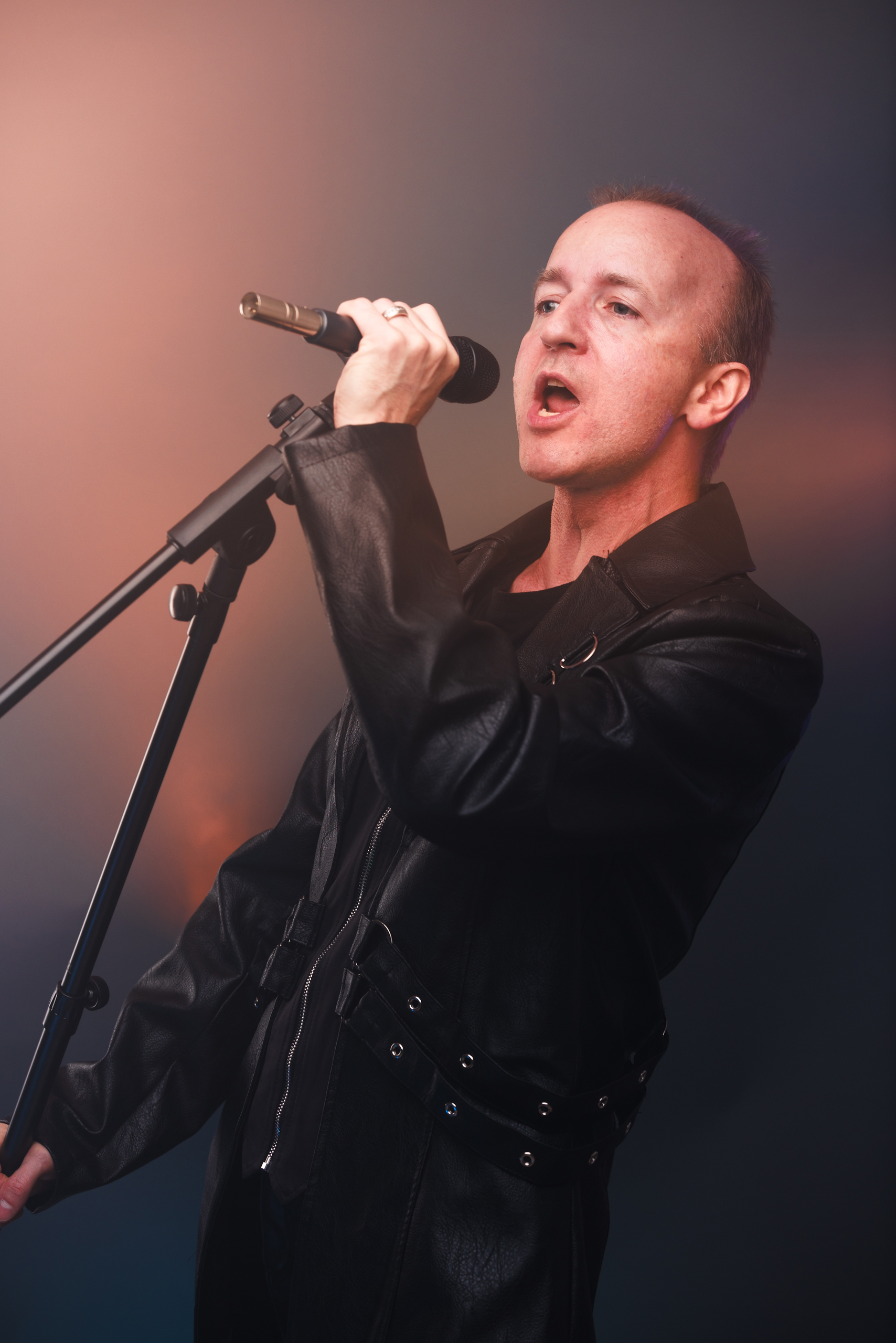
Heavy metal has always been a genre built on intensity, but behind the loud guitars, powerful vocals and aggressive drums, there are often personal stories that give the music its real meaning. For Brian Hunsaker, making music has never been only about creating a heavy sound. It is also about pushing through difficult moments, learning from experience and finding a way to turn personal struggles into something honest.
His latest EP, Where Dreamers Fall, released in 2026, represents an important chapter in his journey. The project came after a two-year break from music and the loss of his best friend and mentor. Returning to songwriting during such a difficult period changed the way he approached his music. Songs that had remained unfinished for years began to take shape, with melodies and lyrics coming more naturally than before. The result was a collection of seven tracks that carried a stronger emotional weight and reflected what he was going through.
The EP also came together under unusual circumstances. While raising newborn twins, Hunsaker recorded from the driver’s seat of his Ford Freestyle during lunch breaks. It was not the kind of recording environment most musicians would choose, but he found a way to keep working. Some ideas took months to develop, while others came together in a short burst of inspiration. His process depended on capturing those moments when they arrived and then returning to the material with a critical ear until every section felt right.
Hunsaker’s relationship with music began when he was 16, inspired by guitar great Joe Satriani and the legendary heavy metal band Iron Maiden. He spent hours practising every day, determined to improve his playing. Years later, while living in China, he began creating content on YouTube, sharing guitar covers and lessons and building a community around his music. That early experience helped him discover another side of being a musician: the creative work that happens beyond playing an instrument.
His sound continues to draw from classic heavy metal and power metal influences, but he is not afraid to push himself into more demanding territory. Dio’s powerful vocal style, King Diamond’s high-register delivery and the melodic drama of Sonata Arctica all helped shape the direction of “Final Score.” The track began as an idea dating back to 2005, but it eventually became the explosive closing song of Where Dreamers Fall. With Diego Palma’s contribution helping transform the arrangement, the song developed into a fast, aggressive and anthemic finale.
The project also reflects Hunsaker’s belief in working with people who understand their craft. Musicians Mats Eriksson, Diego Palma, Clif Chambliss and Sergio Ortega brought their own ideas and strengths to the recordings, helping the songs grow beyond his original plans. Hunsaker also took control of the final mix and master for the first time, learning how to preserve the power of the guitars and vocals while giving every element its own space. With Joe Gentner serving as executive producer, the experience gave him the confidence to take on those production responsibilities for future releases.
Building an independent music career has required more than writing and recording strong songs. Hunsaker has worked to create momentum through grassroots promotion, independent curators, international radio, streaming and media coverage from outlets such as Metal Injection and EARMILK. His experience has taught him that artists can create meaningful opportunities without relying entirely on a traditional record label, provided they approach their music and promotion with patience and a clear strategy.
The video for “Final Score” brings another side of his personality into the picture. Built around the humorous idea of NORAD commanders abandoning the seriousness of their situation to become rock musicians as World War III begins, it combines heavy metal performance with an unexpected sense of fun. The concept reflects an artist who takes his music seriously but still enjoys the creative freedom that comes with making it independently.
With a power ballad, an instrumental collaboration with Raymond Hayden and more progressive material already in development, Hunsaker is looking beyond Where Dreamers Fall. Rather than trying to repeat what has worked, he wants to explore new sounds, collaborate with other musicians and continue challenging himself as a songwriter and producer.
In this interview with Spinex Music, Brian Hunsaker discusses his beginnings as a guitarist, the personal experiences behind Where Dreamers Fall, the challenges of recording while raising a young family, the creative process behind “Final Score” and what lies ahead for his independent metal career. Check out the full interview below.
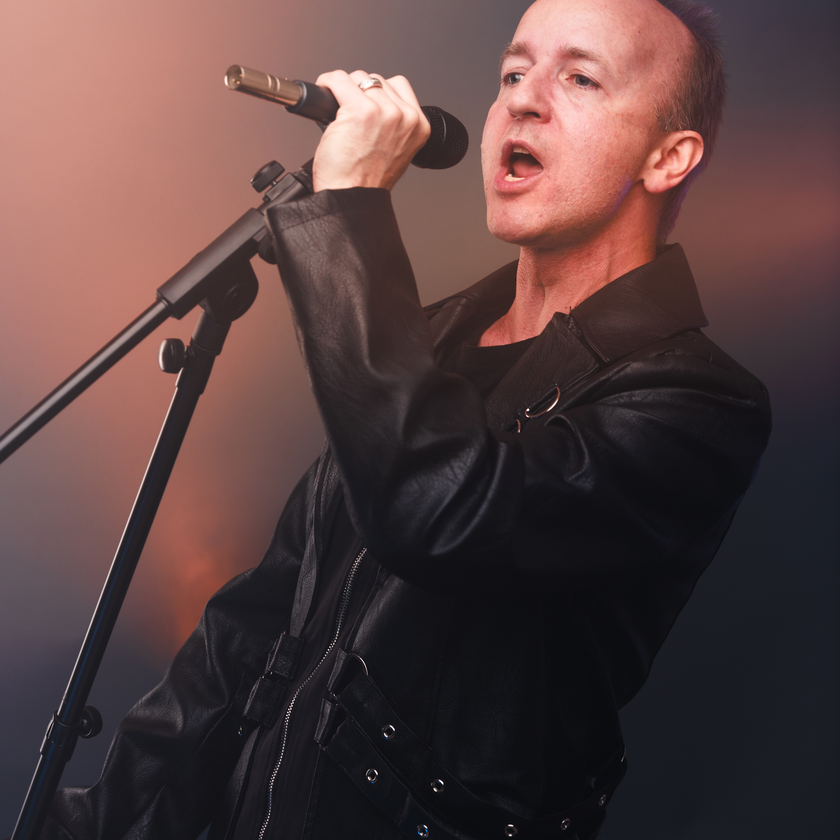
Before we get into “Final Score,” can you take us back to how you first got into music and heavy metal, and what drew you toward becoming a guitarist and creator in the first place?
I was 16, obsessed with the sounds of Joe Satriani and Iron Maiden. Joe was the real catalyst; I practiced 4–6 hours daily for my first five years. I was relentless, feeling I had to make up for starting late.
Regarding being a ‘creator,’ I cut my teeth in the early days of YouTube. While living in China in 2009, I connected with quick-study guitarist Joe Gentner on the Fractal Audio forums. We started collaborating on covers, with me handling the vocals, and he eventually pushed me to get a camera and step in front of the lens. I fell in love with the process, started my own guitar lesson channel, and built a community from there. It was that grassroots start that set the stage for everything that followed.
“Final Score” closes out your 2026 EP, “Where Dreamers Fall.” What did you want the final chapter to say or feel like, especially after everything you experienced while creating the project?
I originally slated a ballad for the finale, but it didn’t fit the EP’s evolving sonic trajectory. I revisited ‘Final Score,’ a track I had initially doubted, and sent it to Diego Palma for his take on it. What he sent back was a revelation. It went from a questionable draft to a high-octane powerhouse overnight.
I wanted the final chapter to feel daunting, to capture the speed and intensity that the project had been building toward. Given that the entire EP explores themes of despair and trauma, a track confronting the psychological reality of war was the perfect, severe punctuation mark to close the cycle.
The story of recording the EP from the driver’s seat of your Ford Freestyle during lunch breaks while raising newborn twins is remarkable. What did that experience teach you about discipline, creativity and finding a way to keep making music when circumstances are far from ideal?
I learned that progress, no matter how incremental, is the only thing that matters. Some days were a sprint; others were glacial. It took two months to get the final vocals for ‘Haunted’ to my satisfaction, while ‘Power Over You’ came together in a 30-minute burst of inspiration. There was a week where I spent every lunch break perfecting the melody of a two-bar guitar refrain. It’s all about the push.
I record every take because you never know when magic will strike. My creative process is defined by two stages: the spark and the refinement. When I’m in the moment, I’ll let sections improvise and flow naturally to capture the raw emotion. But then, I switch into ‘sculptor’ mode. A section or phrase I’m not 100% on board with does not survive. It will get reworked or replaced.
I won’t release a track until every single second draws you in and occasionally punches you in the face. Sorry about that!
This EP also came after a two-year break from music and the loss of your best friend and mentor. How did returning to music after that period change the emotional weight behind the songs you were writing?
It changed everything. I had a huge backlog of songs, but for years, I couldn’t find the right melodies or lyrics. Except one, that was actually “Final Score”. Now, after that period of loss, it all came pouring out.
The lyrics weren’t a problem, and the melodies wrote themselves quite often. Whole sections were improvised and kept. I pushed my harmonies to be larger and more complex to match the intensity of what I was feeling. It was a process of soldiering on, turning that weight into seven tracks of final takes that felt truly honest.
“Final Score” brings together aggressive speed metal and anthemic power metal, with Dio-inspired grit alongside piercing King Diamond-style highs. What made you want to push your vocals and overall sound in that direction for this final track?
The song’s roots actually trace back to 2005. When selecting this single, I noticed that my performances were naturally trending toward more head voice and higher registers as we went deeper into the EP. “Final Score” was the natural pinnacle of that evolution.
Dio has always been my “first love”, but while writing this, I was also listening to Sonata Arctica. I loved how Tony Kakko used sudden jumps to high notes to create drama. Now, I’ve always been able to hit those King Diamond-style notes, but I wanted to bring that piercing, King Diamond-style delivery under greater control with newfound power.
Those “banshee” chorus harmonies were a late addition, but once they were in, I knew they were essential to push the song’s epic feel to its limit.
You brought together a global ensemble of musicians for this project. What was it like working with different musicians from around the world, and how did their individual strengths influence the final sound of “Final Score”?
I work with this team because they are the absolute best at what they do. I give them the “blank check” approach, trusting their ears and instincts. When I get tracks back from Mats Eriksson, Diego Palma, Clif Chambliss, or Sergio Ortega, the songs are invariably elevated to a new plateau. They find creative fills and dynamic shifts I never would have thought of.
Mats opted for a simple hard-hitting, groovy beat for the prechorus, where most drummers would just default to double-kick, and it went so hard! It made us just smile listening to it.
It’s a testament to the team’s professionalism that the final result sounds like we’ve been rehearsing in the same room for months, despite the fact that we’re collaborating across digital borders. Overall, this is a terrific way to work when you find the right partners in crime. Obviously, I would love to jam out with these guys, but we live so far apart!
You took control of the final mix and master for the first time to make sure the record sounded the way you heard it in your head. What did taking that level of control teach you about yourself as a producer and about the sound you ultimately want to represent?
It was a masterclass in modern production. It was fascinating to discover that my “blank check” approach to collaboration is what top producers do: find the right talent and trust their instincts.
The challenge was in the mix; I had to learn new techniques to ensure that dense, multi-tracking maintained its punch and that everything had its own space. During mastering, if a change made the mix sound “better” but buried the guitars, I’d roll it back and find a more surgical fix.
My buddy Joe Gentner was crucial as Executive Producer, providing the outside ears I needed for feedback. We also worked together on Haunted last year.
Believe it or not, the solos and acoustic guitar in the final mix are from my draft version back in 2005! They sounded great, so why mess with it? I put 13’s on that acoustic and had a bone bruise for months from recording that part! I had to keep it.
I’ve earned the confidence now. I’ll be handling the mix and master for everything moving forward.
As an independent artist who has earned coverage from outlets such as Metal Injection and EARMILK while building an audience through international radio and streaming, what have you learned professionally about creating opportunities for your music without relying on a traditional label or studio system?
The most valuable professional lesson I’ve learned is the power of momentum and leverage. In the independent world, you can’t just cold-pitch a major outlet and expect a response. You have to build a narrative first.
We focused heavily on a grassroots strategy, securing critical acclaim and online clout from independent curators to prove the music demanded attention. Once that foundation was solid, we leveraged that social proof to partner with professional publicists and push into tier-one media like Metal Injection. It’s taught me that a traditional label isn’t the gatekeeper to major media. A relentless, tiered rollout strategy is.
But the most important lesson is artistic: refine your song until it’s genuinely great. You can achieve incredible fidelity with a professional mix, but production can’t compensate for a song that hasn’t been fully developed. I spend a lot of time reshaping melodies, reworking sections, and making sure every element earns its place.
If I’m going to spend 16 hours mixing a track or 80 hours editing a video, I want to know the song itself is as strong as I can possibly make it. I believe listeners can hear the difference.
Now that “Final Score” brings the “Where Dreamers Fall” chapter to an end, what does the next chapter look like for Brian Hunsaker, and what is still left for you to prove or explore as an independent metal artist?
I have a few songs already queued up: a power ballad, an instrumental collaboration with Raymond Hayden, and the most progressive material I’ve ever written. I’m also open to working with guest vocalists on future tracks. My ensemble really loved the vibe of ‘Final Score,’ so I’m definitely looking to explore that aggressive, melodic mode further. There is a wide range of material coming starting next year.
I don’t know that I have anything left to prove, necessarily. At this point, it’s more about seeing how far I can take this thing. I’ve got some of the most progressive material I’ve ever written in the pipeline, and I want to keep pushing myself into territory I haven’t explored yet. I’m also excited about collaborating with new musicians and seeing what happens when I get out of my own comfort zone.
I’ve spent years refining my playing, songwriting, and production, and I’m finally at a point where I feel like all those pieces are coming together. I want to keep making music that excites me, challenges me, and hopefully connects with people in ways I can’t predict. I’m not interested in repeating myself just because something worked. I’m just getting started.
The video for “Final Score” was very engaging, creative, and even funny in a few parts. It also seems to be an evolution of sorts in your video journey. Tell me about how it was making it?
It was an absolute blast. I wanted the “whole band” feel this time, and Sergio Ortega was great to work with on the filming, having had a hand in writing the song.
I had this ridiculous vision: Clif and I as NORAD commanders watching World War 3 start, and instead of panicking, we just decide, “Screw it, time to rock!” We put on the leathers and jump into the performance.
I used a 7-second AI clip to get the concept across, and it was so funny that I couldn’t stop laughing. I knew it was the hook. Note that the NORAD commander-to-rocker cut scene is the only part of the video where the musicians are AI, simply because we don’t own convincing military uniforms.
It’s definitely the best video I’ve made: over the top, engaging, and a lot of fun.
CONNECT