

Music can be a way of telling personal stories, but for some artists, it becomes a means of connecting history, culture and the experiences of people across different parts of the world. For Skyy ZNO, music carries all these possibilities. His artistic identity has been shaped by movement between the United States, the Dominican Republic and other parts of the Caribbean, alongside a family history that reaches across Africa, Europe and beyond. These experiences have given him a perspective that extends beyond any single country or musical tradition. In his world, music is not simply about creating a sound that appeals to different audiences. It is about bringing together the places, people, rhythms and histories that have helped shape who he is.
That outlook is central to ExitUs, a project that explores the relationship between survival, identity, personal freedom and spiritual growth. Rather than treating an album as a collection of unrelated songs, Skyy ZNO approaches the project as a journey, with each stage representing a different part of the human experience. The story begins with the pressures people face, the wounds they carry and the things they must overcome to keep moving forward. But for him, surviving difficult experiences is only the beginning. There comes a point when people must learn to live beyond those experiences, recognise their own worth and decide what they want their future to become.
The expanded version of ExitUs reflects that change in perspective. Originally presented as a seven-act journey built around what Skyy ZNO describes as the physics of survival, the project eventually grew to include four additional tracks. The new material allowed him to explore what happens after the storm has passed. In his view, people can become so accustomed to struggling that survival itself begins to feel like their permanent state. He wanted to challenge that idea by showing that life can move beyond endurance into celebration, freedom and a deeper understanding of oneself.
One of the most important additions to this chapter is “ARUANDA,” a song that draws from Afro Brazilian spiritual traditions and places ancestral connection at the centre of its message. Through Portuguese invocations and powerful percussion, the track represents a movement towards freedom and the reclamation of identity. Its declaration, “Eu no fim sou rei,” meaning “In the end, I am king,” captures the idea that a person’s value cannot be permanently taken away by the hardships they experience. For Skyy ZNO, sovereignty means more than being free from physical restrictions. It means taking ownership of one’s spirit, personal story and destiny.
This idea of reclaiming what has been lost or suppressed also runs through “King Turned God,” which approaches betrayal, opposition and old wounds from a darker, more aggressive perspective. Rather than allowing anger to become the final destination, Skyy ZNO sees it as energy that can be redirected towards personal growth. The song explores the possibility of turning painful experiences into motivation, using the very things that once threatened to break a person as reasons to become stronger. It is a different side of the album’s journey, showing that healing does not always begin in a quiet or gentle place. Sometimes, it starts with confronting what hurt you and deciding that it will no longer control your future.
On “Beyond the Horizon,” that struggle begins to open into something wider. The layered voices and persistent rhythm reflect Skyy ZNO’s belief that people are not limited by the places they come from, the experiences they have survived or the expectations others place on them. Having grown up moving between cultures, he understands how borders can shape people’s lives, but he also believes that music and human connection can reach beyond them. The horizon therefore becomes more than a distant destination. It represents the freedom to imagine a future that is not dictated by the past.
The expanded journey reaches a different kind of conclusion with “SAMADHI.” After the intensity, movement and force of the preceding material, the track turns inward, drawing on the Sanskrit concept of deep meditative absorption and spiritual stillness. For Skyy ZNO, this quieter ending is essential because constant movement does not always mean genuine progress. The pursuit of success, recognition and ambition can become another source of pressure when people lose sight of themselves along the way. By ending the album with a moment of reflection, he makes the case that self-mastery can be as important as external achievement. Sometimes, the greatest sign of growth is the ability to become still and understand who you are without needing to prove it to everyone else.
Musically, ExitUs reflects the many cultural influences that have shaped Skyy ZNO’s life. Afrobeats, Soul, Reggae, Salsa and Dembow all contribute to the project’s sound, but he does not approach them as separate styles that must be forced together. Instead, he sees them as connected expressions of a wider musical history, particularly the shared rhythms and experiences of the African diaspora. From West Africa to the Caribbean, Latin America and other parts of the world, music has carried stories of displacement, resilience, adaptation and celebration. These connections give the album its identity, allowing the sound to change according to the emotion and purpose of each song.
His collaboration with nine-time Grammy winner Joe Nicolo, whose production work includes records associated with Lauryn Hill, Nas and Billy Joel, also played an important role in developing the project. Skyy ZNO describes the experience as a lesson in understanding the importance of sonic clarity, strong songwriting and staying true to an artistic vision. Rather than trying to make his music fit an established mould, the collaboration encouraged him to focus on the heart of each song and allow its emotion to come through. The result is a project that aims to combine global musical influences with a clear and personal message.
With hundreds of thousands of Spotify streams, more than a million YouTube views and public recognition from Queen Diambi Kabatusuila Tshiyoyo Muata, ExitUs has reached listeners beyond its original audience. Yet Skyy ZNO’s ambitions extend beyond streaming numbers and online recognition. His current focus is bringing the project to audiences through an international tour spanning North America, Africa, Latin America, Europe and the Caribbean. Through Znoverse Entertainment, he also plans to expand the movement into visual cinema and immersive media, creating experiences that allow people to engage with the music and its cultural themes in different ways.
In this interview with Spinex Music, Skyy ZNO opens up about his multicultural upbringing, the sacrifices that helped him discover his identity as a solo artist and the ideas behind the expanded version of ExitUs. He discusses the meaning of freedom and sovereignty, the spiritual influences behind “ARUANDA” and “SAMADHI,” and how he transforms personal struggles into music that speaks to a wider human experience. He also shares what he learned from working with Joe Nicolo, why the sounds of the African diaspora remain central to his artistic vision and what he hopes to build as he takes the project to the global stage.
Check out the full interview with Skyy ZNO on Spinex Music to discover the story, cultural influences and deeper meaning behind ExitUs, and how he is turning a journey of survival into a wider statement about freedom, identity and the power to shape one’s own future.
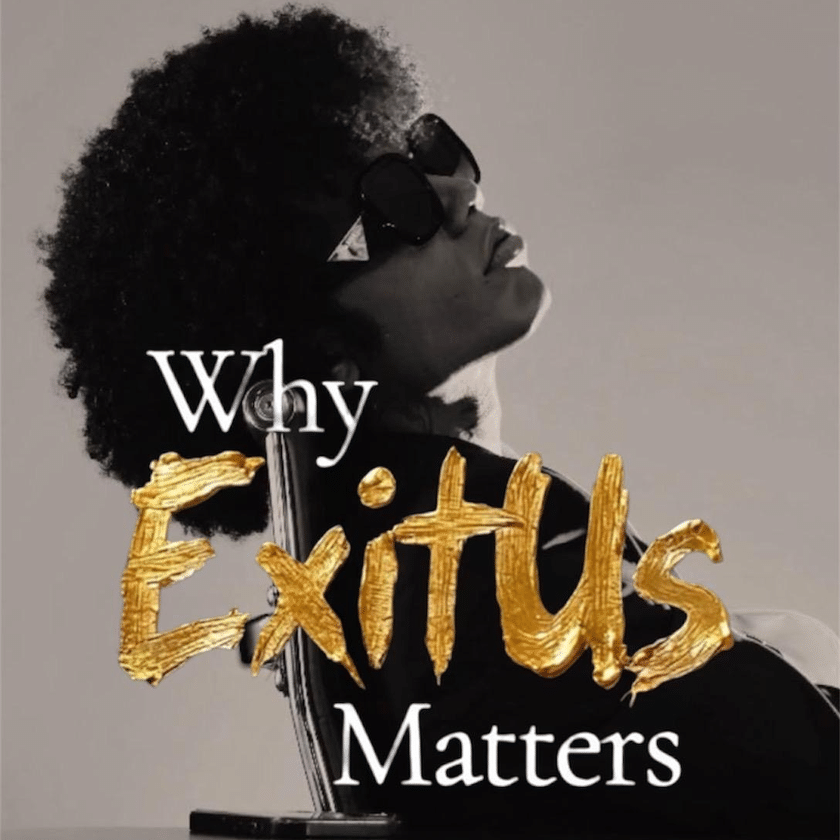
Before we get into ExitUs, take us back to the beginning. You grew up moving between the United States and the Dominican Republic, with music deeply rooted in your family. How did those different cultures and your family’s musical history shape the artist and storyteller you eventually became?
I was introduced to the world before I was old enough to understand what that meant. I was raised in the United States and came of age in the Dominican Republic, where my family has our home and business, with plenty of stops across the Caribbean.
International travel was never unusual to me; it was simply life. And when you grow up moving through different cultures, you learn a fundamental truth: the world has borders, but culture doesn’t. You hear it in the music, see it in the dance, and realize that what looks different on the surface is deeply connected underneath.
That connection is in my bloodline, from Nigeria, Denmark, and Portugal on my father’s side, to Cameroon, Germany, and England on my mother’s. That’s why I can meet someone from Brazil, West Africa, or Puerto Rico and feel an immediate familiarity, even across languages. There’s something underneath language that speaks first. I wasn’t raised to see identity confined to one flag or culture; I was raised to listen, to observe, and to recognize that every place leaves an imprint because of the love you experience.
That reality shapes everything I do as an artist. When people hear Afrobeats, Dembow, Reggae, or Neo Soul in my music, it isn’t a strategic attempt to sound global. I don’t make global music because I’m trying to be; I make it because I am global.
These rhythms aren’t costumes. They are my musical vocabulary: memories, ancestry, and experiences from the places and people that shaped me. Music is bigger than genre. It’s about taking Africa, the Caribbean, Latin America, Europe, and the United States and letting them speak to one another, because all of those worlds created me.
So when you hear my music, you aren’t just hearing a sound. You’re hearing a history. You’re hearing movement. You’re hearing ancestry. You’re hearing what happens when a child of the world finally finds his voice.
You started recording music as early as seven and joined a music group at fourteen before eventually stepping away at eighteen to build your own identity. What did you learn during those early years that became important when you started developing Skyy ZNO as a solo artist?
I learned early on about what I call the necessary sacrifices of life. When you’re young in this industry, you can see things start to work out, and then just as quickly, everything can come crashing down. At first, you look at that as taking a loss. As I got older, I started understanding it differently.
I began looking at how different cultures understood sacrifice. The Maya in Mexico, the Igbo in Nigeria, and the Taíno throughout the Caribbean all had traditions centered around offering, gratitude, respect, and maintaining a relationship with something greater than ourselves. That really resonated with me. Sacrifice wasn’t simply about losing something. It was about recognizing the value of what you had and being willing to give something in order to move forward.
So when I stepped away from the group at eighteen, I didn’t see it as giving up on music. I saw it as letting go of one version of myself so I could discover another. The things that didn’t work out, the doors that closed, the disappointments, they all became part of that process.
When I started developing Skyy ZNO as a solo artist, I carried that lesson with me. I learned not to fear change or become attached to something just because it was familiar. Sometimes you have to sacrifice the past to create the future. And for me, that became a big part of understanding who Skyy ZNO was and who I was meant to become as an artist.
ExitUs was initially presented as a seven-act journey built around what you call the “physics of survival.” With these four additional tracks, the story now seems to move beyond simply surviving. When did you realise that the album had another chapter waiting to be told?
I realized it the moment I looked around and saw that we had survived the storm, but were still holding our breath. Survival is essential, but it’s a stage, not the destination.
If you stay locked in a mindset of pure survival, you risk becoming addicted to the struggle. Ancient traditions across the globe, from the Igbo of Nigeria and the Taíno of the Caribbean to the Maya of Mexico, always taught that after the storm passes, the harvest begins. And with that harvest comes a spiritual obligation to give thanks, celebrate, and ascend beyond the struggle.
That’s why tracks like “ARUANDA” and “SAMADHI” had to be born. They represent two distinct, sacred realms of human liberation.
“ARUANDA” draws directly from Afro-Brazilian traditions like Umbanda and Candomblé, where Aruanda is recognized as the sacred ancestral realm of peace, spiritual freedom, and divine celebration. It’s where the heavy chains of trauma dissolve into rhythmic joy, dance, and gratitude.
“SAMADHI” comes from the ancient Sanskrit traditions of India, representing the ultimate state of meditative stillness, unshakeable equanimity, and total oneness with the Creator. It’s essentially the quiet after the storm, where the ego stops fighting and you realize your true divine nature.
Moving beyond seven acts was my way of showing that our journey doesn’t end at endurance. We don’t just survive the pressure. We inherit our freedom, step into ancestral celebration through Aruanda, and achieve total spiritual clarity through Samadhi.
“ARUANDA” opens this new chapter with Portuguese invocations, powerful percussion, and the declaration “Eu no fim sou rei,” meaning “In the end, I am king.” What does freedom mean to you personally, and why did this particular song feel like the right way to begin the album’s movement toward sovereignty?
To me personally, freedom is sovereignty. It isn’t just the absence of physical bondage; it’s total ownership of your spirit, your narrative, and your destiny.
When people think of the transatlantic slave trade, most immediately point to colonial America. But most people aren’t aware that the transatlantic trade began in Brazil hundreds of years before it ever reached the North American mainland. Because of that history, Brazil holds the largest population of the Black diaspora outside of Africa itself.
Knowing that history, knowing that this particular struggle on this side of the Atlantic began there, I knew that this new era of global freedom and creative reclamation had to begin in the very same place. “ARUANDA” is a direct return to the root. Opening with Portuguese invocations and that driving percussive rhythm is an intentional act of turning a site of historical trauma into a site of divine triumph.
Declaring “Eu no fim sou rei” isn’t an ego trip. It is a spiritual reclamation. It’s reminding ourselves that regardless of what was taken, survived, or endured, in the end, we are royal. Starting the album’s expansion with “ARUANDA” lays down the foundation that before you can ascend or find stillness, you must first claim your sovereignty.

“King Turned God” approaches betrayal, opposition, and old wounds from a much darker and more aggressive place. How did you transform those experiences into something empowering without allowing the anger behind them to control the message?
That’s a great question. “King Turned God” is the exact moment survival stops being an ending and becomes a powerful new beginning.
Most of us have suffered at the hands of others, but betrayal only controls you if you let it sit stagnant. You can either wallow in that misery, or you can take that dark energy and use it as high-octane fuel for your evolution. Aggression isn’t inherently negative. It’s raw force. The key is direction.
When you take the pain of old wounds and channel it into purpose, you don’t just recover. You evolve into something so formidable, so unshakeable, that you ascend beyond standard human limits into a godlike form.
“King Turned God” isn’t about holding onto anger; it’s about alchemy. It’s taking the fire that was meant to destroy you and using it to forge your own divinity.
“Beyond the Horizon” feels like a turning point, with its layered voices and persistent rhythm creating a sense of healing, alignment, and possibility. What were you personally trying to move beyond when you wrote the song, and what does the horizon represent to you now?
I was moving beyond the illusion of limitation, the idea that our stories are confined by regional borders, past trauma, or the artificial ceilings people try to place on our artistry.
When you grow up as a passport child moving between cultures, you realize early on that borders are man-made, but human connection and rhythm are universal. “Beyond the Horizon” was written in that state of clarity.
The layered voices in the track represent the collective chorus of ancestry, the voices of those who came before us, walking alongside us as we align with our true path. The persistent rhythm is the heartbeat of continuous movement.
To me, the horizon is no longer a distant line you just stare at or hope to reach someday. The horizon represents infinite possibility and absolute sovereignty. Moving beyond the horizon means stepping past the phase of merely surviving the storm or reacting to opposition, and stepping into the power of creating your own world. It’s the bridge between where history tried to leave us and where we choose to go.
After so much movement and intensity across ExitUs, “SAMADHI” becomes almost meditative, focusing on pressure, visibility, patience, and the illusions that can come with ambition. What made you want to end this expanded journey by looking inward rather than continuing to push forward?
Because true expansion doesn’t come from endless external noise. It comes from quiet, unshakeable self-mastery.
When you navigate intense pressure, visibility, and the pursuit of ambition, it’s easy to get trapped in the illusions of the world. People often mistake momentum for growth, but if you’re always charging forward without centering yourself, you’re just reacting to the noise around you.
In Vedantic and ancient Sanskrit philosophy, Samadhi represents the state of complete spiritual absorption, quiet reflection, and divine clarity. Ending this expanded journey with “SAMADHI” was a conscious choice to demonstrate that the ultimate flex isn’t proving yourself to the world. It’s mastering yourself.
After the trial, the survival, the reclamation in “ARUANDA,” the raw force of “King Turned God,” and the expansion in “Beyond the Horizon,” “SAMADHI” is where you lower the volume, drop the armor, and sit in absolute stillness with the Creator. Looking inward isn’t stepping back; it’s stepping into the highest form of power. It’s where you realize that once you know who you are, the world can no longer shake you.
The album moves across Afrobeats, Soul, Reggae, Salsa, and Dembow while drawing from the history and experiences of the African diaspora. How do you approach combining these different musical traditions while making sure they remain connected to the larger story you are trying to tell?
I don’t look at Afrobeats, Reggae, Salsa, or Dembow as separate, competing genres that need to be artificially spliced together. To me, they are simply different accents of the exact same ancestral language.
When you trace the migration of sound across the African diaspora, from West Africa across the Atlantic to Colombia, Puerto Rico, Jamaica, Brazil, and the Dominican Republic, you realize that the syncopation in a Dembow kick, the polyrhythms of Afrobeat, the pulse of Reggae, and the brass fire of Salsa all share a common root. They were forged in the exact same furnace of resilience, survival, and celebration.
Growing up as a passport child surrounded by these cultures, I never had to study them from a distance in a university; I lived them. So when Joe Nicolo and I build a track, we aren’t trying to check boxes on global genres. We let the emotion of the narrative dictate the rhythm. If a moment in ExitUs requires raw pressure, the pulse naturally shifts toward Dembow or Afrobeats. If it requires spiritual reflection or Soul, Reggae takes over.
The sound stays connected because the story is connected. Every genre on this album is just another chapter in the global map of our movement, proving that no matter where the diaspora scattered, our rhythm remained whole.
ExitUs was co-produced with nine-time Grammy winner Joe Nicolo, whose work includes artists such as Lauryn Hill, Nas, and Billy Joel. What did that collaboration teach you professionally about songwriting, production, and understanding your own artistic vision at a higher level?
Working with Joe was a reality check in the best way possible. When you step into the studio with someone who helped create timeless records for Lauryn Hill and Nas, you realize instantly that legendary music isn’t built on tricks or over-producing. It’s built on pure sonic truth.
Joe didn’t try to change who I was or put me in a box. Instead, he forced me to sharpen my pen and stand firm in my vision. He taught me how to strip away the noise so that the core emotion and the rhythm hit as hard as possible.
More than anything, working with him proved that my global sound, rhythms, grit, and ancestral stories deserve to sit at the highest level of music. It validated that when you combine raw global authenticity with world-class engineering, you create something that can compete on any stage across the world.
ExitUs has already travelled far beyond its original release, from hundreds of thousands of Spotify streams and more than a million YouTube views to public recognition from Queen Diambi Kabatusuila Tshiyoyo Muata. Now that the album has moved from survival toward freedom, what does Skyy ZNO want to build next, and what kind of artistic territory are you ready to explore?
Receiving validation from ancestral Congolese royalty like Queen Diambi, and seeing millions of the diaspora connect with the project worldwide, proved that the world is hungry for raw truth, cultural depth, and spiritual substance. But ExitUs was never meant to stay confined to a studio or a digital screen.
Right now, our immediate focus is taking this movement live to the global stage. We are actively structuring the international tour to bring this energy directly to the people across North America, Africa, Latin America, Europe, and the Caribbean. This isn’t just about playing shows; it’s about creating an electric cultural experience where people feel that ancestral rhythm in real time and step into their own sovereignty.
As we hit the road, Znoverse Entertainment is expanding that live momentum into a complete ecosystem, bridging music, visual cinema, and immersive media. We aren’t asking for permission or trying to fit regional industry moulds. The phase of proving ourselves is over. Now, we take the message live, and you will see a King Turn…
CONNECT