
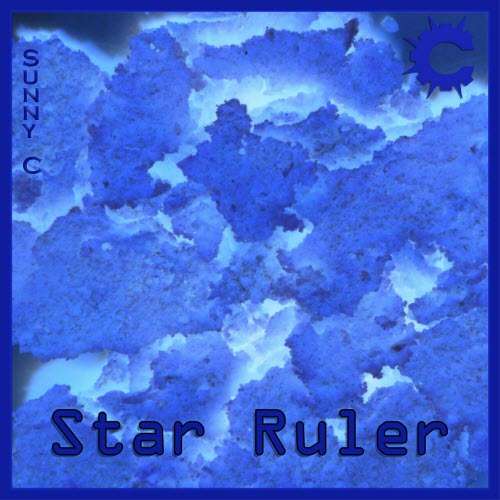
Electronic music often thrives on reinvention. A subtle adjustment in production, a different vocal approach or a new understanding of rhythm can completely transform a track without changing its identity. For Sunny C, revisiting “Star Ruler” was not about correcting a mistake. It was about uncovering a stronger version of a song that already contained everything it needed to become something more powerful.
The newly reworked “Star Ruler (dry mix)” preserves the original composition while introducing a sharper and more focused sonic landscape. The familiar bassline remains intact, the melodic foundation continues to drive the track, and the song’s distinctive identity is still immediately recognizable. However, the production has evolved considerably. The vocals have become more controlled, the percussion has gained greater impact, and the excessive processing of earlier versions has been stripped away in favor of a more natural and human sound.
That balance between precision and humanity sits at the heart of Sunny C’s artistic philosophy.
Although often associated with EBM, dark electronic music and esoteric synth, Sunny C refuses to be confined by genre boundaries. His music constantly moves between opposing emotional forces, combining hard and soft textures, cold and warm atmospheres, and physical energy with intellectual depth. Rather than creating tracks designed exclusively for dance floors, he aims to build immersive sonic environments that reward both movement and concentrated listening.
“Star Ruler (dry mix)” perfectly demonstrates that philosophy. The track’s hypnotic rolling bassline and driving percussion create an undeniable physical presence, while its carefully constructed melodies provide an emotional anchor that extends beyond the immediate impact of the beat. For Sunny C, melody is not an accessory that softens darker electronic music. It is the defining element that gives every track its character and memorability.
Perhaps the most revealing aspect of this new release is what it says about Sunny C’s evolution as a producer. Rebuilding an existing song forced him to reexamine every decision, offering valuable lessons in mixing, mastering, clarity and balance. Rather than simply moving on to the next composition, he chose to revisit familiar territory and use it as an opportunity to refine his craft.
In this exclusive interview with Spinex Music, Sunny C discusses the creative decisions behind “Star Ruler (dry mix),” the importance of melody in dark electronic music, the relationship between physical and intellectual listening, and the artistic philosophy that continues to shape his ever evolving musical world.
What did you hear in the original version that convinced you the song still had another, more powerful version waiting to emerge?
The original version already had the core of what I wanted: the bassline, the melodic structure and the overall identity of the track were there. What bothered me was that the production did not fully support the energy that I heard in the composition itself. The vocals were less controlled and the transients were too soft. Earlier I used quite a lot of effects on the vocals, but lately I’ve started realizing I just want them to sound more human. That’s why I called it the dry mix.
You chose to make the new version harder and more focused while retaining the melodic core. How do you decide how far you can push a dark electronic track before its atmosphere begins to disappear beneath its intensity?
I have actually never tried to make a really hard track. Maybe something for the future. I’m interested in the answer as well but I think I’d probably work with contrast within one track first: e.g., hard chorus, soft bridge,…If it’s constantly hard, well, that’s just boring to me.
EBM has always had a physical quality that can make electronic music feel almost bodily. When you’re building around a rolling bassline and hard percussion, are you thinking first about how the track should sound, or how you want the listener to physically experience it?
I believe these are connected. I would not build a track around a bassline if it already sounded wrong in the context of the song, but I also notice immediately when the physical feeling of it is off. At the same time, I do not make pure EBM, and not all of my tracks have that typical bodily quality. I like repetition when it becomes almost hypnotic, especially in a rolling bassline, but I also need something more cerebral alongside it. I want there to be enough melodic, atmospheric or structural detail that the track still rewards concentrated listening rather than functioning only through physical impact.
That balance is probably important to me: I like electronic music that can work on the body and the mind at the same time.
The phrase “Star Ruler” suggests something much larger than the dance floor. What does the title represent within your own artistic world, and how does it connect with the esoteric side of your music?
“Star Ruler” itself is not really an esoteric track. This is a genre label I’ve adopted only recently, and I do associate it with some other songs from my first album, but not with this track.
The title came more simply from my interest in space imagery. I liked the scale of the phrase and the image of something powerful on a cosmic level. It sounded strong and fitting for the track, without having a very specific symbolic meaning behind it.
I would not want to retroactively give “Star Ruler” a meaning that was never really there.
Cold wave, EBM and dark electro can create very different emotional temperatures. What draws you toward the colder, darker side of electronic music, and what emotions do you find there that you wouldn’t express as effectively through brighter sounds?
I think I have been listening to darker electronic music for so long that it has become my default. I do not necessarily hear it as “dark” anymore in the way someone outside those genres might.
In fact, one of the things I have struggled with most is wanting several emotional qualities to exist in the same track at once: hard and soft, cold and warm, bright and dark.
Some of my tracks are quite bright. Sometimes the connection to darker electronic music is only subtle, perhaps in the percussion or a particular timbre, but it always has that particular underground edge. And sometimes I deliberately use very bright sounds because the contrast can create a kind of irony.
Your music sits between dark-club energy and concentrated listening. Do you deliberately create music that can function in both environments, or does that duality naturally emerge from the way you produce?
Perhaps this track has that duality but most other songs lean more toward concentrated listening, although I plan to lean less in that direction in the future. I want to try making harder music. But yes that duality naturally emerges.
If one of my tracks happens to work physically as well as intellectually, that is ideal. The notes, structure and sound choices are often very deliberate, but the feeling behind them is much more intuitive. I do not consciously design two separate kinds of experience. I make specific decisions, follow what feels right, and that can naturally leave different angles from which to enter the same track.
Reworking your own music requires a willingness to question decisions you previously made. What did rebuilding “Star Ruler” teach you about your evolution as a producer that you couldn’t have learned from simply creating a completely new track?
Reworking “Star Ruler” helped me learn a lot about mixing and mastering because I was able to work with material I already knew very well instead of starting from scratch. It was also a relatively easy track to work with, which let me focus more closely on balance, clarity and impact.
I am still learning now, so revisiting older material is useful because it gives me a very direct way to experiment and understand what works.
You describe your music as EBM, dark electronic and esoteric synth. Beyond genre labels, what atmosphere or state of mind do you want someone to enter when they step into the world of Sunny C?
I want people to enter the world of Sunny C, but that world is not built around one fixed atmosphere. I am interested in expressing very different extremes, sometimes from one track to the next and sometimes within the same body of work.
What I am trying to develop is a recognisable Sunny C sound that makes those extremes feel like they still belong together. The mood can change completely, but I want there to be enough continuity in the sound, production and the way I approach a track that it still feels like part of the same world.
So the state of mind I want to create is not one specific emotion. It is more the feeling of entering a coherent musical world that can contain many different moods and emotions.
There is a striking balance in “Star Ruler (dry mix)” between aggression and memorability. How important is melody to you when working within such a hard-edged electronic framework?
Melody is probably the most important element in my music. Even when a track is harder, more repetitive or more aggressive, I still need there to be something melodic that gives it identity and makes me want to return to it.
I do not see melody as something that softens the harder elements. For me, it gives them shape. A track can be very physical or abrasive, but if the melodic idea is strong enough, that is usually what makes the whole thing memorable.
So even within a harder electronic framework, melody is not secondary for me. It is usually the part everything else is built around.
If someone encounters Sunny C for the first time through “Star Ruler (dry mix),” what do you hope they understand about your artistic philosophy beyond the sound itself?
I do not think one track can really communicate the whole philosophy behind Sunny C, and “Star Ruler” is only one part of what I do.
What I would hope it communicates is that I care about melody, structure, atmosphere and detail, and that I want a track to feel intentional rather than simply fit within a genre.
The broader philosophy behind Sunny C is something that becomes clearer across several tracks rather than through one song alone. I am drawn to the less flattering parts of being human: conflict, fear, detachment, self-deception, avoidance, and the fact that feelings can make things worse instead of clearer.
I am not very interested in romanticising emotional experience. I tend to treat it as material to shape rather than something to surrender to.
Composing gives me a way to turn those ideas into something structured.
STAY IN TOUCH:
FACEBOOK | TIKTOK | SPOTIFY | YOUTUBE | INSTAGRAM