

Some love songs are about certainty. Others live in that more complicated moment when something beautiful is beginning, but you are still wondering whether you can trust it. Aurealis finds the emotional space between those two feelings in “How I Feel,” turning the excitement of falling for someone into a synthpop song filled with warmth, movement and quiet vulnerability.
For Aurealis, that emotional uncertainty is not something that needs to be hidden. Writing has always been a deeply personal outlet, a way of processing experiences that can be difficult to express directly. Even when a song feels joyful, there is often another layer underneath it, another question waiting in the shadows. With “How I Feel,” that question is simple but deeply human: what happens when something finally feels good enough that you are almost afraid to believe it is real?
That perspective becomes even more interesting when placed alongside “Cursed,” a previous release written during a much darker period. The contrast between the two songs was not planned as a deliberate shift from darkness into light. They simply came from different chapters of Aurealis’ life. That honesty gives both sides of the music their weight. Happiness does not erase sadness, just as difficult experiences do not eliminate the possibility of joy.
Musically, “How I Feel” embraces that sense of movement. Aurealis knew from the beginning that the song needed to be an upbeat, happy track, and synthpop became the natural language for that feeling. Yet beneath the bright production is an intimate songwriter’s instinct. The result is music that allows deeper emotions to exist without slowing everything down. For Aurealis, you can move through heartbreak, pain and loss, and sometimes the best way forward is simply to keep moving.
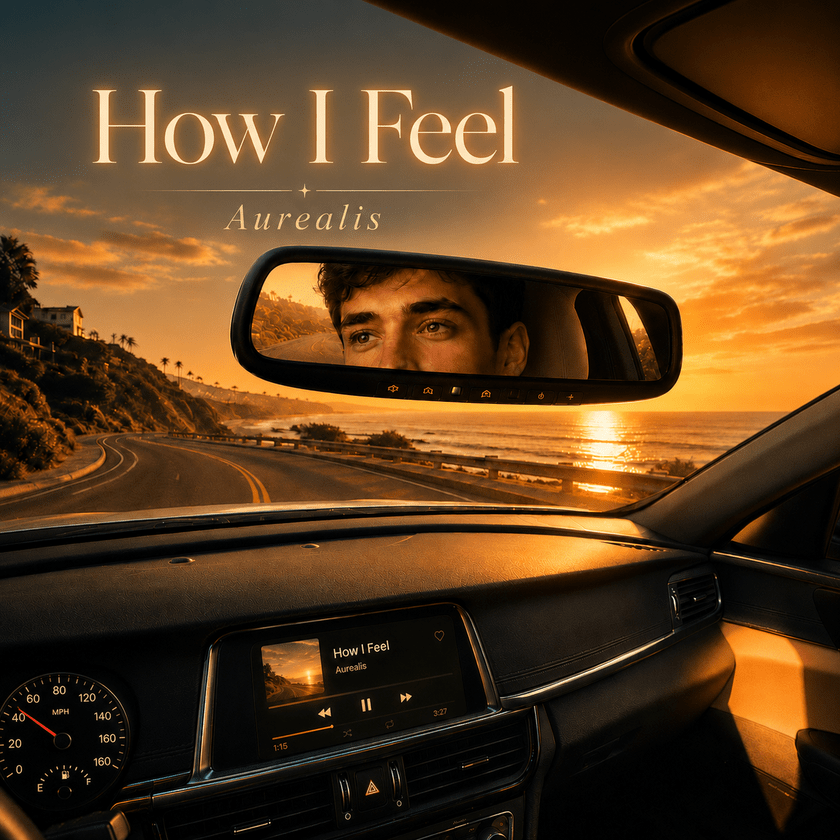
That philosophy also shapes the visual world surrounding the song. The golden-hour drive in the music video captures the anticipation of heading toward someone you love, when the journey itself begins to feel magical because you know where it is taking you. Sunlight, movement and the open road become extensions of the emotion in the song, creating a visual counterpart to the feeling of falling deeper into a relationship.
Visual storytelling has become an important part of the Aurealis identity, but the song always comes first. Only after the music is complete does the visual world begin to take shape. It is a process rooted in the belief that a great music video can become inseparable from the song itself, creating images that listeners instinctively return to whenever they hear the music.
There is also an intriguing contradiction at the centre of Aurealis. The artist is naturally private and introverted, yet the music explores deeply personal emotions. The mask and hood have become part of that identity, offering both mystery and a sense of confidence. They create a little distance between the private person and the artist while allowing the emotions inside the songs to remain completely human.
Perhaps that is why the music does not feel anonymous despite the mystery. The mask may conceal a face, but the songwriting reveals something much more personal. Aurealis writes about love, fear, loss and hope in a way that leaves enough space for listeners to recognise themselves in those emotions.
And beneath the excitement of falling in love, there is an even deeper question: how do you build a life with someone without losing the person you were before the relationship began? For Aurealis, the answer is not about choosing between independence and commitment. It is about finding someone who allows both people to remain themselves while building something together.
In this conversation with Spinex Music, Aurealis opens up about the vulnerability behind “How I Feel,” the relationship between light and darkness in the songwriting, the meaning behind the golden-hour visuals, the freedom offered by remaining a studio-based artist, and why sometimes the best way through life’s difficult moments is to keep moving, keep feeling and, if possible, dance along the way.
Why focus How I Feel on that delicate space between confidence and uncertainty rather than write a conventional love song?
When I write, I write from my own experiences. I never sit down and say, “Okay, I’m going to try to write a love song,” or anything like that. I’m a very emotional, private person, and writing music is my outlet for that. It always has been.
I think when any relationship is still in those early stages, even when you’re starting to feel, “This is real,” there’s going to be some amount of uncertainty. Does the other person feel the same way I do?
I tend to analyze things and look at them from every angle in my life, and that comes across in my writing. I don’t typically write songs that are too straightforward. I usually dip my toe into the shadows of it as well.
Why was it important to hold hope and vulnerability together — emotional clarity like “the sun still shines” alongside wondering whether it might all be a dream?
I think this ties in with my answer to the first question, because to me, hope and vulnerability go hand in hand. When we hope, we’re wishing in a way for a certain outcome, right? Wishing, hoping… I think all of that actually comes from a place of vulnerability, from wanting something to happen or change. And sometimes we need to allow ourselves to be vulnerable for that change to happen.
There have been plenty of times in my own life when something good would happen and my immediate thought was, “Is this real? Am I dreaming?” As humans, we all go through so many struggles, some private and some less so, that sometimes when something truly good happens, it can be a little hard to believe at first.
After several darker releases, was the turn toward warmth, optimism, and openness conscious, or did it naturally emerge from a different chapter?
My previous release, “Cursed,” was written during a very dark period of my life. It came from a real conversation I had with myself at a time when so many things felt like they were collapsing around me and I had very little control.
“How I Feel” was actually written much earlier than “Cursed,” when I was in a completely different mindset. So the contrast between the two wasn’t really a conscious decision to move from darkness into something warmer. They were simply written during different chapters of my life.
There is both light and dark in all of us. One can’t really exist without the other, and I enjoy exploring all of it in my writing.
Did the emotional narrative shape the synthpop landscape, or did the music help reveal the story?
For me, the emotional narrative and the music often arrive together. Sometimes when I write, it almost feels more like I’m channeling. How it comes through can be different every time. Sometimes a chorus just pops into my head at the weirdest moment, and when that happens, I know I need to write it down as fast as I can. Other times, the lyrics and melody come through together.
With “How I Feel,” I knew from the beginning that it was going to be an upbeat, happy bop, and synthpop fit that feeling perfectly.
What does the golden-hour driving journey in the video symbolize, and how closely does it mirror the emotional message?
I think many of us can relate to that drive to see someone we love, and how it just feels different when you know the person you’re heading toward is the one person you truly want to see more than anyone else.
And if you believe that person feels the same way about you, that drive can feel pretty magical in itself. Being in love, and anticipating that you’re soon going to be with the person you love, can almost change the way the world looks and feels around you.
That’s what I wanted the drive in the video to represent: that golden-hour feeling of knowing you’re getting closer and closer to the person you want to be with more than anyone else.

How has performing behind the Aurealis mask influenced writing about personal emotions?
This is a great question, and to answer it honestly, I’ll share a little about myself that I don’t typically talk about. I’ve always been a pretty private person, and when I was younger I was painfully shy. I still am to a certain extent.
Music, though, has always been a huge part of my life. It’s been my dream and my outlet for as long as I can remember. Getting in front of other people to perform it? Not so much.
The mask and hood are simply how I choose to present myself as an artist, and they also help me feel more confident in my own skin. I really enjoy the mystery they create, too. I write about a lot of very personal things, and maybe the hood and mask make me a little more comfortable sharing those things with the world.
At the same time, I think when you listen to my songs and really listen to the lyrics, you can feel the human behind them. But hopefully they’re written in a way that allows the listener to connect those emotions to their own experiences, too.
How do you balance intimate singer-songwriter storytelling with synthpop/electronic energy?
I don’t believe that songs that tell a story, or that approach tougher subjects and emotions, necessarily have to be slower-paced songs.
I’ve experienced a lot in my life: a lot of loss, a lot of love, a lot of happiness and sadness. Through all of it, I’ve always done my best to keep moving. That’s something I want my songs to express, too. You can keep moving through heartbreak. You can keep moving through pain and loss. And if you can dance through it? That’s even better.
So I truly enjoy taking those deeper feelings and emotions and intertwining them with music that makes you want to get up and move.
How central is visual storytelling, and when do you begin imagining the visual world around a song?
Another great question! Videos and visuals are definitely a central part of the Aurealis experience. For songs like “Cursed,” I think the video even helped offer additional insight into the song itself. With “How I Feel,” it’s difficult for me to listen to it now without imagining that sun-soaked drive down the coast. It just feels like it belongs there.
I’ve always loved music videos. Whenever an artist I enjoyed released a new song, one of the first things I would look for was, “Is there a video?” I think a great music video can actually become synonymous with the song, to the point that when you hear the music, you immediately picture those images too.
But the song comes first, always. Everything begins there. Once the song is finished, that’s typically when I start imagining the visual world that might surround it.
Has being a studio-based artist rather than a live performer given you more freedom to build Aurealis’ cinematic worlds?
I would say so. Being a studio-based artist allows me to put my full focus into creating the songs and videos exactly the way I want to share them with the world.
If I had to divide my time and energy between live performances and studio work, I think one or the other would probably suffer. As I mentioned earlier, I’m naturally an introvert, and performing live isn’t something I’ve ever really felt drawn to anyway.
I’d rather put that energy into creating the best songs and visual experiences I possibly can, and keep the focus there.
10. What do people most fear when they realize love might actually change their lives?
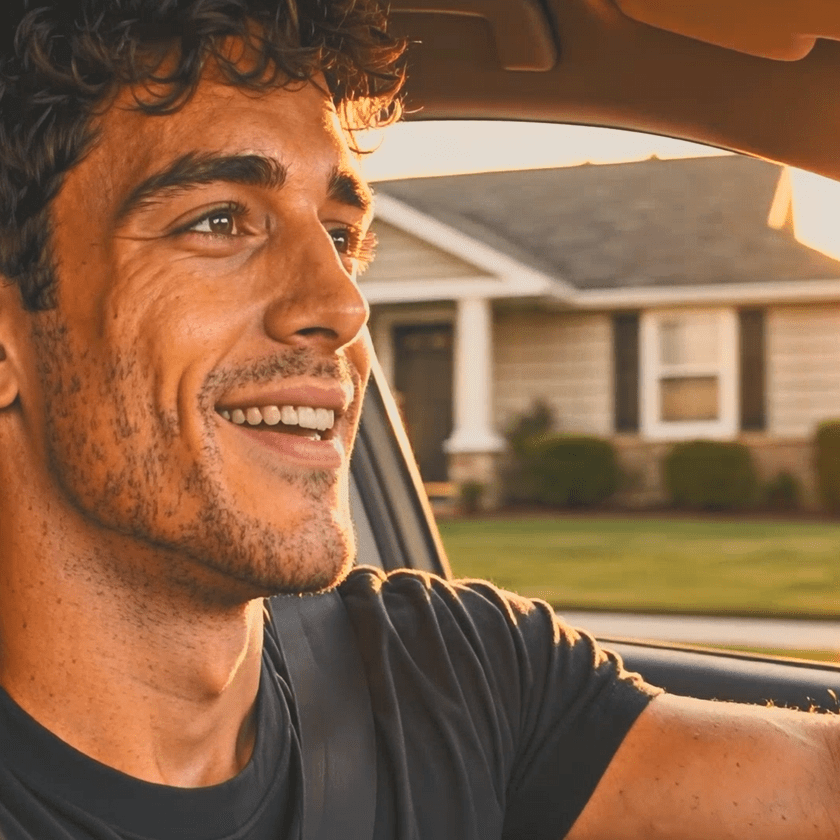
Wow, another thoughtful question. I can’t really answer for what most people would fear, because everyone is different. But for me, one of those fears was the fear of losing myself.
Sometimes when true love is there and two lives begin to become deeply intertwined, there can be that question of, “How much of me will still remain the same once I commit to making this work?”
So I think finding someone who lets you be you, while you let them be them, is the golden ticket. You can build a life together without either person having to disappear inside it.
GET CONNECTED:
FACEBOOK | INSTAGRAM | SPOTIFY | YOUTUBE | WEBSITE