
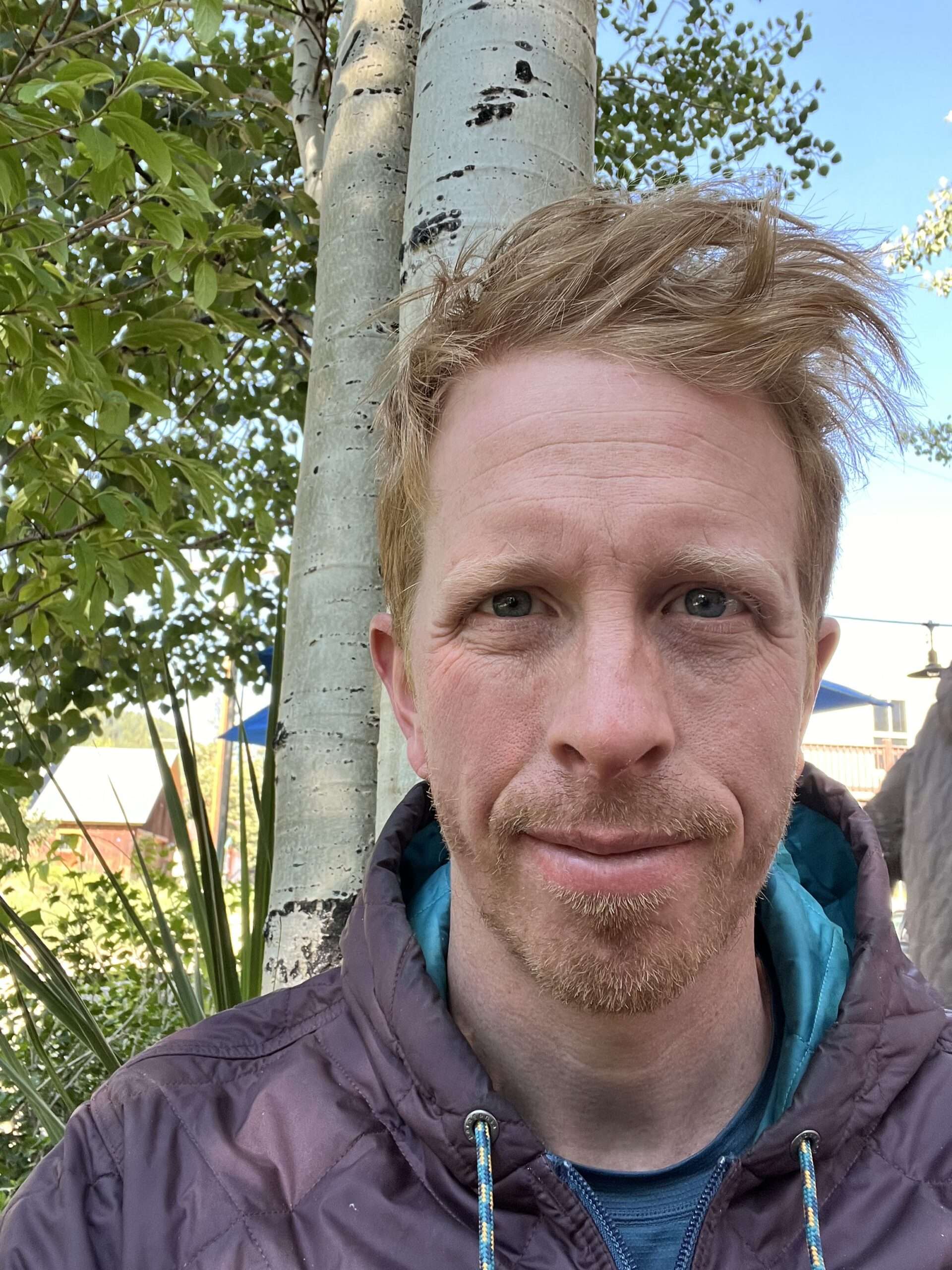
There is a certain honesty that comes from admitting you do not have all the answers. For Jared Bond, that honesty sits at the heart of his music. Rather than using songwriting to explain life, he uses it to sit with the questions that make life complicated in the first place. Love, loss, mortality, meaning and the strange beauty of simply being alive all find their way into his work, but rarely as neatly resolved ideas.
His approach becomes especially clear through his latest project, Existentialism. The EP grew from a confrontation with one of humanity’s oldest questions: why are we here? Yet instead of leading Jared toward a darker conclusion, the search gradually made him more grateful for the temporary nature of existence. Looking at mountains, walking through the woods and confronting reminders of mortality helped him recognise something simple but profound: life does not need to last forever to be meaningful.
That tension between impermanence and gratitude runs through the project. “Nothing Lasts Forever” looks directly at the anxiety of knowing that everything changes, while “Miracle” approaches the same reality from a more hopeful direction. For Jared, the two ideas are not contradictions. If anything, knowing that moments, relationships and lives are temporary gives them greater value.
There is also a refreshing lack of certainty in the way Jared talks about his art. Psychedelic experiences did not convince him that he had discovered some ultimate truth. Instead, they made him more comfortable admitting that he does not know what that truth might be. That uncertainty has also changed the way he writes. He has become less interested in perfection and more willing to follow an idea, finish it and let the song exist.
That openness extends into the way Existentialism was made. Parts of the project came together in a traditional studio, but other recordings happened in a friend’s living room and at the Olathe Public Library. Rather than making the record feel disconnected, those unconventional environments helped keep the music from becoming overly polished or self-important. The songs may wrestle with enormous ideas, but they were created in ordinary spaces.
Collaboration also helped Jared step outside his own assumptions. Carson Kropp brought an entirely different musical vocabulary through his trumpet work, while engineer David Bennet helped preserve the emotional intention behind the songs. Longtime friend Nathan Johnson also contributed to “Nothing Lasts Forever.” The experience reinforced an important lesson for Jared: even when a song begins as something deeply personal, other people can help reveal possibilities the original writer could not see alone.
Perhaps the most compelling part of Jared’s philosophy is his belief that something does not have to be important to the entire universe to matter. A relationship, a conversation or a single moment between two people can be enormous on a human scale. That idea gives his existential songwriting a warmth that prevents it from becoming purely intellectual. He starts with shared emotions and lets the larger questions grow naturally from them.
He also refuses to tell listeners exactly what they should believe. For Jared, art does not necessarily need to provide an answer. Sometimes its value lies in creating enough space for someone else to ask better questions. That independence of thought is perhaps why the project’s central message feels so simple despite the size of the subjects it explores.
In this conversation with Spinex Music, Jared Bond opens up about the ideas behind Existentialism, the relationship between impermanence and gratitude, how psychedelic experiences changed his creative outlook, the unconventional environments where the music was recorded, the importance of collaboration and why he believes the most meaningful art does not always need to tell us what to think.
At the centre of it all is a thought that feels both humble and reassuring: “You don’t have to know why you’re here to be grateful that you are.”
“Existentialism” is built around some of life’s biggest questions, yet the EP also carries a strong sense of gratitude. How did you discover that questioning the meaning of life could actually make you more appreciative of being alive?
I think questioning the meaning of life eventually forced me to confront the fact that I might not get an answer.
At first, that can feel terrifying. We spend so much of our lives looking for some larger explanation—why we’re here, what we’re supposed to be doing, whether any of this ultimately matters. But the more I thought about those questions, the more I started noticing something very simple: I am here. You’re here. We get this strange, temporary experience of being conscious and alive, and we don’t really know why.
That realization can be frightening, but it can also be incredibly beautiful.
I started thinking about it while hiking in Colorado and looking at mountains that had been there for millions of years. Then I’d come across something like a dead deer in the woods and be reminded that everything living eventually becomes something else. And somehow, in the middle of all that impermanence, we worry about bills, talk about silly things, try to make it to appointments on time, etc.
The questions didn’t make life feel meaningless to me. In some ways, they made ordinary life feel miraculous.
“Nothing lasts forever” and “miracle” seem to approach existence from very different emotional directions. Do you see them as opposing ideas, or are they ultimately two sides of the same philosophy?
I definitely see them as two sides of the same idea. The two song split is intentionally schizophrenic.
“Nothing Lasts Forever” comes from the anxiousness of recognizing impermanence. Everything we love changes. People change. Relationships change. Our bodies change. Eventually, everything we know disappears. That’s a difficult truth, but it’s also just the nature of being alive.
“Miracle” comes from looking at that same reality from the other direction.
If nothing lasts forever, then the fact that anything exists at all becomes more remarkable. The fact that we’re here together, at this particular moment in history, on this tiny planet, having this particular conversation—it’s almost impossible to comprehend.
So I don’t really see impermanence and gratitude as opposites. I think impermanence is what gives gratitude its urgency.
If something lasted forever, maybe we wouldn’t appreciate it nearly as much.
Psychedelic experiences and existential philosophy can both radically alter the way someone perceives reality. How have those experiences changed the way you listen to music, write songs, or understand your own place in the world?
Psychedelic experiences gave me a very visceral sense that my normal perception of reality isn’t necessarily reality itself. It’s one way of experiencing reality.
That doesn’t mean I think psychedelics magically reveal some ultimate truth. If anything, they made me more comfortable admitting that I don’t know what the ultimate truth is. They definitely changed the way I see life.
They’ve also influenced the way I approach songwriting. I take it less seriously, and focus more on completion than perfection. The pipeline of a song idea to having a release is so bottlenecked around production. Having a finite amount of time and so many things I want to say and do in music, makes me more free and aim to say “yes”, to whatever ideas come to me.
“Miracle” features haunting trumpet arrangements from Carson Kropp. What made the trumpet the right instrument for expressing something as difficult to put into words as wonder, existence or gratitude?
I mostly just wanted to involve a friend and feature a unique instrument. I really enjoy collaborating, and didn’t have some grand scheme when I asked Carson to play on it. Whatever deeper meaning or symbolism people find in the trumpet is purely in the eye of the beholder.
The song is playful and about questioning long-held beliefs, so maybe the trumpet adds to that sense of playfulness and wandering. I knew I didn’t want the part to be overly rehearsed. I wanted Carson to improvise over the music and see what happened. He totally crushed it. I realized after the fact that it might have some serendipitous artistic meaning.
The EP was created across Aorist Studios, a friend’s living room and the Olathe Public Library. How did moving between such different environments affect the music, and did any particular location unexpectedly become part of the creative process?
I actually love that the record came together in places that weren’t necessarily designed to make a record.
A studio gives you a certain kind of focus. You’re there because you’re supposed to make music, and there’s something valuable about that. But a living room has a completely different energy. You’re surrounded by normal life. People are talking, drinking something, coming and going. It feels less precious, and I don’t overthink things.
The library was almost comically appropriate for a record about existential questions. My friend Daniel Smith went with me and engineered the drums for “nothing lasts forever”. They have a fully fleshed sound proof studio at the Olathe public library. It’s not like you are playing a drum set in the middle of people trying to study. You have your own private little space tucked away in a secret lair. It’s so sick. It gives me hope that at some levels our legislation is prioritizing the arts.
I think the different environments helped keep the music from becoming too polished or self-important. These songs are about enormous ideas, but they came from very ordinary places.
That feels right to me.
There is a fascinating contradiction at the heart of existential thought: recognising how insignificant we may be while simultaneously recognising how extraordinary it is that we exist at all. Is that tension something you consciously explore in your songwriting?
Absolutely. I think that’s probably the central tension running through the whole EP.
On one hand, we’re incredibly small. You can look at a photograph of Earth from space and realize how little we are. Or think about deep time and realize that human history is essentially a blink.
But then you zoom in instead of out.
You look at one person.
One consciousness.
One relationship.
One moment between two people.
Suddenly that tiny thing becomes enormous.
I don’t think human beings have to be cosmically important for our experiences to be meaningful. Maybe that’s the mistake we sometimes make—we think something has to be important to the entire universe in order for it to matter to us.
I’m much more interested in the idea that significance can exist on a human scale.
A conversation with someone you love doesn’t have to alter the trajectory of the universe to be profoundly important.
When you write about subjects as enormous as mortality, existence and meaning, how do you prevent the songs from becoming purely philosophical and make sure there is still a deeply human story underneath them?
I try to start with some shared emotion.
Instead of starting with “What is the meaning of existence?” I might start with a person sitting next to me. Or a walk through the woods. Or a dead deer. Or a mountain. Or the feeling of realizing that someone you love won’t always be here.
Those things give the philosophy somewhere to live.
I think people generally don’t connect with ideas because they’re intellectually impressive. They connect with ideas because they’ve felt something similar.
Everybody understands loss. Everybody has wondered what they’re doing with their life. Everybody has looked at the stars and felt small. Everybody has had a moment where they’ve been overwhelmed by the fact that they’re alive.
So I try to write from that human experience first and let the larger questions grow out of it.
What did Carson Kropp and engineer David Bennet bring to the project that you couldn’t have discovered while creating these songs entirely on your own?
Carson and David both helped me bring “miracle” to life. I had the idea around since I was touring as the drummer for Josephine Collective, so like, about 15 years. Having the comfort with David and the excitement of adding Carson helped me get outside of my own head. Sometimes having a song idea around for so long can stifle it. When you write something by yourself, you can become convinced that the way you’ve imagined it is the only possible way it could exist. Having other people involved challenges that.
Carson brought an entirely different musical vocabulary. His trumpet arrangements introduced emotions I couldn’t have created with the instruments I was already using.
David brought a different kind of perspective. Engineering isn’t just about making something sound good. It’s about understanding what the song is trying to communicate and figuring out how to preserve that feeling in a recording.
Both of them reminded me that making music is collaborative, even when the original idea starts with one person.
My other collaborator on this release was Daniel Smith, and Nathan Johnson. They helped me get “nothing lasts forever” out there. Daniel is a rather new relationship, but one that has already felt lives in. Our kids go to the same school, we play dnd with our families, he really values and fosters others creativity, (and is insanely creative himself).
Nathan is my literal longest friend. We met in 7th grade and I could never begin to explain our deep history. He is my first musical companion. He currently makes music with a project called “enjoyer” you must listen to it. They are way too talented to not be world famous. Anyways, he mixed the song and really smoothed out it out.
If a listener finishes the EP and feels that it has raised more questions than it answered, would you consider that a successful outcome? What question would you secretly hope they start asking themselves afterward?
I don’t know if there can be “success” with art.
I don’t think I have the answers to these questions, and I don’t want to pretend that I do. I’m suspicious of art that tells you exactly what you’re supposed to believe.
I am detached from how people receive my music. When I start worrying about that, it suffers.
If you had to reduce the entire philosophy behind “Existentialism” to one sentence that someone could carry with them through a difficult day, what would you want that sentence to be?
“You don’t have to know why you’re here to be grateful that you are.”
That’s probably the simplest version of what I’m trying to say.
I don’t know why we’re here. I don’t know if there’s some grand purpose behind any of this. I don’t know what happens when it ends.
But I know I’m here right now.
I know there are people I love.
I know there are moments worth experiencing.
And I know that the fact that any of us get to experience this strange, beautiful, terrifying thing called being alive is pretty incredible.