
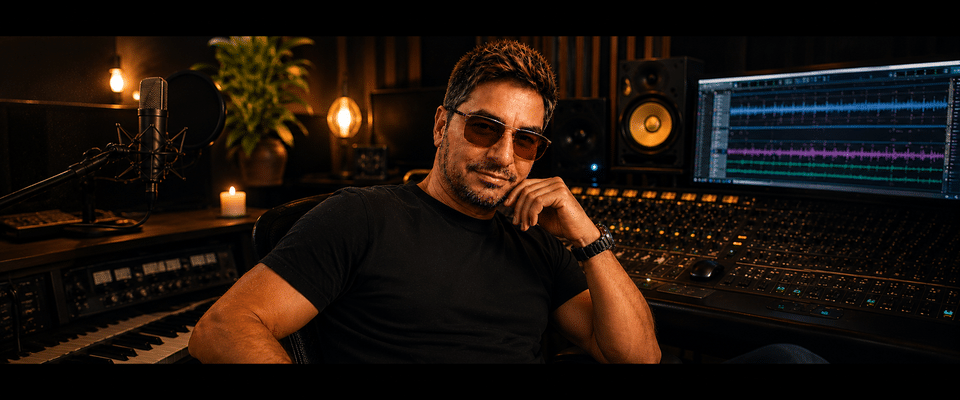
German independent artist and songwriter Elias Dream approaches music as a form of storytelling, exploring the complexities of human relationships, emotional conflict, personal responsibility, and the decisions that can shape the course of a life. Drawing inspiration from the experiences people often keep to themselves, he creates songs that examine the grey areas of human behaviour, where love, fear, regret, and uncertainty can exist side by side. His sound combines rap, melodic vocals, rock instrumentation, and cinematic elements, with each musical choice serving the story rather than conforming to a particular genre.
In this interview with Spinex Music, Elias Dream reflects on his journey from playing keyboards as a teenager to developing an independent artistic identity built around narrative-driven songwriting. He discusses the inspiration behind “The Love I Hide,” a song that explores the emotional tension of a man torn between his commitment to one woman and his feelings for another, without reducing its characters to simple heroes or villains. He also explains how everyday scenes, unresolved emotions, and difficult personal choices become the starting points for his songwriting, allowing listeners to interpret the stories through their own experiences.
Beyond his creative process, Elias Dream offers insight into the musical and technical decisions that shape his sound, including his longstanding connection to the Hammond organ and his hands-on involvement in mixing and mastering. He explains how he brings different musical styles together according to the emotional needs of each story, while reflecting on the influence of past mistakes and the value of allowing listeners to reach their own conclusions. Looking ahead, he shares his desire to keep experimenting musically while creating honest, meaningful work that resonates with people. In this conversation, Elias Dream reveals the thinking behind his approach to music and why the most powerful stories often emerge from ordinary life.
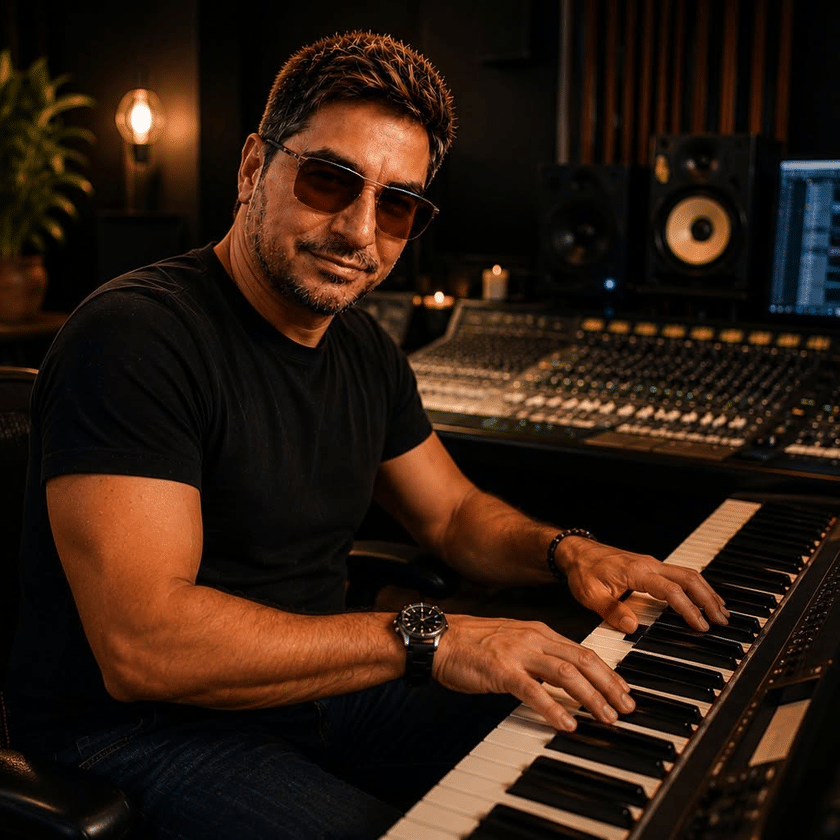
How did your journey as a songwriter and independent artist in Germany begin?
It actually started when I was a teenager. I played keyboards back then and did a few small live shows. Nothing huge, but I really enjoyed it.Music has pretty much been part of my life ever since.Of course, a lot has happened between then and now. And not everything turned out the way I thought it would.
I’ve made decisions I regret. There are things I look back on and think, “What on earth was I thinking?” But I can’t change any of that now.Maybe that’s part of why I make the kind of music I do today.
At some point, I realized I wasn’t just interested in melodies. I was interested in the stories behind them. What people go through, what they keep to themselves, and what they sometimes don’t understand until it’s too late.
With Elias Dream, I get to tell those stories without having to stick to one particular style of music.
I love the idea of someone listening to one of my songs and recognizing something from their own life in it. That’s really what I’m hoping for.
What inspired you to write “The Love I Hide”?
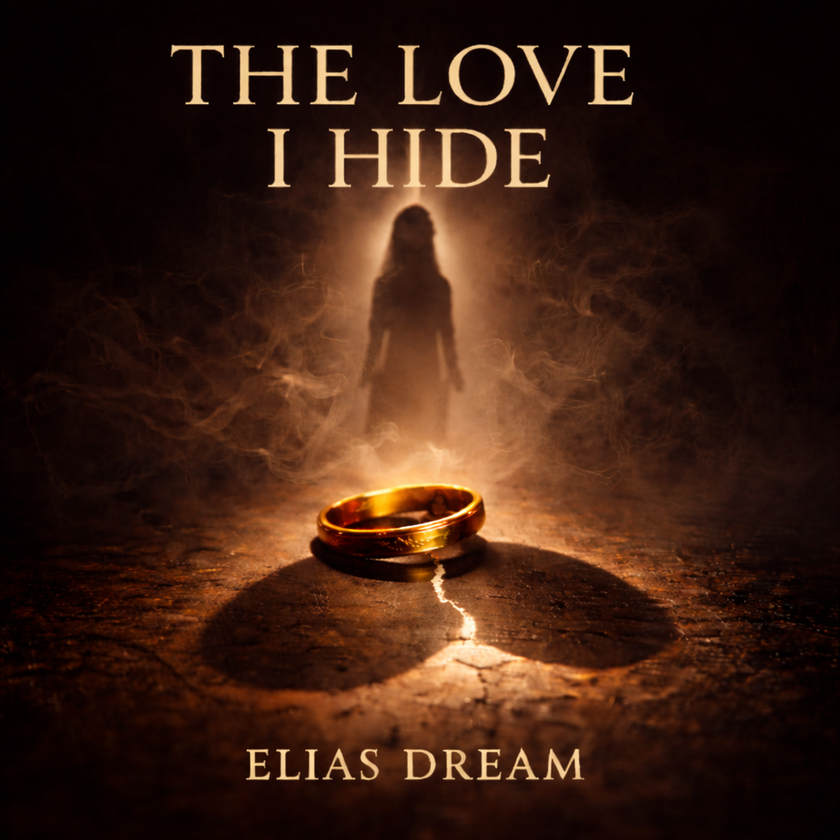
I wanted to tell a story where you couldn’t just point at someone and say, “That’s the bad guy.”There’s a man who’s with a woman who genuinely loves him. But he can’t get another woman out of his head.
Obviously, that’s not a good situation, especially for the woman who trusts him.
But feelings don’t always follow the rules, do they?
was interested in what goes on inside someone’s head in a situation like that. Is he lying to himself? Is he really trying not to hurt anyone, or is he just afraid to make a decision?
I’ve made mistakes in my own life, too. So I know what it’s like to look back at something years later and think, “I really should’ve handled that differently.”
That doesn’t mean the song is autobiographical, though.
One thing I really wanted to avoid was making either woman the villain. And I didn’t want the man to come across as some helpless victim of his own feelings, either.I’d rather let people listen and decide for themselves what they think of him.
Do people hide their feelings to protect others, or are they really protecting themselves?
I’d say a lot of the time, they’re protecting themselves, even if they don’t want to admit it.That might sound a little harsh, but I’ve been there myself.You know you need to talk about something. Maybe you’ve known for weeks. But you keep thinking, “Not today. Maybe tomorrow.”And then tomorrow comes, and you find another reason to put it off.
Before you know it, so much time has passed that bringing it up feels even harder.Of course, there are times when you genuinely want to spare someone pain. I’m not denying that.But one thing I’ve learned over the years is that staying quiet isn’t always the same as being considerate.
Sometimes you’re just scared of dealing with what might happen next.And that can end up doing more damage than the truth would have.
Your songs often feel like short films. How do those stories come together?
A lot of the time, it starts with a scene I can picture in my head.Maybe there’s a man sitting in his car outside his house after work, and for some reason, he just can’t bring himself to go inside.
Nothing dramatic has happened. His family’s waiting for him, everything looks normal. But something doesn’t feel right anymore.And that’s when I start asking questions.Why won’t he get out of the car? What’s going through his mind? What happened over the years to bring him to this point?
Or take the story of someone listening to an old voicemail. Twelve seconds of a voice belonging to someone who’s no longer there. That’s all they have left.Little things like that sometimes stay with me more than the big dramatic moments.
Then I try to write the song in a way that makes you feel like you’re right there in the room.One thing I really don’t like is when a song is full of beautiful words but doesn’t actually tell you anything.
I want something to happen. I want the character to change, or maybe end up facing a decision they can’t avoid.And sometimes I’m perfectly happy leaving the ending open.
The Hammond organ has become a recognizable part of your sound. What’s the story behind that?
That’s actually kind of a funny story.I started playing keyboards when I was a teenager, so I’ve always had a thing for keyboard instruments.Then one day, I came across a genuine Hammond organ on an online classifieds site here in Germany. And the crazy part was how little they were asking for it.I just couldn’t pass it up.
I’ve always loved that sound. Especially when it gets a little gritty, or when you hear that classic Leslie effect.For my recordings, though, I use a digital Hammond-style instrument. There’s a pretty simple reason for that: I do a lot of my production on a computer, and the digital version is much easier to work with.
But I still play the organ parts myself.In a way, it brings me back to where I started musically, which I really like.And sometimes a song doesn’t need much. Just a few Hammond notes in the background can completely change the mood.
You mix rap, melodic vocals, rock, and cinematic elements. How do you make those different styles work together?
I’ve never been too concerned about fitting into one particular genre.When I’m working on a song, the first thing I think about is the story and how I want to tell it.Some things work better when they’re almost spoken, like you’re sitting across from someone telling them what happened. That’s where rap or rhythmic storytelling comes in.
But then you might reach a point where the emotions really take over, and a sung chorus just feels right.And if things get more intense, that’s when the guitars or the Hammond can really kick in.
I listen to all kinds of music myself, so why should I limit my own music to just one style?
Of course, it all has to come together naturally. Throwing a bunch of different genres into one song just for the sake of it doesn’t make much sense to me.The story has to work. Everything else follows from there.
You’re also involved in mixing and mastering your music. Why is having that control important to you?
I usually have a pretty clear idea of how I want a song to sound.If someone’s completely alone in a scene, maybe I want you to hear almost nothing but their voice. Very few instruments, nothing distracting from what they’re saying.
And then, when everything finally comes pouring out, the music can open up and get really big.That’s why I spend a lot of time working on the mixing and mastering.
The problem is, after a while, you can lose perspective.You spend hours working on one section, adjusting this, turning that up, changing something else, and eventually you start wondering if it actually sounded better before you touched it.I think anyone who’s produced their own music knows that feeling.So I try to step away from a song now and then and come back with fresh ears.And one thing I’ve learned is that sometimes removing an instrument does a lot more for a song than adding another one.
Does songwriting help you understand your own emotions, or is it more about giving other people a voice?
I’ve actually thought about that quite a bit.I think my own experiences probably influence my writing more than I sometimes realize.
There are things I’ve done in my life that I’m not particularly proud of. Decisions I’d make differently today, and situations I see in a completely different light now.There was a time when I would’ve loved to just erase some of those memories.These days, I see them as part of my life, whether I like them or not.
But that doesn’t mean every song is about me. A lot of the stories are fictional. Sometimes I’ll take a feeling I know well and build a completely different story around it.What really means something to me is when other people recognize themselves in those stories.
Maybe they’ve been through something similar but never really talked about it.And then they hear a song and think, “Yeah. That’s exactly how it felt.”There’s something pretty special about that.
Why do you prefer to let listeners decide for themselves whether your characters are right or wrong?
Because I don’t think I’m in any position to sit in judgment of other people.I certainly haven’t gotten everything right in my own life.Of course, some things are clearly wrong. And just because someone does something out of love doesn’t automatically make it okay.
But I’m also interested in understanding why people make the choices they do.
Take the man in “The Love I Hide.”
Some listeners might think he’s selfish. And I can understand that.
Someone else might hear the song and remember a time in their own life when they felt just as torn.
I don’t want to tell people what they’re supposed to think.
Actually, I’d be quite happy if two people listened to the song and ended up having a real discussion about it.That would mean the story got them thinking.
What kind of stories and musical directions would you like to explore next with Elias Dream?
I’ve still got plenty of stories in my head.
What interests me most are situations that almost anyone could find themselves in at some point.
Like someone who suddenly realizes, after many years, that they have a good life but aren’t actually happy anymore.
They’ve got a family, a job, pretty much everything they once wanted. And yet one morning, they’re sitting in their car asking themselves, “Is this really all there is?”
Or someone who’s lost a person they love and keeps playing their last voicemail over and over, just to hear their voice again.
I don’t think you need extraordinary situations to tell a powerful story. Everyday life gives you more than enough material.
Musically, I want to keep experimenting with whatever feels right for each song.
Sometimes that might mean just a piano, a Hammond, and a voice. Other times it might be something with more rock, rap, and a big, emotional chorus.
I honestly don’t know exactly where it’s all going to take me.
But that’s part of what makes it exciting.
One thing matters to me: I want to make music I can genuinely stand behind.
I’ve made mistakes in my life, and there are some things I wish I could go back and change. Obviously, I can’t.
But maybe I can take something from those experiences and turn it into music that means something to somebody else.
And if I can do that with Elias Dream, then this whole musical journey will have been worth it.
WEBSITE | FACEBOOK | SPOTIFY | YOUTUBE | INSTAGRAM | TIKTOK | SOUNDCLOUD