
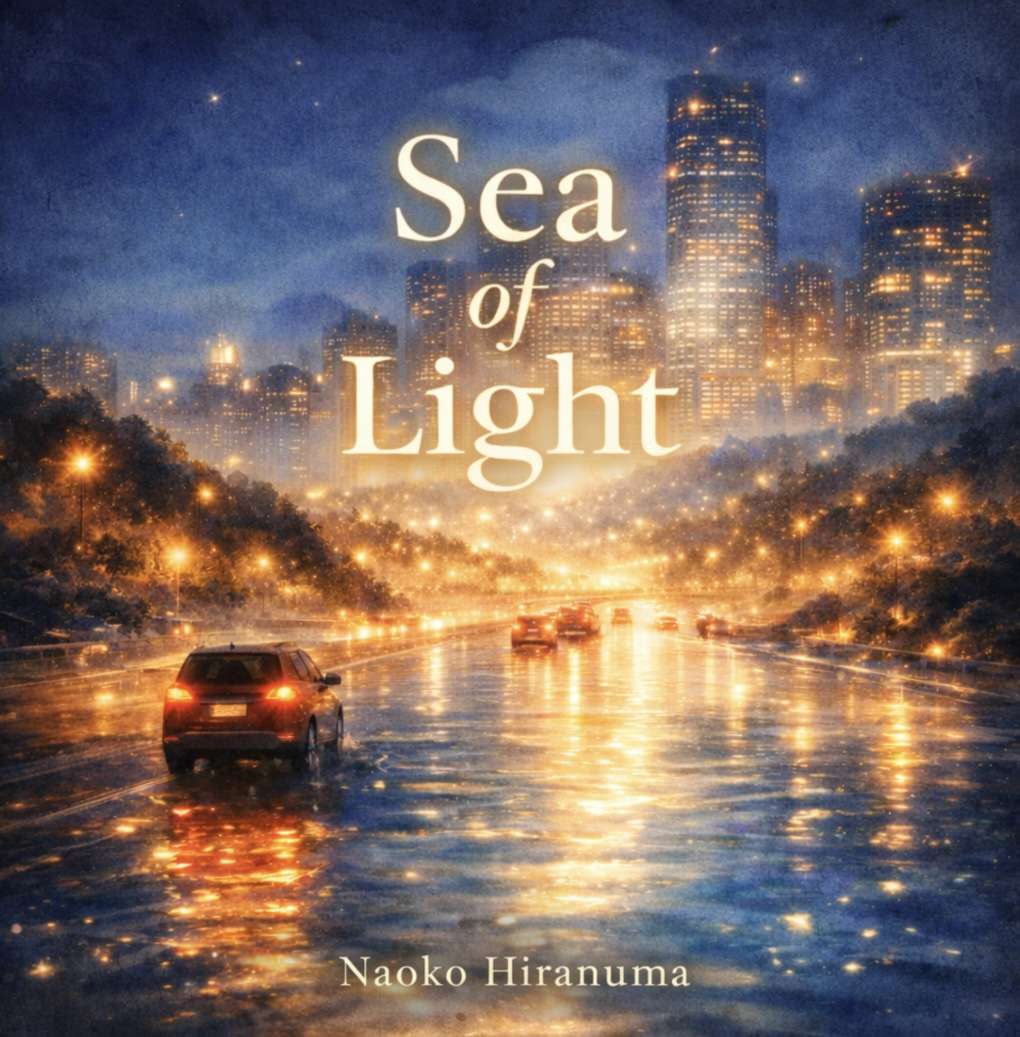
There is a rare confidence in artists who understand that they don’t need to fill every second with noise to make an impact. On Sea of Light, Naoko Hiranuma embraces that philosophy, delivering a song that thrives on honesty, subtlety, and emotional precision rather than grand musical gestures. It is a release that doesn’t chase trends but instead invites listeners into a deeply personal space where every lyric feels intentional.
From the outset, Sea of Light establishes its own rhythm, refusing to be rushed. Rather than building toward a dramatic climax, the song moves with the natural ebb and flow of memory, allowing emotions to surface gradually. This measured pacing becomes one of its greatest strengths, encouraging listeners to experience the song instead of simply hearing it.
Naoko’s songwriting reflects an artist who understands that life’s most meaningful moments are often the quiet ones. Instead of presenting love and loss as opposing forces, she explores how both can exist together, shaping a person’s identity long after circumstances have changed. There is no search for easy answers or tidy conclusions. The song simply acknowledges that healing is rarely linear, and that acceptance often arrives in small, almost unnoticed moments.
Her vocal delivery reinforces that emotional authenticity. Every phrase feels considered rather than performed, carrying the weight of lived experience without becoming theatrical. It’s the kind of performance that draws listeners closer with each verse, rewarding careful attention instead of demanding it.
What makes Sea of Light particularly compelling is its refusal to rely on familiar songwriting formulas. The arrangement leaves room for the story to breathe, allowing melody, instrumentation, and silence to work together rather than compete for attention. The production understands that atmosphere isn’t created by adding more layers, but by giving every musical choice a clear purpose.
Perhaps the song’s greatest achievement is its ability to remain emotionally accessible while resisting predictability. It doesn’t tell listeners what to feel. Instead, it creates space for individual interpretation, making the experience deeply personal for anyone willing to immerse themselves in its reflective world. Long after the final note fades, the emotions continue to resonate, a testament to the strength of Naoko’s artistic vision.
In a musical landscape increasingly driven by immediacy and algorithm-friendly moments, Sea of Light stands as a reminder that timeless music is built differently. It values craftsmanship over convenience, sincerity over spectacle, and emotional truth over commercial calculation. Naoko Hiranuma has delivered a song that doesn’t merely occupy a playlist; it invites reflection, rewards repeated listening, and quietly confirms her gift for creating music that lingers in both the heart and the mind.